


Last updated: October 11, 2026
Best Shampoo Bars for African Hair: Complete Guide to 4C, Coily & Kinky Textures
Introduction
- Why African hair textures need special care from shampoo bars
- How cold-process soap behaves on 4C hair (and why the ACV rinse matters)
- How hard water affects coily and kinky textures
- What ingredients to look for (and avoid)
- Best practices for washing 4C, coily, and kinky hair with bars
- How to prevent breakage, dryness, and buildup
Understanding African Hair Textures: 4A, 4B, 4C
What Makes 4C Hair Unique?
- 4A: Coily with defined S-shaped curls (pencil-sized)
- 4B: Zigzag pattern with sharp angles (less definition)
- 4C: Tightest coils with minimal visible curl pattern (densest, most fragile)
- Gentle cleansing (no harsh sulfates)
- Deep moisture (humectants + emollients)
- Protein for strength (but not too much)
- Minimal manipulation
- Protection from mineral buildup (hard water is a nightmare for 4C hair)
Cold-Process Soap and 4C Hair: What to Know
Why the ACV Rinse Matters on Coily Hair
Natural Answer bars are cold-process soap, made from 6 organic plant oils saponified with lye. Like every true soap, they are alkaline. Coily and kinky hair is fragile, so it pays to use the bar the right way:1. Alkaline pH (9-10): close the cuticle afterwardsYour hair’s natural pH is 4.5-5.5. Soap lifts the cuticle while you wash. An acidic ACV rinse (1 tbsp apple cider vinegar in 1 cup of water) brings it back down:- Cuticles lie flat again
- Hair feels smoother and less frizzy
- Moisture stays in
- Tangles ease
- Lock moisture OUT (because it seals the cuticle shut)
- Make hair feel rough, stiff, and straw-like
- Cause matting and difficult tangles
- Build up over time, leading to breakage
The Solution: Cold-Process Soap + an ACV Rinse
- pH 9-10 (cold-process soap) – follow with an acidic ACV rinse to close cuticles and smooth them after washing
- Works in hard water with an ACV rinse – the rinse keeps soap scum and waxy buildup away
- Gentle cleansing – removes dirt without stripping protective oils
- Moisturizing formulas – plant oils and butters stay in the bar
- Cuticle-smoothing finish – the ACV rinse means less frizz, less breakage
Hard Water + African Hair = Disaster (And How to Avoid It)
Why Hard Water is Especially Bad for 4C Hair
Hard water contains dissolved calcium and magnesium. When these minerals interact with your hair:1. They form a film on each strand2. This film prevents moisture from penetrating3. Your hair feels rough, dry, tangled4. Over time, buildup causes breakageFor coily/kinky hair, this is catastrophic because:- You’re already fighting dryness (tight coils = oil can’t travel)
- Mineral buildup makes low-porosity hair even MORE resistant to moisture
- Tangles turn into matted sections (detangling = breakage)
- Protective styles (braids, twists) become impossible to install on buildup-coated hair
How to Tell If Hard Water is Damaging Your Hair
Signs of hard water damage on African hair:- Hair feels rough, straw-like, or “crunchy” after washing
- Deep conditioner doesn’t seem to work anymore
- Hair tangles immediately after washing (even with leave-in)
- White or gray film visible on strands (mineral deposits)
- Breakage increases, especially at the ends
- Hair won’t hold moisture no matter how much product you use
The Fix: Cold-Process Soap Bars + ACV Rinse
Cold-process soap bars + ACV rinse handle hard water effectively. The acidic rinse neutralizes mineral deposits so the soap rinses completely clean.How cold-process soap + ACV rinse handle hard water:- ACV dissolves mineral deposits after each wash
- Hair rinses clean with zero waxy buildup
- ACV (pH ~3) closes cuticles after the alkaline soap wash
Best Ingredients for 4C, Coily & Kinky Hair in Shampoo Bars
Look For:
Moisturizing Ingredients:- Glycerin – humectant, pulls moisture into hair
- Shea butter – emollient, seals moisture, adds slip
- Coconut oil – penetrates shaft, strengthens from inside (use sparingly if protein-sensitive)
- Jojoba oil – mimics natural sebum, lightweight moisture
- Aloe vera – hydrates, soothes scalp
- Hydrolyzed wheat protein – strengthens without weighing down
- Silk amino acids – adds elasticity, reduces breakage
- Keratin – rebuilds damaged areas
- Cold-process soap (saponified plant oils) – mild, coconut-derived, low irritation
- coconut-derived oils – adds foam, derived from coconut
- Tea tree oil – antifungal, prevents buildup
- Peppermint oil – stimulates circulation, promotes growth
- Rosemary extract – strengthens follicles
Avoid:
Harsh Sulfates:- Sodium Lauryl Sulfate (SLS) – strips oils, causes dryness
- Sodium Laureth Sulfate (SLES) – slightly milder but still too harsh for 4C hair
- Denatured alcohol – evaporates moisture
- Isopropyl alcohol – extremely drying
- Dimethicone, cyclopentasiloxane – create buildup over time, prevent moisture penetration
- Hard to remove without sulfates (catch-22)
- Coat hair without adding moisture
- Can cause buildup in hard water
How to Use Shampoo Bars on 4C, Coily & Kinky Hair
Step-by-Step Wash Routine
1. Pre-Poo (Optional but Recommended)Apply oil (coconut, olive, jojoba) to dry hair 15-30 minutes before washing. This:- Creates a barrier against mineral deposits
- Prevents protein loss during washing
- Adds extra moisture
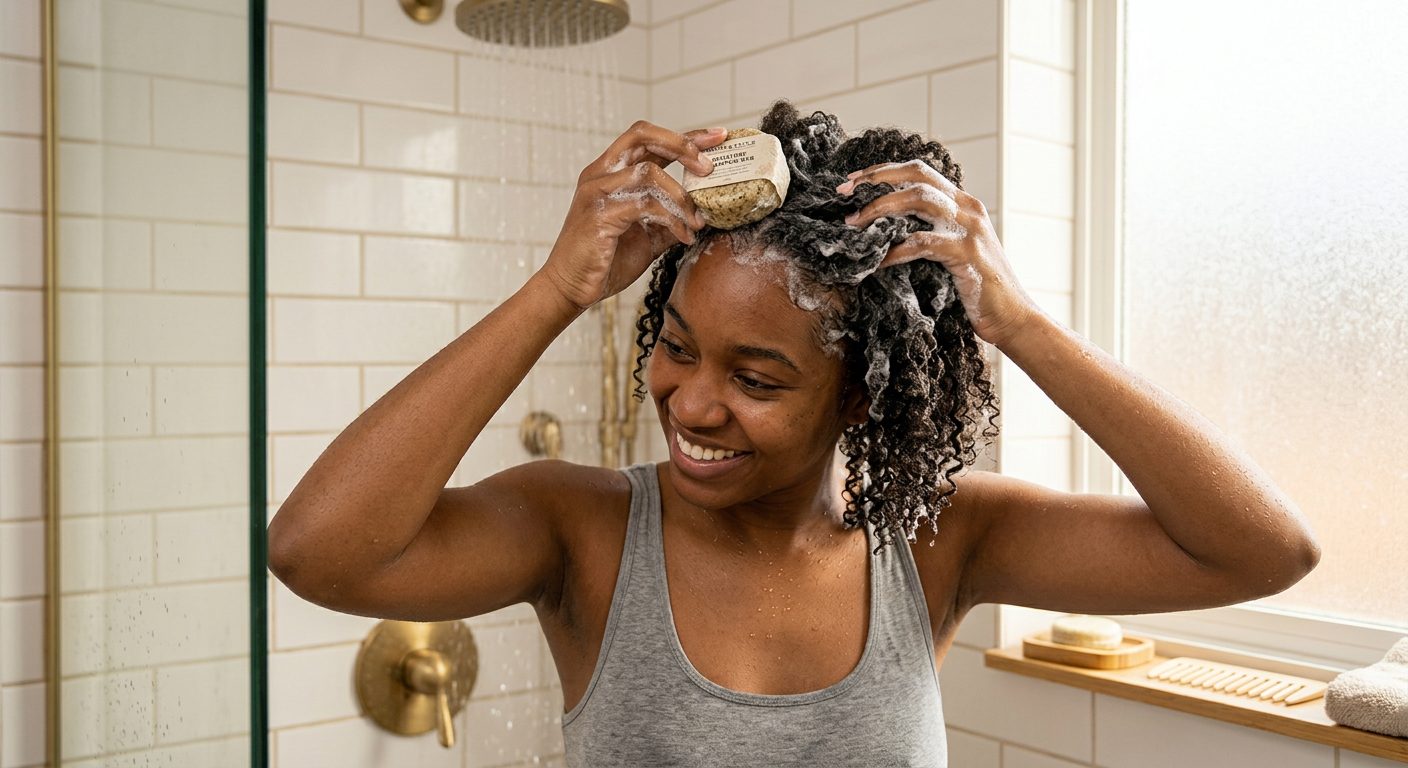
- Method A: Rub bar directly on scalp in sections (use gentle, circular motions)
- Method B: Lather bar in hands, then apply foam to scalp
- Removes buildup
- Stimulates circulation
- Distributes cleansing agents
- Leave-in conditioner (moisture)
- Oil or butter to seal (shea butter, jojoba oil)
How Often to Wash 4C Hair with Shampoo Bars
General recommendation: Every 7-14 days4C hair doesn’t need frequent washing because:- Natural oils take days to travel down coils
- Over-washing = dryness + breakage
- Protective styles can last 1-2 weeks between washes
- Active lifestyle/sweaty scalp: wash weekly
- Buildup-prone hair: wash every 7-10 days
- Low-manipulation styles (box braids, twists): wash every 2 weeks
Common Mistakes When Using Shampoo Bars on African Hair
Mistake #1: Skipping the ACV Rinse in Hard Water
The problem: Soap + hard water without an acidic rinse = waxy buildup, tangles, breakage.The fix: Follow every wash with an ACV rinse (1 tbsp apple cider vinegar in 1 cup of water). Check your water hardness at: https://www.waterhardness.org/Mistake #2: Washing Too Often
The problem: Over-cleansing strips protective oils, leaving hair dry and brittle.The fix: Wash every 7-14 days. Use a satin bonnet at night to preserve moisture.Mistake #3: Scrubbing Hair Instead of Scalp
The problem: Rough handling of fragile coils = instant breakage.The fix: Massage SCALP only. Let foam gently cleanse hair as you rinse.Mistake #4: Skipping Deep Conditioning
The problem: Shampoo (even gentle bars) removes some moisture. Without conditioning, hair stays dry.The fix: Deep condition after EVERY wash. Use heat for better penetration.Mistake #5: Not Detangling First
The problem: Washing tangled 4C hair = matted nightmare.The fix: Detangle on dry hair BEFORE wetting. Section your hair. Be patient.Mistake #6: Storing Bar in Wet Environment
The problem: Bars left in puddles dissolve quickly, become mushy.The fix: Use a soap dish with drainage. Let bar dry between uses. (One bar should last 50-80 washes if stored properly.)—Shampoo Bars vs. Liquid Shampoos: Which is Better for 4C Hair?
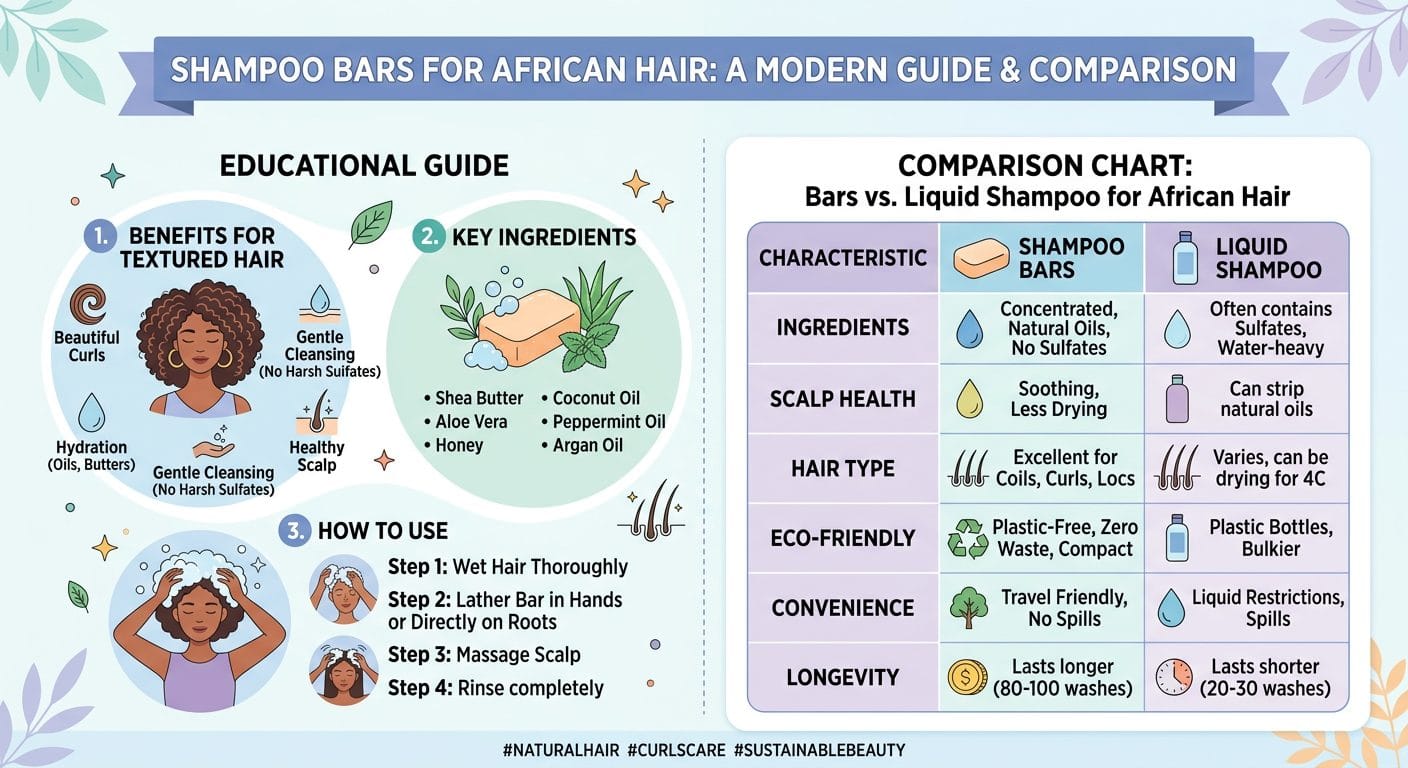
| Feature | Shampoo Bars (natural) | Liquid Shampoos ||———|———————-|—————–|| pH Balance | 9-10 (cold-process soap) + ACV rinse | Varies (often 5-7) || Hard Water Performance | Excellent (no scum) | Depends on formula || Moisture Retention | High (gentle cleansing) | Varies widely || Eco-Friendliness | Plastic-free, concentrated | Plastic bottles, diluted || Travel-Friendly | TSA-approved, compact | Liquid restrictions || Cost per Use | €0.15-€0.30/wash | €0.20-€0.50/wash || Ingredient Transparency | Usually clean formulas | Often contains fillers || Learning Curve | Moderate (new technique) | Easy (familiar) |Verdict: cold-process soap bars used with an ACV rinse can be a great choice for 4C hair IF you want plastic-free, long-lasting, gentle cleansing. Liquid shampoos work fine if you find a sulfate-free, gentle formula—but they cost more and create waste.—Natural Answer Shampoo Bars for African Hair
Why Natural Answer Works for 4C, Coily & Kinky Hair
1. Made for hard waterOur bars work in hard water (common in Europe and the U.S.) when you finish with an ACV rinse. No waxy soap-scum film.2. Cold-process soap (pH 9–10) + ACV rinseThe ACV rinse (1 tbsp apple cider vinegar in 1 cup water after washing) closes cuticles — moisture locked in, frizz minimized, no waxy mineral buildup.3. Palm Oil-FreeWe’re the only European natural bar brand that’s 100% palm oil-free (because we care about forests AND your hair).4. Moisturizing Ingredients- Glycerin (humectant)
- Shea butter (emollient)
- Natural oils (jojoba, coconut)
Best Natural Answer Bars for 4C Hair
For Dry, Moisture-Hungry Hair:Our Shea Butter & Lavender bar is deeply moisturizing with calming lavender for scalp health.For Protein-Sensitive Hair:Our Coconut & Ylang Ylang bar is lightweight, gentle, focused on moisture over protein.For Scalp Health:Our Tea Tree & Peppermint bar prevents buildup, stimulates circulation, promotes growth.—Frequently Asked Questions
Can shampoo bars cause hair loss in African hair?
No—IF you use the right type. Soap in hard water without an acidic rinse can cause breakage (which looks like hair loss), but cold-process soap with an ACV rinse is gentle and safe. Always deep condition after washing.Do I need to use an apple cider vinegar rinse with shampoo bars?
Yes—Natural Answer bars are cold-process soap (pH 9–10). Use an ACV rinse after every wash to close cuticles and prevent hard-water mineral buildup.Will shampoo bars work on 4C hair with hard water?
Natural Answer cold-process soap bars work in hard water when paired with an acidic ACV rinse. The rinse neutralises mineral residue and prevents waxy buildup.How long does one shampoo bar last on 4C hair?
50-80 washes if stored properly (dry between uses). For 4C hair washed every 7-14 days, that’s 1-2 years per bar (compared to 2-3 months for a liquid shampoo bottle).Can I use shampoo bars on protective styles (braids, twists)?
Yes! Gently rub the bar on your scalp between braids/twists. The foam will cleanse your scalp without disturbing your style. Rinse thoroughly.Are shampoo bars good for low-porosity 4C hair?
Yes, with an ACV rinse. Cold-process soap is alkaline and can lift cuticles, so the acidic rinse afterwards matters. Use warm water and deep conditioner for best results.Can children with African hair use shampoo bars?
Absolutely. Natural Answer bars are gentle enough for kids. Make washing fun by letting them help lather the bar. Always follow up with a detangling conditioner.—Final Thoughts: Are Shampoo Bars Right for Your 4C Hair?
Yes—IF you choose the right type.✅ Choose: Cold-process soap bars + ACV rinse — gentle cleansing at pH 9–10, paired with an ACV rinse to close cuticles and handle hard water without buildupYour 4C, coily, or kinky hair deserves:- Gentle cleansing that doesn’t strip oils
- Formulas that work WITH hard water (not against it)
- Ingredients that add moisture, strength, and shine
- Sustainable, plastic-free options
- [How to Use Shampoo Bars: Complete Guide](#)
- [Shampoo Bars for Hard Water](#)
- [Best Shampoo Bars for Dry Hair](#)
- [Shampoo Bar Transition Period](#)
- [Best Shampoo Bars for Curly Hair](#)
- [How Long Do Shampoo Bars Last?](#)
- Water hardness checker: https://www.waterhardness.org/
Ready to Make the Switch?
Ready to experience the benefits of a natural shampoo bar? Browse our complete collection of cold-processed soap bars — each one made with 6 organic plant oils and zero synthetic additives.