



Last updated: September 25, 2026
Winter can be brutal on your hair. Between freezing temperatures, dry indoor heating, static electricity, and that awful hat hair, it’s no wonder so many people struggle with dry, brittle, frizzy hair during the colder months.If you’re considering switching to shampoo bars or already use them, you might wonder: do shampoo bars work well in winter? The answer is yes — but choosing the right type makes all the difference.Why Winter Destroys Your Hair (And What Shampoo Bars Can Do About It)

The Winter Hair Damage Cycle
Cold outdoor air strips moisture from your hair shaft. The cuticle layer contracts in cold temperatures, making hair more fragile and prone to breakage.Indoor heating creates desert-like humidity levels (often below 20%), which pulls even more moisture from your hair. It’s like running a blow dryer on your head 24/7.Static electricity happens because dry air can’t conduct electrical charges away, so they build up on your hair. This is why you get that Einstein look when you remove your hat.Frequent hat wearing creates friction that roughens the cuticle, leading to tangles, breakage, and that dreaded flat, greasy hat hair.Hot showers feel amazing on cold days, but scalding water strips your scalp’s natural oils and damages the hair cuticle, making dryness worse.Hard water in winter is an often-overlooked problem. Cold water holds more dissolved minerals than warm water, meaning your winter showers deposit extra calcium and magnesium on your hair — even if you use warm water, the incoming cold water starts with higher mineral content.Why Traditional Winter Shampoos Often Fail
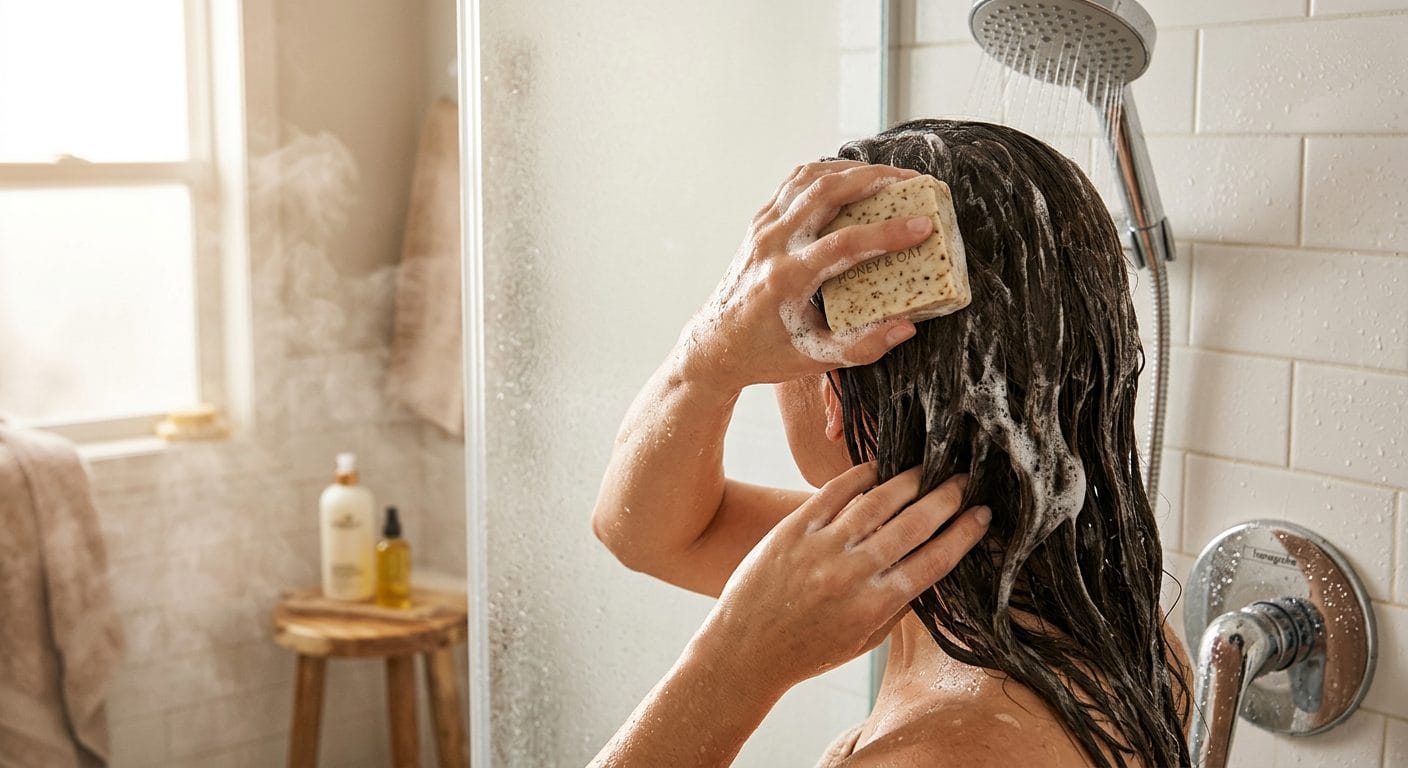
- Harsh sulfates (like SLS) that strip oils your hair desperately needs in winter
- Silicones that temporarily smooth hair but prevent moisture from penetrating, creating long-term dryness
- Synthetic fragrances and dyes that can irritate winter-sensitive scalps
- Plastic bottles that freeze in your car or cabin (minor but annoying)
The Best Types of Shampoo Bars for Winter Hair
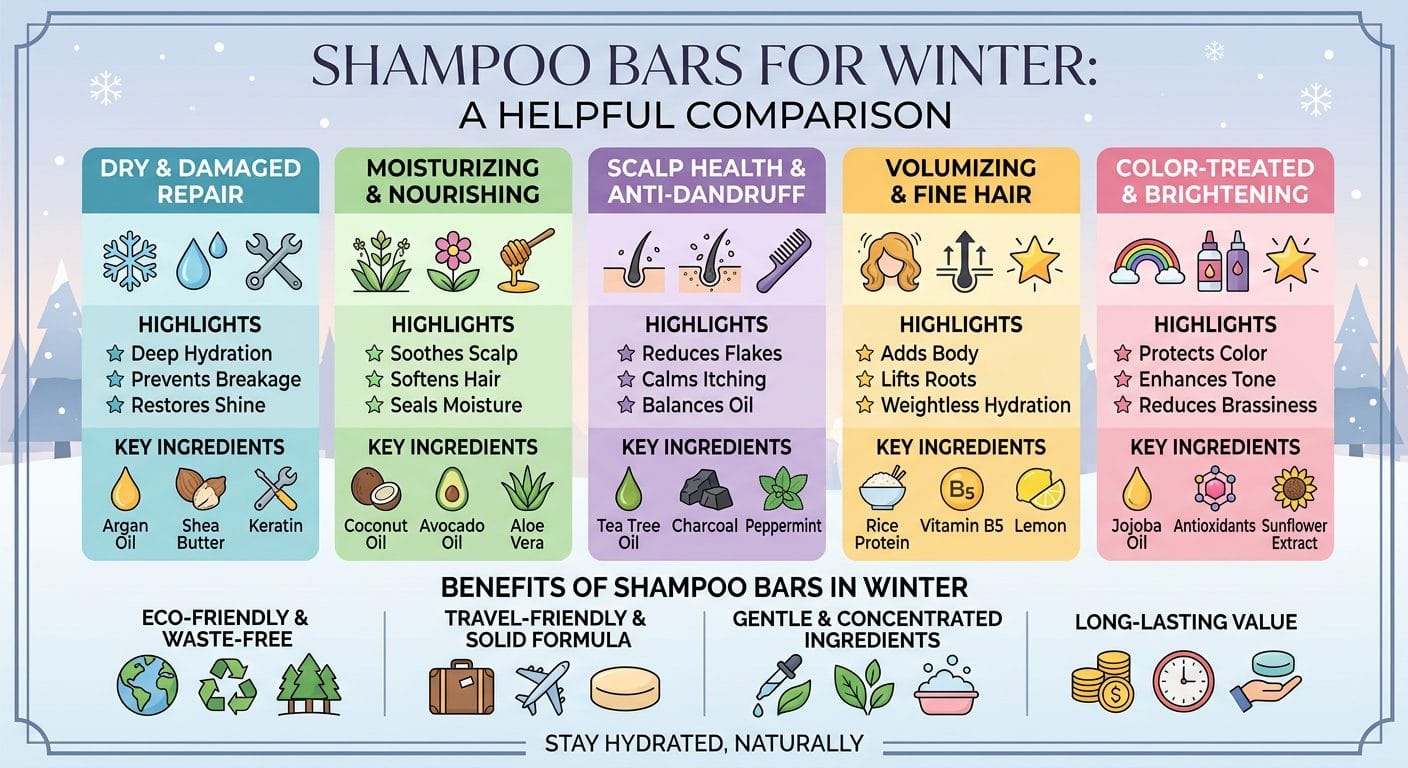
Not all shampoo bars are created equal. For winter, you need specific formulations.1. Cold-Process Soap Bars with an ACV Rinse (Best Choice for Most People)
What they are: Cold-process soap bars (pH 9–10), made from six organic plant oils saponified with lye. Pair with an ACV rinse to restore scalp balance after washing.Why they’re ideal for winter:- Gentle cleansing that doesn’t strip essential oils
- An acidic rinse closes the cuticle after washing, reducing moisture loss
- Work in hard water — crucial for winter when mineral content is higher
- Rich, creamy lather even in cold water
- Can include targeted moisturizers like glycerin, panthenol, and plant oils
2. Soap Without an Acidic Rinse (What to Avoid in Winter)
- High pH (9-10) lifts the hair cuticle and can increase moisture loss, the opposite of what winter hair needs
- Hard water minerals bond with soap to create a sticky film that makes hair feel waxy and straw-like
- Can feel drying on already winter-stressed hair
- Finish every wash with an acidic rinse (apple cider vinegar or citric acid) to close the cuticle
- Use lukewarm water rather than hot
- Choose a bar with a generous superfat of plant oils
3. Superfatted Bars (Extra Moisture)
Some cold-process bars leave extra plant oil unsaponified in the bar (a high superfat). That helps in winter, when hair and scalp lose moisture fast.Look for: Bars that list balanced plant oils (shea, cocoa, jojoba) and state their superfat.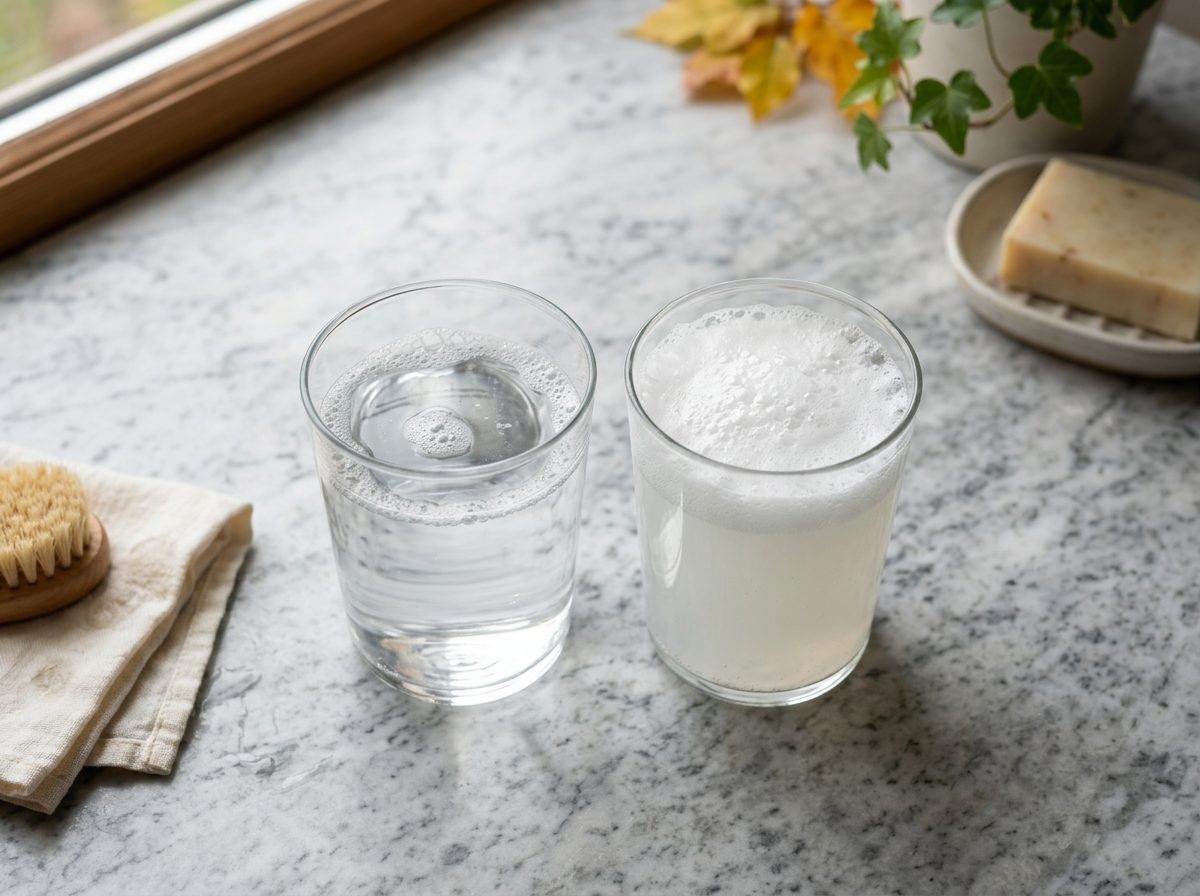
Top Ingredients to Look For in Winter Shampoo Bars
Your winter shampoo bar should contain moisture-preserving ingredients:Humectants (Draw Moisture In)
- Glycerin — pulls moisture from the air into your hair (works even in low humidity)
- Panthenol (Pro-Vitamin B5) — penetrates the hair shaft, improving elasticity and moisture retention
- Honey powder — natural humectant with antibacterial properties (great for sensitive winter scalps)
Emollients (Lock Moisture In)
- Shea butter — rich fatty acids that coat and protect hair from cold air
- Cocoa butter — seals the cuticle, preventing moisture loss
- Jojoba oil — closely mimics your scalp’s natural sebum
- Argan oil — lightweight moisture plus vitamin E for protection
- Coconut oil — penetrates the hair shaft (though too much can be protein-heavy)
Proteins (Strengthen Winter-Brittle Hair)
- Hydrolyzed wheat protein — fills gaps in damaged cuticles
- Silk protein — adds shine and smoothness
- Keratin — rebuilds the hair’s protein structure
Soothing Scalp Ingredients (Winter Scalps Get Sensitive)
- Oat extract — calms irritation from dry air and hats
- Chamomile — anti-inflammatory for flaky, itchy winter scalps
- Aloe vera — soothes without adding oil
Hard Water Helpers (Critical in Winter)
- Citric acid — softens mineral buildup so it rinses away
- Sodium citrate or EDTA — binds to hard water minerals so they rinse away
- ACV (Apple Cider Vinegar) powder — natural mineral remover
What to AVOID in Winter Shampoo Bars
Certain ingredients make winter hair worse:Harsh Sulfates
- SLS (Sodium Lauryl Sulfate) and SLES (Sodium Laureth Sulfate) strip too much oil
- Look for gentler alternatives like saponified plant oils or Coco Glucoside
High Coconut Oil Content
- While moisturizing, too much coconut oil can make hair protein-heavy and stiff in winter
- Look for bars with balanced oil blends (shea, cocoa, jojoba)
Soap Without an Acidic Rinse
- Cold-process soap is alkaline (pH 9-10). Always follow with an apple cider vinegar rinse to close the cuticle
Synthetic Fragrances
- Can irritate winter-sensitive scalps; look for essential oil scents or unscented options
How to Use Shampoo Bars for Best Winter Results
Even the best shampoo bar won’t work well if used incorrectly in winter.1. Warm (Not Hot) Water
- Why: Hot water strips natural oils and raises the cuticle, causing moisture loss
- Do this: Use lukewarm water for shampooing, then finish with a cool rinse to seal the cuticle
2. Thorough Wetting
- Why: Dry winter hair doesn’t lather well, leading to over-application of product
- Do this: Wet hair completely for 30-60 seconds before applying bar
3. Lather in Hands First (Winter Pro Tip)
- Why: Cold air makes bars harder; direct application can snag dry, fragile winter hair
- Do this: Rub bar between hands to create lather, then apply lather to hair (especially effective in winter)
4. Focus on Scalp, Not Lengths
- Why: Winter hair shafts are already dry; they need moisture, not cleansing
- Do this: Apply shampoo primarily to scalp and roots; let runoff gently cleanse lengths
5. Don’t Over-Wash
- Why: Winter scalps produce less sebum; washing too often worsens dryness
- Do this: Reduce wash frequency to 2-3 times per week if possible; use dry shampoo between washes
6. Acidic Rinse (Optional But Helpful)
- Why: Helps close cuticle after washing, combats hard water minerals (worse in winter), reduces static
- Do this: After shampooing, pour diluted apple cider vinegar (1 tbsp per cup of water) or lemon juice over hair, let sit 30 seconds, rinse
7. Condition Every Time
- Why: Winter hair needs extra moisture; conditioning is non-negotiable
- Do this: Use a conditioner bar or deep conditioning treatment on mid-lengths to ends
8. Don’t Let Hair Freeze
- Why: Going outside with wet hair in freezing temps can cause hair to literally freeze and snap
- Do this: Dry hair completely before going outside in below-freezing weather
Winter Hair Care Routine with Shampoo Bars
Here’s a complete winter routine for healthy hair:Weekly Routine
- Monday: Shampoo bar + conditioner bar + leave-in treatment
- Wednesday: Co-wash (conditioner only) or dry shampoo
- Friday: Shampoo bar + deep conditioning mask (5-10 min)
- Daily: Light oil on ends (argan, jojoba) before bed
Pre-Shampoo Treatment (1x per week)
- Apply coconut or olive oil to dry hair
- Leave 30-60 minutes (or overnight)
- Shampoo as usual
- Benefit: Prevents protein loss during cleansing, adds moisture
Hard Water Clarifying Treatment (1x per month)
- Use clarifying shampoo bar or do an apple cider vinegar soak (1:3 ratio with water, soak 5 min)
- Follow with deep conditioner
- Benefit: Removes winter mineral buildup that makes hair dull and dry
Combating Specific Winter Hair Problems with Shampoo Bars
Static and Flyaways
Causes: Dry air, friction from hats and scarves, lack of moisture.Shampoo bar solutions:- Choose bars with glycerin and panthenol (add moisture)
- Use acidic rinse after shampooing (closes cuticle, reduces static)
- Apply tiny amount of oil to hands, smooth over hair after washing
- Avoid over-washing — natural scalp oils prevent static
Hat Hair and Flatness
Causes: Compression from hats, sweat at roots, static, lack of volume.Shampoo bar solutions:- Choose volumizing bars with proteins (wheat, silk)
- Don’t over-condition roots (only mid-lengths to ends)
- Use cool water final rinse to add lift
- Flip head upside-down while blow-drying (if you blow-dry)
Dry, Brittle Ends
Causes: Cold air exposure, indoor heating, lack of trims, over-washing.Shampoo bar solutions:- Choose bars with shea butter, cocoa butter, argan oil
- Don’t shampoo the lengths — only scalp/roots
- Deep condition weekly
- Trim ends every 6-8 weeks
Flaky, Itchy Scalp
Causes: Dry air, indoor heating, sensitive skin, product buildup.Shampoo bar solutions:- Choose bars with oat extract, aloe, chamomile
- Avoid menthol and peppermint (can irritate dry winter scalps)
- Use lukewarm water (not hot)
- Massage scalp gently while shampooing (increases circulation, loosens flakes)
Dull, Lackluster Hair
Causes: Hard water mineral buildup (worse in winter), lack of moisture, cold air damage.Shampoo bar solutions:- Choose bars with an acidic rinse (work with your hair)
- Do monthly clarifying treatment
- Use acidic rinse after every shampoo
- Ensure you’re rinsing thoroughly (buildup makes hair look dull)
Natural Answer Shampoo Bars for Winter
Our cold-process soap bars, paired with an ACV rinse, are made to combat hard water (which worsens in winter) while providing gentle cleansing.Why Our Bars Work in Winter:
1. Cold-process soap formula- pH 9–10 (saponified plant oils — naturally alkaline cold-process soap)
- Pair with an apple cider vinegar rinse (1 tbsp per cup of water) to close the cuticle and clear hard-water minerals
- Rich lather from 6 organic plant oils — no synthetic detergents
- Formulated to work in hard water conditions
- Contains natural oils
- No waxy buildup even in mineral-heavy winter water
- Glycerin — humectant that draws moisture in
- Panthenol (Vitamin B5) — strengthens and hydrates
- Plant oils — nourish without weighing down
- Ethical ingredients that also happen to create excellent winter lather
- Cruelty-free formula gentle enough for sensitive winter scalps
- Bars won’t freeze and crack like plastic bottles in cold cars/cabins
- Perfect for winter travel (no TSA liquid limits)
- Rich moisture for dry, damaged winter hair
- Gentle cleansing for sensitive winter scalps
- Volumizing for hat-flattened hair

Tips for Storing Shampoo Bars in Winter
Winter creates unique storage challenges:Keep Dry Between Uses
- Use well-draining soap dish (even more important in winter due to humidity-free air causing bars to crack if wet/dry cycles are extreme)
- Let bar air-dry completely
- Don’t store in shower if bathroom stays very cold (condensation issues)
Prevent Freezing
- If you store bars in unheated spaces (cabin, van, garage), bring inside overnight
- Frozen bars can crack when thawing
- Keep in heated living space if possible
Travel in Winter
- Use tin or hard case to prevent crushing in luggage
- Let dry completely before packing
- Place in separate bag (in case of leaks from pressure changes)
Winter Hair Care Mistakes to Avoid
Even with the best shampoo bar, these mistakes can sabotage your winter hair:❌ Washing with Scalding Water
Feels great, destroys hair. Use lukewarm water.❌ Going Outside with Wet Hair
Hair can freeze and break. Dry completely or wait until spring.❌ Over-Washing
Your scalp produces less oil in winter. Reduce frequency.❌ Skipping Conditioner
Non-negotiable in winter. Every. Single. Time.❌ Using Summer Products
Your lightweight summer shampoo won’t cut it in January. Switch to richer formulas.❌ Ignoring Hard Water
Winter makes it worse. Use clarifying treatments and acidic rinses.❌ Tight Hats and Ponytails
Friction + tension = breakage. Use gentle hair ties, take breaks from hats.❌ Skipping Trims
Dry winter air worsens split ends. Trim every 6-8 weeks.When to Seek Help
See a dermatologist if you experience:- Severe scalp itching or bleeding from scratching
- Large flakes or patches (could be psoriasis or seborrheic dermatitis, not just dryness)
- Hair loss beyond normal shedding (especially at temples or crown)
- Painful, red, or inflamed scalp (could be infection)
Frequently Asked Questions
Q: Do shampoo bars work in cold water?A: Cold-process soap lathers best in lukewarm water and a little less in very cold water. Lukewarm water is best for winter hair health anyway.Q: Can I use the same shampoo bar year-round?A: Many people do, but switching to a more moisturizing formula in winter (and lighter formula in summer) can optimize results.Q: Will shampoo bars make my winter static worse?A: No — in fact, gentle bars with moisturizing plant oils reduce static. It’s harsh sulfate shampoos and dry air that cause static. Use acidic rinses and conditioning for best results.Q: How often should I wash my hair with a shampoo bar in winter?A: Most people do well with 2-3 times per week in winter. Reduce frequency if you notice dryness; increase if you have oily scalp.Q: Do I still need conditioner if I use a moisturizing shampoo bar?A: Yes. Shampoo (even moisturizing) cleanses. Conditioner adds moisture and protects. Both are needed in winter.Q: Can shampoo bars help with winter dandruff?A: Yes, especially bars with gentle cleansing and soothing ingredients (oat, aloe, chamomile). Often “winter dandruff” is just dry scalp flakes, which improve with gentler cleansing and more moisture.Q: Are shampoo bars better than liquid shampoo for winter travel?A: Absolutely. No TSA liquid limits, won’t freeze/explode in cold luggage, takes up less space, lasts longer. Perfect for winter trips.Q: How do I transition to shampoo bars in winter?A: Winter is actually easier than summer for transitioning since your scalp produces less oil. Expect 2-4 weeks of adjustment. Use acidic rinses if you have hard water to speed up the process.Final Thoughts: Your Best Winter Hair Starts with the Right Shampoo Bar
Winter doesn’t have to mean bad hair. With the right shampoo bar (a gentle cold-process soap with moisturizing plant oils), proper technique (lukewarm water, acidic rinses, less frequent washing), and consistent conditioning, you can have healthy, shiny, static-free hair all season long.Key takeaways:✅ Follow your bar with an acidic ACV rinse in winter✅ Look for glycerin, panthenol, shea butter, and plant oils✅ Use lukewarm water and acidic rinses✅ Reduce wash frequency; condition every time✅ Combat hard water (it’s worse in winter!)✅ Adjust your routine seasonallyReady to find your perfect winter shampoo bar? Our hard-water-friendly cold-process soap bars are designed to work in the toughest conditions — including European winters.[Explore Winter Hair Solutions →]Have winter hair questions? Drop them in the comments below — we’re here to help!—Ready to Make the Switch?
Ready to experience the benefits of a natural shampoo bar? Browse our complete collection of cold-processed soap bars — each one made with 6 organic plant oils and zero synthetic additives.