


Last updated: September 20, 2026
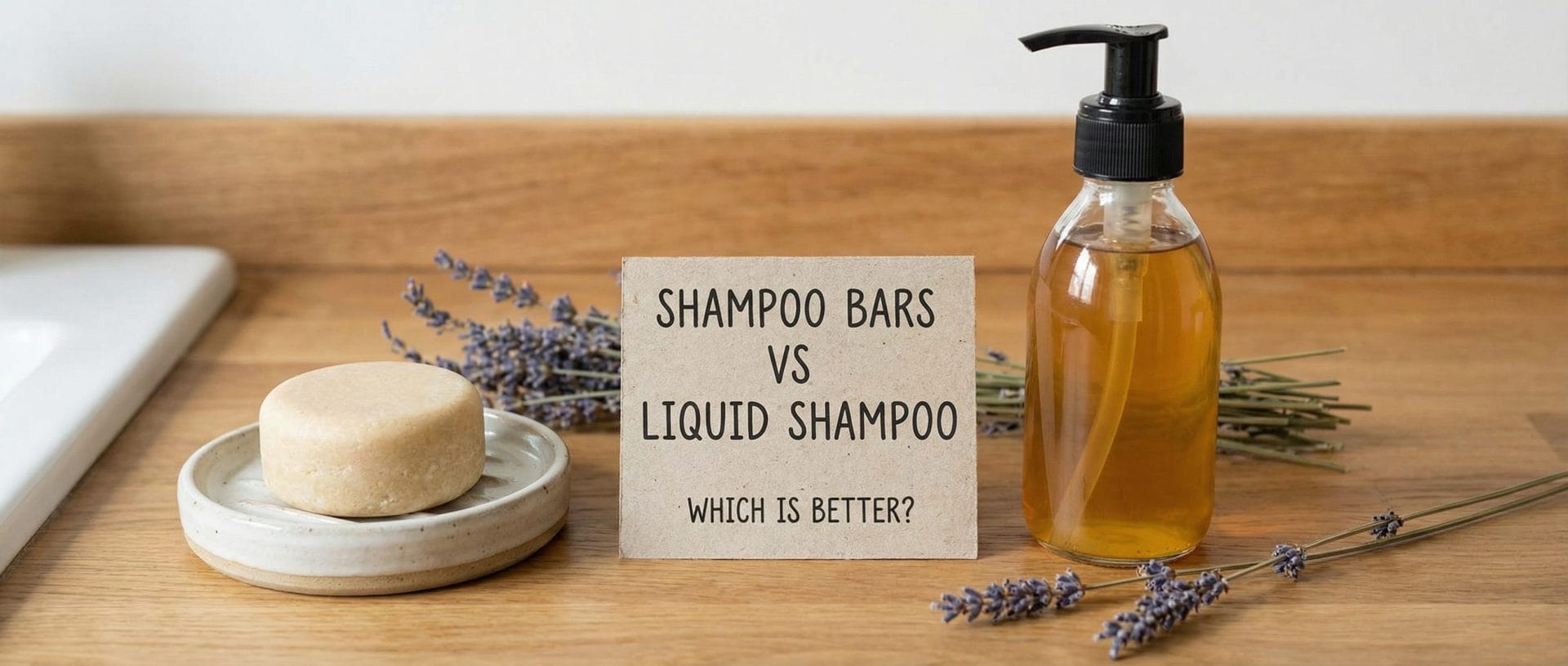 When comparing shampoo bars vs liquid shampoo, many people wonder whether making the switch is worth it. You’re not alone. As more people discover the environmental and practical benefits of solid shampoo, the question “are shampoo bars better than liquid shampoo?” is being asked more than ever.This complete comparison covers everything you need to make an informed decision: environmental impact, cost-effectiveness, hair health benefits, travel convenience, and the all-important question of whether shampoo bars actually work as well as traditional liquid shampoo.Whether you’re motivated by sustainability, looking to save money, or simply tired of plastic bottles cluttering your shower, this guide will help you understand exactly what changes when you switch from liquid to solid shampoo.Spoiler: For most people, the switch is worth it – but there’s a learning curve.—
Environmental Impact: The Biggest Difference
Plastic Waste Comparison
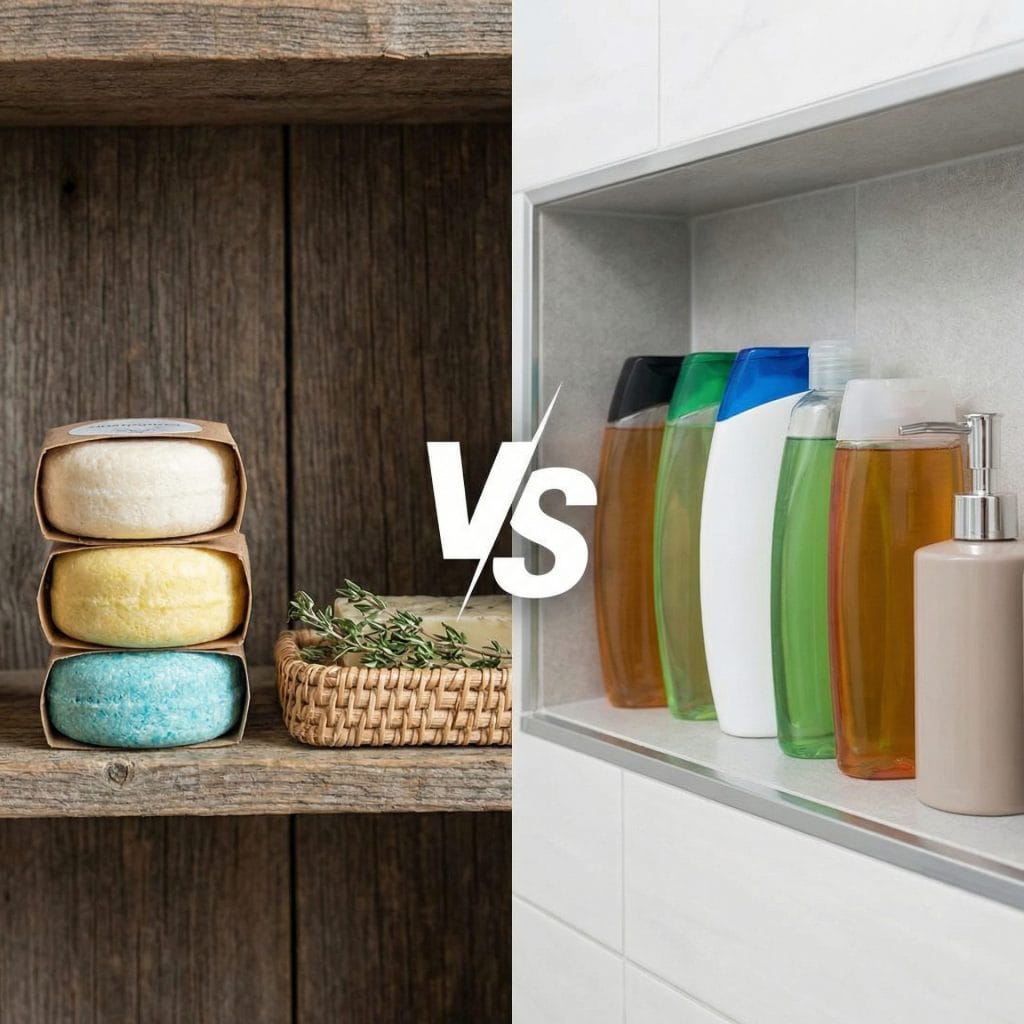
The environmental difference between shampoo bars and liquid shampoo is dramatic:Liquid shampoo:- Average bottle: 250-500ml plastic
- Typical usage: 2-3 bottles per person per year
- Annual plastic waste per person: 500-1500g
- Only 9% of plastic is actually recycled globally (UN Environment Programme)
- Bottles often contain mixed plastics that can’t be recycled together
- Packaging: Paper, cardboard, or completely package-free
- Zero plastic waste
- Fully biodegradable packaging options
- One 80g bar = 2-3 plastic bottles worth of washes

Carbon Footprint & Water Usage
The sustainability story goes beyond plastic:Manufacturing differences:- Liquid shampoo is 80% water – you’re paying to ship water around the world
- Shampoo bars contain no added water, making shipping far more efficient
- Transport emissions for bars are roughly 15-20% of equivalent liquid products
- Bar production requires less energy for heating/mixing processes
- Making liquid shampoo requires water as the primary ingredient
- Water must be purified, heated, mixed, then shipped globally
- Shampoo bars use water only during the saponification process
- End-user water consumption is similar for both

Cost Comparison: Are Shampoo Bars Cheaper?
Price Per Wash Analysis
Let’s break down the real cost:Average liquid shampoo:- Price: €5-12 per 250ml bottle
- Washes per bottle: 25-40 (depending on hair length)
- Cost per wash: €0.20-0.40
- Annual cost (washing every 2-3 days): €35-70
- Price: €8-15 per 80g bar
- Washes per bar: 60-80 (sometimes up to 100 for short hair)
- Cost per wash: €0.10-0.20
- Annual cost: €20-40
Longevity Factors
How long shampoo bars last depends on:- Hair length: Short hair = 80+ washes; long hair = 60-70 washes
- Storage: Proper drying between uses extends life significantly
- Water type: Hard water can make bars dissolve faster (use an apple cider vinegar rinse to remove mineral deposits)
- Quality: Handmade bars often last longer than commercial pressed bars
Hidden Costs
Don’t forget to factor in:- Liquid shampoo: Conditioner often required (add €30-50/year)
- Shampoo bars: Many work as 2-in-1, eliminating conditioner need
- Travel: Bars don’t count toward liquid limits (saves checked bag fees)
- Storage: Bars take up 70% less bathroom space
Hair Health: Do Shampoo Bars Work as Well?
The Science of Cleansing
Both liquid shampoo and shampoo bars clean hair using surfactants (cleansing agents), but the formulations differ significantly:Liquid shampoo typically contains:- Sodium Lauryl Sulfate (SLS) or Sodium Laureth Sulfate (SLES) – harsh detergents known to irritate skin
- Silicones – create artificial smoothness, coat hair shaft
- Synthetic fragrances and preservatives
- 70-80% water
- Cold process saponified plant oils (coconut, olive, sesame, castor, shea butter)
- Natural oils and butters for nourishment
- Plant-based ingredients
- No silicones (hair learns to be naturally healthy)
The Transition Period (Important!)
Here’s what most guides don’t tell you: There’s usually a 2-4 week adjustment period when switching from liquid to bars.Why this happens:- Liquid shampoos coat hair with silicones that repel water and other products
- When you switch to bars, hair must “detox” from silicone buildup
- During this period, hair may feel waxy, heavy, or different
- This is temporary and happens because bar ingredients can’t penetrate silicone coating
Hair Type Considerations
Fine/thin hair:- Bars often add volume (no silicone weighing hair down)
- Look for lightweight formulas without heavy oils
- Best results: Tea tree, citrus, or volumizing formulas
- Bars with shea butter or coconut oil provide moisture
- May not need separate conditioner
- Best results: Moisturizing or argan oil formulas
- Bars can help regulate oil production over time
- Avoid over-washing (strips oils, triggers more production)
- Best results: Clay-based or clarifying formulas
- Bars with natural oils restore moisture
- Gentler cleansing preserves natural oils
- Best results: Hydrating formulas with jojoba or avocado oil
- Both liquid and bars can struggle with hard water
- Bars formulated specifically for hard water perform better
- Pair with an apple cider vinegar rinse and consider a shower filter. Our Activated Charcoal & Rosemary shampoo bar is excellent for deep cleansing and oily scalps

Practical Differences: Daily Use & Travel
Shower Experience
Liquid shampoo:- Familiar squirt-and-lather routine
- Easy to control amount (though most people use too much)
- Can be used one-handed
- Messy if bottles tip over
- Requires technique: wet bar, rub on hair or lather in hands
- Learning curve for even distribution
- Need both hands initially
- No bottle-tipping disasters
- Needs proper drainage between uses
Travel & Portability
This is where shampoo bars absolutely shine:Air travel:- Bars don’t count as liquids (no 100ml restriction!)
- No risk of shampoo explosions in luggage
- Lighter weight means more packing space
- Won’t leak if bag gets tossed around
- Doesn’t require special containers
- Works perfectly for quick rinses
Bathroom Organization
Space efficiency:- One shampoo bar ≈ space of 2-3 stacked bottle caps
- Perfect for small bathrooms, van life, or minimalist setups
- Looks cleaner (no plastic bottles)
- Bars MUST dry between uses (prevents mushiness)
- Need a draining soap dish or rope/bag
- Can’t leave sitting in water

Making the Switch: Decision Framework
Choose Liquid Shampoo If You:
- Have extremely sensitive skin prone to reactions
- Travel infrequently and prefer familiar routines
- Have very specific hair treatment needs requiring medicated products
- Aren’t ready to commit to a transition period
- Share bathroom with many people who prefer liquids
Choose Shampoo Bars If You:
- Want to reduce plastic waste and environmental impact
- Are looking to save money (30-50% cheaper long-term)
- Travel frequently (especially by air)
- Have limited bathroom storage space
- Want simpler, more natural ingredients
- Are willing to try something new for 3-4 weeks
Consider Both If You:
- Want bars for travel but prefer liquid at home (hybrid approach)
- Are gradually transitioning your whole routine to zero-waste
- Like having options for different situations
How to Make the Switch Successfully
Step 1: Choose Your First Bar Wisely
Don’t just grab any bar – match it to your needs:- Hard water area? Get a hard water-specific formula
- Colored hair? Look for color-safe options
- Specific concerns? Choose targeted formulas (dandruff, volume, moisture)
Step 2: Prepare for Transition
Before your first wash:1. Do a final clarifying wash with your liquid shampoo (or use a clarifying shampoo)2. Set up proper bar storage (draining dish or soap saver bag)3. Commit to 4 weeks minimum before deciding (see our shampoo bar usage guide for technique tips)Step 3: Learn Proper Technique
Method 1: Direct application1. Wet hair thoroughly2. Rub bar directly on hair in downward strokes3. Work into lather4. Rinse thoroughlyMethod 2: Hand lather1. Wet bar and hands2. Create lather in hands first3. Apply lather to hair4. Rinse thoroughlyKey tip: Thorough rinsing is crucial – leftover residue causes the waxy feeling some people experience.Step 4: Optimize Your Routine
During transition (weeks 1-4):- Apple cider vinegar rinse (1:4 ratio with water) helps remove buildup
- Be patient with texture changes
- Don’t give up after one week
- Adjust washing frequency (many people need to wash less often)
- Experiment with different application techniques
- Enjoy healthier, more voluminous hair
Common Myths Debunked
Myth: “Shampoo bars leave waxy buildup”
Truth: This happens during the transition period when switching from silicone-heavy liquid shampoos. It’s temporary. After 2-4 weeks, this resolves as silicone buildup washes away. Proper rinsing also prevents this.Myth: “Bars are just soap and will damage hair”
Truth: Modern shampoo bars use nourishing plant oils that condition while cleansing. Quality cold process soap bars (like those from Natural Answer) use a rich blend of coconut, olive, sesame, castor oil and shea butter – very different from cheap multi-purpose soap.Myth: “You always need conditioner with bars”
Truth: Many shampoo bars are formulated to be conditioning enough that separate conditioner isn’t necessary, especially for shorter or less damaged hair.Myth: “Bars don’t lather well”
Truth: Quality bars lather beautifully when used correctly. Hard water can reduce lather – use a hard water formula in affected areas.Myth: “Shampoo bars are only for eco-warriors”
Truth: While environmentally friendly, bars also save money, work better for travel, take up less space, and often result in healthier hair. The eco-benefit is a bonus.—The Verdict: Which Is Better?
There’s no universal answer – it depends on your priorities:Shampoo bars win for:- Environmental impact (massively less waste)
- Cost-effectiveness (30-50% cheaper)
- Travel convenience (no liquid restrictions)
- Space efficiency (70% less storage)
- Long-term hair health (no silicone dependency)
- Familiarity (no learning curve)
- Instant results (a gentle transition period)
- Ease of use for some people (especially with mobility issues)
- Specific medicated needs
Recommended Next Steps
Ready to Try Shampoo Bars?
1. Identify your hair type and needs (oily, dry, hard water, colored, etc.)2. Choose a quality bar formulated for your specific needs3. Set up proper storage (soap dish with drainage)4. Commit to 4 weeks before deciding5. Learn proper technique (see steps above)Looking for Palm Oil-Free Options?
Most shampoo bars (and liquid shampoos) contain palm oil derivatives, contributing to deforestation. Natural Answer Products creates handmade, completely palm oil-free shampoo bars with 8 variants for different hair types.Popular options:- Banana & Coconut (deep moisture for dry or damaged hair)
- Lavender & White Kaolin Clay (gentle cleansing for sensitive scalps)
- Charcoal, Tea Tree & Rosemary (deep cleanse for oily/flaky scalp)