


Last updated: October 13, 2026
Key takeaways
- Saponification converts triglycerides and sodium hydroxide into soap salts and glycerin; no lye remains in a properly formulated, fully cured bar.
- Cold process keeps temperatures low, preserving conditioning unsaturated fatty acids and the natural glycerin that industrial soap-making typically removes and sells separately.
- A 4-week cure reduces free water content from roughly 30% to under 10%, stabilises bar pH at 9–10, and produces a harder, longer-lasting bar.
- An apple cider vinegar rinse after washing closes the hair cuticle and counters both the alkaline pH and hard-water soap residue.
- Cold-process bars contain no synthetic detergents, synthetic preservatives, or synthetic emulsifiers — the soap molecule itself handles cleansing, preservation, and emulsification.
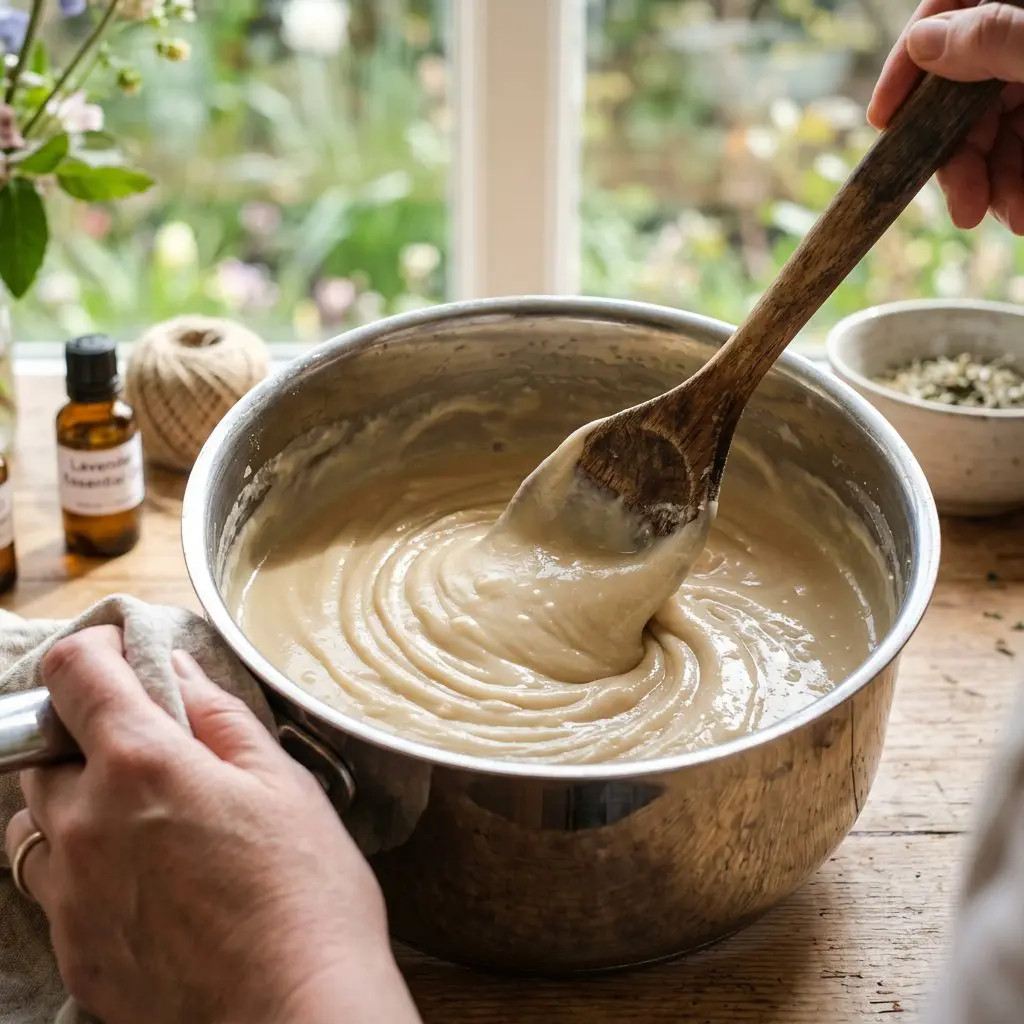
If you’ve ever wondered why a soap maker stirs a beaker of caustic-looking liquid into a pot of olive oil and ends up with shampoo three weeks later, this is the article. Saponification isn’t magic, isn’t dangerous in the finished product, and is one of the oldest chemical reactions humans have used.
Here’s cold process shampoo bars explained from first principles.
What saponification actually is, step by step
Saponification is the reaction between a triglyceride (fat or oil) and a strong base (sodium hydroxide for solid bars, potassium hydroxide for liquid soap). The reaction produces:
- Soap: the sodium or potassium salts of the fatty acids in the oil
- Glycerin: the backbone of the triglyceride, released as a free molecule
The reaction looks roughly like this:
Triglyceride + 3 NaOH → 3 sodium fatty-acid salts + glycerin
The chemistry has been understood since the 19th century and has been used unconsciously since at least Mesopotamian times.
Cold process vs hot process saponification
Both methods make real soap. They differ in temperature and time:
- Cold process: oils and lye are mixed at room temperature (sometimes warmed to 35°C). The bars are poured, set, and saponified slowly over several weeks during a “cure” phase.
- Hot process: the same mixture is cooked at 80–90°C, which forces saponification to completion in a few hours. Bars can be used after a few days.
Cold-process produces smoother, less rustic-looking bars and preserves more of the delicate compounds in plant oils that would degrade at hot-process temperatures. Most artisan shampoo bars — ours included — are cold-process.
Why “cold process” matters for hair
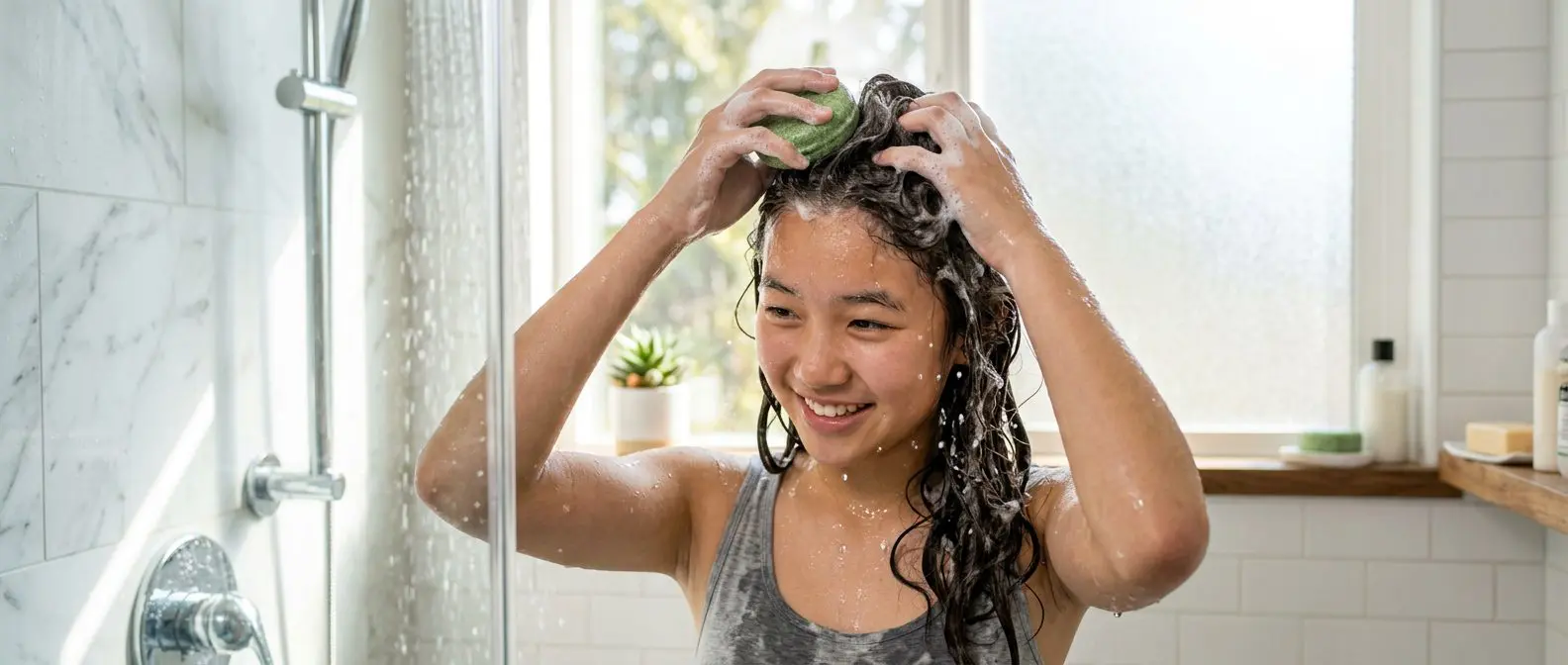
During cold process, the saponification reaction generates its own heat (it’s exothermic) but stays well below the temperatures that would damage the unsaturated fatty acids in plant oils. The result:
- More skin-conditioning unsaturated fatty acids preserved in the bar
- Naturally formed glycerin retained in full (industrial soap-making often removes glycerin to sell separately)
- Antioxidant compounds from the oils — like the polyphenols in olive oil — partially preserved
The role of each oil in a six-oil bar
Different oils contribute different fatty acids, and each fatty-acid type behaves differently when saponified. Soap makers blend oils to balance qualities. Our six-oil formula:
- Olive oil (sodium olivate): high oleic acid; conditioning, gentle, low-foam
- Coconut oil (sodium cocoate): high lauric acid; produces big lather, cleansing
- Castor oil (sodium ricinoleate): ricinoleic acid; humectant, stabilises lather
- Shea butter (sodium sheaate): stearic acid; conditioning, creamy lather
- Sweet almond oil (sodium amygdalate): oleic + linoleic; soft, mild, conditioning
- Rice bran oil (sodium ricibate): linoleic acid + tocopherols; hair-friendly, balanced
What happens during the 4-week cure
After pouring, the bar continues to lose water and the saponification reaction completes. By week 4:
- Free water content drops from 30% to under 10%
- Any remaining lye has fully reacted
- The bar’s pH stabilises at 9–10 — alkaline but normal for any plant-oil soap
- The bar hardens, lasts longer in the shower, and lathers more reliably
About that pH
You’ll see articles online claiming hair should only be washed at “skin pH” (~5.5). The reasoning: alkaline pH lifts the cuticle and damages hair.
This is half-true and routinely overstated. Yes, repeated alkaline washes without an acid rinse can lift the cuticle. No, this is not a death sentence for your hair. Humans washed with alkaline soap exclusively for centuries before pH-balanced detergents existed. The fix is simple: end your wash with an acid rinse.
Apple cider vinegar rinse
- 1 tablespoon ACV in 500 ml cool water
- Apply to hair after rinsing the bar out
- Leave 30 seconds
- Rinse with cool water
This brings the cuticle back down, smooths the hair shaft, and prevents the over-time damage that pure soap-only routines can cause.
What’s not in a real cold-process bar
- Synthetic detergents (SLS, SLES, SCI)
- Added water (the bar contains residual water from the saponification reaction, but no formula water)
- Synthetic preservatives (no microbial growth medium = no need)
- Synthetic emulsifiers (the soap is its own emulsifier)
The trade-offs of cold-process saponification
- Higher pH means an acid rinse is genuinely useful
- Hard water reacts with soap molecules — ACV rinse fixes this too
- 4-week cure means production is slower than detergent bars
- Each batch is slightly different (small variation in colour, scent intensity)
None of these are problems for the right person. Most are signs of a real, hand-made product.
FAQ
Is there any lye left in a cured cold-process bar? No. Properly formulated bars use a slight excess of oil (“superfat”) to ensure all lye reacts. After 4 weeks of cure, lye is undetectable.
Why doesn’t my bar foam like liquid shampoo? Liquid shampoo lather comes mostly from synthetic foam boosters. Real soap lather is creamier and quieter — perfectly normal.
Are cold-process bars vegan? Ours are. Some traditional cold-process recipes use tallow (beef fat) or lard. Read the INCI list for “sodium tallowate” or “sodium lardate” to check.
Want a real cold-process shampoo bar made the slow way? Browse our six-oil bars — cured 4 weeks, palm-oil-free, plastic-free.