


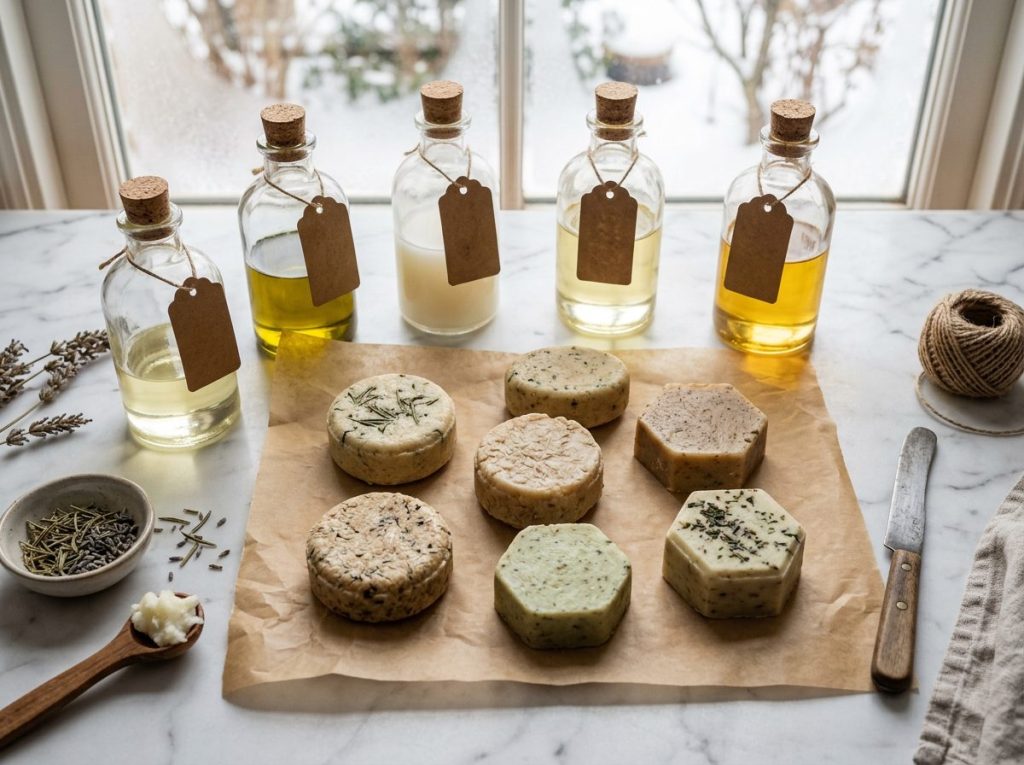
Last updated: October 13, 2026
Key takeaways
- A healthy scalp hosts a diverse microbiome of bacteria and yeasts; every wash temporarily disrupts it, and recovery speed depends on how mild the cleanser is.
- No peer-reviewed trial directly compares shampoo bars to liquid shampoo for microbiome outcomes, but surfactant research favours mild, cold-process bars over high-SLS systems.
- An acid rinse after a saponified bar wash restores scalp pH to 4.5–5.5, supporting protective bacteria and discouraging yeast overgrowth.
- Shampoo bars are not appropriate for active Malassezia overgrowth or eczema flares; those conditions require medicated or dermatologist-recommended products.
- Lifestyle factors — diet, sleep, stress, and sun exposure — influence scalp microbiome health as much as the choice of shampoo.
Your scalp is home to roughly a million bacteria per square centimetre, plus yeasts, mites, and microscopic fungi. They aren’t pests — they’re your scalp microbiome, and they keep your skin barrier functional. The way you wash either supports or disrupts that ecosystem.
Here’s a fair-minded look at shampoo bars and the scalp microbiome, what the research actually shows, and how to wash for long-term scalp health.
What lives on a healthy scalp
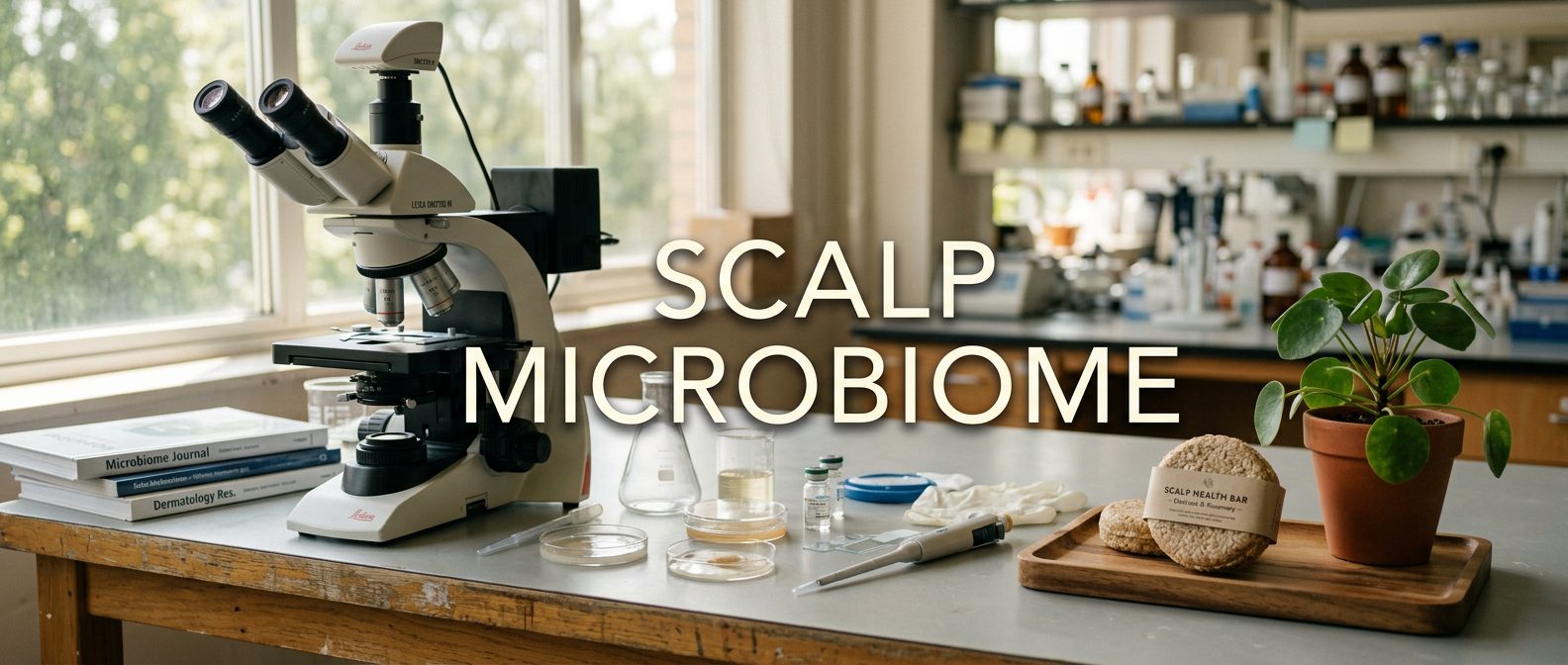
Microbiome studies on healthy adult scalps consistently show three dominant residents:
- Cutibacterium acnes (formerly Propionibacterium acnes) — bacteria that live in sebum-rich follicles
- Staphylococcus epidermidis — surface bacteria, generally protective
- Malasseziaspp. — lipophilic yeasts; balanced levels are normal, overgrowth causes dandruff
A “good” scalp microbiome is diverse and balanced — not sterile.
What washing actually does to that ecosystem
Every shampoo wash temporarily disturbs the microbiome. Lipid-stripping cleansers reduce sebum (which the residents feed on), shift the local pH, and can wash away surface bacteria.
The recovery time depends on the wash. Studies on harsh anionic surfactant systems (high SLS) show microbiome recovery taking 24–48 hours. Mild plant-based or pH-buffered systems recover faster.
Where shampoo bars fit in
This is the honest part: there is no large-scale, peer-reviewed clinical trial comparing cold-process shampoo bars to liquid shampoos for microbiome outcomes. The microbiome research on shampoos has mostly looked at:
- Sulfate vs sulfate-free liquid systems
- Antimicrobial vs non-antimicrobial shampoos
- Anti-dandruff (zinc pyrithione, ketoconazole) vs neutral shampoos
From those studies, three principles can be applied to bars:
1. Less stripping = better recovery
Mild cleansers preserve more of the lipid film that feeds Cutibacterium and Staphylococcus. Cold-process bars made from plant oils generally leave more conditioning fatty acids on the strand than sulfate liquids, which suggests faster microbiome recovery.
2. pH cycling matters
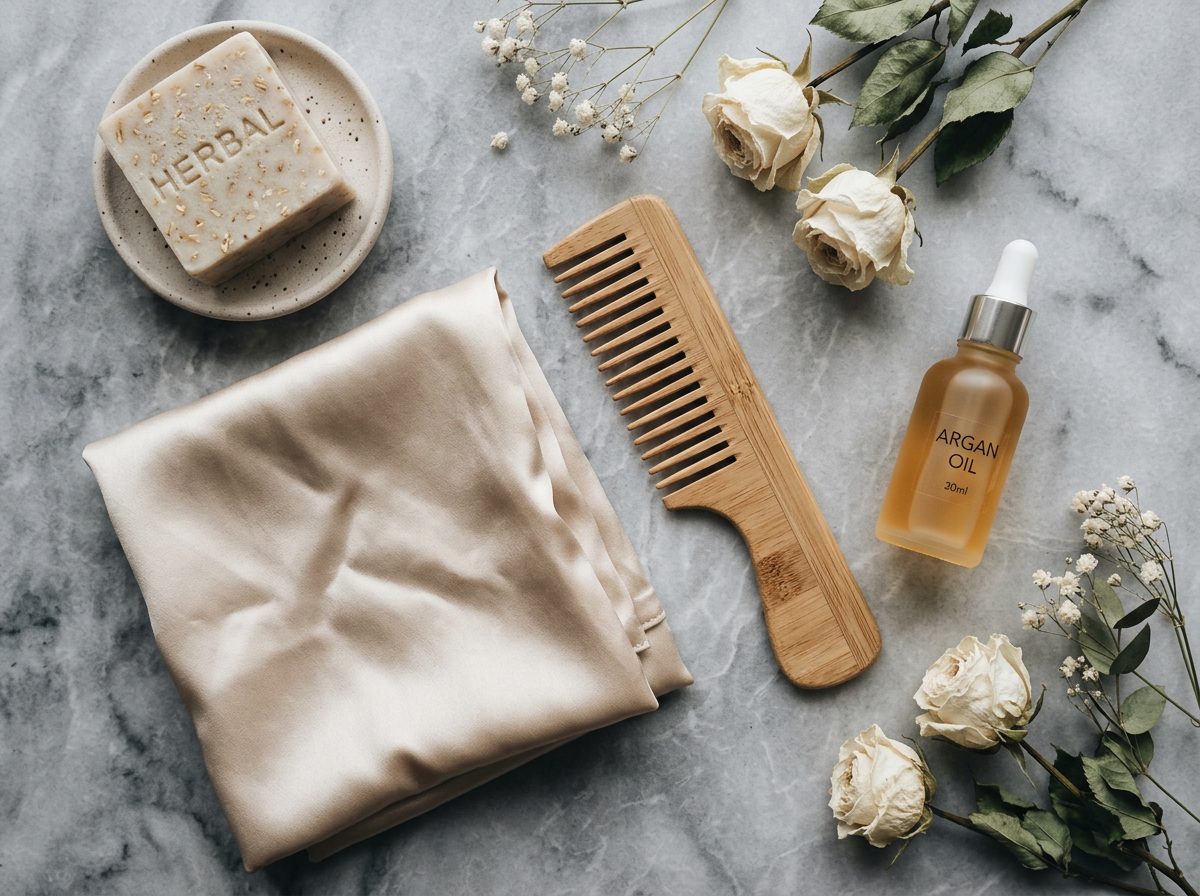
Bars at pH 9–10 followed by an acid rinse mirror the natural pH cycle of skin (slightly stressed during washing, returning to acidic baseline). This is roughly what humans did for thousands of years before pH-buffered detergents existed.
3. Diversity beats sterilisation
Aggressive antimicrobial shampoos used long-term reduce diversity, sometimes opening niches for opportunistic species. A gentle wash with a real soap doesn’t selectively kill organisms — it just temporarily reduces the population, which then recovers.
Where bars might be worse
Two scenarios where bars are not the right tool for microbiome health:
Active Malassezia overgrowth (dandruff, seborrheic dermatitis)
If your microbiome is already imbalanced and yeasts dominate, you need a medicated shampoo (ketoconazole, ciclopirox, zinc pyrithione) to bring populations back into range. A bar can support a calmer scalp on non-medicated days, but it isn’t a treatment.
Eczema or contact dermatitis flares
Active eczema needs a dermatology-recommended cleanser. Cold-process bars are not first-line treatment for active flares.
The acid rinse and the scalp microbiome
Apple cider vinegar rinses bring scalp pH back toward 4.5–5.5 after a saponified bar wash. This:
- Restores the slightly acidic environment that Staphylococcus epidermidis prefers
- Discourages overgrowth of yeast (which prefers slightly higher pH)
- Closes the hair cuticle, reducing mechanical damage during drying
The microbiome benefits are anecdotal at the clinical level but mechanistically sound.
Practical wash routine for scalp microbiome health
- Don’t over-wash. Twice a week is plenty for most adults.
- Use a mild cold-process bar with a balanced oil profile.
- End with an apple cider vinegar rinse 2–3 times per week.
- Rotate between wash days and water-only rinses.
- Skip antimicrobial products unless you have a diagnosed condition.
- Avoid drastic clarifying treatments more than once a month.
What pre-biotic and probiotic shampoos do to the scalp microbiome
“Microbiome-friendly” is a fashionable marketing claim. Most products labelled this way contain inulin or oat-derived prebiotics. The clinical evidence for shampooed prebiotics actually colonising the scalp is thin — the wash time is too short.
The mechanism that’s better evidenced is gentle washing that doesn’t disrupt the microbiome in the first place.
Lifestyle factors that matter as much as your shampoo
- Sleep — immune-microbiome cross-talk
- Diet — high-sugar diets correlate with Malassezia overgrowth
- Stress — cortisol affects sebum composition
- Sun exposure — modulates yeast levels
- Wearing hats / helmets — alters local moisture and oxygenation
FAQ
Will switching to a shampoo bar cause a microbiome “transition”? Yes, mildly. 7–14 days as sebum production recalibrates from over-cleansing.
Are antibacterial soaps better for scalp acne? No. Active Cutibacterium acnes imbalance needs targeted treatment, not blanket antimicrobials. Bar soap is fine for routine washing.
Does dry shampoo affect the microbiome? Yes. Repeated dry shampoo without water rinses can shift the bacteria/yeast balance. Use sparingly.
Want a gentle bar that supports a healthy scalp ecosystem? Browse our six-oil cold-process bars — balanced for normal-skin pH cycles with an acid rinse.