


Last updated: October 12, 2026
Key takeaways
- Oily roots and dry ends have opposite needs — scalp-only lathering with a shampoo bar keeps both from getting worse.
- The two-bar method uses a clarifying bar on the scalp and a conditioning bar on the lengths for maximum control.
- With a single bar, apply lather only to the scalp and let the rinse-off foam pass through the ends without re-lathering.
- Washing every 2–3 days reduces rebound oil production at the roots and moisture loss at the ends.
- An acid rinse after washing closes the cuticle — especially important for colour-treated hair and for retaining moisture in dry ends.
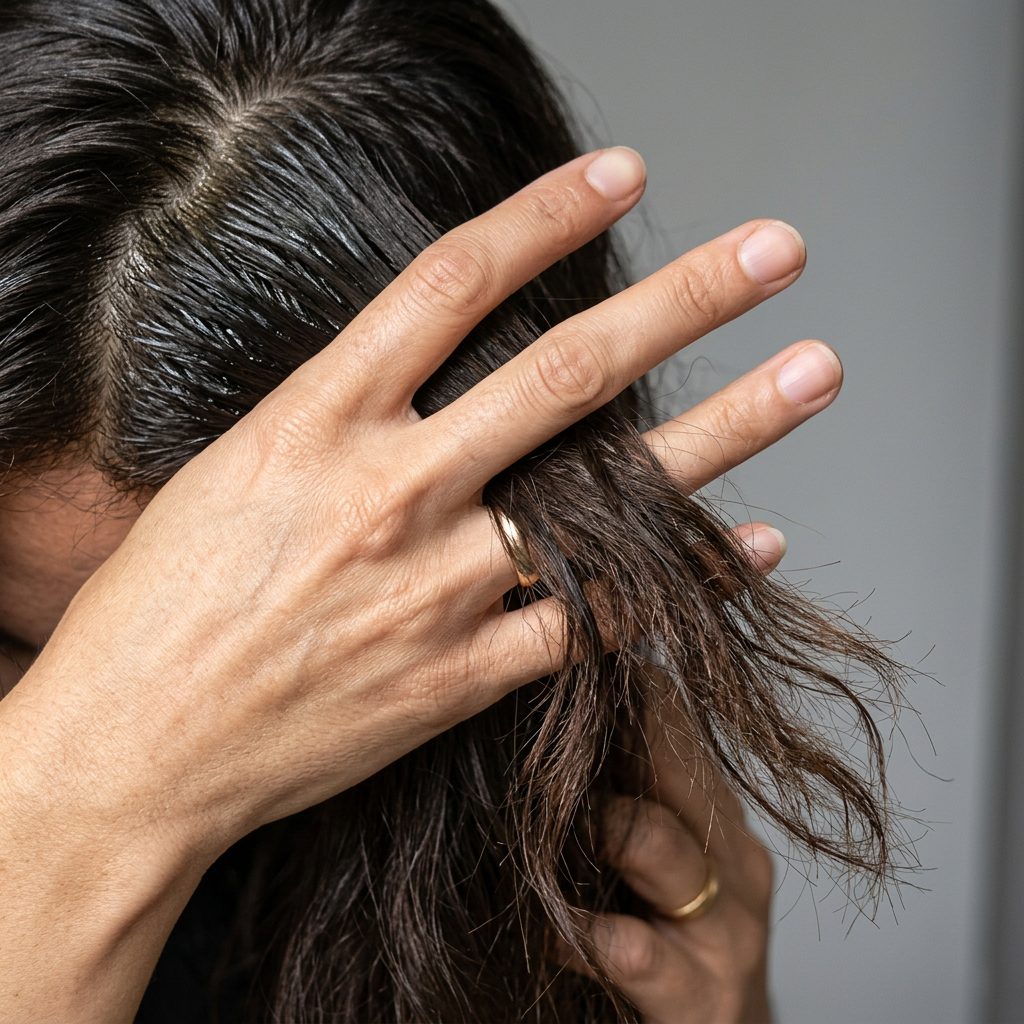
The trickiest hair to wash isn’t oily, dry, fine or thick. It’s the combination — oily roots that need cleaning every other day, and dry, brittle ends that lose moisture every time water touches them. Most shampoos pick a side. The bar approach lets you serve both.
Here’s how to use shampoo bars for oily roots and dry ends without making either side worse.
Why scalp and ends behave differently

Sebum is produced by glands at each hair follicle. Fresh sebum coats the first few centimetres of hair, then needs to travel down the shaft — through brushing, friction, and scalp-to-end transfer.
The longer your hair, the further sebum has to travel. By the time it reaches the ends, much of it has been redistributed, absorbed, or washed away. Combined with cumulative damage from heat styling, colouring, and UV, the ends become drier and drier as you grow your hair longer.
Result: oily roots produced today, dry ends accumulated over years.
Why one shampoo bar for oily roots dry ends can’t solve both
A shampoo strong enough to cleanse oily roots completely is too stripping for already-dry ends. A shampoo gentle enough to spare the ends doesn’t fully cleanse the scalp.
The standard liquid-shampoo industry’s answer: marketing. “Balanced” shampoos try to compromise and end up doing neither job well.
The bar approach: lather only on the scalp, let foam run through ends with minimal fresh soap.
The two-bar method for shampoo bars for oily roots dry ends
If you want maximum control:
- Lighter clarifying bar for the scalp: higher coconut oil percentage (sodium cocoate near the top of the INCI list). Cleanses sebum well.
- Conditioning bar for ends: higher shea, sweet almond, rice bran, with extra superfat. Smooths cuticles, prevents further moisture loss.
Use the lighter bar on day two when roots get oily. Use the conditioning bar (or just water-rinse) on day-four wash days.
The single-bar method for shampoo bars for oily roots dry ends
Most people don’t want two bars in the shower. The fix: a balanced six-oil bar plus technique.
Step-by-step routine
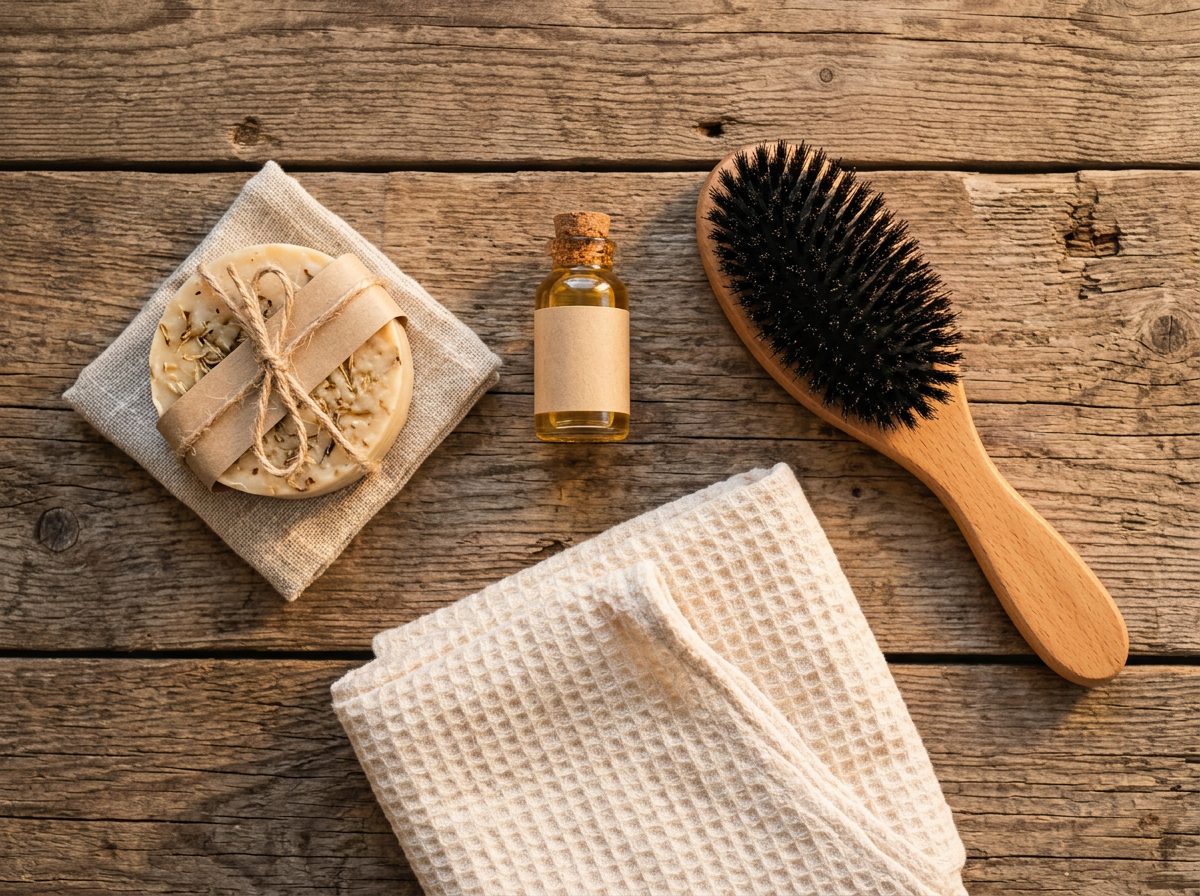
- Brush dry hair with a boar-bristle brush from scalp to ends. This redistributes sebum down the shaft — effectively a free conditioning treatment.
- Wet hair fully with lukewarm water.
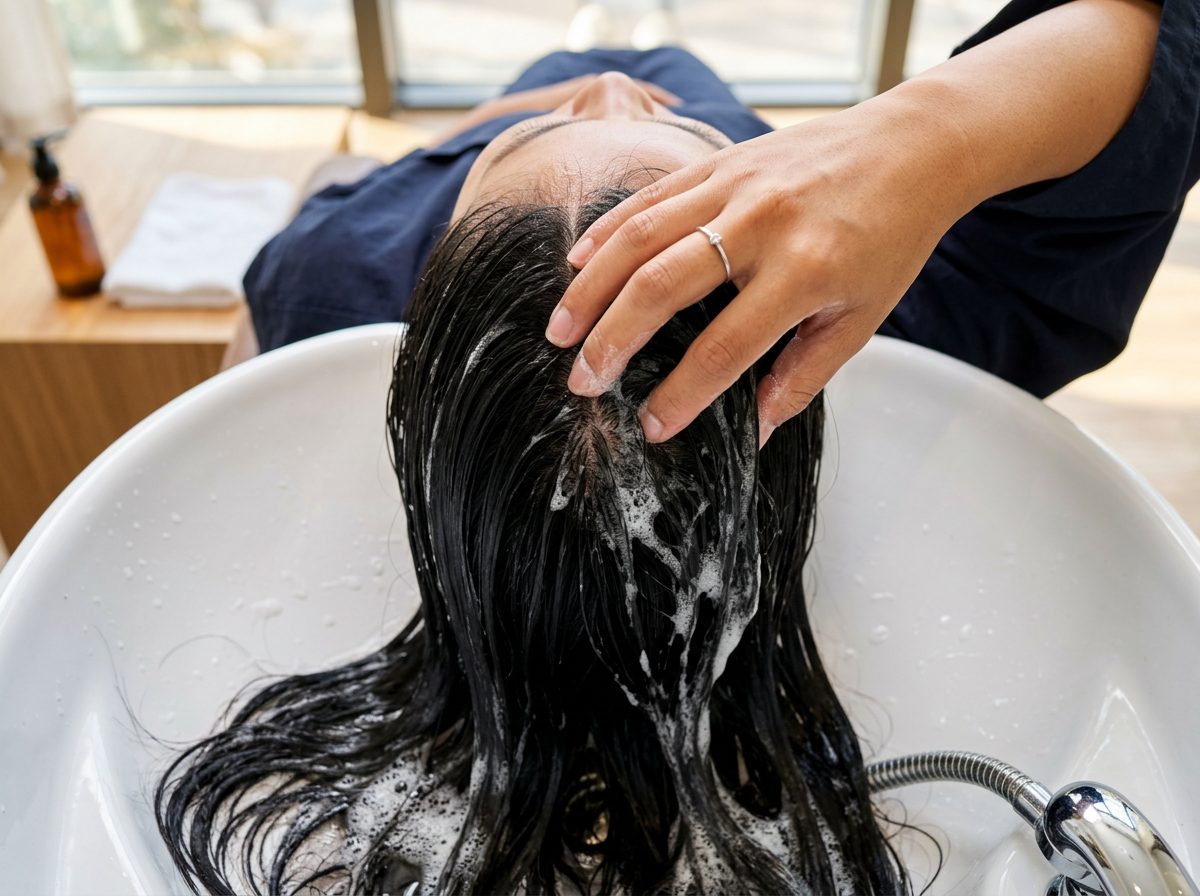
- Lather the bar between your hands, not on your head. Apply foam only to scalp and the first 5–10 cm of hair below it.
- Massage scalp for 60 seconds with fingertips.
- Rinse. Let the foam run through the ends. Don’t add fresh lather to the ends.
- Apply a diluted apple cider vinegar rinse (1 tablespoon in 500 ml water) to the lengths only.
- Optionally, apply a leave-in oil (a few drops of argan or jojoba) to the bottom 10 cm of damp hair.
How often should you wash with mixed hair?
Every 2–3 days for most people. Daily washing makes the scalp produce more oil to compensate (rebound seborrhea) and dries the ends faster.
If your roots feel greasy on day two, try a “scalp-only rinse” with a mild bar instead of a full wash. Use just enough lather for the roots and don’t soak the ends at all. This buys you another day before a full wash.
The dry-shampoo question
Dry shampoo (powder or aerosol) is genuinely useful for mixed-type hair on day-three roots. The catch: most aerosol dry shampoos use butane propellants and synthetic fragrances. Look for refillable powder versions or a homemade arrowroot-cocoa-powder mix instead.
And don’t replace washes with dry shampoo — the underlying sebum is still there, and prolonged dry-shampoo use without rinsing can disrupt the scalp microbiome.
What not to do
- Don’t apply conditioner to the scalp. Even a “scalp” conditioner. It’s the wrong direction.
- Don’t use a clarifying shampoo on dry ends. Apply only to roots and rinse out before it travels down.
- Don’t air-dry without protection. Wet hair is its most vulnerable. Squeeze out water with a microfibre towel and apply a leave-in before letting hair air-dry.
- Don’t sleep on cotton pillowcases. Silk or satin pillowcases reduce friction and conserve scalp oils where they’re useful.
The colour-treated mixed-hair case
Colour-treated ends with oily roots is the trickiest combination. The colour fades faster from over-stripping; the roots get oilier from over-washing.
Use the lightest possible bar, lather scalp only, do a cool-water rinse on the lengths without re-lathering. Acid rinse is essential to keep the cuticle closed and the colour locked in.
FAQ
Should I use the same bar on roots and ends? The same bar, but apply it only to the scalp and let the rinse-off foam clean the ends. Don’t double-lather.
Is “scalp scrub” a good idea? A weekly massage with fingertips is great. Aggressive physical scrubs damage the surface and can trigger more oil production.
What about co-washing the ends? Yes, with a conditioning bar. Apply a small amount of conditioning bar lather to the lengths only as a refresher between full washes.
Want a balanced six-oil bar that handles both ends of the spectrum? Browse our shampoo bars — cleansing enough for oily roots, conditioning enough for tired ends.