


Last updated: October 12, 2026
Key takeaways
- Daily shampooing with sulfate bars triggers a rebound oil cycle — two to three proper washes per week is the right frequency for most active practitioners.
- Plain warm water rinses on non-wash workout days remove sweat effectively without disturbing the scalp’s natural oil balance.
- Wet hair fully with cool water before class so it absorbs less sweat during the session.
- For a high-sweat lifestyle, choose a shampoo bar with a moderate-to-high coconut oil percentage and a light superfat of five to seven percent.
- Avoid cocoa butter and mango butter bars for daily workout washing — they build up faster on the scalp under heat and sweat.
Six hot yoga classes a week, 90 minutes of spin on the off days, and your hair starts to feel like it’s been through a desert and a swamp at the same time. Salt, sweat, and the daily wash that follows it. The standard advice — “use a clarifying shampoo every day” — sounds reasonable until your scalp turns flaky and your ends fry.
Here’s how to actually use shampoo bars for hot yoga and other high-sweat workouts without trashing your hair.
What sweat does to hair (and where shampoo bars for hot yoga help)
Sweat is mostly water with electrolytes, urea, and trace lipids. It’s slightly salty and slightly acidic. On the hair shaft, the salt component dehydrates over time. On the scalp, the moist environment lets Malassezia yeast and bacteria thrive between washes.
Crucially, sweat by itself doesn’t really “dirty” your hair. The problem is sweat + sebum + cosmetic build-up + skin cells, all sitting wet in a hot studio for an hour.
Why daily clarifying isn’t the answer
Sulfate clarifying shampoos strip everything — sweat residue, sebum, the lipid layer, and cosmetic product. Repeated daily, the scalp:
- Detects abnormally low oil levels
- Cranks up sebum production
- Hair feels greasier faster between washes
- You wash more often
- Scalp gets irritated and flaky
This cycle is rampant in hot-yoga studios. The right approach is gentler, not stronger.
The two-tier wash strategy with shampoo bars for hot yoga
Use two different wash intensities depending on the day:
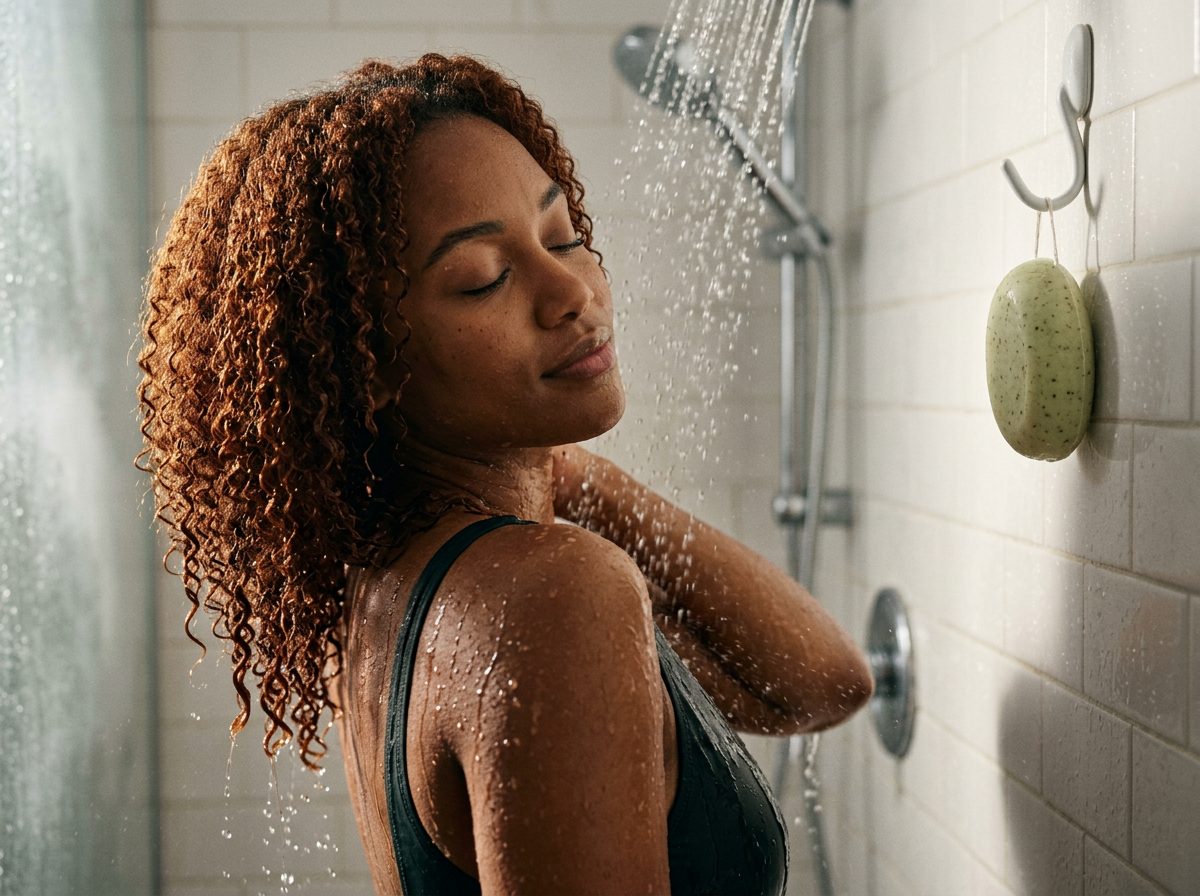
Tier 1: Sweat-rinse (post-class, no real wash)
- Plain warm water rinse for 60 seconds, focusing on the scalp
- No shampoo
- Optional: very dilute apple cider vinegar (1 teaspoon in 500 ml water) on lengths only
- Squeeze out water, let air-dry
Use this on 3–4 of your workout days. The scalp is barely producing extra sebum on those days; the sweat will rinse out with water alone.
Tier 2: Real wash (proper shampoo bar wash)
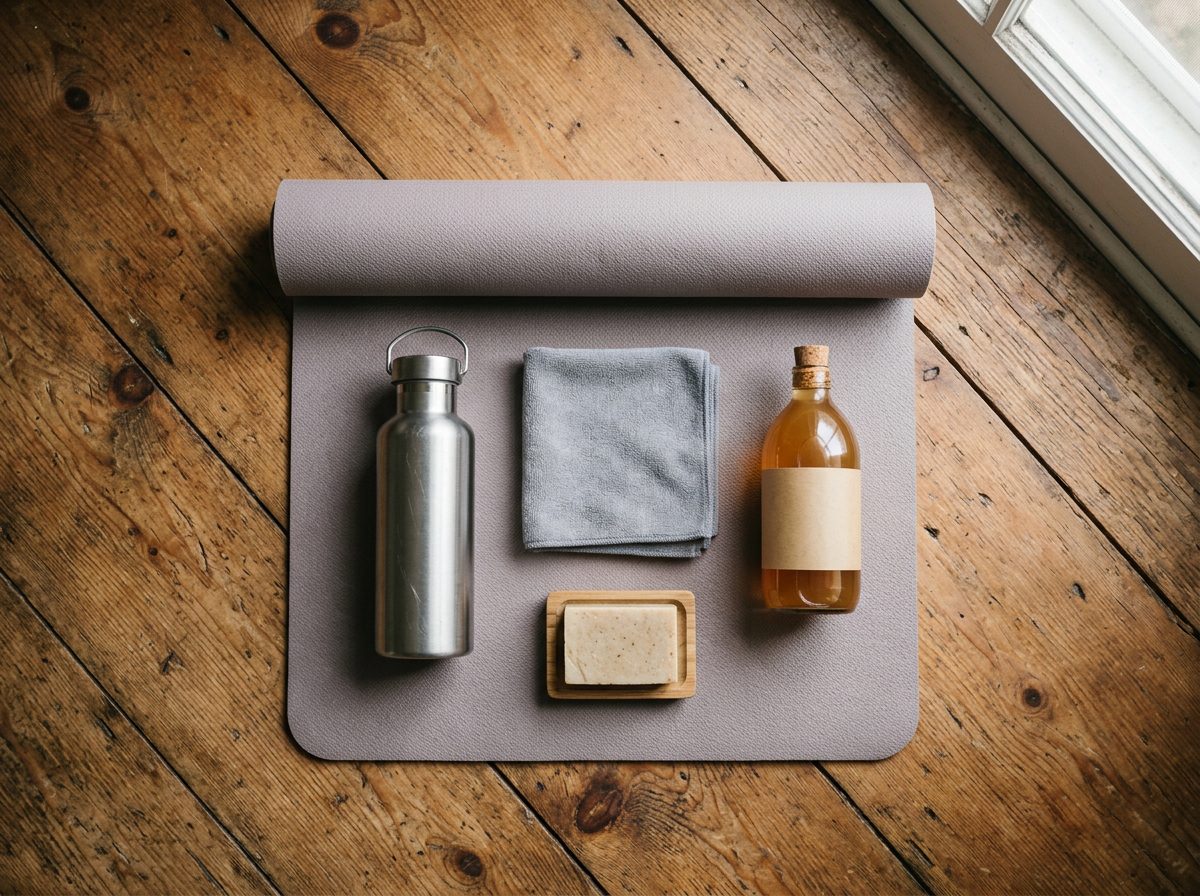
- Cold-process bar lather between hands
- Apply to scalp only, massage 60 seconds
- Rinse
- ACV rinse (1 tablespoon ACV in 500 ml water) on lengths
Use this 2–3 times per week.
Pre-class hair prep
What you do before the studio matters as much as what you do after.
- Wet hair fully with cool water before class — saturated hair absorbs less sweat
- Apply a thin coat of leave-in conditioner or argan oil to ends
- Tie hair up loosely — tight ponytails snap in heat
- Skip dry shampoo before class — it pastes when wet with sweat
Post-class drying
Hot yoga rooms run at 35–40°C and 40% humidity. You leave the studio with hair fully wet from sweat. Two options:
- Quick rinse + air dry: ideal if you have time. Gentlest on hair.
- Quick rinse + microfibre towel + low blow-dry: avoids the scalp staying damp for hours, which can promote yeast.
Don’t tie wet hair up tight after class — the tension on already-stressed hair causes mid-shaft breakage.
Bar choice matters with shampoo bars for hot yoga
For a hot-sweat lifestyle, choose:
- Bar with moderate-to-high coconut percentage (good cleansing, doesn’t over-strip)
- Light superfat (5–7%) — enough conditioning, not heavy
- Mild fragrance or unscented — you don’t need a heavy scent layered over sweat
- Balanced six-oil formula like ours, not a single-oil castile bar
Avoid heavy butter bars for daily workout washing
Cocoa butter and mango butter bars feel luxurious but build up faster on the scalp under heat and sweat. Save those for once-a-week deep-wash days.
Conditioner question
Most hot-yogis over-condition because their hair feels stripped. The actual fix is washing less aggressively in the first place. If you do condition, use a small amount on the lengths only, and rinse well. Conditioner left on a sweaty scalp causes its own problems within 24 hours.
Salt-water swimmers + hot-yogis
If you also swim in pools or oceans, the chlorine/salt + sweat combo is hard on hair. Add a pre-swim soak with fresh water (saturated hair absorbs less chlorine) and a post-swim wash with the bar.
Scalp acne from workout caps and hats
Spinning helmets and yoga headbands trap sweat against the hairline. The cycle: sweat + friction + bacteria + sebum = breakouts.
Wash the inside of your headband or cap weekly. Wipe your forehead with a clean cloth post-class. Skip leave-in conditioners along the hairline.
FAQ
How often should hot-yoga people actually wash their hair? Twice or three times per week with a real wash. Plain water rinses on other workout days.
Is dry shampoo OK for sweaty workout days? Sparingly — before, not after. After-class is when sweat and dry shampoo combine into paste.
Should I rinse with cold water after class? Yes — reduces inflammation and closes the cuticle.
Want a bar that handles a sweaty week without over-stripping? Browse our six-oil cold-process bars — built for real use, not photogenic shower shelves.