


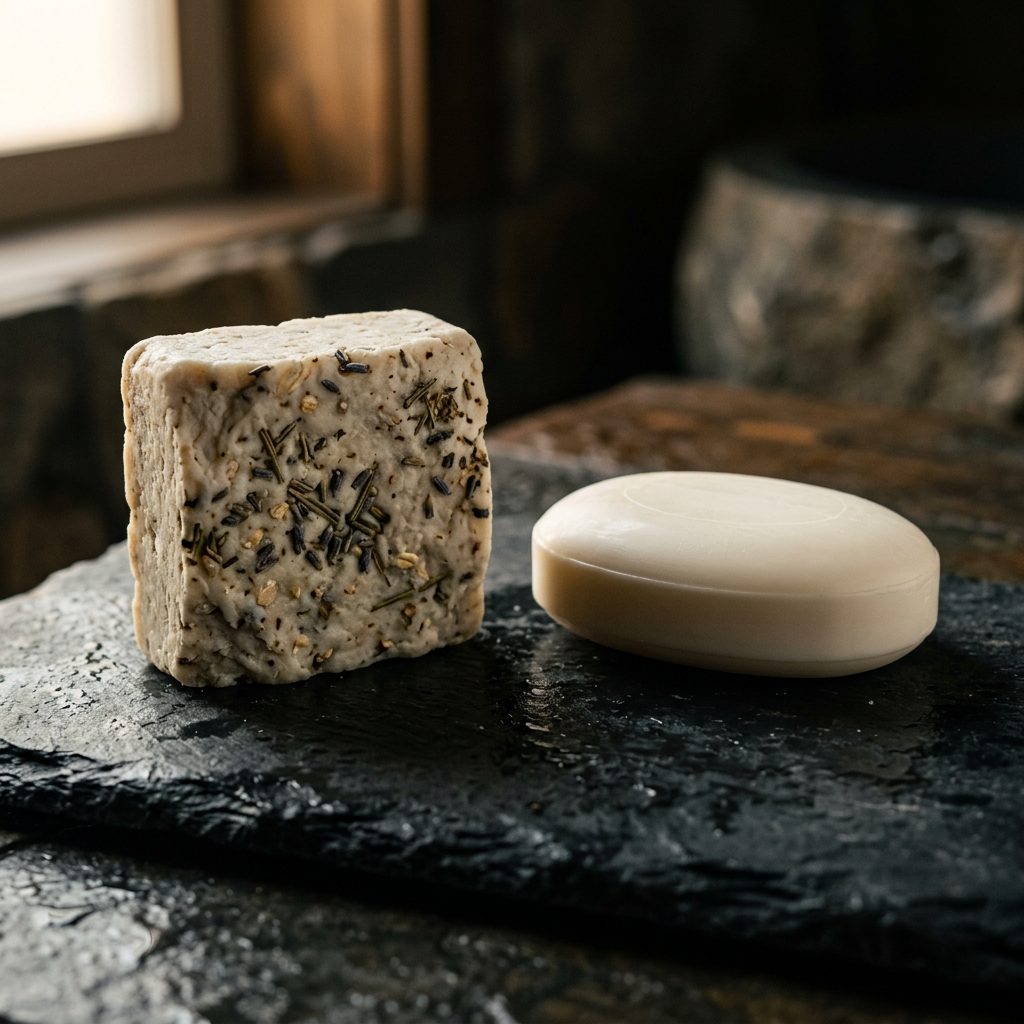
Last updated: October 12, 2026
Key takeaways
- Saponified bars typically contain 6 to 10 ingredients; liquid surfactant shampoos contain 25 to 35 and require preservatives because they contain free water.
- Synthetic surfactants outperform true soap in hard water and can be pH-balanced to 5.0 to 6.5, closer to skin’s natural pH.
- Detergent bars — synthetic surfactants pressed into solid form — combine hard-water tolerance with reduced plastic packaging, sitting between true soap bars and liquid shampoo.
- The environmental advantage of bars depends on palm-oil-free sourcing and plastic-free packaging, not on bar format alone.
- Neither type is universally superior; water hardness, scalp sensitivity, and ingredient priorities all determine the better fit.
Soap is one of those words that has stretched far past its chemical meaning. The “soap” your grandmother used was a saponified oil bar. The “soap” in your modern shower bottle is usually a synthetic surfactant blend. They clean similarly. Almost everything else is different.
Here’s an honest comparison of saponified oils vs synthetic surfactants: how each works, and where each actually wins.
How saponified oils vs synthetic surfactants clean
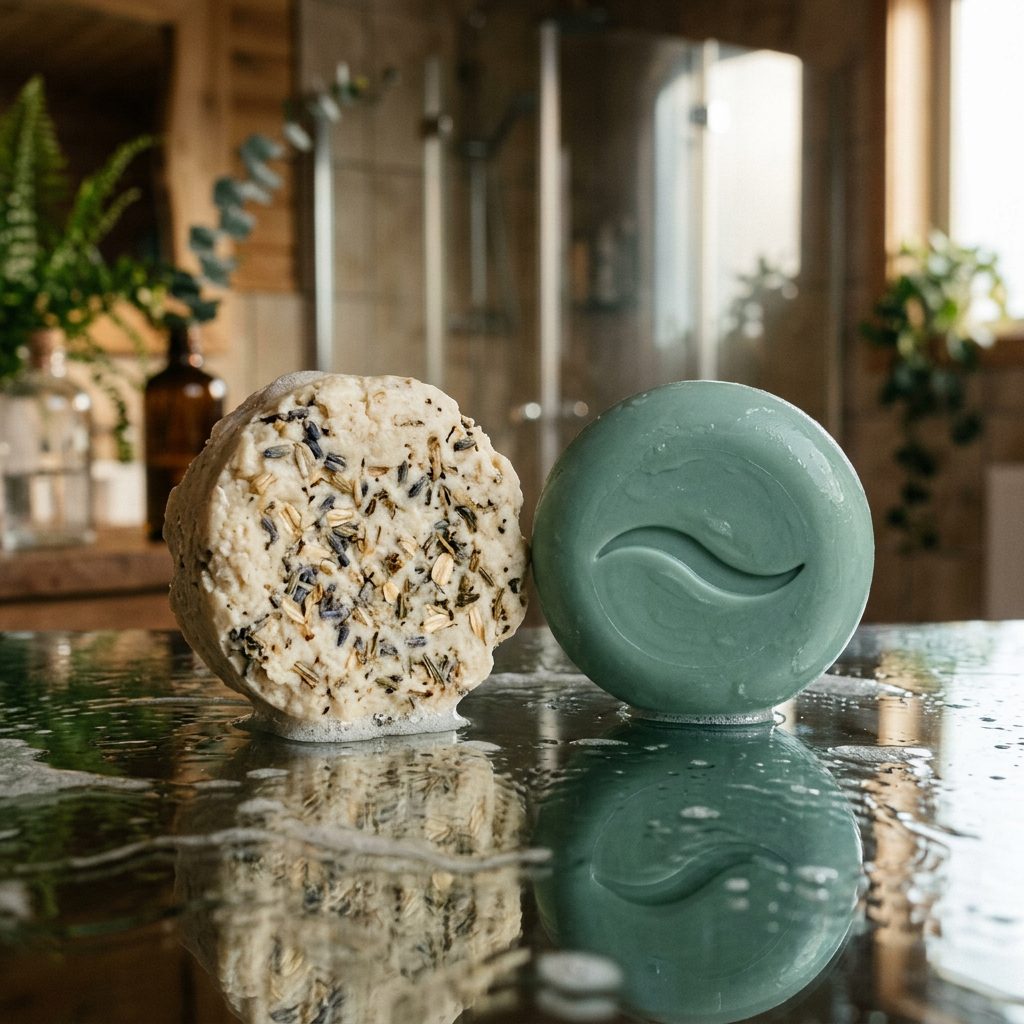
Saponified oils (true soap)
A triglyceride (fat) reacts with sodium hydroxide to produce a fatty-acid sodium salt — soap. The molecule is amphipathic: a hydrophobic tail that bonds to oil and dirt, a hydrophilic head that bonds to water. When you rinse, the soap molecules carry oil and dirt away with them.
Synthetic surfactants
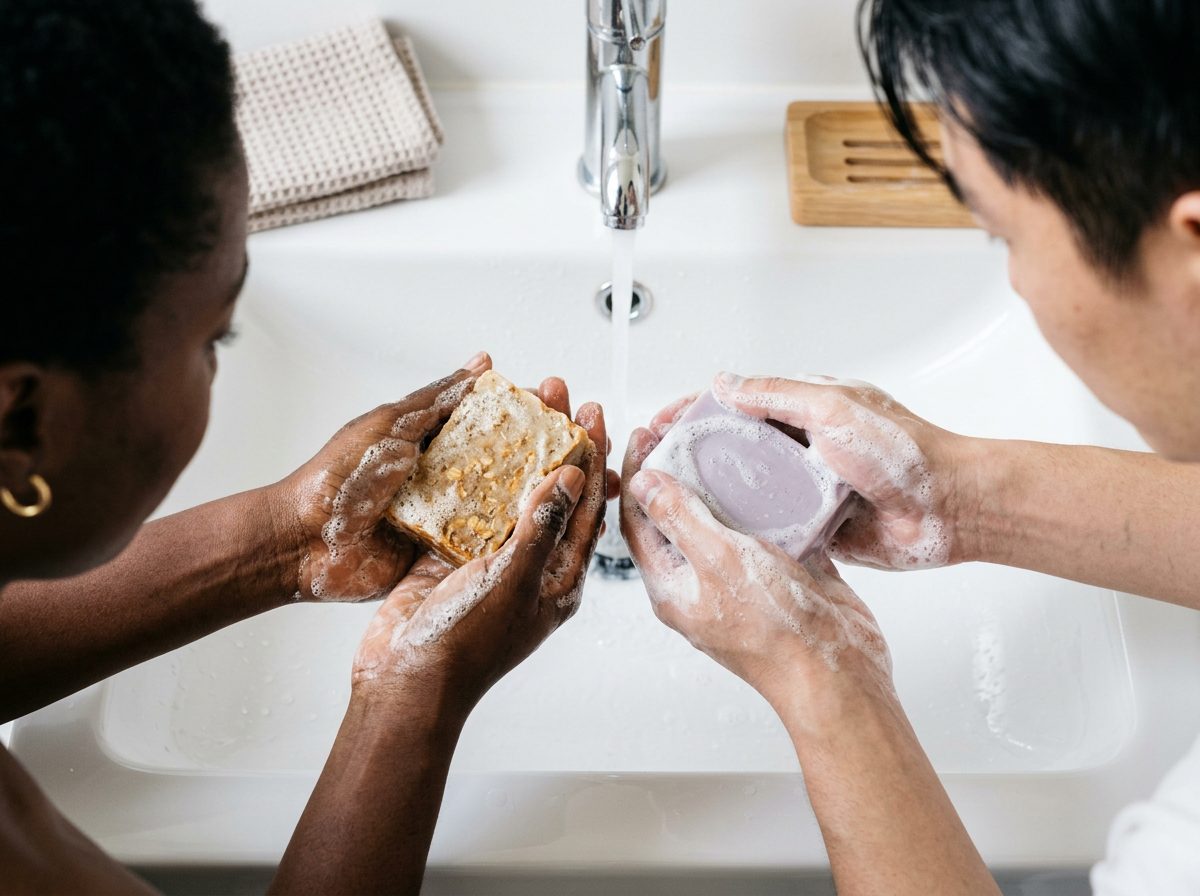
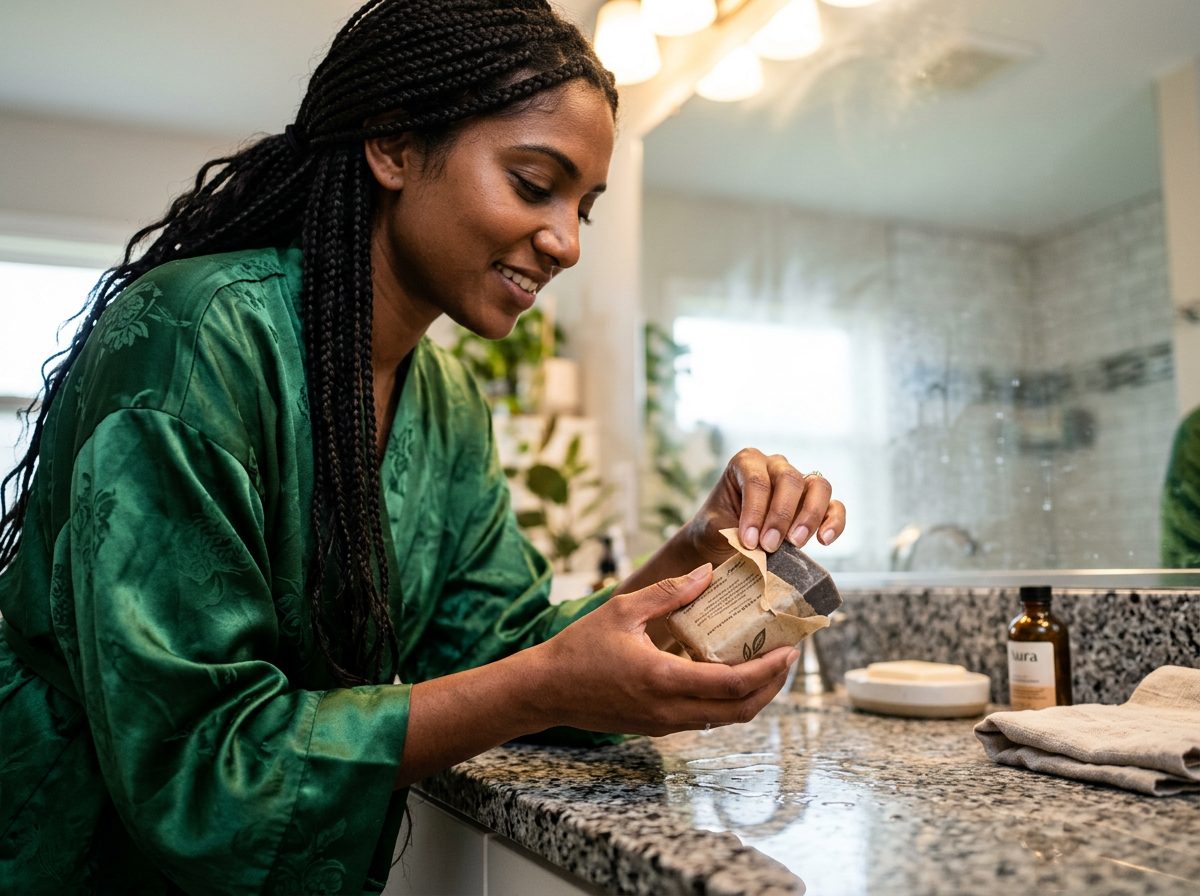
Built from scratch in chemical synthesis. Same amphipathic structure (oil-loving tail, water-loving head), but engineered for specific properties: pH stability, foam volume, mildness, viscosity. SLS, SLES, SCI, cocamidopropyl betaine — all surfactants. Different molecules, different behaviours.
Where saponified oils win
Ingredient simplicity

A real cold-process bar contains 6–10 ingredients. A liquid surfactant shampoo contains 25–35. Less to react to.
No need for preservatives
True bars contain almost no free water, so no microbial growth medium. Liquid surfactant blends need preservatives like phenoxyethanol, MIT, or parabens.
Lower transport footprint
Solid bars don’t ship water. Liquid surfactants are sold in water. Per wash, bars have lower transport CO2.
No microplastic shedding
Some synthetic surfactant blends include opacifying or thickening polymers that shed microplastic. Bars don’t.
Carbon-source diversity
Bars are made from agricultural plant oils. SLS, SLES, and most synthetic surfactants come from petrochemical or palm-oil-derived feedstocks. (Note: some plant-derived surfactants like coco-glucoside exist, but they’re a small part of the market.)
Multi-purpose
One bar handles hair, body, hands, occasionally laundry pre-treatment. Surfactant blends are usually formulated for one purpose.
Where synthetic surfactants win
Hard water tolerance
True soaps react with calcium and magnesium to form an insoluble film (“soap scum”) on hair and skin. This is the source of the “waxy” feeling people report from bars in hard water. Synthetic surfactants don’t react with calcium ions in the same way — they keep foaming.
Predictable pH
Saponified bars run at pH 9–10 (the natural pH of the soap reaction). This is fine for most skin and hair with an acid rinse, but it’s not “skin-pH” out of the bottle. Synthetic surfactants can be formulated at pH 5.0–6.5, matching skin natively.
Foam volume
Synthetic surfactants foam more dramatically. Marketing-wise, this matters. Functionally, it doesn’t — foam volume doesn’t correlate with cleaning power. But many users equate foam with cleanness, which is a real perceptual win for synthetics.
Sensitive-skin formulations possible
Specific synthetic surfactants like SLSA, sodium cocoyl isethionate, and decyl glucoside can be formulated to be exceptionally mild — sometimes milder than soap for very reactive skin.
Build-up management
Synthetic shampoos can include conditioning silicones, polymers, and coatings that improve the immediate feel of hair. Whether this is a “win” depends on whether you want silicone build-up over time.
Where saponified oils vs synthetic surfactants gets misleading
“Soap is harsher than surfactants”
Sometimes true (alkaline pH on already-damaged hair without an acid rinse). Often false. Many sulfate liquid shampoos are far harsher on the hair shaft than a balanced six-oil cold-process bar with an ACV rinse.
“Surfactants are toxic”
Most are not. SLS gets a worse reputation than it deserves — it’s an irritant in concentrated leave-on products, but in wash-off concentrations it’s not toxic. The actual concerns are different surfactants in different categories (e.g., MIT preservatives, undisclosed fragrance compounds).
“Bars are always more eco”
Bars made with non-RSPO palm oil can have a worse footprint than a synthetic surfactant liquid. The eco win comes from palm-oil-free, plastic-free, locally produced bars — not bars in general.
The middle ground: solid detergent bars
“Detergent-based” bars are synthetic surfactants pressed into solid form. Examples: Lush-style “shampoo bars” with SCI as the main ingredient.
- pH-buffered around 5.5 — closer to skin pH
- Work in hard water
- No bottle, similar packaging savings
- But: still synthetic chemistry, often with longer ingredient lists
Detergent bars sit between true soap bars and liquid shampoo. Useful for some hair types and water situations.
How to choose between saponified oils vs synthetic surfactants
| Your situation | Lean toward |
|---|---|
| Soft to medium water | Saponified bar |
| Very hard water | Saponified bar + ACV rinse, or detergent bar |
| Very sensitive scalp | Try detergent bar first |
| Plastic / preservative concerns | Saponified bar |
| Heavy silicone styling routine | Saponified bar (clearer build-up) |
| Frequent salon treatments | Saponified bar (no sulfates) + acid rinse |
FAQ
Are saponified oils more “natural”? Strictly, both are real chemistry. Saponified oils come from agricultural feedstocks; many synthetic surfactants come from petrochemicals. “Natural” is closer to true for saponified bars but isn’t a clean binary.
Will my hair feel different switching from synthetic to saponified? Yes, especially in week 1. The lipid layer recalibrates and old silicone build-up clears.
Do salons use saponified or synthetic shampoo? Almost all use synthetic. Stylists prefer pH-buffered formulas because they’re predictable with chemical treatments.
Want a real cold-process saponified bar with the math published? Browse our six-oil shampoo bars — palm-oil-free, plastic-free, transparent.