


Last updated: September 3, 2026
Hydroxyapatite powder remineralises tooth enamel at the mineral level. Unlike fluoride, which forms a fluorapatite coating, hydroxyapatite (HAP) is bioidentical to 97% of natural tooth enamel. It fills micro-cracks and enamel lesions directly, reduces sensitivity, and whitens teeth without bleach — all without systemic fluoride exposure.
Natural Answer offers two forms: 60nm nano particles for maximum enamel penetration and sensitivity relief (from EUR34.00), and 40 micron particles for daily polishing and maintenance (from EUR19.82). Both are fluoride-free, vegan, and ship across Europe.

Why Powder Instead of Paste?
Walk into any health store and you’ll find hydroxyapatite toothpastes from a dozen brands. So why would anyone choose powder?
It comes down to concentration and purity.
Commercial hydroxyapatite toothpastes combine the mineral with water, glycerin, binders, flavoring, and preservatives. When you brush, most of what touches your teeth isn’t hydroxyapatite — it’s paste ingredients.
Pure hydroxyapatite powder means you’re brushing with the mineral itself. No dilution. No unnecessary chemicals. Just the active ingredient your teeth need.
The Practical Advantages
Higher mineral contact. More hydroxyapatite reaches your enamel per brushing session. This matters for remineralization — the more mineral your teeth absorb, the stronger they get.
No preservatives needed. Powder doesn’t contain water, so bacteria can’t grow in it. No water = no preservatives, no parabens, no synthetic stabilizers. The powder stays effective indefinitely.
Zero waste. No plastic tube, no pump, no cap. A single pouch of powder lasts months. When it’s empty, you’ve generated virtually zero packaging waste.
Travel-friendly. No liquids means no TSA hassle, no leaking in your bag, no 100ml restrictions. A small jar of powder goes anywhere.
Cost-effective. Without paying for water weight, packaging, marketing, and distribution markup, you get more active ingredient per euro spent.
Nano vs. 40 Micron: Which Do You Need?
This is the most common question — and most brands don’t even offer a choice. Understanding the difference helps you match the product to your actual dental needs.
Nano Hydroxyapatite (60 Nanometers)
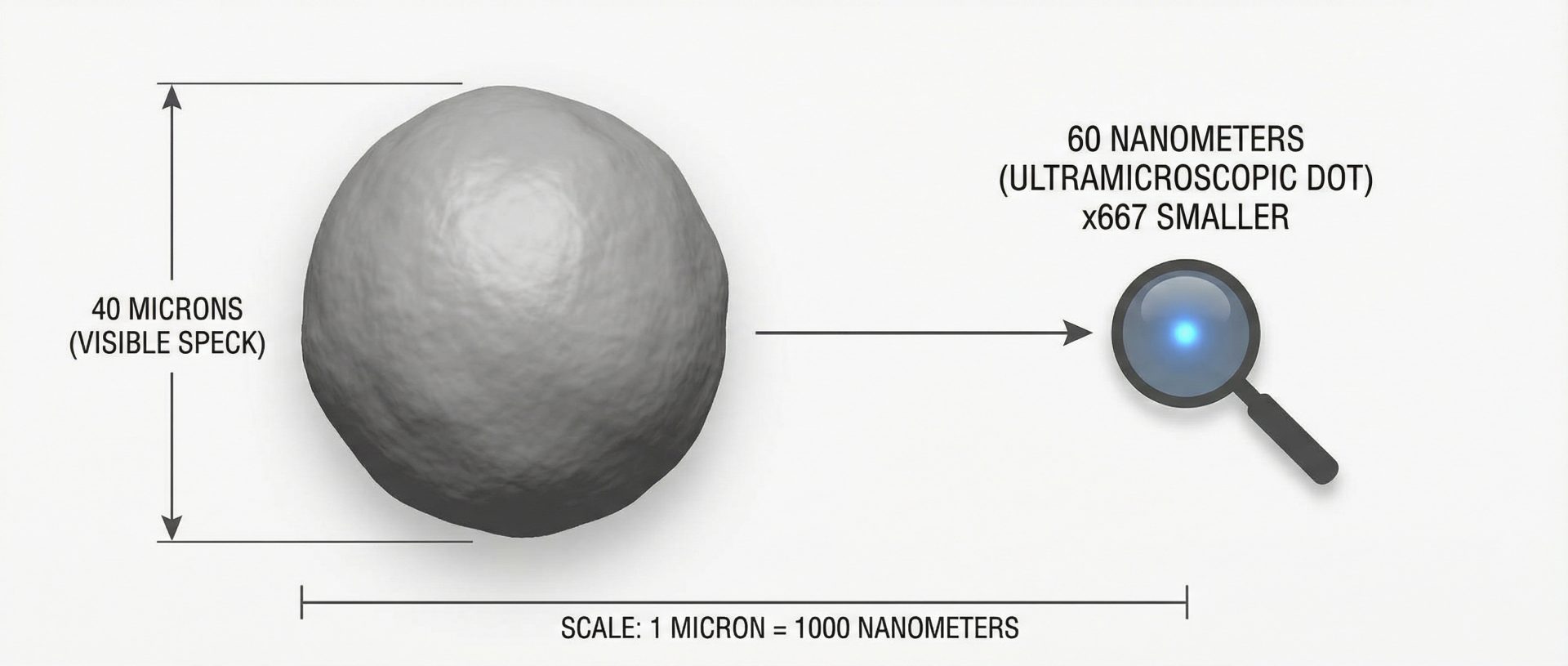
Particles this small can penetrate into the microscopic structure of your enamel. At 60 nanometers, they’re roughly 1,000 times smaller than the width of a human hair.
What it does:
- Fills micro-cracks and pores in enamel from the inside out
- Blocks exposed dentin tubules (the channels that cause sensitivity)
- Builds up enamel density over time through deep remineralization
- Creates a smooth enamel surface that resists bacterial adhesion
Best for:
- Daily remineralization routine
- Reducing tooth sensitivity
- Strengthening weakened or eroded enamel
- Post-whitening treatment enamel repair
- Children’s dental care (non-toxic if swallowed)
How to use: Wet your toothbrush, dip it lightly in the powder, brush for 2 minutes. The fine particles will feel almost silky — there’s no grittiness.
40 Micron Hydroxyapatite
At 40 micrometers, these particles are visible to the naked eye (barely) and have a different function. They’re still far gentler than baking soda or charcoal, but they provide a mild mechanical cleaning action.
What it does:
- Gently polishes enamel surfaces
- Removes surface stains (coffee, tea, wine)
- Deposits a protective mineral layer on top of enamel
- Provides a mild cleaning abrasion without scratching
Best for:
- Weekly deep cleaning sessions
- Surface stain removal
- Adding an extra protective layer
- People who want a slight polishing effect
- Complementing a nano hydroxyapatite routine
How to use: Same as nano — wet brush, dip, brush. You’ll notice a slightly grittier texture, which is the polishing particles doing their work.
The Ideal Routine: Both
Many dental professionals who recommend hydroxyapatite suggest alternating:
- Weekdays: Nano hydroxyapatite for deep remineralization
- Weekends: 40-micron for surface polishing and extra protection
This gives you both deep repair and surface-level maintenance.
What to Look For When Buying
Not all hydroxyapatite powder is equal. Here’s what separates quality products from marketing gimmicks:
1. Purity
The powder should be pure hydroxyapatite — full stop. Check the ingredients list. If you see a long list of additives, flavorings, or “proprietary blends,” you’re not getting pure mineral.
Some brands add silica, calcium carbonate, or other cheap fillers to bulk up the product. True hydroxyapatite powder should list one ingredient: hydroxyapatite (or calcium phosphate hydroxide, its chemical name).
2. Particle Size Specification
Reputable products clearly state their particle size. “Nano hydroxyapatite” without a specific measurement is vague — it could be anywhere from 20nm to 200nm, and the size affects performance.
Look for specific claims: “60 nanometer” or “40 micron.” If a brand can’t tell you the exact particle size, they probably don’t control their sourcing tightly enough.
3. Source and Manufacturing
Hydroxyapatite can be:
- Synthetic — lab-produced to exact specifications (most consistent quality)
- Bovine-derived — extracted from animal bone (may vary in composition)
- Mineral-derived — mined from natural deposits (may contain trace minerals)
Synthetic is generally preferred for dental use because the particle size, purity, and crystalline structure can be precisely controlled.
4. Packaging
Powder should be stored in airtight, moisture-proof packaging. Exposure to humidity can cause clumping and reduce effectiveness. Pouches with resealable closures or small jars with tight lids work best.
5. Certifications
While not strictly necessary, look for:
- EU cosmetic safety compliance (if sold in Europe)
- Cruelty-free certification (especially if you want to avoid bovine-derived HAp)
- Vegan certification (synthetic HAp is inherently vegan)
How to Use Hydroxyapatite Powder
Basic Method (Daily Use)
1. Wet your toothbrush under running water
2. Dip the bristles lightly into the powder — you need less than you think
3. Brush gently for 2 minutes using circular motions
4. Spit but don’t rinse immediately — let the minerals sit on your teeth for a minute
5. Rinse gently
Pro tip: Not rinsing immediately after brushing gives the hydroxyapatite more time to bond with your enamel. This “soak time” matters — it’s the same reason dentists tell you not to rinse immediately after fluoride toothpaste.
Paste Method
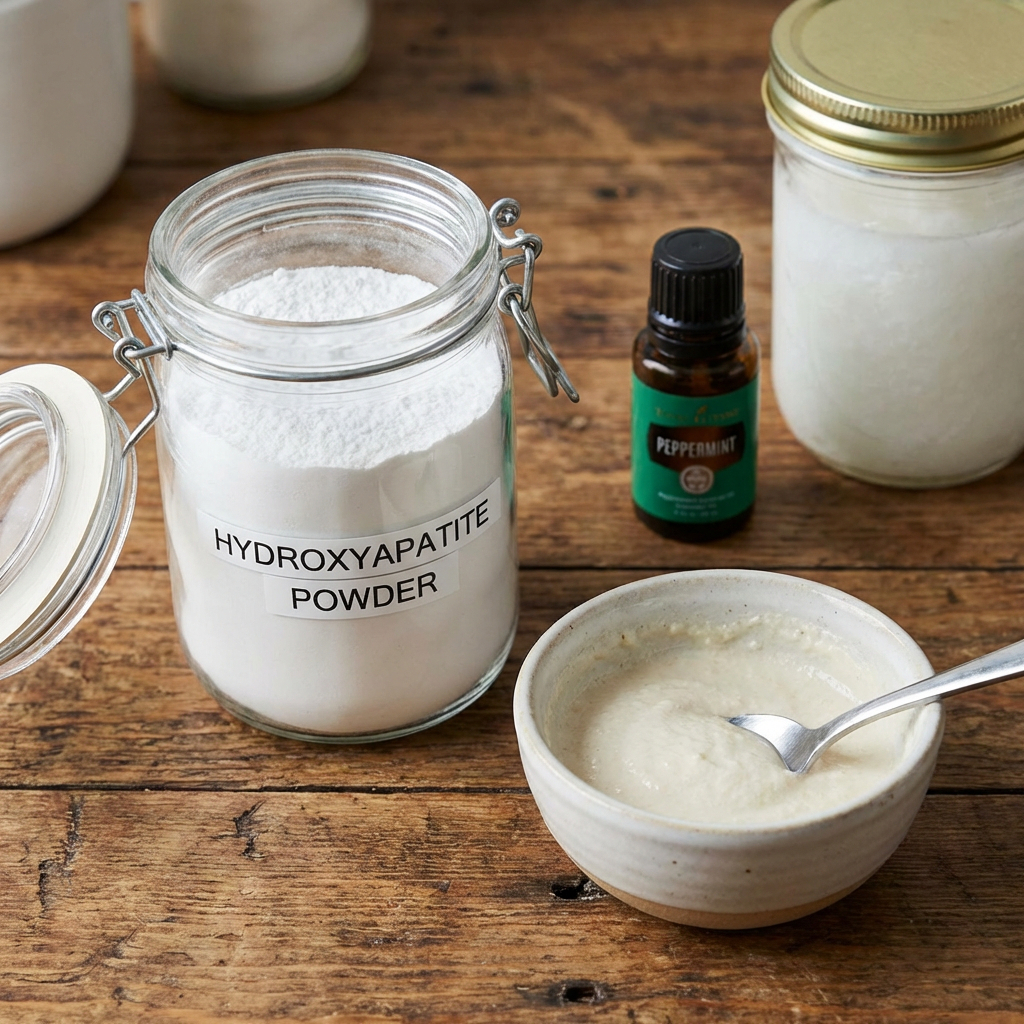
1. Put a small amount of powder on your palm or a small dish
2. Add 2-3 drops of water
3. Mix into a paste with your toothbrush
4. Brush normally
Some people prefer this because it feels more familiar than brushing with dry powder.
Oil Pulling Enhancement
1. Mix a quarter teaspoon of hydroxyapatite powder into a tablespoon of coconut oil
2. Swish for 10-15 minutes
3. Spit out (not into the drain — coconut oil solidifies and can clog pipes)
4. Brush normally
This combines the remineralizing benefits of hydroxyapatite with the antibacterial properties of coconut oil.
For Children
Hydroxyapatite powder is especially suitable for children because:
- It’s completely non-toxic if swallowed
- It has no strong flavor (unlike mint toothpaste that kids often refuse)
- Parents can control exactly how much goes on the brush
- No fluorosis risk whatsoever
For small children, use just a tiny pinch of powder. The neutral taste means most kids don’t resist it the way they do with strong-flavored toothpaste.
Common Questions
“Can I use hydroxyapatite powder with my electric toothbrush?”
Yes. Wet the brush head, dip in powder, and use your electric toothbrush normally. The vibration actually helps distribute the mineral particles more evenly.
“How long until I notice results?”
Most people report reduced sensitivity within 1-2 weeks. Visible improvement in enamel smoothness and whitening typically takes 4-6 weeks of consistent use.
“Can I use it alongside fluoride toothpaste?”
Yes. Some people use hydroxyapatite in the morning and fluoride at night, or vice versa. They work through different mechanisms and don’t interfere with each other. Some newer products even combine both.
“Does it expire?”
Pure hydroxyapatite powder is a stable mineral — it doesn’t expire in any practical sense. Keep it dry and sealed, and it’ll last for years. Unlike toothpaste, there’s no water content for bacteria to grow in.
“Is it safe for braces, retainers, and dental work?”
Completely safe. Hydroxyapatite won’t damage brackets, wires, crowns, veneers, or implants. In fact, it’s often used in the dental implant coating itself — so your dentist is already putting it in your mouth.
“How does it taste?”
Nearly tasteless. Slightly chalky. Nothing like the intense mint of conventional toothpaste. Most people get used to it within a day or two. If you want flavor, add a single drop of food-grade peppermint oil to the powder before brushing.
The Bottom Line
Hydroxyapatite powder represents the most concentrated, pure form of this proven dental mineral available to consumers. It costs less per use than premium toothpaste, generates zero packaging waste, and delivers more active ingredient to your teeth per brushing session.
The choice between nano and 40-micron depends on your needs — or just use both for a complete remineralization and polishing routine. Either way, you’re giving your teeth the exact mineral they’re built from, in its purest form.
Natural Answer’s Nano Hydroxyapatite Powder (60nm) and 40 Micron Hydroxyapatite Powder are pure, vegan, and come in zero-waste packaging. No fillers, no additives — just the mineral your teeth need.
Related Articles
- Hydroxyapatite vs Fluoride: Which Is Better for Your Teeth?
- Nano vs 40 Micron Hydroxyapatite: What’s the Difference?
Safety Information: Nano Hydroxyapatite
Our hydroxyapatite powder can be used independently as a tooth remineralisation treatment. If you are using nano hydroxyapatite powder, please review the Safety Data Sheet (SDS), provided in accordance with EU REACH regulations.
Make Your Own Toothpaste
Hydroxyapatite powder can also be used as an ingredient for homemade toothpaste. Download our free Hydroxyapatite e-book for recipes and detailed usage instructions.
Related reading
- Nano Hydroxyapatite vs Fluoride: What the Science Actually Says
- Is Hydroxyapatite Safe for Children? A Parent’s Guide
Looking for the powder this guide covers?
See Nano Hydroxyapatite Powder (60nm) in our shop.
View Nano Hydroxyapatite Powder (60nm) →