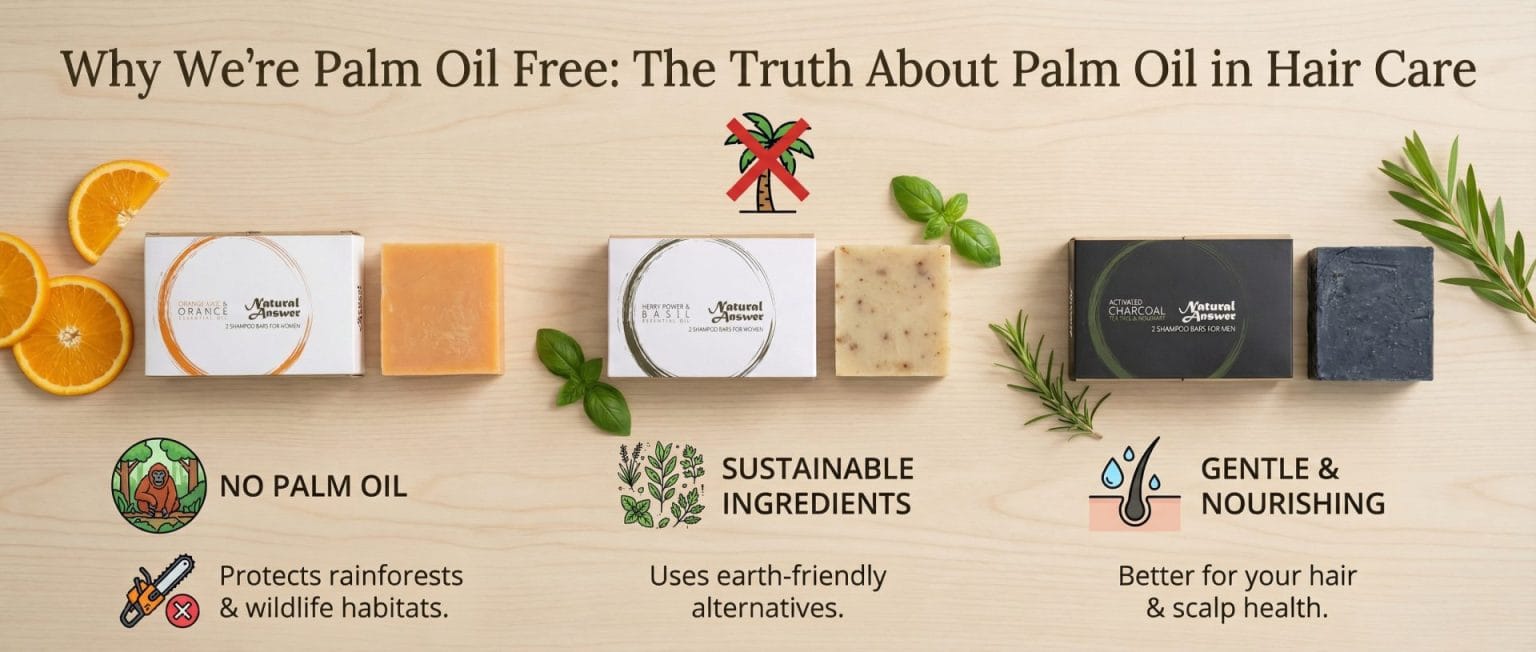
Last updated: September 20, 2026
 Walk into any supermarket and pick up a shampoo bottle. Check the ingredients. Chances are you’ll find palm oil — or one of its 200+ derivatives — listed somewhere on the label. It’s in an estimated 50% of all consumer products, from food to cosmetics. So why did we decide to go completely palm oil free?
The Palm Oil Problem
Palm oil is the world’s most widely used vegetable oil, and the demand is devastating. Every hour, an area of tropical rainforest the size of 300 football fields is cleared for palm oil plantations. The consequences are staggering:- Deforestation — 10 million hectares of tropical forest have been lost to palm oil since 2000
- Wildlife extinction — orangutans, Sumatran tigers, and pygmy elephants are losing their habitats at alarming rates
- Carbon emissions — clearing peatland forests releases massive amounts of stored carbon
- Community displacement — indigenous communities are routinely displaced from their ancestral lands
But What About “Sustainable” Palm Oil?
You might have seen the RSPO (Roundtable on Sustainable Palm Oil) certification on some products. While well-intentioned, the reality is complicated. Investigations have repeatedly found deforestation and rights violations within RSPO-certified supply chains. The certification system struggles to keep pace with the scale of the problem.We didn’t want to gamble on “sustainable” labels. We wanted certainty. So we simply removed palm oil entirely from our palm oil free shampoo bars.Why Most ‘Natural’ Shampoo Bars Still Contain Palm Oil
Here’s the uncomfortable truth: even brands marketing themselves as eco-friendly and natural often rely heavily on palm oil. Why? The answer comes down to economics and chemistry.It’s Incredibly Cheap
Palm oil produces more oil per hectare than any other vegetable oil crop. This efficiency makes it significantly cheaper than alternatives like coconut or olive oil. For manufacturers trying to keep costs down, the financial incentive to use palm oil is enormous.It Creates Excellent Lather
Palm oil derivatives like Sodium Palmate create the rich, foamy lather that consumers expect from shampoo. When making shampoo bars, palm-based surfactants are the easy default choice because they work so well technically.It’s Everywhere in the Supply Chain
Many soap-making suppliers sell pre-made soap bases that already contain palm oil. Small brands might not even realize they’re using it, or they assume that because their supplier says it’s “sustainable,” the problem is solved.At Natural Answer, we source our ingredients individually and formulate our own recipes from scratch. No mystery bases. No hidden palm oil. Just transparent, natural ingredients we can stand behind.Palm Oil in Shampoo: Where It Hides
One reason palm oil in shampoo is so hard to avoid is that it hides behind dozens of chemical names on ingredient lists. Even if you don’t see “palm oil” written explicitly, it might still be there. Here are the most common palm oil derivatives you’ll find in hair care products:Common Palm Oil Derivatives
- Sodium Palmate — the soap form of palm oil, extremely common in bar shampoos
- Sodium Palm Kernelate — derived from palm kernel oil, creates lather
- Palmitic Acid / Palmate — fatty acid from palm oil
- Sodium Lauryl Sulfate (SLS) — often derived from palm kernel oil
- Sodium Laureth Sulfate (SLES) — another palm-derived surfactant
- Cetyl Alcohol — can be palm-derived, used as a thickener
- Cetearyl Alcohol — similar to cetyl alcohol, often palm-sourced
- Stearic Acid — can come from palm oil or other sources
- Glycerin / Glycerol — frequently a byproduct of palm oil soap-making
- Glyceryl Stearate — emulsifier often derived from palm
- Tocopherol (Vitamin E) — when derived from vegetable oil, often palm
- PEG compounds — many polyethylene glycol derivatives use palm oil
What We Use Instead
Creating an effective shampoo without palm oil takes more effort and higher ingredient costs — but it’s absolutely possible. Our handmade natural shampoo bars and conditioner bars use carefully selected plant-based oils that clean and nourish your hair without the environmental cost:- Coconut oil — excellent lather, deep moisturising properties
- Olive oil — gentle cleansing, rich in antioxidants
- Castor oil — promotes hair strength and natural shine
- Essential oils — natural fragrance from lavender, lemongrass, orange, cedarwood, and more
Palm Oil Free Alternatives: What Works Better
Switching to palm oil free hair care doesn’t mean compromising on quality. In fact, many alternative oils offer superior benefits for your hair and scalp.Coconut Oil
Coconut oil is the backbone of many palm oil free shampoo bars. It creates a rich, creamy lather similar to palm oil but with better moisturising properties. Coconut oil penetrates the hair shaft, reducing protein loss and preventing damage. While coconut plantations have their own environmental considerations, they’re far less destructive than palm oil monocultures.Olive Oil
Extra virgin olive oil has been used in hair care since ancient times. It’s incredibly gentle, making it ideal for sensitive scalps. Olive oil is rich in antioxidants and vitamins A and E, which help repair damaged hair. In shampoo formulations, it creates a mild, conditioning lather.Shea Butter
Shea butter comes from the nuts of the shea tree, which grows wild across West Africa. It’s deeply moisturising and helps seal the hair cuticle, reducing frizz and adding shine. Unlike palm oil, shea butter is typically harvested sustainably by small-scale producers, supporting local economies rather than displacing them.Argan Oil
Often called “liquid gold,” argan oil is prized for its ability to smooth hair, add shine, and protect against heat damage. It’s rich in fatty acids and vitamin E. Argan trees grow in Morocco and are protected by law, making this a truly sustainable alternative.Castor Oil
This thick, nutrient-rich oil is known for promoting hair growth and strength. In shampoo bars, it helps create stable lather and adds body to the formula. Castor oil is also praised for its ability to cleanse without stripping natural oils.When you explore the benefits of shampoo bars made with these alternatives, you’ll discover that palm oil free hair care can actually outperform conventional products.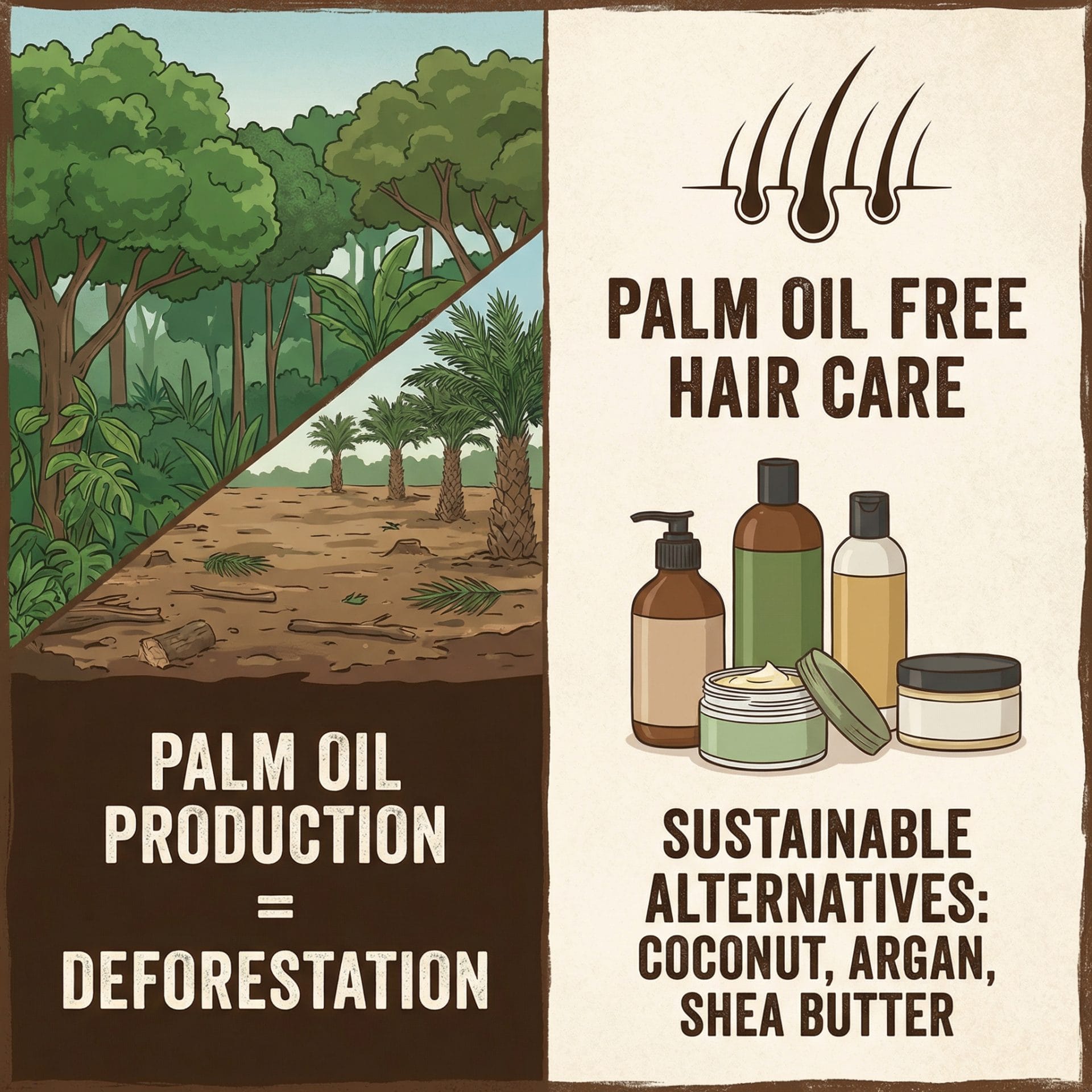
How Going Palm Oil Free Changes Your Hair Care
Switching to a palm oil free shampoo bar isn’t just an environmental choice — it can genuinely improve your hair care routine. Here’s what changes when you make the switch:Fewer Irritants on Your Scalp
Many palm-derived surfactants like SLS and SLES are known skin irritants. They can strip your scalp of natural oils, leading to dryness, itching, and dandruff. Palm oil free alternatives tend to be gentler, using milder cleansing agents that work with your scalp’s natural balance rather than against it.A Cleaner, More Transparent Supply Chain
When you choose palm oil free products, you’re supporting brands that have taken the harder road. We source our ingredients directly, know exactly where they come from, and can guarantee their quality. There are no murky supply chains, no “sustainable” certifications that might not mean what you think they mean.Lighter Environmental Footprint
Beyond avoiding deforestation, palm oil free shampoo bars often come with other eco-friendly features. Our products use zero plastic packaging — everything comes in recyclable cardboard or paper. One bar replaces 2-3 plastic bottles of liquid shampoo. Combined with our commitment to plant a tree with every order (we’ve planted over 1,168 trees so far), choosing palm oil free hair care becomes part of a holistic approach to sustainable living.Simpler, More Natural Formulas
Brands committed to being palm oil free often avoid other questionable ingredients too. You’ll typically find shorter ingredient lists, with recognisable plant-based components rather than long chemical names. This transparency makes it easier to know exactly what you’re putting on your hair and scalp.How to Choose a Truly Palm Oil Free Shampoo Bar
Not all shampoo bars are created equal, and greenwashing is rampant in the natural beauty industry. Here’s how to make sure you’re getting the real deal:1. Check for Explicit “Palm Oil Free” Claims
Don’t assume. If a brand is genuinely palm oil free, they’ll usually say so prominently. It’s a significant selling point that requires extra effort, so brands that achieve it tend to advertise the fact.2. Read the Full Ingredient List
Look for the palm oil derivatives listed earlier in this article. If you see Sodium Palmate, Sodium Palm Kernelate, or any ingredient with “palm” in the name, it’s not palm oil free. Be especially wary of generic terms like “vegetable oil” or “soap base,” which often contain palm.3. Ask the Brand Directly
If the ingredient list is unclear, contact the company and ask specifically about palm oil derivatives. A transparent brand will give you a straight answer. Vague responses about “sustainable sourcing” are red flags.4. Look for Third-Party Verification
Some certifications, like vegan and cruelty-free labels, can indicate a brand’s overall commitment to ethical practices. While these don’t guarantee palm oil free status, they suggest the company cares about supply chain transparency.5. Consider the Whole Package
A truly eco-conscious brand won’t stop at palm oil. Look for plastic-free packaging, natural ingredients, and ideally some form of environmental giving-back programme. At Natural Answer, we combine all of these elements because we believe sustainability should be comprehensive, not piecemeal.6. Try Our Starter Kit
If you’re ready to experience the difference palm oil free hair care can make, our Natural Answer Starter Kit is the perfect place to start. It includes everything you need to transition to a more sustainable, effective hair care routine — all handmade with 100% natural ingredients, vegan, cruelty-free, and completely palm oil free.