


Last updated: October 1, 2026
You made the switch to shampoo bars. You were excited about going plastic-free. Then reality hit: your hair feels waxy, heavy, and just… wrong. Sound familiar?
Waxy buildup is the number one reason people give up on shampoo bars. But here’s what most people don’t know: it’s almost always fixable, and it’s usually not the bar’s fault. Let’s break down exactly what’s happening and how to fix it.
Why Your Hair Feels Waxy: Shampoo Bar Waxy Buildup Explained
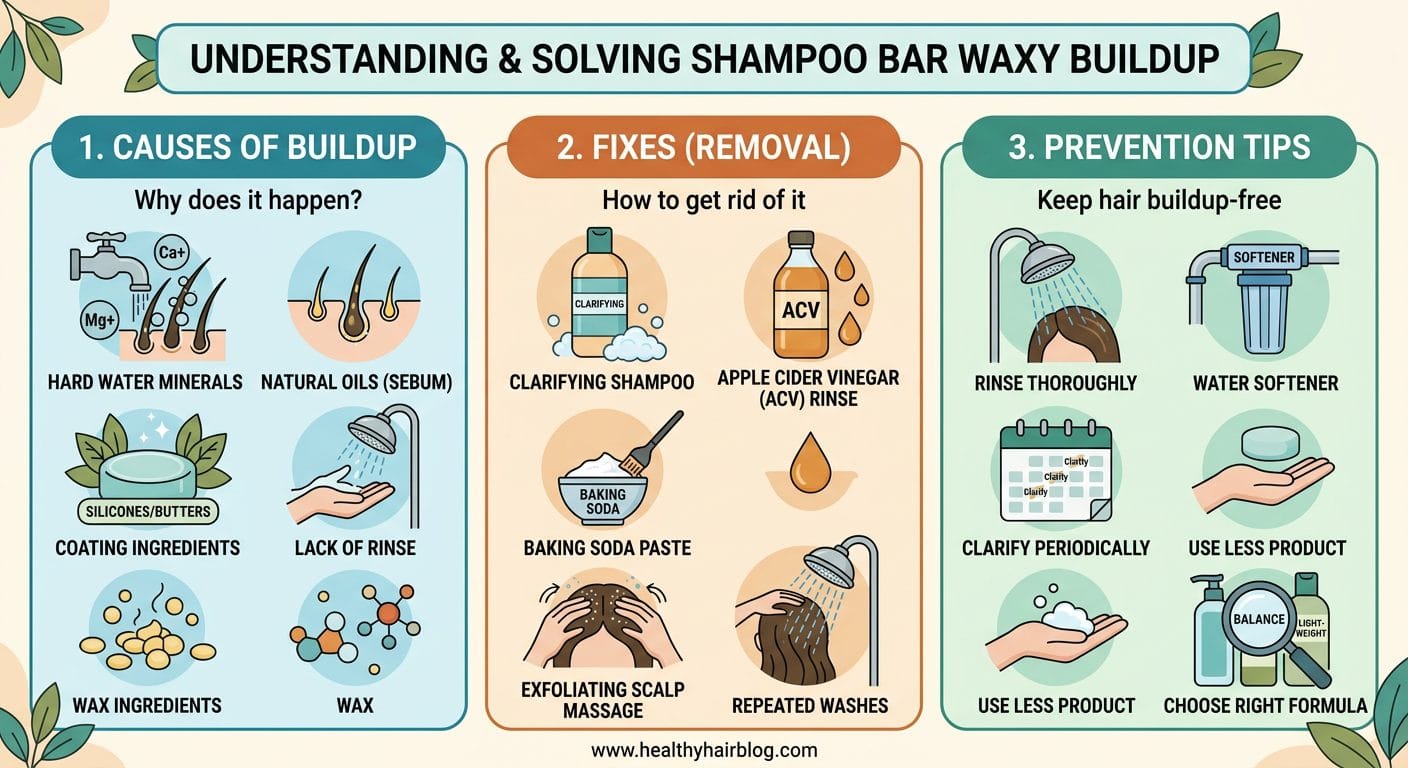
There are four main causes of waxy buildup from shampoo bars. Understanding which one you’re dealing with is the key to fixing it.
1. hard water + Soap-Based Bar = Soap Scum
This is the most common cause by far. If your bar is soap-based (cold process) and you live in a hard water area, the minerals in your water react with the soap to form a waxy residue called soap scum. It’s the same stuff you see on your shower glass, but on your hair.
How to identify it:
- Hair feels coated and stiff, not soft
- Residue is white or grey
- Gets worse with every wash
- Hair looks dull even when clean
The fix: Finish every wash with an ACV rinse. A cold-process soap bar reacts with hard water minerals, and the rinse dissolves that film before it builds up. (Syndet bars, made with synthetic detergents like SCI, react less with minerals — a different category, not what we recommend.) Problem solved within a wash or two.
2. The Transition Period (Liquid to Bar)
When you switch from liquid shampoo to bars, your hair and scalp need time to adjust. Conventional shampoos contain silicones (dimethicone, cyclomethicone) that coat your hair shaft. When you stop using them, those silicone layers slowly break down and slough off. During this process, hair can feel waxy or greasy.
How to identify it:
- Hair felt fine the first wash, then got worse over days 3-10
- Gradually improving over 2-3 weeks
- Mostly concentrated near the roots
- Previous shampoo contained silicones
The fix: Be patient. The transition typically takes 1-3 weeks. You can speed it up with a clarifying wash (baking soda paste or an ACV rinse) to strip the silicone residue.
3. Over-Application
Shampoo bars are concentrated. Much more concentrated than liquid shampoo. Many people use far too much product, especially in the beginning.
How to identify it:
- Hair feels heavy and limp after washing
- You can see or feel residue when rubbing strands
- Occurs from the first wash
- Worse in the middle lengths and ends
The fix: Use less. Seriously. Either:
- Rub the bar 3-5 times across wet hair (not 10-15 times)
- Lather in your hands first, then apply the foam
- Focus on the scalp, let the suds wash through the lengths
4. Product Incompatibility
Using a conditioner bar or leave-in product that doesn’t pair well with your shampoo bar can create buildup. Heavy butters and oils in conditioners can accumulate if the shampoo isn’t cleansing thoroughly enough.
The fix: Use a matching conditioner bar from the same brand, or reduce conditioner use until you find the right balance.
The Clarifying Wash: Your Shampoo Bar Waxy Buildup Reset
If you already have waxy buildup, here’s how to strip it and start fresh:
Option 1: Apple Cider Vinegar Rinse
- Mix 2-3 tablespoons ACV with 1 cup of water
- After shampooing, pour through your hair
- Leave for 1-2 minutes
- Rinse with cool water
The acetic acid dissolves mineral deposits and closes the hair cuticle. Don’t worry about the smell — it disappears once your hair dries.
Option 2: Baking Soda Paste
- Mix 1 tablespoon baking soda with 3 tablespoons water
- Apply to wet hair, focusing on problem areas
- Massage gently for 1-2 minutes
- Rinse thoroughly, then condition
Caution: Don’t use baking soda more than once a month. It’s alkaline (pH 9) and can damage hair if overused.
Option 3: cleansing Shampoo (One-Time)
Use a cleansing or clarifying liquid shampoo once to strip all buildup, then switch to your shampoo bar. This is the nuclear option — effective but stripping.
How to Prevent Shampoo Bar Waxy Buildup in the Future
Choose the Right Type of Bar
This is the biggest factor. If you’re in a hard water area (most of Europe), stick with a cold-process soap bar and add an ACV rinse. This combination:
- Dissolves soap scum before it builds up
- Uses organic plant oils gentle on your scalp
- Rinses clean with one extra step
- Works from the first wash — a gentle transition period
Natural Answer bars are cold-process soap, made with six organic plant oils (coconut, sesame, sunflower, olive, castor) and shea butter. Paired with an ACV rinse, they work well in hard water without buildup.
How to Tell if Your Bar is Soap or Syndet
Check the ingredients:
- Soap bar: Ingredients ending in “-ate” from oils (sodium olivate, sodium cocoate, sodium palmate)
- Syndet bar: SCI, SLSA, coco-glucoside, or similar surfactants
Use the Right Amount
Start with less than you think you need:
- Short hair: 2-3 swipes across the scalp
- Medium hair: 3-5 swipes
- Long/thick hair: 5-7 swipes, focus on scalp
You can always add more. You can’t easily remove excess.
Rinse Thoroughly
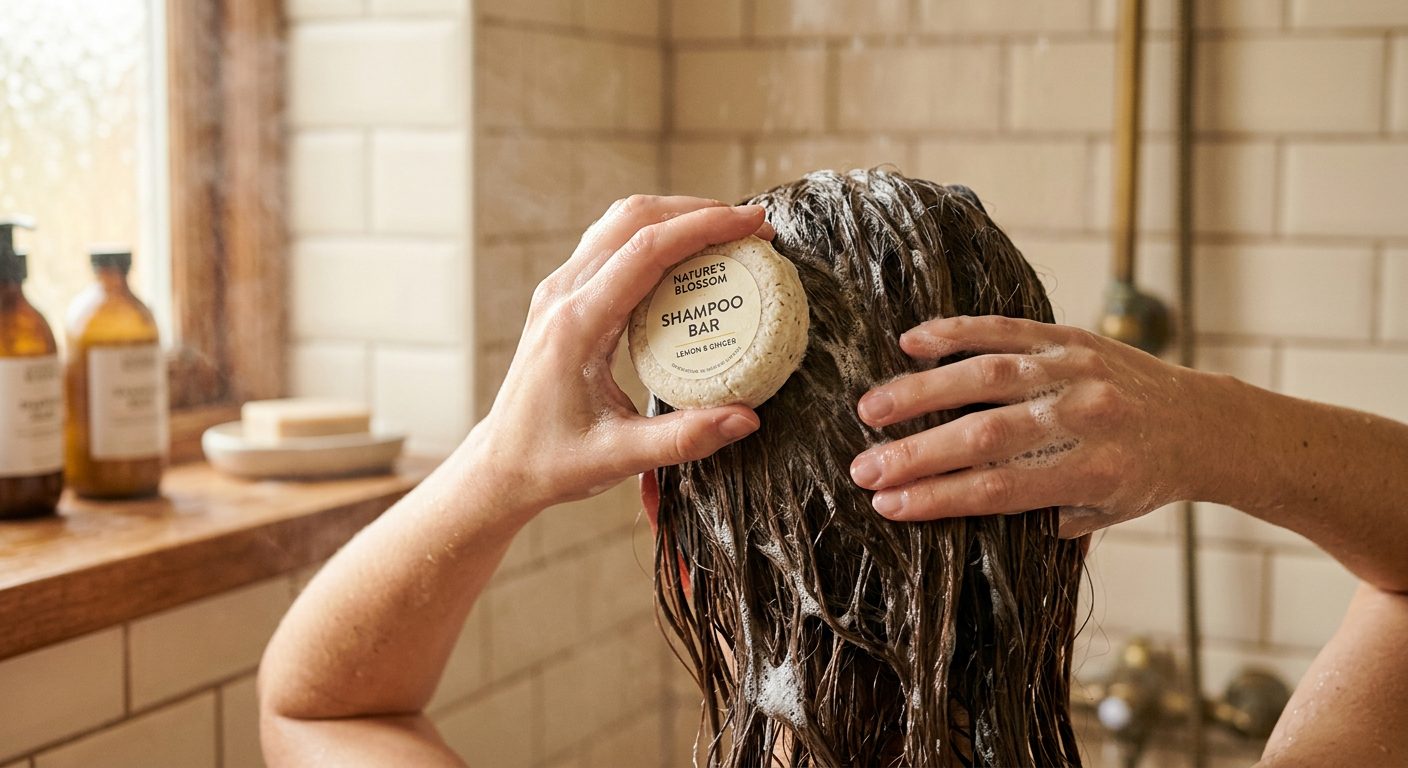
Spend at least 30 seconds rinsing. Solid shampoo is more concentrated than liquid, so it needs more water to fully rinse out. Run your fingers through your hair while rinsing to ensure no product is trapped.
Store Your Bar Properly
A bar sitting in water dissolves unevenly and wastes product. Use a draining soap dish or hang it in a soap bag between uses.
Special Cases
Waxy Buildup with Curly Hair
Curly hair is more prone to buildup because the curl pattern traps product. Focus the bar on your scalp only, let suds run through the lengths, and use a wide-tooth comb in the shower to distribute and rinse.
Waxy Buildup with Colour-Treated Hair
Avoid clarifying treatments that could strip colour. Instead, finish with an ACV rinse — it dissolves mineral buildup gently, without the harsh reset of a clarifying wash.
Waxy Buildup with Fine Hair
Fine hair shows buildup faster because each strand has less surface area to absorb product. Use even less bar than recommended, and consider washing your bar in your hands to create foam before applying.
When It’s Not Buildup
Sometimes what feels like waxy buildup is actually something else:
- Dry, rough hair: You might need conditioner, not less shampoo
- Static and frizz: Common when switching from silicone-heavy products — temporary
- Oily roots: Your scalp is adjusting oil production — takes 2-4 weeks
The Bottom Line
Waxy buildup from shampoo bars is frustrating but fixable. In most cases, the solution is simple:
- Check your water hardness — if it’s hard, finish every wash with an ACV rinse
- Use less product — bars are concentrated
- Give it 2 weeks — for the transition from liquid shampoo
- Do a clarifying wash — to reset if buildup has accumulated
The right shampoo bar shouldn’t leave buildup. If it does consistently, it’s not the right bar for your water type. Try a cold-process soap bar with an ACV rinse for hard water and see the difference from the first wash.
Still have questions? Check our complete guide to shampoo bars or how to choose the best bar for your hair type.