



Last updated: August 10, 2026
Making the switch to shampoo bars can feel intimidating if you’ve spent your entire life using liquid shampoo. The good news? Once you learn the proper technique, using a shampoo bar is actually simpler than you might think. This comprehensive guide will walk you through everything you need to know to get the best results from your shampoo bar.
Why Shampoo Bars Need a Different Technique
Shampoo bars aren’t just solid versions of liquid shampoo—they’re concentrated formulas that work differently. While liquid shampoos contain 70-80% water, shampoo bars are almost entirely active ingredients. This means you need less product and a slightly different application method to achieve the same (or better) results.
Understanding this fundamental difference is key to avoiding the most common beginner mistake: using too much product.
The Basic Technique: Two Methods That Work
There are two main ways to use a shampoo bar, and both work equally well. Choose whichever feels more natural to you.
Method 1: Direct Application (Most Popular)
- Wet your hair thoroughly – This is crucial. Your hair should be completely saturated with water before you apply any product.
- Wet the shampoo bar – Hold it under running water for a few seconds until the surface feels slippery.
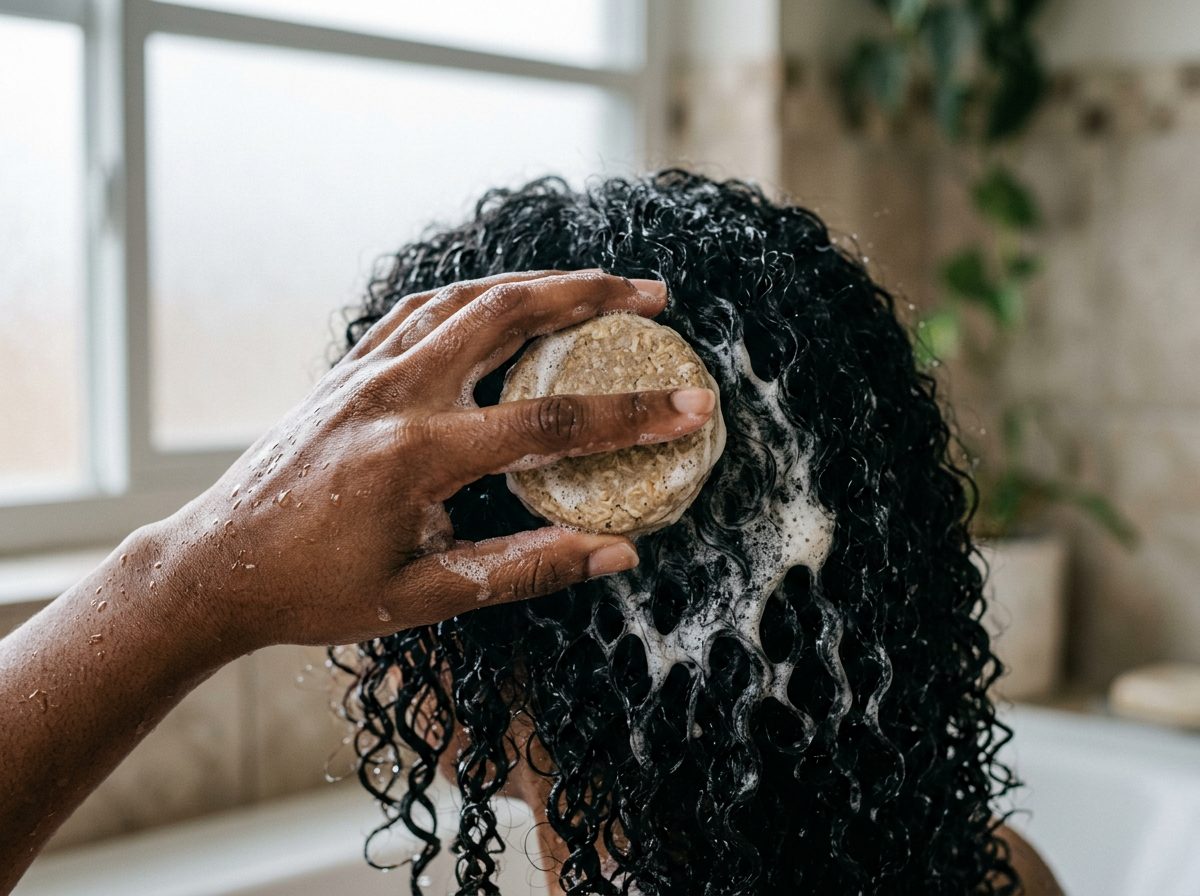
- Glide the bar over your hair – Using gentle, stroking motions, rub the bar directly onto your scalp and hair. Start at your crown and work your way around your head.
- Use 3-5 strokes per section – You don’t need much. Three to five gentle glides over each section of your scalp is usually enough.
- Set the bar aside – Place it in a dry spot or soap dish while you lather.
- Massage and lather – Use your fingertips to massage your scalp, working the product into a lather. The foam will spread through your hair as you massage.
- Rinse thoroughly – Spend extra time rinsing to ensure all product is removed.
Method 2: Lather in Hands First
- Wet your hair completely – Again, thorough wetting is essential.
- Create lather in your hands – Rub the wet shampoo bar between your palms to create a foam.
- Apply the lather to your hair – Work the foam into your scalp and hair, focusing on your roots.
- Massage thoroughly – Use your fingertips to work the product through your hair.
- Rinse well – Ensure all product is completely removed.
This method gives you more control over how much product you use and can be easier for beginners who want to avoid over-applying.
Step-by-Step Guide for Best Results
Before You Start
Water temperature matters. Use warm water to wet your hair and the bar—it helps create lather more easily than cold water. However, for your final rinse, cool water can help seal hair cuticles and add shine.
Start with clean hair. Your first experience with a shampoo bar shouldn’t be on day-three hair loaded with dry shampoo and styling products. Start your transition on relatively clean hair for the best first impression.
During Application
Focus on your scalp, not your lengths. Just like with liquid shampoo, concentrate the product on your scalp where oil and buildup accumulate. The suds that run down your hair as you rinse will be sufficient to clean the lengths.
Use less than you think you need. The single biggest mistake beginners make is using too much product. Start with just a few strokes and add more only if needed. You can always add more, but you can’t take it away.
Hard water can affect your shampoo bar. If you have hard water, you might need to work the lather a bit more vigorously to get good foam. Consider the direct application method, which often works better in hard water.
After Washing
Rinse thoroughly—then rinse again. Shampoo bars are concentrated, so they require thorough rinsing. Spend at least 30 seconds rinsing, making sure to get all areas of your scalp. Incomplete rinsing is the second most common beginner mistake.
Consider an apple cider vinegar rinse. If you have hard water, an ACV rinse (1 tablespoon in 1 cup of water) can help prevent mineral buildup and leave your hair softer. This is optional but can make a significant difference in hard water areas.
Common Mistakes and How to Avoid Them
Mistake #1: Not Wetting Hair Enough
The problem: Applying a shampoo bar to slightly damp hair makes it difficult to create lather and can cause the bar to drag on your hair.
The solution: Your hair should be dripping wet before you start. When you think it’s wet enough, wet it some more.
Mistake #2: Using Too Much Product
The problem: Because shampoo bars are concentrated, you need much less than you’re used to with liquid shampoo. Too much product can leave hair feeling heavy or waxy.
The solution: Start with just 3-5 gentle strokes per section. You should see and feel lather forming quickly. If you don’t get enough foam, add a few more strokes—but err on the side of less.
Mistake #3: Incomplete Rinsing
The problem: Leftover product can make hair feel sticky, heavy, or look dull.
The solution: Double your rinsing time. Seriously. Lift sections of hair and let water run through them. Massage your scalp while rinsing to ensure all product is removed.
Mistake #4: Giving Up Too Soon
The problem: Hair sometimes goes through a brief adjustment period when switching from liquid to bar shampoo, especially if your previous shampoo contained silicones.
The solution: Give it at least 2-3 weeks. Your hair needs time to adjust and shed the buildup from previous products. Many people who initially felt shampoo bars “didn’t work” found their hair was actually healthier than ever after the adjustment period.
Mistake #5: Poor Storage Between Uses
The problem: Leaving your shampoo bar in standing water or a wet shower caddy will turn it to mush and drastically reduce its lifespan.
The solution: Use a well-draining soap dish or soap saver bag. Keep it somewhere it can dry completely between uses.
Special Situations and Solutions
For Thick or Long Hair
- Part your hair into sections before applying the bar
- Apply the bar to each section separately to ensure even distribution
- You may need a few more strokes than someone with short hair, but not much more
- Focus on scalp coverage rather than coating every strand
For Fine or Thin Hair
- Use even less product than you think you need
- The lather-in-hands method might work better for you
- Focus exclusively on roots; let rinse water clean the lengths
- Consider skipping conditioner or using it only on ends
For Curly or Textured Hair
- Ensure hair is completely saturated before starting
- The direct application method often works better for shampoo bars for curly hair
- Work in sections for even distribution
- Follow with a good conditioner or hair mask
- Consider finger-combing while conditioning to detangle
For Hard Water Areas
- Expect less lather (this is normal and doesn’t mean it’s not working)
- Use the direct application method for better results
- An apple cider vinegar rinse is highly recommended
- Look for shampoo bars specifically formulated for hard water
- Consider installing a shower filter for best results
For Colored or Treated Hair
- Use color-safe shampoo bars (check product descriptions)
- Be extra gentle when applying to avoid tangling
- Focus on scalp only; avoid scrubbing the lengths
- Follow with a hydrating conditioner
- Expect your color to last longer than with many liquid shampoos
The Adjustment Period: What to Expect
Week 1: Getting Used to the Technique
The first few uses might feel awkward as you develop the right touch. You might use too much product or not rinse enough. This is completely normal.
What’s normal: Feeling like you’re not getting enough lather, questioning if it’s working, taking longer than usual to wash your hair.
Red flags: None yet—give yourself time to learn the technique.
Weeks 2-3: The Transition Phase
If you’ve been using silicone-heavy products, your hair might go through a brief adjustment as it sheds buildup.
What’s normal: Hair might feel different than usual, potentially a bit waxy or heavy for a few washes. This typically resolves within 2-3 weeks.
Red flags: If your hair still feels waxy after 3 weeks, you might need a clarifying wash or ACV rinse to remove remaining buildup.
Week 4+: The Results Phase
By now, you should be seeing the benefits: cleaner hair, longer time between washes, and healthier-looking results.
What’s normal: Hair that feels clean, bouncy, and manageable. Many people report their hair feels lighter and has more natural volume.
Red flags: If your hair still doesn’t feel right after 4 weeks, you might need a different formula. Not all shampoo bars work for all hair types.
Troubleshooting Common Issues
“My hair feels waxy or heavy”
Possible causes:
- Using too much product
- Incomplete rinsing
- Hard water mineral buildup
- Residual silicones from previous products
Solutions:
- Use less product on your next wash
- Rinse for at least 60 seconds
- Try an apple cider vinegar rinse
- Use a clarifying wash to remove buildup
- Wait through the adjustment period
“I’m not getting any lather”
Possible causes:
- Hair not wet enough
- Hard water (reduces lather but doesn’t affect cleaning)
- Oil buildup on hair
- Bar not wet enough
Solutions:
- Thoroughly wet hair before applying
- Wet the bar under running water
- Try the direct application method
- Remember: less lather doesn’t mean less cleaning
“My scalp feels dry/itchy”
Possible causes:
- Bar formula doesn’t suit your scalp type
- Over-washing
- Not rinsing thoroughly enough (residue can cause itching)
Solutions:
- Try a different shampoo bar formula (look for moisturizing ingredients)
- Reduce washing frequency
- Ensure complete rinsing
- Consider alternating with a gentle liquid shampoo
“My hair is tangling while washing”
Possible causes:
- Scrubbing too vigorously
- Piling hair on top of head while washing
- Not using enough water
Solutions:
- Keep hair hanging down while washing
- Use gentle strokes with the bar
- Focus on scalp massage rather than scrubbing
- Ensure hair stays saturated throughout washing
How Often Should You Wash?
One of the benefits of shampoo bars is that they clean thoroughly without stripping hair, which often means you can wash less frequently.
General guidelines:
- Oily hair: Every 1-2 days initially, possibly stretching to every 2-3 days
- Normal hair: Every 2-3 days
- Dry hair: Every 3-5 days
- Curly/coily hair: Once a week or as needed
Listen to your hair and scalp. You might find you can go longer between washes than you could with liquid shampoo.
Maximizing Your Shampoo Bar’s Lifespan
A well-cared-for shampoo bar can last 2-3 times longer than a bottle of liquid shampoo. Here’s how to get the most from each bar:
Storage is everything: Keep your bar in a well-draining dish away from direct water spray. Between uses, it should dry completely.
Travel smart: Use a soap tin with drainage holes or a soap saver bag. Never seal a wet bar in an airtight container.
Cut it in half: For a 100g+ bar, consider cutting it in half. Use one half while the other dries completely. This prevents waste from a soggy bar turning to mush.
Use every bit: When your bar gets small, press it onto a new bar while both are wet. They’ll fuse together, and you won’t waste any product.
One bar, one person: Sharing bars between people with different hair types or oil production can introduce bacteria and reduce the bar’s lifespan.
Advanced Tips for Power Users
Create a Perfect Lather Every Time
For maximum foam:
- Wet hair with warm water
- Wet the bar thoroughly
- Glide it over your scalp in gentle, continuous strokes
- Massage scalp vigorously to create foam
- Add a bit more water if needed while massaging
The Two-Pass Method for Very Oily Hair
First pass: Light application focusing on scalp, quick rinse
Second pass: Another light application, thorough massage, complete rinse
This removes excess oil without over-stripping or using too much product in one application.
Pre-Wash Scalp Massage
Before wetting your hair, spend 1-2 minutes massaging your scalp with your fingertips. This loosens oil and buildup, making the shampoo bar more effective and requiring less product.
The Upside-Down Rinse
Flip your hair upside down for the final rinse. This helps ensure complete product removal and can add volume at the roots.
When to Use Conditioner
Unlike some claims you might read, most people still benefit from conditioner when using shampoo bars.
You probably need conditioner if:
- Your hair is medium to long length
- Your hair is colored, bleached, or chemically treated
- Your hair is naturally dry or coily
- You live in a hard water area
You might skip conditioner if:
- Your hair is very short
- Your hair is naturally oily
- You have very fine hair that gets weighed down easily
When using conditioner with shampoo bars, apply it only to the mid-lengths and ends, never on the scalp.
Environmental Benefits Beyond the Obvious
Using shampoo bars properly isn’t just about great hair—it’s about impact:
Water conservation: Shampoo bars require less rinse water than liquid shampoos (no need to rinse out a bottle).
Reduced packaging: One bar typically replaces 2-3 plastic bottles.
Lower carbon footprint: Bars are lighter to ship and don’t contain water weight.
Less product waste: The concentrated formula means you use only what you need—no accidental over-pouring.
Finding the Right Bar for You
Not all shampoo bars are created equal. The technique described in this guide works for quality shampoo bars, but results depend heavily on the formula.
Look for:
- Saponified organic plant oils with generous superfatting
- Natural ingredients without harsh sulfates
- Bars made specifically for hair (not multi-purpose soap bars)
- Formulas designed for your hair type
- Products from reputable manufacturers
Avoid:
- Bars with harsh detergents (SLS, SLES in high concentrations)
- Multi-purpose bars that claim to wash hair, body, and dishes
- Overpowering synthetic fragrance
- Products with no ingredient list or manufacturer information
In hard water, the real fix is a quick apple cider vinegar rinse after washing (one tablespoon in 250 ml of water) — it works with any true soap bar.
Your First Week Action Plan
Day 1: Use the direct application method with minimal product. Take notes on how it feels.
Day 3: Try the lather-in-hands method. Compare results.
Day 5: Stick with whichever method you preferred. Focus on perfecting your technique.
Day 7: Evaluate results. Are you using the right amount? Is your rinse thorough? Adjust as needed.
Week 2: Maintain consistency with your chosen method. Your technique should start feeling natural.
Week 3: If results still aren’t great, consider trying a different shampoo bar formula rather than giving up on the concept entirely.
Final Thoughts
Learning how to use shampoo bars properly is like learning any new skill—it takes a bit of practice, but once you’ve got it, it becomes second nature. The key is starting with good technique, being patient through any adjustment period, and not giving up if your first attempt isn’t perfect.
Most people who struggle with shampoo bars are simply using too much product or not rinsing thoroughly enough. Remember: wet hair completely, use less product than you think you need, massage well, and rinse thoroughly. Master these four principles, and you’ll get excellent results every time.
The small learning curve is worth it for healthier hair, reduced plastic waste, and the satisfaction of mastering a sustainable alternative to liquid shampoo. Give yourself three weeks of consistent use before making a final judgment—your hair (and the planet) will thank you.