


Last updated: October 9, 2026
Introduction: Can Shampoo Bars Really Repair Damaged Hair?
- No sulfates → Gentle cleansing that doesn’t strip fragile hair
- Concentrated nourishment → Pure oils, butters, and proteins (no water filler)
- Cold-process soap + an acidic rinse → Close cuticles, lock in moisture, reduce breakage
- Hard water protection → Remove minerals that cause dryness and brittleness
- What causes hair damage (and how to stop it)
- Best shampoo bars for repairing damaged hair
- How to restore strength, shine, and elasticity
- Hard water’s hidden role in hair damage
- Complete damage-repair routine (products + techniques)
What Causes Hair Damage?
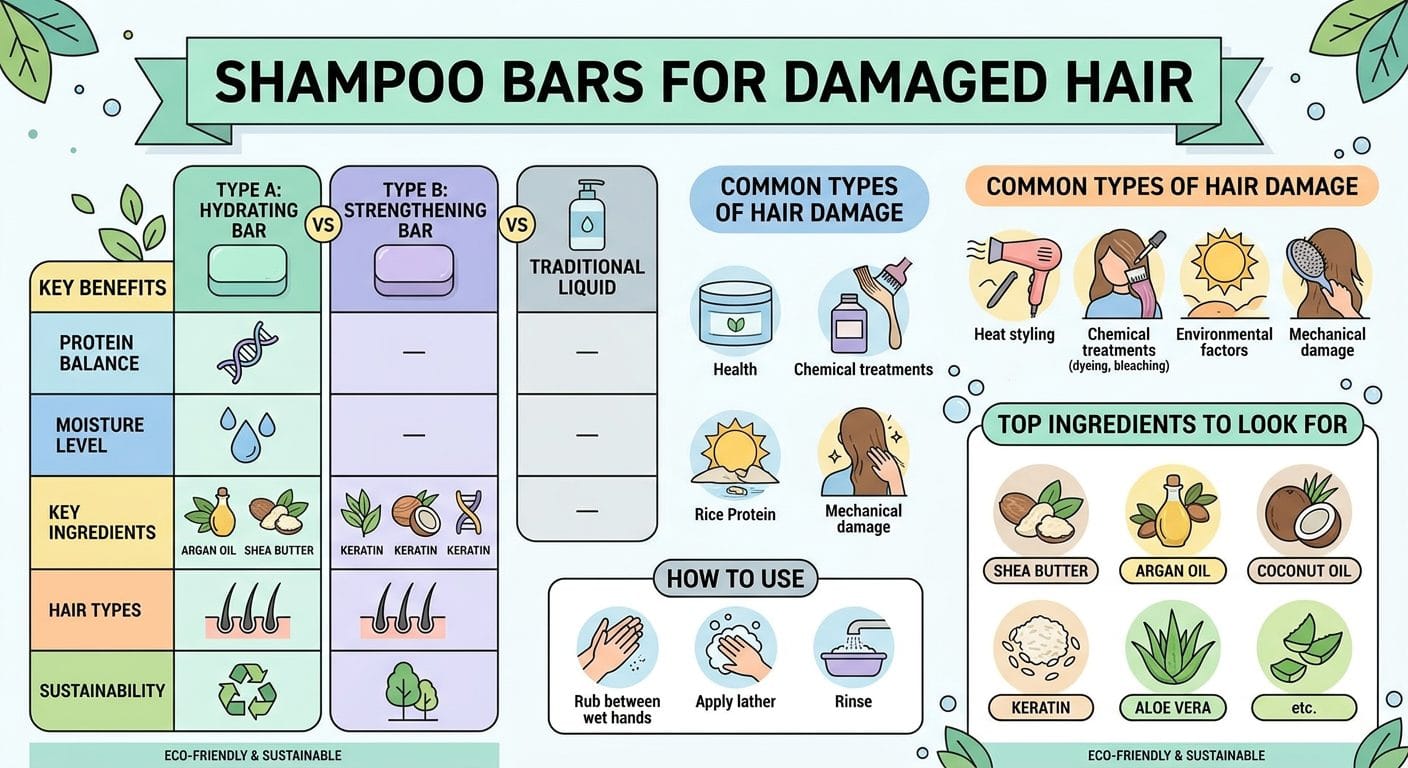
Understanding the cause helps you choose the right solution.1. Heat Damage
- Blow dryers, flat irons, curling wands exceed 300°F (150°C)
- High heat evaporates moisture from hair shaft
- Cuticle layer lifts and cracks
- Hair becomes dry, brittle, prone to breakage
- Rough, straw-like texture
- Split ends
- Loss of curl pattern or natural texture
- Breakage at mid-lengths
2. Chemical Damage
What happens:- Hair dye, bleach, relaxers, perms alter hair structure
- Chemicals break protein bonds (disulfide bonds)
- Cuticle becomes porous, loses moisture
- Color-treated hair fades faster
- Porous, spongy texture
- Hair stretches excessively when wet
- Color fades quickly
- Extreme dryness or “gummy” feel
3. Mechanical Damage
What happens:- Tight hairstyles (ponytails, braids, buns)
- Aggressive brushing or combing
- Friction from pillowcases, clothing, hats
- Over-manipulation when wet (hair is weakest when saturated)
- Breakage at hairline or crown
- Short broken hairs (“baby hairs” that aren’t regrowth)
- Thinning edges
4. Hard Water Damage
- Minerals (calcium, magnesium, iron) in hard water coat hair
- Buildup makes hair rough, dull, and tangled
- Minerals oxidize color-treated hair (brassiness)
- Cuticle stays lifted → more breakage
- Hair feels waxy, sticky, or coated
- Dull, flat appearance
- Tangles easily
- Products don’t work properly
5. Environmental Damage
What happens:- UV radiation breaks down hair proteins
- Chlorine (pools) strips moisture and color
- Pollution particles create free radicals
- Wind, dry air, humidity cause cuticle lifting
- Sun-lightened ends (unintentional)
- Green tint (chlorine on blonde/light hair)
- Frizz, static, flyaways
What Makes a Shampoo Bar Good for Damaged Hair?
Not all shampoo bars are created equal. For damaged hair, look for:1. Gentle, Sulfate-Free Cleansing
Why it matters: Damaged hair is fragile. Harsh sulfates (SLS, SLES) strip what little moisture and protein is left. Look for:- Cold-process soap (saponified plant oils) → gentle, creamy lather
- Coco-betaine → mild, non-stripping
- Decyl glucoside → plant-derived, extra gentle
2. Moisture-Rich Ingredients
Why it matters: Damaged hair lacks moisture. You need oils and butters that penetrate the shaft. Look for:- Coconut oil → penetrates deeply, restores protein
- Argan oil → repairs cuticle, adds shine
- Shea butter → seals moisture, protects from heat
- Jojoba oil → mimics natural sebum, balances scalp
3. Protein for Strength
Why it matters: Hair is 90% protein (keratin). Chemical and heat damage break these bonds. Look for:- Hydrolyzed wheat protein → fills gaps in cuticle
- Silk protein → smooths, strengthens
- Keratin → rebuilds structure (though rare in shampoo bars)
4. A Gentle Formula Plus an Acidic Rinse
Why it matters: Damaged hair has a lifted cuticle. An acidic rinse closes it, locking in moisture and reducing breakage. How to check: Cold-process soap is alkaline (pH 9-10), so finish every wash with an apple cider vinegar rinse (1 tbsp in 250 ml of water).5. Hard Water Protection
Why it matters: If you have hard water (most of Europe does), mineral buildup compounds damage. Look for:- An acidic ACV rinse → dissolves mineral film and closes the cuticle
- Citric acid or sodium citrate → binds to calcium/magnesium
- Hard water-specific formulas (like Natural Answer)
Best Shampoo Bars for Damaged Hair (By Damage Type)
For Heat-Damaged Hair
What you need:- Deep moisture (oils + butters)
- Heat protection ingredients
- Cuticle-sealing pH
- Argan oil (repairs heat damage)
- Panthenol (vitamin B5) → moisture retention
- Coconut oil (penetrates shaft)
For Chemically Damaged (Color-Treated, Bleached) Hair
What you need:- Color-safe formula (no sulfates)
- Protein to rebuild structure
- Low pH to seal cuticle and lock in color
- Silk protein (strengthens without stripping)
- Shea butter (moisture + color protection)
- citric acid (pH balance, mineral removal)
For Mechanically Damaged Hair (Breakage, Thinning Edges)
What you need:- Gentle cleansing (no friction)
- Scalp-nourishing ingredients
- Strengthening proteins
- Castor oil (stimulates growth at hairline)
- Biotin (strengthens hair follicles)
- Wheat protein (fills breakage points)
For Hard Water Damage
What you need:- Chelating ingredients (remove buildup)
- Deep moisture (counteract dryness)
- Low pH (seal lifted cuticles)
- Citric acid or an ACV rinse (dissolves mineral deposits)
- Coconut oil (restores moisture)
- Argan oil (repairs roughness)
For Sun/Chlorine/Environmental Damage
What you need:- Antioxidants (combat free radicals)
- Clarifying ingredients (remove chlorine, pollution)
- UV protection (prevent further damage)
- Vitamin E (antioxidant)
- Tea tree oil (clarifying)
- Aloe vera (soothes, hydrates)
How to Use Shampoo Bars for Maximum Repair
Technique matters when your hair is damaged.Step 1: Pre-Wash Detangling
Why: Wet hair is fragile. Detangle while dry to minimize breakage. How:- Apply a leave-in oil or conditioner to ends
- Use a wide-tooth comb or detangling brush
- Work from ends to roots (never roots to ends)
Step 2: Wet Hair Thoroughly
Why: Shampoo bars need fully saturated hair to lather and distribute evenly. How:- Use lukewarm water (hot water damages cuticles)
- Wet hair for 30-60 seconds
- Squeeze out excess water (not dripping wet)
Step 3: Apply Bar Gently
Why: Rubbing aggressively causes friction → more breakage. How:- Wet the bar under running water
- Glide bar along hair in downward strokes (root to tip)
- For short/medium hair: 8-12 swipes
- For long hair: 15-20 swipes
- Set bar aside
Step 4: Lather & Massage
Why: Scalp circulation promotes healing and growth. How:- Work lather into a foam using fingertips (not nails)
- Massage scalp in circular motions for 1-2 minutes
- Let suds run down the length of hair (don’t scrub ends—they’re the oldest, most fragile part)
Step 5: Rinse Completely
Why: Residue weighs down damaged hair and attracts dirt. How:- Rinse with lukewarm water for 60-90 seconds
- Use fingers to gently work through tangles
- Final rinse with cool water (closes cuticle, adds shine)
Step 6: Condition or Treat
Why: Damaged hair needs extra moisture. How:- Apply conditioner to mid-lengths and ends (avoid roots)
- Leave in for 2-5 minutes
- For severe damage, use a deep conditioning mask 1x/week
Complete Damage-Repair Routine
Weekly Schedule:
Monday, Wednesday, Friday:- Wash with restorative shampoo bar
- Condition (focus on ends)
- Air-dry or low-heat blow dry
- Pre-wash oil treatment (coconut, argan, or jojoba)
- Wash with clarifying bar (if hard water) or restorative bar
- Deep conditioning mask (leave in 15-30 minutes)
- Air-dry
- No wash (dry shampoo at roots if needed)
- Refresh with water + leave-in conditioner spray
Daily Habits:
Morning:- Detangle gently with wide-tooth comb
- Apply leave-in treatment to ends
- Avoid heat styling (or use heat protectant)
- Sleep on satin or silk pillowcase (reduces friction)
- Loose braid or bun (prevents tangles without tension)
Hard Water & Damaged Hair: The Hidden Connection
If your hair is damaged and you have hard water, you’re fighting a losing battle.Why Hard Water Makes Damage Worse:
- Minerals coat damaged cuticles → hair feels rougher, tangles more
- Buildup prevents moisture absorption → deep conditioners can’t penetrate
- Oxidation → color fades, hair looks dull
- Increased breakage → rough texture snags and breaks more easily
How to Test for Hard Water:
- White mineral stains on faucets, showerheads, or kettles
- Soap/shampoo doesn’t lather well
- Hair feels sticky or waxy even after washing
- Skin feels dry or itchy after showering
How Natural Answer Bars Help Damaged + Hard Water Hair:
- An ACV rinse removes existing mineral buildup
- Moisture-rich formula restores softness and elasticity
- Cold-process soap (pH 9–10) — follow with an ACV rinse to close cuticles and reduce breakage
- Gentle cleansing doesn’t strip fragile hair
Frequently Asked Questions
Can shampoo bars repair split ends?
No product can “repair” split ends (the hair is permanently damaged). However, shampoo bars can:- Prevent new splits by reducing breakage
- Seal cuticles to make existing splits less visible
- Strengthen hair to slow progression
How long until I see results?
- 1-2 weeks: Reduced tangles, improved texture
- 4-6 weeks: Noticeable shine, less breakage
- 3 months: Healthier new growth, stronger hair overall
Should I alternate between clarifying and moisturizing bars?
Yes, if you have:- Hard water → Use hard water bar 2x/week, moisturizing bar other days
- Product buildup → Clarifying bar 1x/week, restorative bar otherwise
- Normal water + damage → Stick with one restorative bar
Can I use shampoo bars on keratin-treated hair?
Yes, but choose sulfate-free bars labeled “keratin-safe” or “color-safe.” Harsh bars can strip the treatment faster.Do I need conditioner with a shampoo bar?
For damaged hair, yes. Even moisturizing bars benefit from a conditioner or mask on the ends.Final Thoughts: Repairing Damage Takes Time (But It Works)
Damaged hair doesn’t heal overnight. But with the right shampoo bar, consistent care, and patience, you can:- Reduce breakage by 50-70% within 6 weeks
- Restore shine and softness
- Strengthen new growth
- Prevent future damage
- Choose sulfate-free, moisture-rich bars
- Address hard water immediately (it’s likely making damage worse)
- Use heat protection and satin pillowcases
- Deep condition weekly
- Trim split ends regularly
Ready to Make the Switch?
Ready to experience the benefits of a natural shampoo bar? Browse our complete collection of cold-processed soap bars — each one made with 6 organic plant oils and zero synthetic additives.