


Last updated: October 9, 2026
TL;DR
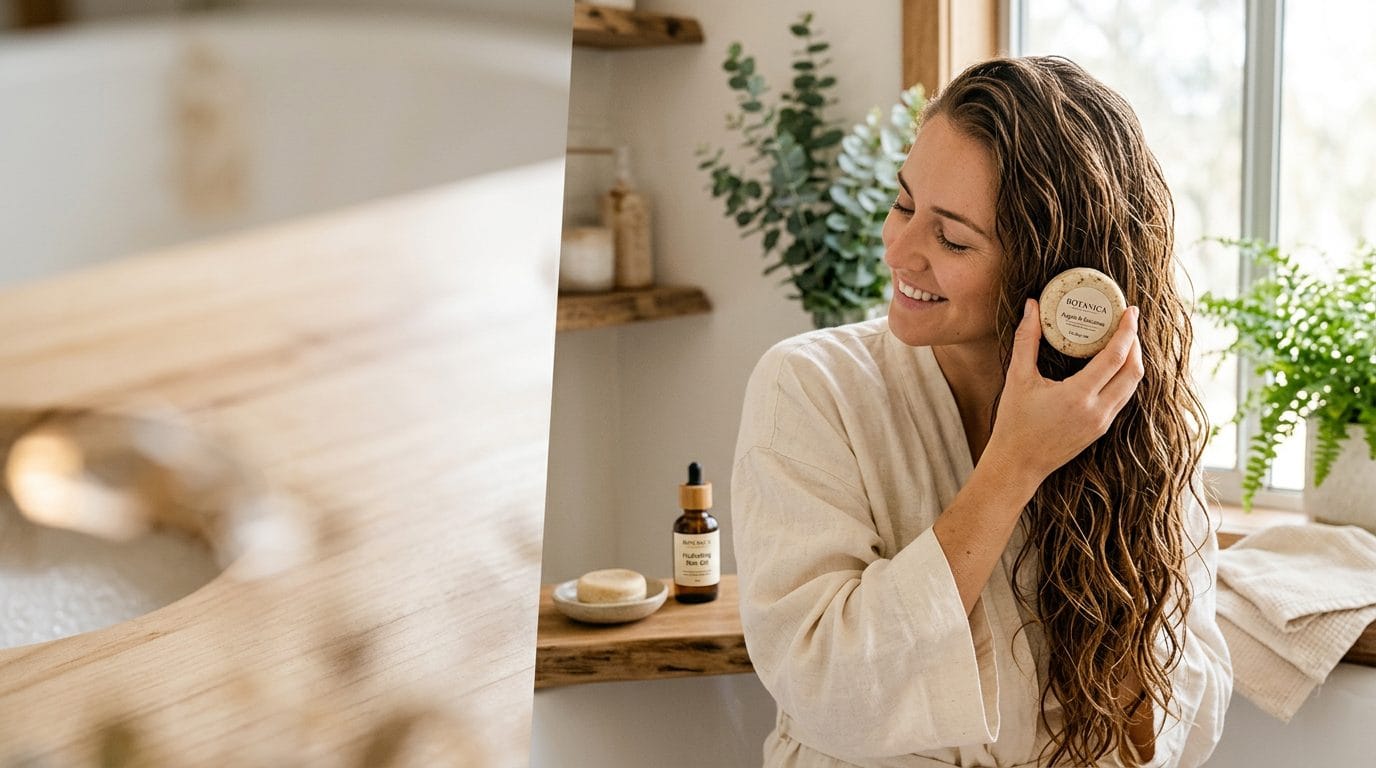
- Best for dry hair: Of all shampoo bars dry hair can use, a generously superfatted cold process soap bar — saponified plant oils plus shea butter, which leave moisture on the hair instead of stripping it
- Avoid: Sodium lauryl sulfate (SLS/SLES), silicones, synthetic fragrance and palm oil — these strip and coat dry hair
- Hard water: Calcium and magnesium react with any true soap and can leave a film. One tablespoon of apple cider vinegar in 250 ml of water, poured through after washing, dissolves it and closes the cuticle
- Transition period: 2-4 weeks (your hair may feel worse before better as buildup clears)
- Key ingredients: Shea butter and castor oil for moisture, and the natural glycerin that cold process saponification leaves in the bar
Our bars for dry hair: six certified-organic plant oils saponified with lye, with shea butter for moisture — no SLS, no silicones, no palm oil. Try Banana & Coconut or Lavender & White Kaolin. See all shampoo bars →
Why Dry Hair Needs Special Formulas
Dry hair lacks natural oils (sebum) from the scalp. This happens because:- Underactive sebaceous glands — genetics, age, hormones
- Damaged cuticle — heat styling, chemical treatments, environmental stress
- Long hair — natural oils don’t reach the ends
- Hard water exposure — minerals strip away protective oils
- Frizz (hair catches humidity from air)
- Dullness (light doesn’t reflect smoothly)
- Breakage (weak hair snaps easily)
- Rough texture (feels straw-like)
What Makes a Shampoo Bar Good for Dry Hair?
1. A Base That Leaves Moisture Behind
Why it matters:A real shampoo bar is organic plant oil saponified with lye. It is alkaline (pH 9-10), and saponification leaves the natural glycerin in the bar — a humectant that draws moisture into the hair, and the first thing industrial soap-making strips out to sell separately. For dry hair, what the bar leaves behind matters far more than the number on a pH strip. Being alkaline, real soap does leave the cuticle slightly raised — which is why hair can feel frizzy or rough after the first few washes rather than dry. The cuticle is lifted, not stripped:- Leaves the cuticle raised, so hair catches on itself and reads as frizz
- Needs an acidic rinse afterwards to lay that cuticle flat again
- Can react with hard water minerals and leave a film — the same rinse clears it
- saponified plant oils — mild, creamy lather
- natural plant-based cleansers (gentle cleansers) — gentle, not the harsh SLS
- natural coconut-derived cleansers — conditioning, reduces static
2. Moisturizing Oils & Butters
Ingredients that hydrate dry hair:- Argan oil — vitamin E, fatty acids, penetrates hair shaft
- Jojoba oil — mimics sebum, seals moisture
- Coconut oil — repairs protein structure (use sparingly if hair is protein-sensitive)
- Shea butter — creates protective barrier, reduces moisture loss
- Avocado oil — omega-3s, strengthens hair
- Babassu oil — lightweight moisture without grease
3. Humectants (Attract Moisture)
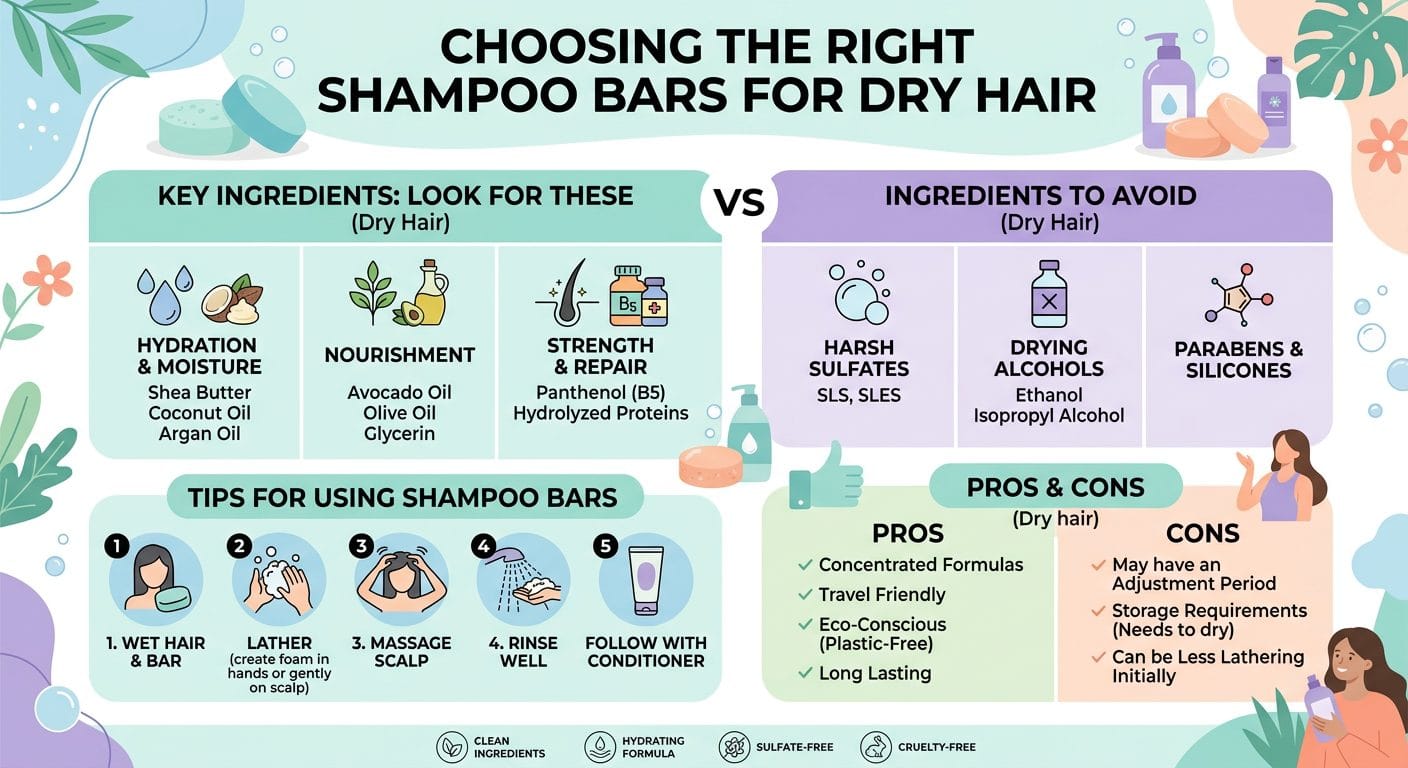
- Glycerin — holds up to 1000x its weight in water
- Panthenol (Pro-Vitamin B5) — penetrates hair shaft, reduces breakage
- Aloe vera — soothes scalp, adds shine
4. Chelating Agents (Hard Water Protection)
The hard water problem:If you have hard water (most tap water contains calcium and magnesium), these minerals:- React with shampoo to form soap scum
- Coat hair with a waxy, dull film
- Prevent moisture from penetrating
- Make hair feel dry, stiff, and heavy
- EDTA (Tetrasodium EDTA) — highly effective chelator
- Citric acid — natural chelator, also adjusts pH
- Sodium gluconate — plant-derived alternative
5. Protein-Free or Balanced Protein
Dry hair often needs moisture more than protein. Too much protein can make hair feel:- Stiff
- Brittle
- Straw-like
- Prone to breakage
What to Avoid in Shampoo Bars for Dry Hair
⚠️ Soap-Based Bars — Use with ACV Rinse
Ingredients: Sodium cocoate, sodium olivate, saponified oilsNote: Cold-process soap (pH 9-10) works well for dry hair when paired with an ACV rinse — close the cuticle and lock in moisture after every wash—❌ Sodium Lauryl Sulfate (SLS)
- Harsh detergent
- Strips natural oils aggressively
- Can irritate scalp
❌ Drying Alcohols
Ingredients: Isopropyl alcohol, SD alcohol, alcohol denatWhy avoid: Evaporates moisture from hair shaftFatty alcohols are fine: Cetyl alcohol, stearyl alcohol, cetearyl alcohol — these are moisturizing.—❌ Silicones (for some)
Ingredients: Dimethicone, cyclomethiconeWhy caution: Creates temporary smoothness but can build up and prevent moisture penetration. If your bar contains silicones, you’ll need occasional clarifying.—How to Use Shampoo Bars for Dry Hair
Step 1: Wet Hair Thoroughly
Run warm water through hair for 30-60 seconds. This:- Opens the cuticle slightly
- Helps shampoo distribute evenly
- Reduces friction (less breakage)
Step 2: Create Lather
Method 1 (direct): Rub bar gently on scalp in circular motions. Focus on roots.Method 2 (hands): Rub bar between wet hands to create lather, then apply to scalp.Don’t: Scrub bar on hair lengths (causes tangles and breakage). Apply lather from scalp downward.—Step 3: Massage Scalp
Use fingertips (not nails) to massage for 1-2 minutes. This:- Stimulates sebum production
- Ensures even cleansing
- Promotes circulation
Step 4: Rinse Thoroughly (Critical!)
Rinse for 2-3 minutes — longer than you think necessary. Leftover residue will make hair feel dry and heavy.Hard water tip: Finish with a diluted apple cider vinegar rinse (1 tbsp per cup water). This:- Removes mineral buildup
- Closes the cuticle
- Adds shine
- Balances pH
Step 5: Condition the Lengths
Shampoo bars (even moisturizing ones) cleanse. You still need conditioner for the mid-lengths and ends.Conditioner bar: Apply only to lengths and ends, not scalp. Leave on 2-3 minutes.DIY: Mix 1 tbsp coconut oil + 2 drops lavender essential oil. Apply to damp ends, leave 5 minutes, rinse.—Transition Period: What to Expect
When switching from liquid shampoo to bars, dry hair may feel:- Waxy or greasy (buildup being purged)
- Stiff or tangled
- Duller than before
- Week 1-2: Hair may feel worse
- Week 3-4: Texture improves noticeably
- Week 6+: Hair feels softer, shinier, healthier
- Use an ACV rinse after every wash
- Clarify once with a cleansing shampoo (to remove old buildup)
- Be patient — the adjustment is worth it
Best Ingredients Checklist for Dry Hair
✅ Saponified organic plant oils — coconut, sesame, sunflower, olive, castor, plus shea butter✅ Moisturizing oils (argan, jojoba, shea butter)✅ Humectants (glycerin, panthenol, aloe vera)✅ Chelating agents (EDTA or citric acid) for hard water✅ Cold-process soap (pH 9-10) with an ACV rinse✅ Sulfate-free or gentle sulfates only✅ Protein-free or balanced protein⚠️ Soap base (sodium cocoate, sodium olivate) without ACV rinse — always follow with an ACV rinse to restore scalp pH❌ Sodium Lauryl Sulfate (SLS)⚠️ High pH (above 7) without ACV rinse — cold-process soap (pH 9–10) works well when paired with an ACV rinse❌ Drying alcohols❌ Heavy silicones (if you don’t clarify regularly)—Shampoo Bar Routine for Dry Hair
Frequency
Every 3-5 days for most dry hair types. Overwashing strips the limited oils your scalp produces.Signs you’re washing too often:- Increased dryness
- Scalp feels tight after washing
- Hair loses softness quickly
Co-Washing (Conditioner-Only Washing)
Between shampoo days, you can “co-wash” — cleanse with conditioner only. This:- Refreshes hair without stripping oils
- Maintains moisture balance
- Reduces overall dryness
Deep Conditioning
Once a week: Apply deep conditioning mask to lengths and ends.DIY mask for dry hair:- 2 tbsp coconut oil
- 1 tbsp honey
- 1 egg yolk
Hard Water: The Hidden Cause of Dryness
Why hard water matters for dry hair:Hard water minerals (calcium, magnesium) coat hair with a film that:- Prevents moisture from penetrating
- Makes hair feel dry, rough, and stiff
- Dulls shine
- Causes frizz
- Builds up over time (gets worse with each wash)
- Buy a water hardness test strip (€5-10 online)
- Check your city’s water report (search “[your city] water hardness”)
- Soft: 0-60 mg/L
- Moderate: 61-120 mg/L
- Hard: 121-180 mg/L
- Very hard: 180+ mg/L
Storing Your Shampoo Bar (Prevents Waste)
Dry hair types wash less frequently, so proper storage is essential:Between Uses
- Soap dish with drainage — prevents soggy bar
- Mesh bag — allows air circulation
- Magnetic holder — keeps bar completely dry
Traveling
- After use: Let bar dry for 2-3 hours before packing
- Storage: Use tin container with holes for airflow, or wrap in cloth
- Carry-on: TSA-friendly (no liquid restrictions!)
Common Mistakes (That Make Dryness Worse)
1. Using Soap-Based Bars
“Natural” doesn’t mean better for dry hair. Soap bars are the most drying option, especially in hard water.—2. Not Rinsing Long Enough
Residue buildup makes hair feel dry and heavy. Rinse until hair feels “squeaky” (but not stripped).—3. Scrubbing Bar on Hair Lengths
This creates tangles and breakage. Apply lather to scalp, let it rinse through lengths.—4. Skipping Conditioner
Even the best shampoo bar cleanses. Dry hair needs conditioner on the lengths and ends.—5. Ignoring Hard Water
If you have hard water and don’t use a cleansing shampoo or ACV rinse, buildup will make your hair progressively drier.—6. Washing Too Often
Dry hair doesn’t need daily washing. Every 3-5 days is ideal for most people.—Dry Hair and Natural Oils: Do They Help?
Pre-Shampoo Oil Treatment
Before washing: Apply coconut, argan, or jojoba oil to dry hair. Leave 15-30 minutes (or overnight), then shampoo.Benefits:- Protects hair from detergent damage
- Adds moisture before cleansing
- Reduces hygral fatigue (damage from water absorption)
Post-Wash Oil Sealing
After washing: Apply 2-3 drops of argan or jojoba oil to damp (not wet) ends.Benefits:- Seals moisture into hair shaft
- Reduces frizz
- Adds shine
- Protects from environmental damage
Ingredients to Look For (Full List)
Cleansing (natural Base)
- saponified plant oils
- natural plant-based cleansers (gentle cleansers)
- natural coconut-derived cleansers
- Disodium Lauryl Sulfosuccinate
Moisturizing
- Argan oil
- Jojoba oil
- Shea butter
- Coconut oil (if tolerated)
- Avocado oil
- Babassu oil
- Castor oil
Humectants
- Glycerin
- Panthenol (Pro-Vitamin B5)
- Aloe vera extract
- Honey
Chelating Agents (Hard Water Protection)
- Tetrasodium EDTA
- Citric acid
- Sodium gluconate
Conditioning
- Cetyl alcohol (fatty alcohol)
- Behentrimonium methosulfate (BTMS)
- Cetearyl alcohol
Hair-Strengthening
- Hydrolyzed wheat protein (small amounts)
- Keratin (for damaged dry hair)
- Silk amino acids
Natural Answer Hard Water Shampoo Bar
Our natural formula is specifically designed for dry hair in hard water areas:Why It Works
✅ Generously superfatted — oil and butter stay on the hair after rinsing✅ Made for an ACV rinse — the acidic rinse clears hard-water film and closes the cuticle✅ Organic shea butter + castor oil — deep moisture and repair✅ Natural glycerin from cold-process saponification — draws moisture into the hair✅ Palm oil-free — ethically formulated✅ Plastic-free — sustainable packagingIdeal for: Dry, dull, or frizzy hair in areas with hard tap water (most of Europe).What makes it different:Most “moisturizing” shampoo bars fail in hard water because they lack natural oils. Ours delivers moisture, and the ACV rinse clears the mineral film — so your hair actually absorbs what the bar leaves behind.—FAQ
Do shampoo bars dry out hair?
Soap-based bars can be very drying if under-superfatted. A generously superfatted one with moisturizing oils is gentler than most liquid shampoos. The key is choosing the right formula and addressing hard water.—Can I use a shampoo bar every day on dry hair?
Not recommended. Dry hair lacks natural oils, and frequent washing (even with a gentle bar) strips what little sebum your scalp produces. Aim for every 3-5 days.—Why does my hair feel waxy after using a shampoo bar?
Hard water buildup. Minerals react with shampoo (especially soap-based bars) to create a waxy film. Solution: Use a bar with EDTA or citric acid, do ACV rinses, or install a shower filter.—How long does it take to see results?
Immediate (if no transition): Hair should feel clean and soft after first use.After transition (2-4 weeks): Hair becomes shinier, softer, and less frizzy as old buildup clears and scalp adjusts.—Are shampoo bars better than liquid shampoo for dry hair?
Depends on the formula. A natural shampoo bar with moisturizing oils is better than a liquid shampoo with harsh sulfates. A soap-based bar (like Natural Answer’s cold-process bars) works well when paired with an ACV rinse to restore scalp pH after washing.The advantage of bars:- No plastic waste
- Last longer (equivalent to 2-3 bottles)
- TSA-friendly for travel
- Often fewer synthetic additives
Do I still need conditioner?
Yes. Shampoo bars cleanse, but dry hair needs extra moisture on the lengths and ends. Use a conditioner bar or leave-in conditioner.—Can shampoo bars cause hair loss?
No — unless you’re scrubbing aggressively or using a formula that irritates your scalp. Gentle massage and the right ingredients are key.—My hair is dry and oily at the roots. What do I use?
This is common! It means your scalp is overproducing oil to compensate for dryness on the lengths. Use a gentle shampoo bar, condition only the ends, and gradually reduce washing frequency. Your scalp will adjust.—Final Thoughts
Dry hair needs moisture, protection, and pH balance. The best shampoo bars for dry hair:✅ Are generously superfatted, so oil and butter stay on the hair✅ Contain shea butter, castor and olive oil, and the natural glycerin cold process leaves in✅ Pair with an acidic rinse — 1 tablespoon of apple cider vinegar in 250 ml water — to clear any hard-water film✅ Have a short ingredient list you can actually read✅ Are free of SLS/SLES, silicones, synthetic fragrance and palm oilThe hard water factor matters more than most people realize. If you have hard water and don’t address it, even the best shampoo bar will struggle to keep your hair moisturized.Choose thoughtfully, be patient during the transition, and your dry hair will thank you.—Looking for a shampoo bar formulated specifically for dry hair in hard water areas? Explore our cold-process soap bars, made with organic plant oils and shea butter. Palm oil-free, vegan, plastic-free.Ready to Make the Switch?
Ready to experience the benefits of a natural shampoo bar? Browse our complete collection of cold-processed soap bars — each one made with 6 organic plant oils and zero synthetic additives.