



Last updated: October 13, 2026

What Is Hydroxyapatite?
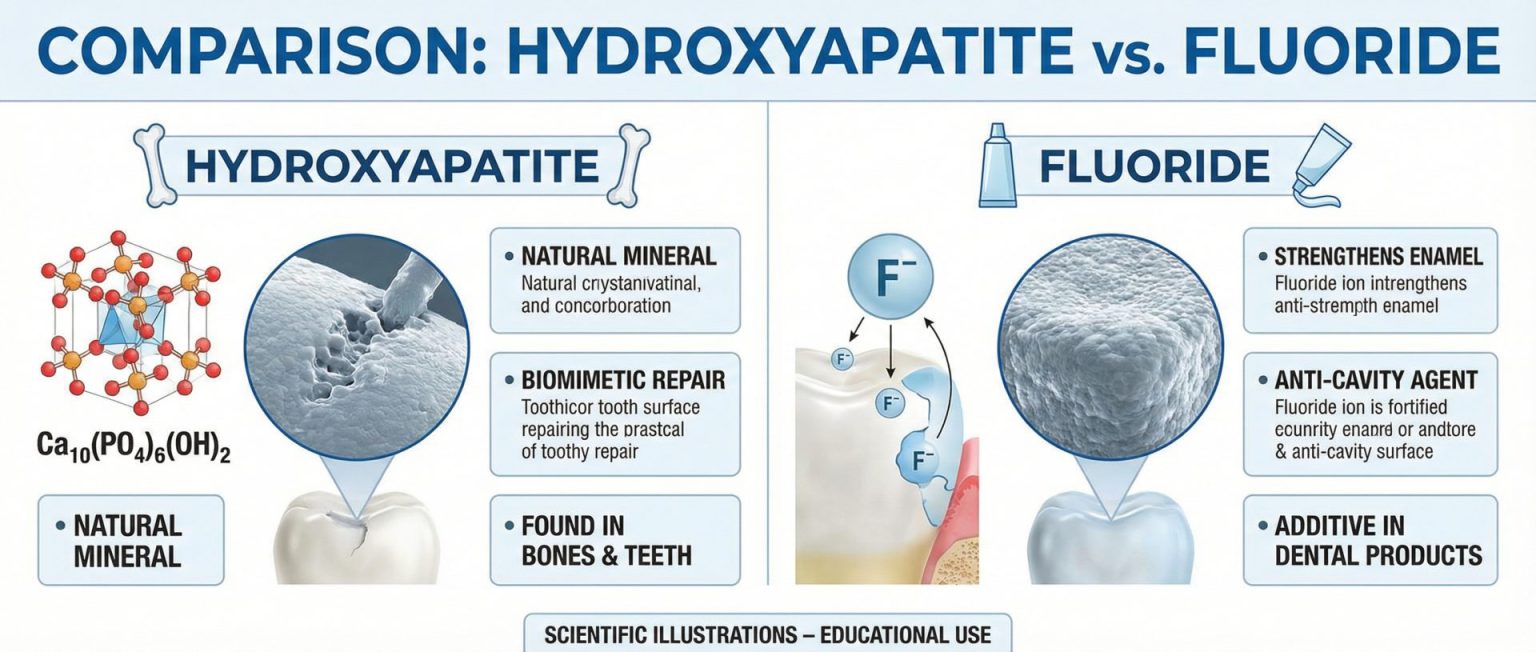
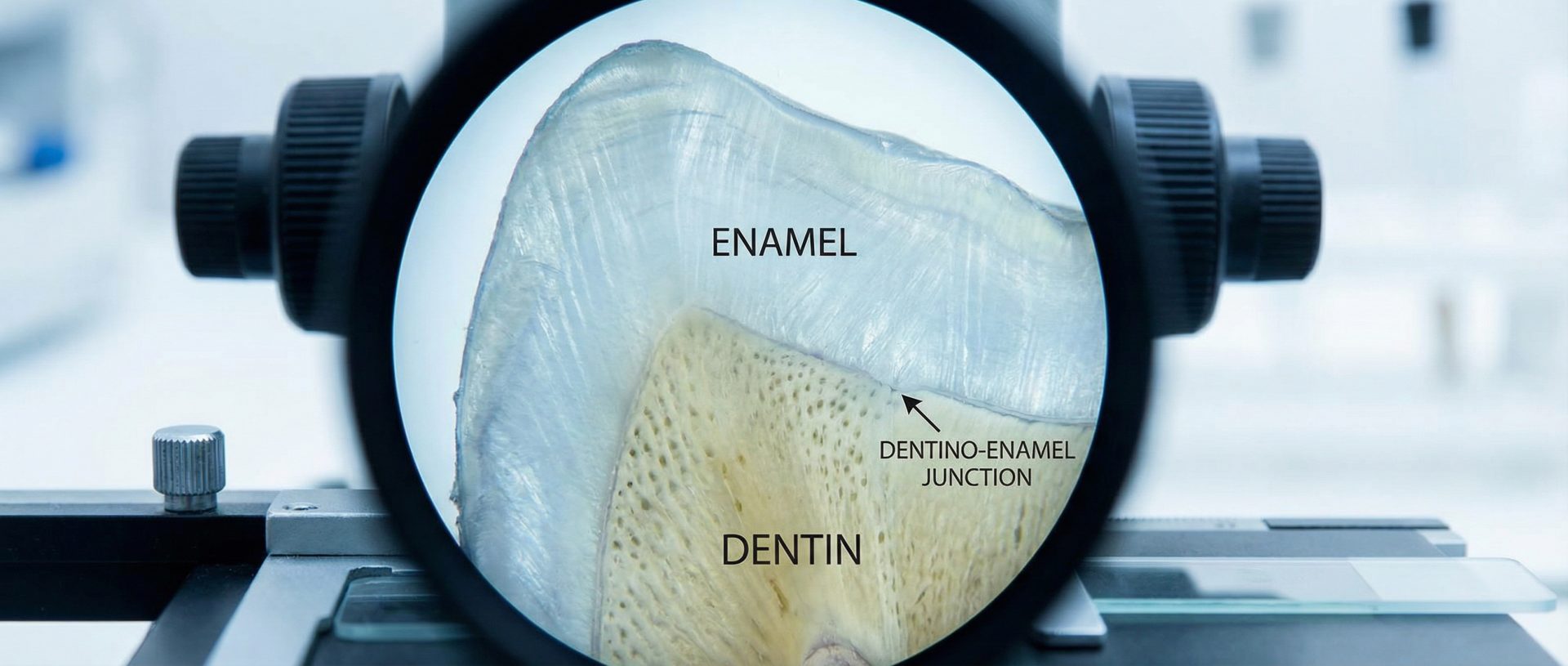
Hydroxyapatite (HAp) isn’t some new lab invention. It’s the mineral your teeth are already made of. About 97% of your tooth enamel and 70% of your dentin consists of hydroxyapatite — a naturally occurring form of calcium phosphate.
When used in dental care, hydroxyapatite works by depositing a new layer of this mineral directly onto your teeth. Think of it as patching tiny cracks and holes in your enamel with the exact same material your teeth are built from.
Japan figured this out first. NASA originally developed synthetic hydroxyapatite in the 1970s to help astronauts remineralize their teeth and bones after returning from space. By the 1980s, Japanese company Sangi had turned it into a toothpaste ingredient. Today, hydroxyapatite toothpaste has been the gold standard in Japan for over 40 years.
What Is Fluoride?
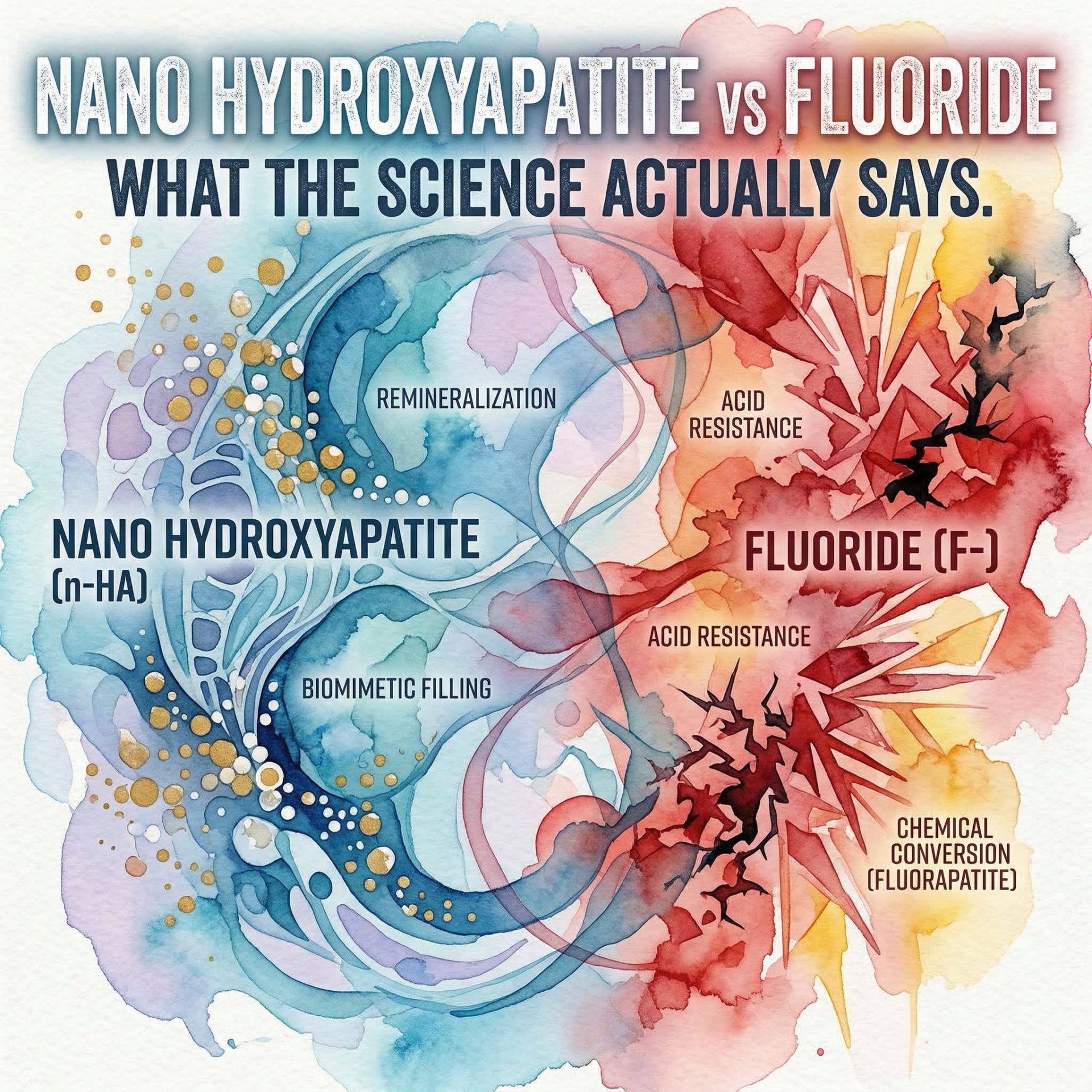
Fluoride has been the cornerstone of dental care in the Western world since the mid-20th century. It works differently from hydroxyapatite — rather than replacing lost minerals with identical ones, fluoride converts hydroxyapatite in your enamel into fluorapatite, a harder (but different) mineral.
Fluoride is effective. Decades of research prove it reduces cavities. That’s not up for debate. The question is whether it’s the only effective option — and whether the trade-offs are worth it.
Head-to-Head: How They Compare
Remineralization
Both work. A 2021 systematic review published in the Journal of Dentistry found that hydroxyapatite toothpaste produced enamel remineralization comparable to fluoride toothpaste at 1,450 ppm. A separate 2022 scoping review confirmed these findings.
The mechanism differs:
- Fluoride converts existing enamel into fluorapatite (harder but foreign to natural tooth structure)
- Hydroxyapatite deposits bioidentical mineral onto enamel (identical to natural tooth composition)
Both approaches strengthen teeth. Hydroxyapatite has the advantage of being biomimetic — it works with your tooth’s natural structure rather than chemically altering it.
Safety Profile
This is where the conversation gets interesting.
Fluoride:
- Effective but has a narrow therapeutic window
- Dental fluorosis affects roughly 25% of Americans aged 6-49 (CDC data)
- Ingestion concerns, especially for children who swallow toothpaste
- Some countries and communities have moved away from water fluoridation
- The EU has stricter limits on fluoride in cosmetics than the US
Hydroxyapatite:
- Biocompatible — your body already recognizes it
- Non-toxic even if swallowed
- No risk of fluorosis
- Safe for children, pregnant women, and anyone with fluoride sensitivity
- Used in medical implants and bone grafts for decades
For parents worried about their toddler eating half the toothpaste tube (it happens), hydroxyapatite removes that anxiety entirely.
Cavity Prevention
A landmark 2019 randomized controlled trial published in Nature’s Scientific Reports — the Karies Schutz Studie (KSS) — tested hydroxyapatite toothpaste against fluoride toothpaste over 18 months with 150 participants. The result: hydroxyapatite was non-inferior to fluoride in preventing cavities.
This matters because it means hydroxyapatite doesn’t just help in a lab setting — it holds up in real-world use over extended periods.
Sensitivity Relief
Hydroxyapatite has a notable advantage here. By filling microscopic tubules in exposed dentin, it physically blocks the pathways that transmit pain signals. Multiple studies show it’s effective at reducing tooth sensitivity — sometimes more so than fluoride-based sensitivity treatments.
If you’ve ever winced drinking cold water, hydroxyapatite addresses the root cause rather than numbing the symptom.
Whitening
Hydroxyapatite creates a smoother, more uniform enamel surface that naturally reflects more light. This produces a genuine whitening effect without bleaching agents, peroxides, or abrasives that strip enamel.
Fluoride doesn’t whiten teeth. If anything, excess fluoride causes the white spots associated with fluorosis.
Nano vs. Micro: Particle Size Matters
Not all hydroxyapatite products are created equal. The particle size makes a real difference:
Nano Hydroxyapatite (nHAp) — Under 100 Nanometers
Nano-sized particles can penetrate deeper into enamel’s micro-cracks and tubules. Most clinical studies showing results comparable to fluoride used nano hydroxyapatite. This is the form most commonly found in toothpastes.
Best for: Daily remineralization, sensitivity relief, general oral care
Micro Hydroxyapatite (40 Micron) — 40 Micrometers
Larger particles work differently. The 40-micron size provides:
- Gentle polishing action for surface stain removal
- Creates a protective mineral layer on top of enamel
- Works as a mild abrasive without damaging enamel (unlike baking soda)
Best for: Surface cleaning, stain removal, adding a protective mineral coating
Why Powder Form?
Most hydroxyapatite products come as toothpaste — mixed with water, binders, preservatives, and other fillers. The concentration of actual hydroxyapatite in these products varies widely (some contain as little as 1-2%).
Pure hydroxyapatite powder gives you:
- Higher concentration — you’re applying the mineral directly, not diluted in paste
- No unnecessary additives — no SLS, no parabens, no artificial sweeteners
- Versatility — mix with water, coconut oil, or use dry
- Longer shelf life — powder doesn’t expire like paste
- Zero waste — no plastic tubes
Simply wet your toothbrush, dip it in the powder, and brush normally. Or mix a small amount with water to create a paste. Some people alternate between nano powder (for deep remineralization) and 40-micron powder (for surface polishing) throughout the week.
What the Research Actually Says
Let’s be precise about the evidence:
Strong evidence (multiple clinical trials):
- Hydroxyapatite remineralizes enamel comparably to fluoride
- It’s non-toxic and biocompatible
- It reduces tooth sensitivity
- It prevents cavities (non-inferior to fluoride)
Growing evidence (laboratory + limited clinical):
- Antibacterial properties against certain oral bacteria
- Prevention of bacterial adhesion to enamel
- Potential benefits for gum health
Important caveat: Most dental organizations in Western countries still recommend fluoride as the primary choice. This is partly because fluoride has 70+ years of population-level data, while hydroxyapatite’s Western clinical data, though strong, is newer. Japan’s 40-year track record is often overlooked in these assessments.
Who Should Consider Hydroxyapatite?
It’s particularly suited for:
- Children — no risk from swallowing, tastes neutral
- Pregnant and breastfeeding women — non-toxic, biocompatible
- People with fluoride sensitivity — alternative that still remineralizes
- Anyone with tooth sensitivity — directly addresses the cause
- Eco-conscious consumers — powder form = zero plastic waste
- People who prefer natural products — it’s literally what your teeth are made of
You might prefer fluoride if:
- You’re at very high cavity risk and want the most established protocol
- Your dentist specifically recommends it for your situation
- You’re comfortable with the safety profile
The Verdict
Hydroxyapatite isn’t “alternative medicine” or wellness marketing. It’s a well-studied dental ingredient backed by clinical trials, used as a standard in Japan for four decades, and increasingly adopted in Europe.
The science says it works comparably to fluoride for remineralization and cavity prevention, with a better safety profile and additional benefits for sensitivity. For people looking for a fluoride-free option that’s actually backed by evidence — not just marketing claims — hydroxyapatite is the strongest candidate that exists.
The real question isn’t “does it work?” anymore. The clinical evidence settled that. The question is whether Western dental guidelines will catch up to what Japan has known since the 1980s.
Natural Answer offers both Nano Hydroxyapatite Powder (60nm) for deep remineralization and 40 Micron Hydroxyapatite Powder for gentle polishing — pure powder form, no additives, zero waste packaging.
Sources:
- Limeback et al. (2021). “Caries preventive and remineralizing effect of hydroxyapatite toothpaste.” Journal of Dentistry.
- Hannig et al. (2022). Scoping review on HAp in oral care. Clinical Oral Investigations.
- Steinert et al. (2019). Karies Schutz Studie (KSS). Scientific Reports (Nature).
- Amaechi et al. (2019). “Comparative efficacy of hydroxyapatite and fluoride toothpaste.” BDJ Open.
- CDC NHANES data on dental fluorosis prevalence.
Related Articles
- Best Hydroxyapatite Powder 2026: Complete Buyer’s Guide
- Nano vs 40 Micron Hydroxyapatite: What’s the Difference?
- Nano Hydroxyapatite for Children: Is It Safe?
Safety Information: Nano Hydroxyapatite
Our hydroxyapatite powder can be used independently as a tooth remineralisation treatment. If you are using nano hydroxyapatite powder, please review the Safety Data Sheet (SDS), provided in accordance with EU REACH regulations.
Make Your Own Toothpaste
Hydroxyapatite powder can also be used as an ingredient for homemade toothpaste. Download our free Hydroxyapatite e-book for recipes and detailed usage instructions.
Deep dive: Nano Hydroxyapatite vs Fluoride: What the Science Actually Says
Looking for the powder this guide covers?
See Nano Hydroxyapatite Powder (60nm) in our shop.
View Nano Hydroxyapatite Powder (60nm) →