


Last updated: June 9, 2026

The Swallowing Problem Every Parent Knows
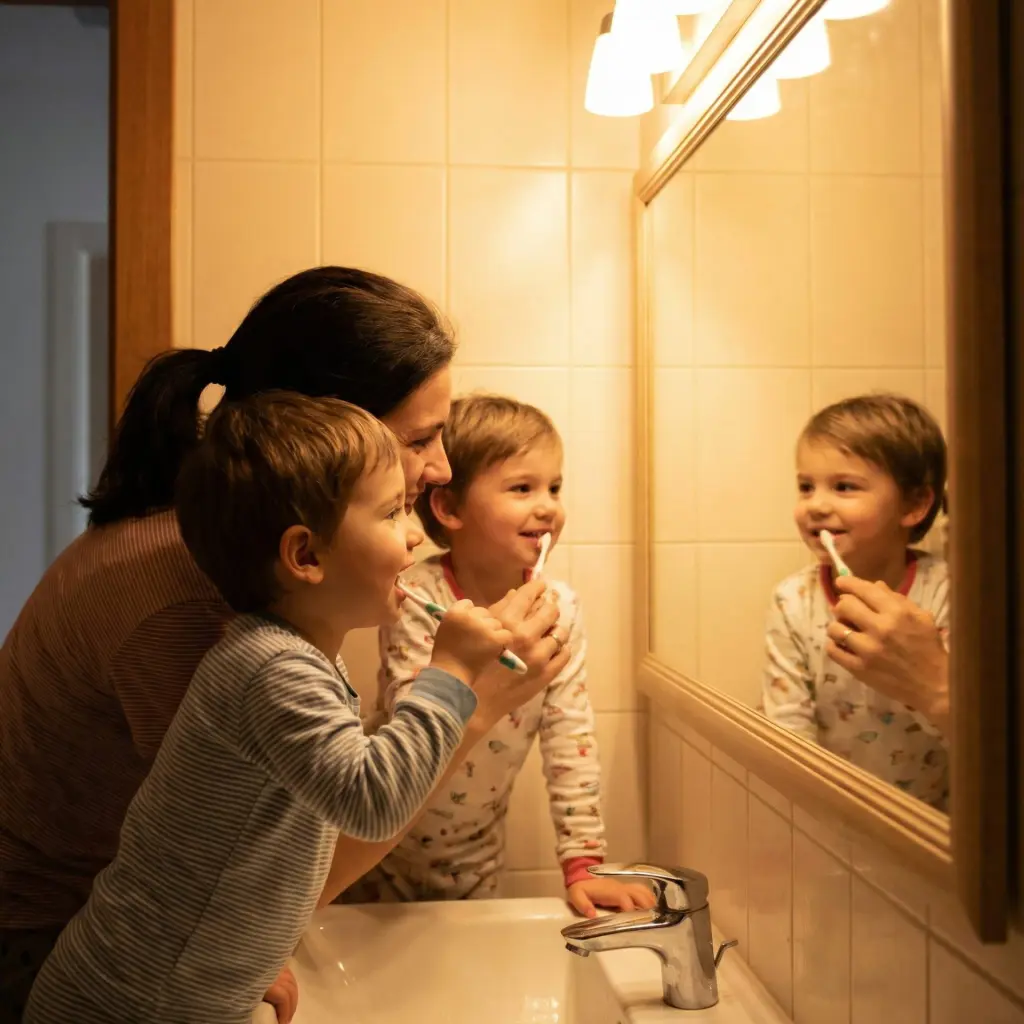
Children under 6 swallow an estimated 30-75% of the toothpaste they use. That’s not a parenting failure — it’s just what kids do. Their swallowing reflex isn’t fully developed, and toothpaste often tastes like candy. With fluoride toothpaste, this is a genuine concern. Too much swallowed fluoride causes dental fluorosis — permanent white spots or streaks on adult teeth. The American Dental Association recommends only a rice-grain-sized smear for children under 3 and a pea-sized amount for ages 3-6. Even then, supervision is required. Hydroxyapatite eliminates this worry entirely.
Why Hydroxyapatite Is Different
Hydroxyapatite is the mineral your child’s teeth are literally made of. When they swallow it, their body treats it the same way it treats the calcium in milk — it’s a naturally occurring mineral that the body knows how to process. No toxicity threshold. Unlike fluoride, there’s no amount of hydroxyapatite that becomes dangerous when swallowed. It’s used in medical bone grafts, dental implants, and orthopedic coatings precisely because the human body recognizes it as its own material. No fluorosis risk. Zero. A child could eat an entire container of hydroxyapatite powder and the worst outcome would be a mild stomach ache from the volume — the same as eating too much of any mineral supplement. No taste aversion. Pure hydroxyapatite powder has almost no taste. Children who refuse mint toothpaste (most of them, at some point) generally accept hydroxyapatite powder without a fight. No bubble gum flavoring needed to mask a chemical taste — because there’s no chemical taste to mask.
What the Science Says About Children
The Japanese Precedent
Japan approved hydroxyapatite for use in dental products in 1993 — over 30 years ago. Japanese children have been brushing with hydroxyapatite toothpaste for an entire generation. The country consistently ranks among the top nations for children’s dental health. This isn’t a new experiment. It’s established practice in the world’s third-largest economy.

Clinical Evidence
A 2020 study in BMC Oral Health examined hydroxyapatite toothpaste use in children and found it was effective at remineralizing early-stage cavities (white spot lesions) in primary teeth. The KSS (Karies Schutz Studie) — a gold-standard 18-month randomized controlled trial — demonstrated that hydroxyapatite was non-inferior to fluoride for cavity prevention. While conducted with adults, the findings are relevant because the remineralization mechanism is identical in children’s teeth. Pediatric dental researchers have specifically noted hydroxyapatite’s advantage for children: comparable efficacy without ingestion risk.
Age-by-Age Guide
Babies (First Tooth to 18 Months)
As soon as that first tooth appears, cleaning matters. For babies:
- Use a tiny fingertip brush or soft infant toothbrush
- A barely-visible amount of nano hydroxyapatite powder — just a light dust on wet bristles
- Gently wipe/brush emerging teeth and gums once daily
- No need to rinse — what they swallow is completely safe
At this age, you’re not just cleaning — you’re building the habit. The neutral taste of hydroxyapatite means babies are less likely to resist than with flavored toothpaste.
Toddlers (18 Months to 3 Years)
The “I want to do it myself” phase. Hydroxyapatite powder actually makes this easier:
- A small dip of the brush into powder is the right amount
- They can’t squeeze out half a tube of paste
- If they eat it all? No problem
- Brush together — you brush your teeth with powder too, and they’ll copy
- Let them “brush” first, then you do a proper clean
Preschool (3-6 Years)
Teeth are establishing, adult teeth are developing underneath. This is prime remineralization time:
- A light coating of powder on a wet child’s toothbrush
- Morning and evening brushing
- Start introducing the “spit don’t rinse” technique — let minerals absorb
- This is when fluoride toothpaste risks are highest (they swallow a lot but the window for fluorosis is now). Hydroxyapatite avoids this entirely.
School Age (6-12 Years)
The mixed-dentition years — baby teeth falling out, adult teeth coming in. New adult enamel is actually more porous and vulnerable than mature enamel:
- Regular powder use strengthens emerging adult teeth during their most vulnerable period
- Nano hydroxyapatite fills the microscopic pores in new enamel
- Can alternate with 40-micron powder for gentle polishing once a week
- Kids can manage their own brushing routine with minimal supervision
- Good time to explain why they’re brushing with “tooth mineral” — kids respond to science
Teenagers (12+)
Orthodontics, hormonal changes, sugary diets, and irregular brushing habits make this a high-risk period:
- Hydroxyapatite powder is safe with braces (won’t damage brackets or wires)
- Helps remineralize the white spots that often appear around brackets after braces removal
- The “clean” ingredient list appeals to teens who are becoming ingredient-conscious
- Sensitivity from orthodontic work responds well to nano hydroxyapatite
Common Parent Questions
“My dentist recommends fluoride. Should I ignore them?”
No. Have a conversation with your dentist about hydroxyapatite. Share the research. Many dentists are already familiar with it — especially those who trained in Japan or Europe, or who stay current with remineralization research. Some dentists recommend a combined approach: hydroxyapatite toothpaste/powder at home plus professional fluoride treatments at checkups. Others are comfortable with hydroxyapatite alone. The right answer depends on your child’s specific cavity risk. If your child has no history of cavities and you maintain good dietary habits, hydroxyapatite alone is well-supported by evidence. If your child is cavity-prone, discuss options with your dentist.
“Is it as effective as fluoride for preventing cavities?”
The clinical evidence says it’s comparable. The KSS trial showed non-inferiority. Multiple remineralization studies show similar performance. No study has shown hydroxyapatite to be significantly worse than fluoride for cavity prevention. The key difference: fluoride works by chemical conversion (creating fluorapatite), while hydroxyapatite works by mineral replacement (adding back what was lost). Both strengthen teeth. Hydroxyapatite does it without toxicity risk.
“What about fluoride in drinking water?”
Many European countries don’t fluoridate water. The Netherlands, Germany, France, Austria, Belgium, Denmark, Finland, and others rely on topical fluoride (toothpaste) rather than systemic fluoride (water). If you live in a country with fluoridated water, your child already gets some fluoride exposure. Adding hydroxyapatite for brushing gives them the remineralization benefits without doubling down on fluoride intake.
“Can my child use both?”
Yes. Hydroxyapatite and fluoride don’t interfere with each other. Some families use hydroxyapatite powder in the morning and fluoride toothpaste at night, or vice versa. Some newer products combine both ingredients.
“How do I get my child to brush with powder?”
Most kids find the transition easier than expected because hydroxyapatite powder has virtually no taste. Tips:
- Let them see you use it first
- Make it fun — “this is what astronaut teeth are made of” (it’s true, NASA developed it)
- Let them dip the brush themselves — it’s tactile and engaging
- Don’t force the switch overnight — introduce it alongside their regular toothpaste
- The lack of foam surprises some kids at first, but they adapt within days
“How much does it cost compared to kids’ toothpaste?”
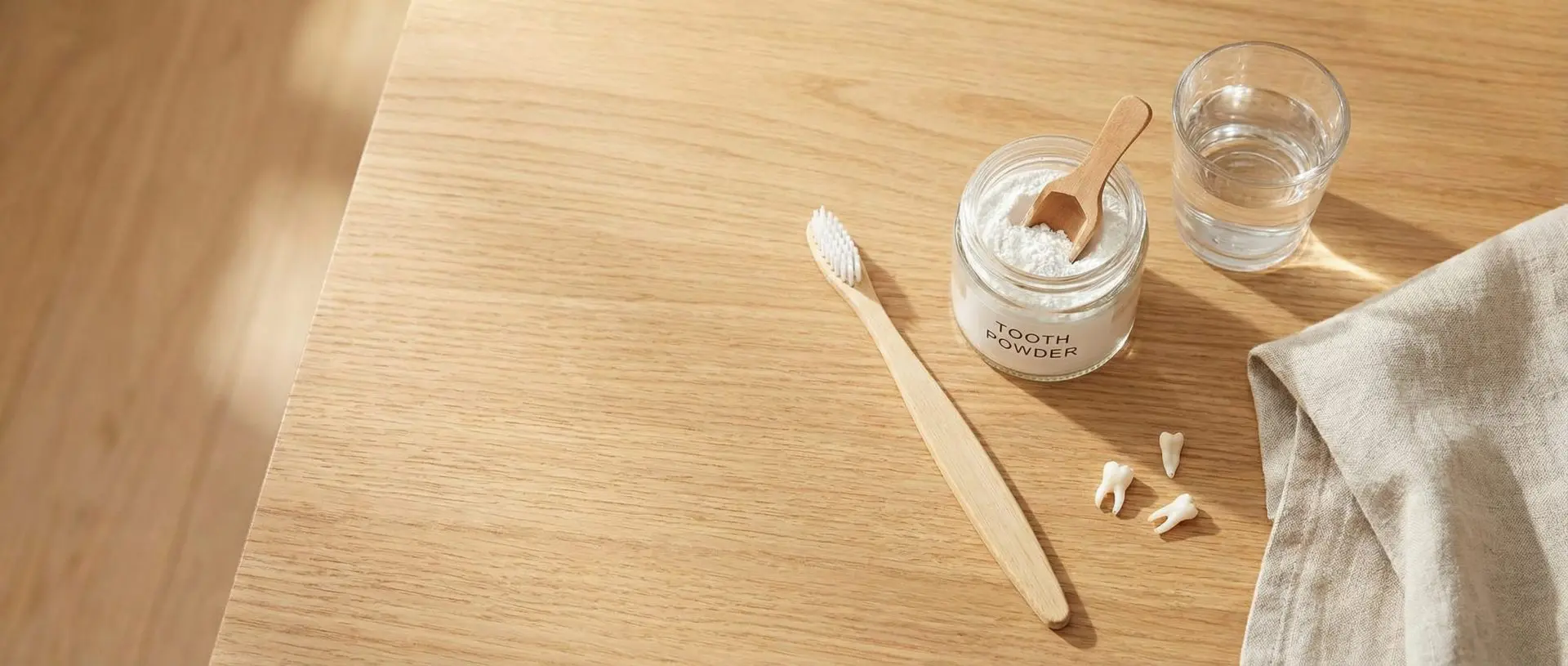
A 50g pouch of hydroxyapatite powder costs roughly the same as 2-3 tubes of brand-name children’s toothpaste. But because you use so little per brushing (just a light dip), a single pouch lasts 3-6 months for a child. Per-use, it’s significantly cheaper than commercial children’s toothpaste.
The Bigger Picture
Every generation of parents faces dental decisions. Our grandparents’ generation adopted fluoride. This generation has a choice. Hydroxyapatite offers the same cavity-prevention and remineralization benefits as fluoride, backed by decades of use in Japan and growing Western clinical evidence, without the toxicity concerns that make every parent anxious at brushing time. Your child swallowing their tooth powder shouldn’t be something you worry about. With hydroxyapatite, it isn’t. Natural Answer’s Nano Hydroxyapatite Powder (60nm) is pure, vegan, fluoride-free, and completely safe if swallowed. Zero waste packaging. One ingredient: the mineral your child’s teeth are made of.
Related Articles
- Hydroxyapatite vs Fluoride: Which Is Better for Your Teeth?
- Best Hydroxyapatite Powder 2026: Complete Buyer’s Guide
Safety Information: Nano Hydroxyapatite
Our hydroxyapatite powder can be used independently as a tooth remineralisation treatment. If you are using nano hydroxyapatite powder, please review the Safety Data Sheet (SDS), provided in accordance with EU REACH regulations.
Make Your Own Toothpaste
Hydroxyapatite powder can also be used as an ingredient for homemade toothpaste. Download our free Hydroxyapatite e-book for recipes and detailed usage instructions.
Related reading
- Nano Hydroxyapatite vs Fluoride: What the Science Actually Says
- Nano vs 40 Micron Hydroxyapatite: What’s the Difference?
Looking for the powder this guide covers?
See Nano Hydroxyapatite Powder (60nm) in our shop.
View Nano Hydroxyapatite Powder (60nm) →