


Last updated: October 9, 2026
Focus Keyphrase: shampoo bars for low porosity hair
Introduction
What Is Low Porosity Hair?
Low porosity hair has tightly closed cuticles that resist moisture absorption. While this means your hair retains moisture well once it gets in, it also means:- Products sit on the surface instead of penetrating
- Hair takes forever to get wet in the shower
- Drying takes hours (air drying feels endless)
- Oil treatments make hair greasy, not nourished
- Protein-heavy products cause stiffness and breakage
Why Low Porosity Hair Struggles with Shampoo Bars
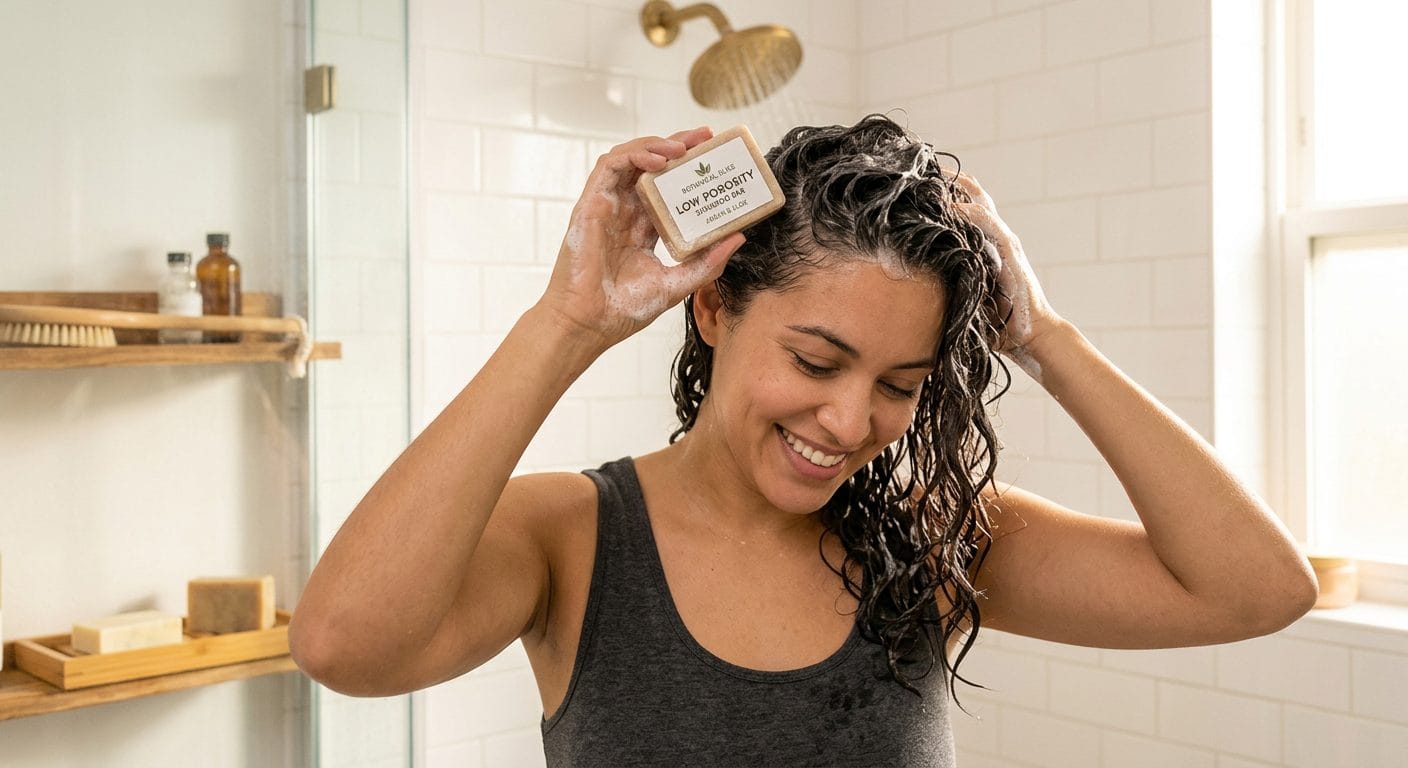
The Hard Water Factor (Europe’s Hidden Problem)
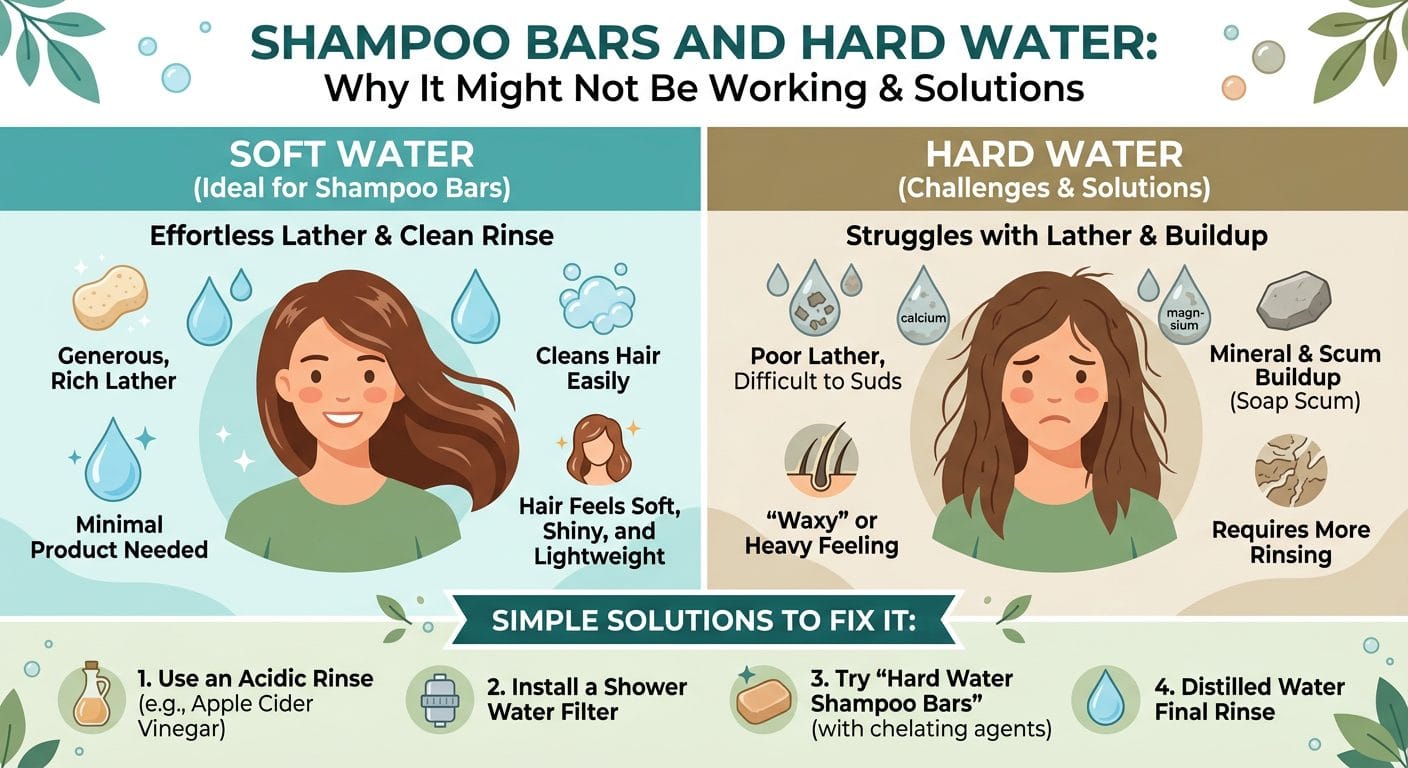
If you’re in the Netherlands, Belgium, Germany, France, or most of Europe, you’re washing in hard water—water loaded with calcium and magnesium minerals.For low porosity hair, hard water is a nightmare:- Minerals bond with shampoo bar ingredients, forming soap scum on your hair
- Your already-closed cuticles trap mineral buildup inside
- Hair feels waxy, straw-like, or coated no matter what you do
- Clarifying shampoos only work temporarily
What to Look For in a Shampoo Bar for Low Porosity Hair
1. Surfactant base and pH compatibility
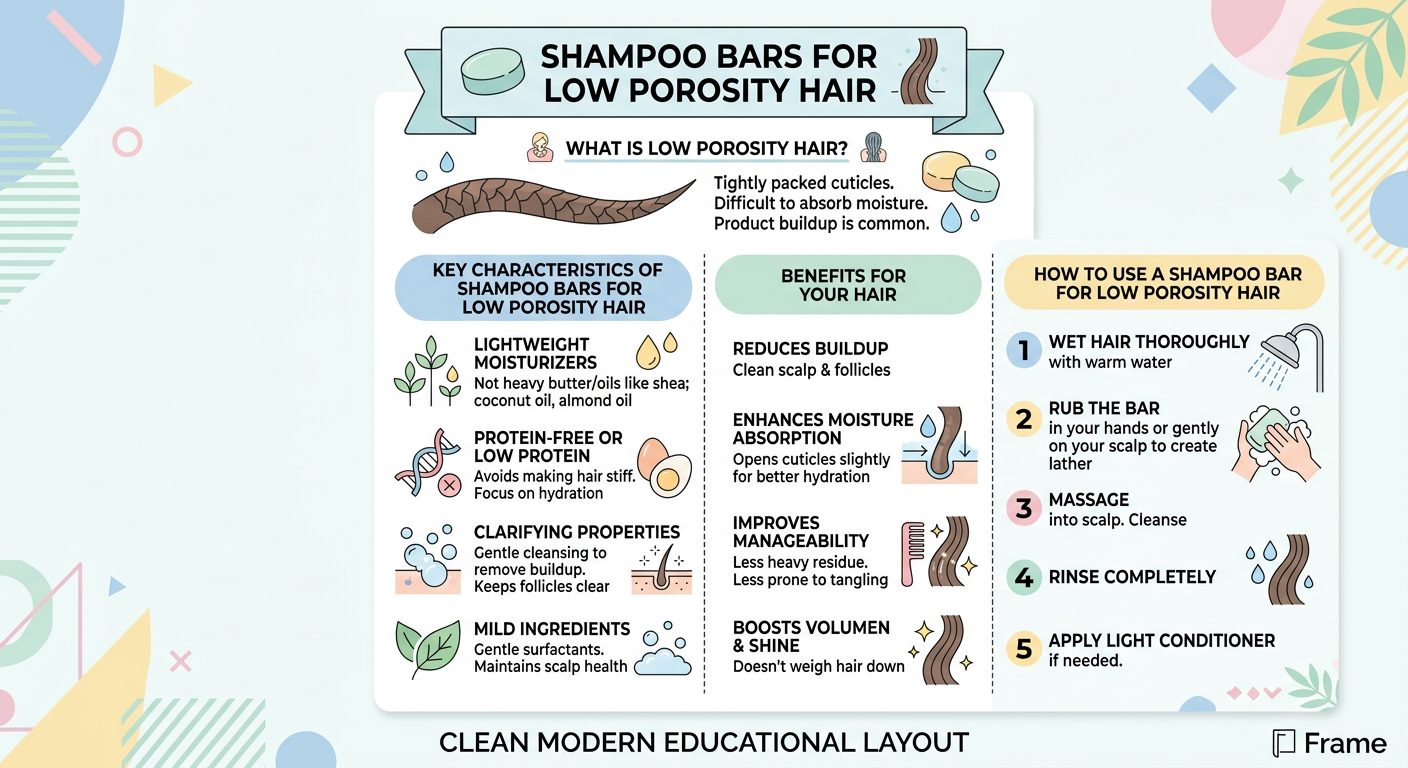
2. Lightweight, Water-Soluble Oils
Avoid heavy butters (shea, cocoa, mango). Instead, look for:- Argan oil (lightweight, absorbs well)
- Jojoba oil (mimics sebum, won’t weigh down)
- Grapeseed oil (very light)
3. cleansing Ingredients (Essential for Hard Water)
If you have hard water, look for a chelator in the bar, or use an ACV rinse after washing, to bind those minerals and rinse them away:- Citric acid (mild chelator, pH adjuster)
- EDTA (disodium EDTA or tetrasodium EDTA)
- Sodium phytate (natural chelator from rice bran)
4. Minimal Protein
A little protein is fine, but avoid bars heavy in:- Hydrolyzed keratin
- Silk protein
- Wheat protein
5. Clarifying Power
Low porosity hair benefits from gentle clarifying ingredients that remove buildup without stripping:- Tea tree oil (antibacterial, clarifying)
- Peppermint oil (stimulating, removes excess oil)
- Charcoal (absorbs impurities)
- Clay (kaolin, bentonite—draws out buildup)
Ingredients to Avoid
- Shea butter, cocoa butter, mango butter → too heavy, won’t rinse clean
- Coconut oil (in high amounts) → builds up on low porosity hair
- Beeswax → coats hair, impossible to rinse out
- Heavy proteins → stiffness, breakage
- Soap base (sodium hydroxide saponified oils) → alkaline pH, mineral buildup
How to Use a Shampoo Bar on Low Porosity Hair
Even the right bar won’t work if you’re using it wrong. Here’s the technique:1. Pre-Wet Thoroughly
Low porosity hair resists water. Spend 2-3 minutes fully saturating your hair under warm water before applying the bar. If your hair isn’t soaking wet, the bar won’t distribute properly.2. Warm Water Opens Cuticles
Use warm (not hot) water to help your cuticles lift slightly and allow the bar to cleanse without leaving residue.3. Create Lather in Hands First
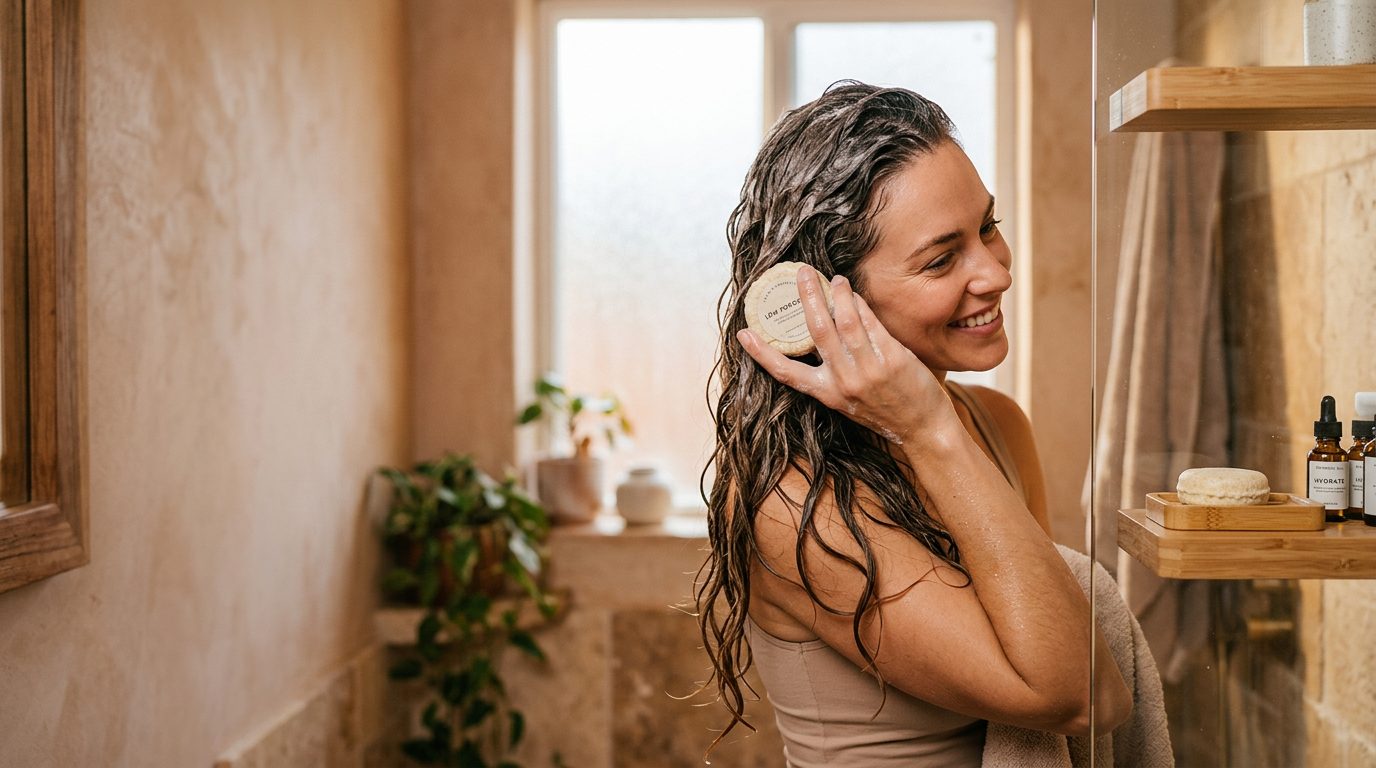
Don’t rub the bar directly on your hair—this deposits too much product. Lather in your hands, then apply foam to scalp and roots.4. Focus on Scalp
Low porosity hair doesn’t need length cleansing. Focus on your scalp where oil and buildup accumulate. The lather running through your hair as you rinse is enough for the rest.5. Rinse for 2-3 Minutes
This is critical. Low porosity hair holds onto product, so you need extended rinsing to remove all residue. Rinse until water runs completely clear and hair feels “squeaky.”6. Cool Water Final Rinse
Finish with 30 seconds of cool water to seal your cuticles and lock out future buildup.7. Apple Cider Vinegar Rinse (Weekly)
Mix 1 tablespoon ACV with 1 cup water and pour over hair after shampooing. This removes mineral buildup, balances pH, and adds shine. Rinse thoroughly.Best Shampoo Bar Ingredients for Low Porosity Hair
| Ingredient | Why It Works ||————|————–|| SCI (Sodium Cocoyl Isethionate) | Gentle natural surfactant, pH-balanced, rinses clean || Citric acid or EDTA | cleanses hard water minerals, adjusts pH || Tea tree oil | Clarifying, prevents scalp buildup || Peppermint oil | Stimulates scalp, removes excess oil || Argan oil | Lightweight moisture without coating || Activated charcoal | Absorbs impurities and product buildup || Kaolin clay | Gently cleanses, removes excess oil |Hard Water Solution: What Actually Works
If you have both low porosity hair and hard water, you have two options:Option 1: cleansing Shampoo Bar
Use a bar specifically formulated for hard water plus an acidic rinse. This is the only way to remove mineral deposits that cause waxy buildup.Option 2: Install a Shower Filter
A cleansing shower filter removes calcium and magnesium before they touch your hair. This is the permanent solution—no amount of product can fix hard water damage if the minerals keep coming.Option 3: Rinse with Distilled Water
Keep a jug of distilled water in your shower and use it for your final rinse. Inconvenient, but effective for removing minerals.The Transition Period (Yes, It Happens)
When switching from liquid shampoo to bars, your scalp might overproduce oil for 2-4 weeks. This is normal—your scalp is adjusting to not being stripped by sulfates.For low porosity hair, this transition can feel extra greasy because your hair holds onto oil longer.How to survive it:- Wash more frequently during the first 2 weeks (every other day instead of twice a week)
- Use dry shampoo between washes
- Focus shampoo bar application only on roots/scalp
- Do weekly ACV rinses to remove buildup faster
- Don’t give up before week 3—it gets better
Common Problems & Solutions
Problem: Hair feels waxy/coated after using the bar
Cause: Hard water minerals bonding with bar ingredients, or too much productSolution:- Switch to a cleansing shampoo bar (an acidic rinse)
- Rinse longer (2-3 minutes minimum)
- Do an ACV rinse to strip buildup
- Use less product—you need way less than you think
Problem: Hair gets greasy within hours
Cause: Product buildup on scalp, or bar is too heavy for your hair typeSolution:- Clarify with a cleansing wash
- Switch to a lighter, natural bar
- Focus only on scalp, avoid applying to hair length
- Consider washing more frequently until scalp adjusts
Problem: Hair feels dry and straw-like
Cause: Hard water mineral deposits, or bar is too alkalineSolution:- Add an ACV or citric acid rinse after each wash
- Rinse for longer to fully clear mineral residue
- Add a lightweight leave-in conditioner (not more oil)
Problem: Hair won’t absorb moisture
Cause: Cuticles are closed + mineral/protein buildup blocking absorptionSolution:- Clarifying wash to remove all buildup
- Deep condition with heat (shower cap + warm towel for 20 min)
- Use lightweight, water-based products only
Natural Answer Products: Why They Work for Low Porosity Hair
Full disclosure: Natural Answer shampoo bars are specifically formulated for hard water areas like the Netherlands, Belgium, and Germany—which makes them ideal for low porosity hair struggling with mineral buildup.Here’s why:1. cold-process soap (pH 9–10) → use with ACV rinse, rinses clean2. No synthetic chelators → just six saponified plant oils, pair with an ACV rinse for hard water3. No heavy butters → won’t coat low porosity hair4. Palm oil-free → no waxy residue5. Handmade in small batches → consistent qualityIf you’re in Europe dealing with hard water + low porosity hair, this combination of cleansing ingredients and natural base is exactly what you need.Tips for Success
1. Be patient → Transition period is 2-4 weeks2. Rinse thoroughly → Low porosity hair holds onto product3. Use warm water → Opens cuticles for better cleansing4. Focus on scalp → Don’t over-cleanse hair length5. Weekly ACV rinse → Prevents mineral buildup6. Less product = better results → You need way less than you think7. Avoid heavy conditioners → Stick to lightweight, water-based formulas8. Consider a shower filter → Permanent hard water solutionCan Low Porosity Hair Use Any Shampoo Bar?
Honestly? No.Most shampoo bars are designed for dry, damaged, or high-porosity hair—which needs rich oils and butters. If you have low porosity hair, those bars will make your hair worse.You need:- cold-process soap (pH 9–10) + ACV rinse
- cleansing ingredients (if you have hard water)
- Lightweight oils or no oils
- Minimal protein
- Clarifying ingredients
Final Thoughts
Low porosity hair isn’t difficult—it’s just misunderstood. You don’t need heavy moisture treatments or oil-rich products. You need gentle cleansing that won’t leave residue.The right shampoo bar for low porosity hair is lightweight, pairs with an ACV rinse, and is formulated to remove buildup (especially hard water minerals). Once you find it, you’ll wonder why you didn’t switch sooner.Your hair will dry faster, stay cleaner longer, and actually absorb the products you use. No more waxy coating. No more greasy roots. Just clean, bouncy hair.The key: Don’t settle for a bar that “sort of works.” Find one specifically designed for your hair type and water quality—and stick with the technique until your scalp adjusts.—Ready to try a shampoo bar formulated for hard water + low porosity hair? Browse Natural Answer’s natural, cleansing shampoo bars →Related guides: