



Last updated: October 12, 2026
Key takeaways
- Cold-process shampoo bars typically contain around six ingredients — no phthalates, parabens, SLS or synthetic fragrance.
- Several essential oils, including clary sage, rosemary and camphor, are best avoided in pregnancy regardless of a product’s natural label.
- Pregnancy changes hair by trimester: oilier in the first, often thicker in the second and third, with postpartum shedding peaking around months three to six.
- Lather the bar in your hands before applying to the scalp — rubbing it directly on sensitive pregnancy skin is unnecessary.
- Persistent scalp itch in the third trimester warrants medical evaluation, not just a product change.
Pregnancy is the moment most people start reading product labels seriously for the first time. Shampoo is on that list because it sits on your scalp for several minutes, runs over the rest of your body, and contains some of the most heavily synthesised ingredients in your bathroom.
Switching to a real shampoo bar during pregnancy is a practical, low-stress upgrade — if you choose the right bar. Here’s what actually matters and what’s marketing.
Why people switch to shampoo bars during pregnancy
Three concerns typically drive the change:
- Endocrine disruptors: phthalates and parabens in fragrance and preservatives
- Allergens: heightened skin and scent sensitivity during pregnancy
- Hormonal hair changes: hair often gets thicker, oilier or drier during pregnancy and old products stop performing
What’s typically in conventional shampoo (and why it’s a question)
A typical drugstore shampoo contains 25–35 ingredients including:
- SLS or SLES sulfates as the cleansing base
- Cocamidopropyl betaine as a co-surfactant
- “Parfum” / “fragrance” — an undisclosed mix of up to 100 fragrance chemicals, sometimes including phthalates
- Methylisothiazolinone, methylchloroisothiazolinone, parabens or other preservatives
- Synthetic colors
None of these are conclusively dangerous in topical wash-off concentrations. But “we’re not sure” is enough for many parents to opt out during pregnancy.
What a cold-process shampoo bar actually contains
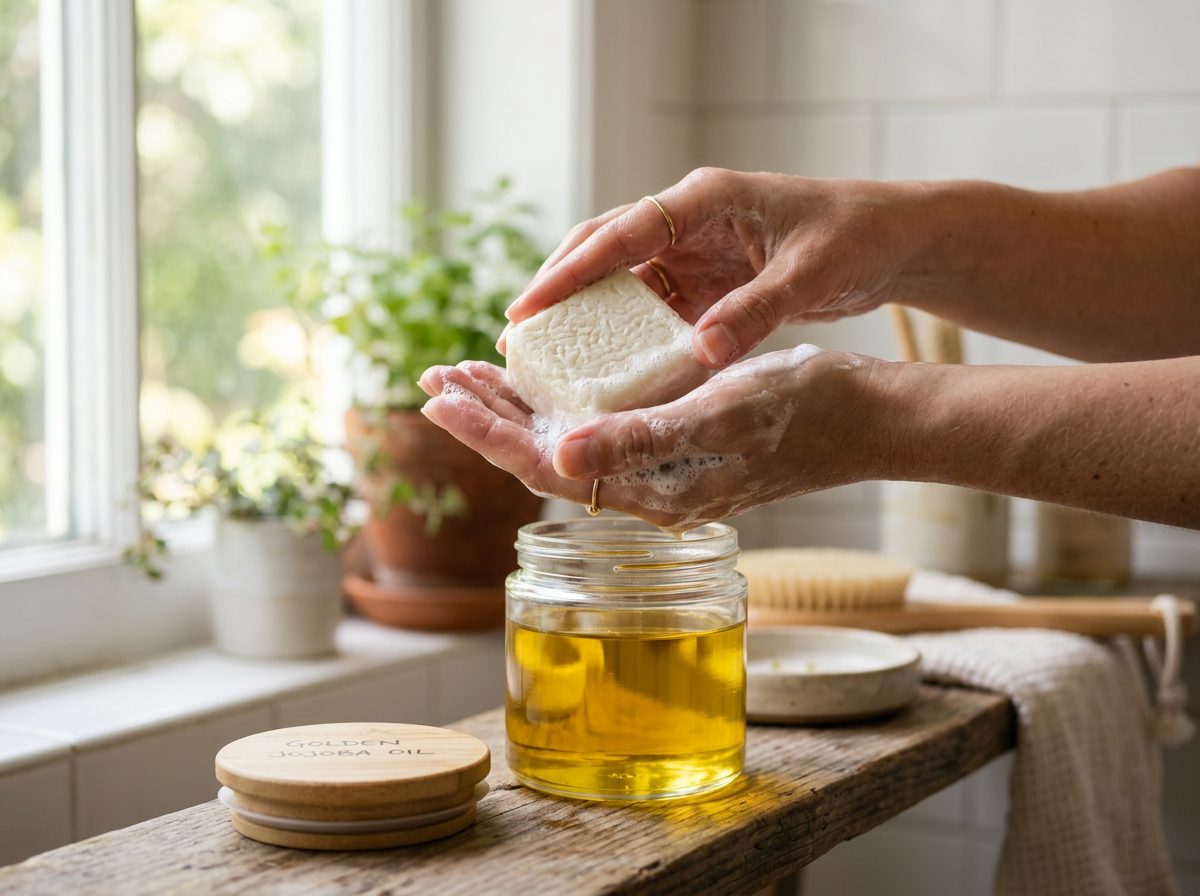
A genuine cold-process bar — like Natural Answer’s six-oil formula — has roughly six ingredients. That’s it.
- Saponified olive, coconut, castor, shea, sweet almond and rice bran oils
- Naturally produced glycerin (a by-product of saponification)
- Optional: a small amount of essential oil for scent
No phthalates. No parabens. No SLS. No synthetic fragrance. No water-soluble preservatives.
Essential oils to avoid in shampoo bars during pregnancy
This is the part most “natural” articles get wrong. Plant-based does not mean pregnancy-safe. Several essential oils are commonly cited as best avoided during pregnancy, especially the first trimester:
- Clary sage
- Rosemary
- Camphor
- Wintergreen
- Pennyroyal
- Thuja
- Tansy
- Mugwort
- Aniseed
- Hyssop
If a bar lists any of these — even labelled “natural” or “herbal” — choose another one. Most concerns are theoretical (essential oils in wash-off concentrations are very dilute), but during pregnancy, the bar is set higher.
Generally considered safer for pregnancy
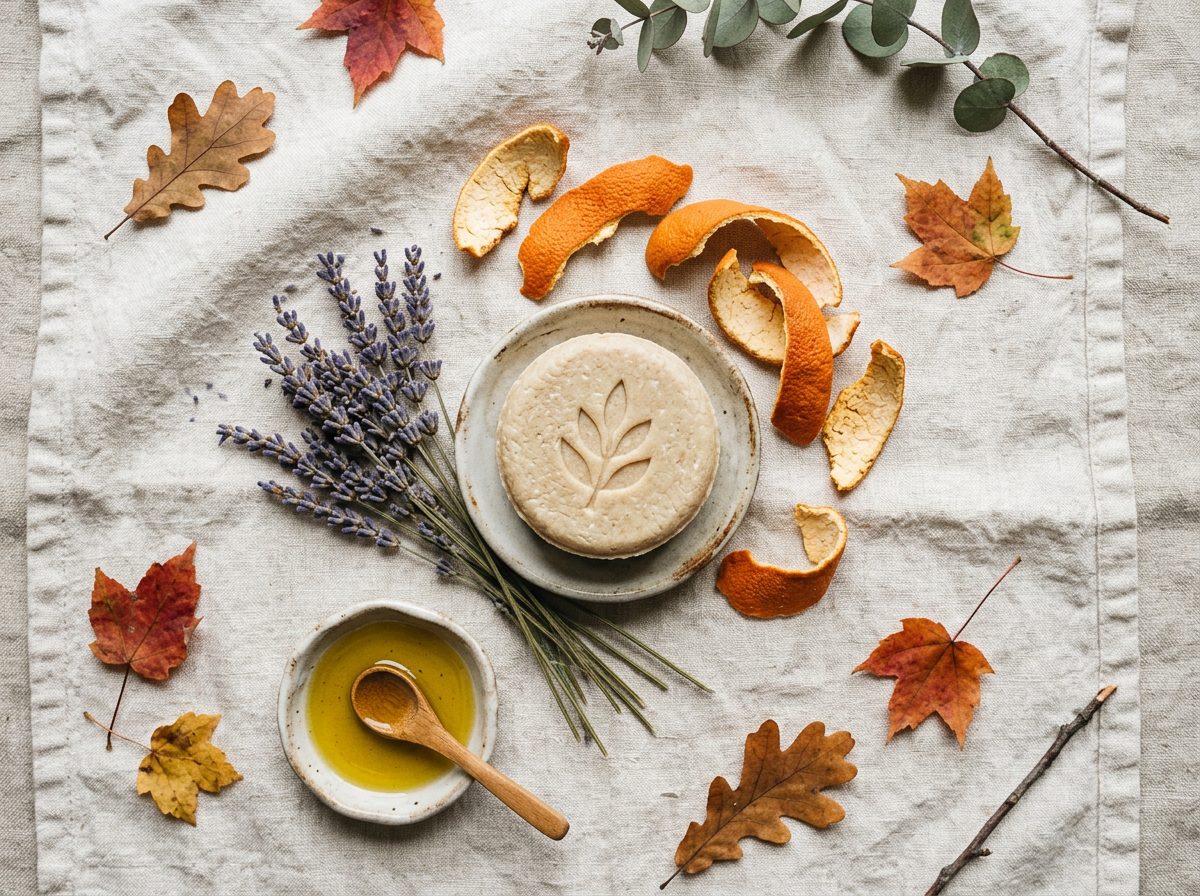
- Lavender (lightly used)
- Roman chamomile
- Sweet orange
- Ylang ylang
- Geranium (after first trimester)
If in any doubt, choose a fragrance-free bar. We make several.
Pregnancy hair shifts and choosing shampoo bars during pregnancy
Trimester 1: scalp gets oily fast
Hormonal sebum spike is real. A balanced six-oil bar with a higher coconut percentage handles oil better than heavy butter-based bars.
Trimester 2–3: hair often feels thicker
Estrogen extends the hair growth phase — you shed less. Hair feels denser, sometimes coarser. A bar with castor and rice bran oil tames frizz without weighing strands down.
Postpartum: shedding catches up
The hair you didn’t shed during pregnancy goes all at once around month 3–6 after birth. A gentle bar plus an acid rinse minimises mechanical breakage on already-stressed strands.
Practical wash routine
- Brush hair before showering with a wide-tooth comb.
- Wet hair fully with lukewarm water (hot water aggravates pregnancy itch).
- Lather the bar between your hands — never rub it directly on the scalp during pregnancy when skin is more sensitive.
- Massage lather into scalp with fingertips for 60 seconds.
- Rinse thoroughly. Skip a second wash unless you used heavy product.
- Optional acid rinse: 1 tablespoon ACV in 500 ml water, applied to lengths.
What about scent sensitivity?
A surprising number of pregnant people develop sudden aversions to fragrances they used to love. If your favourite scented bar suddenly smells overwhelming, switch to unscented immediately. We sell unscented variants specifically for this stage.
Common pregnancy hair myths
“You shouldn’t dye your hair while pregnant.” Modern semi-permanent and ammonia-free dyes are widely considered safe. Discuss with your stylist if you’re concerned.
“You can’t use any essential oils.” Many are fine in low wash-off concentrations. The list above is the cautious one.
“Bar shampoo is too harsh for sensitive pregnancy skin.” Cold-process bars made from plant oils are generally gentler than sulfate liquids.
FAQ
Is glycerin safe during pregnancy? Yes. The glycerin in a cold-process bar is naturally produced from the saponification reaction, no additives.
Can I use the same bar through breastfeeding? Yes, with the same essential-oil caution. Avoid peppermint while breastfeeding (it can suppress milk supply when used heavily).
Will a shampoo bar help pregnancy itch? A gentler wash plus an acid rinse can reduce scalp itch indirectly — but persistent itch in the third trimester needs medical evaluation (cholestasis check).
Looking for a fragrance-free shampoo bar to use throughout pregnancy? Browse our cold-process bars — palm-oil-free, vegan, with unscented options for sensitive stages.