


Last updated: October 12, 2026
Key takeaways
- Postpartum hair loss (telogen effluvium) is hormonal and temporary, typically resolving within 6–12 months of delivery.
- No shampoo bar can stop hormonal shedding, but the right bar reduces mechanical breakage and supports a healthy scalp environment during regrowth.
- Choose a fragrance-free, palm-oil-free bar while breastfeeding to avoid concentrated essential oils and endocrine-disrupting ingredients.
- Washing twice a week, lathering the bar in your hands first, and finishing with a diluted apple cider vinegar rinse all help protect fragile postpartum strands.
- Seek medical advice if shedding continues past month 9 or if you notice patchy bald spots, thyroid symptoms, or signs of iron deficiency.
Around three to six months after birth, the hair you didn’t lose during pregnancy starts falling all at once. It’s normal, it’s hormonal, and it’s almost always temporary — but it’s also alarming when you find a clump in the drain.
Choosing the right shampoo bars for postpartum hair loss won’t stop the shedding (nothing really does — it’s biology), but it can absolutely change how your scalp feels and how the hair you keep behaves while you grow new strands back in.
Why postpartum hair loss happens after birth
During pregnancy, elevated estrogen keeps roughly 90% of hair in the growing (anagen) phase — instead of the normal 80–90%. Almost nothing falls out and your hair feels its thickest in years. After delivery, estrogen crashes, and all those “extra” hairs shift into the resting (telogen) phase at once. Three months later they shed together. The medical term is telogen effluvium.
The cycle resolves on its own in 6–12 months for most people. What you put on your scalp doesn’t reverse the hormonal trigger, but it can:
- reduce mechanical breakage on already-stressed strands
- support a healthy scalp environment for the new hairs growing in
- cut out endocrine-disrupting ingredients you may want to avoid while breastfeeding
What to look for in shampoo bars for postpartum hair loss
Mild, plant-oil saponification

A real cold-process bar is just plant oils saponified with sodium hydroxide. After saponification, no lye remains — only the soap and natural glycerin. Compare that to a typical “drugstore” shampoo’s ingredient list of 25+ synthetic surfactants, fragrances and preservatives.
No fragrance synthetics or essential-oil blends marketed for “regrowth”
Many essential oils (rosemary, peppermint, clary sage) have anecdotal scalp benefits, but breastfeeding parents are often advised to avoid concentrated essential oil exposure. Choose an unscented or lightly scented bar from a brand that lists every ingredient.
Palm-oil-free, vegan, cruelty-free
Especially if you’re already rethinking household products with a baby in the house, this is a useful filter. All Natural Answer shampoo bars are palm-oil-free including derivatives, vegan, and made by hand.
How to wash with a shampoo bar without making postpartum hair loss worse
Fragile postpartum hair breaks easily when wet. The shed itself is happening at the follicle — you can’t prevent that — but you can avoid pulling extra hairs out mechanically.
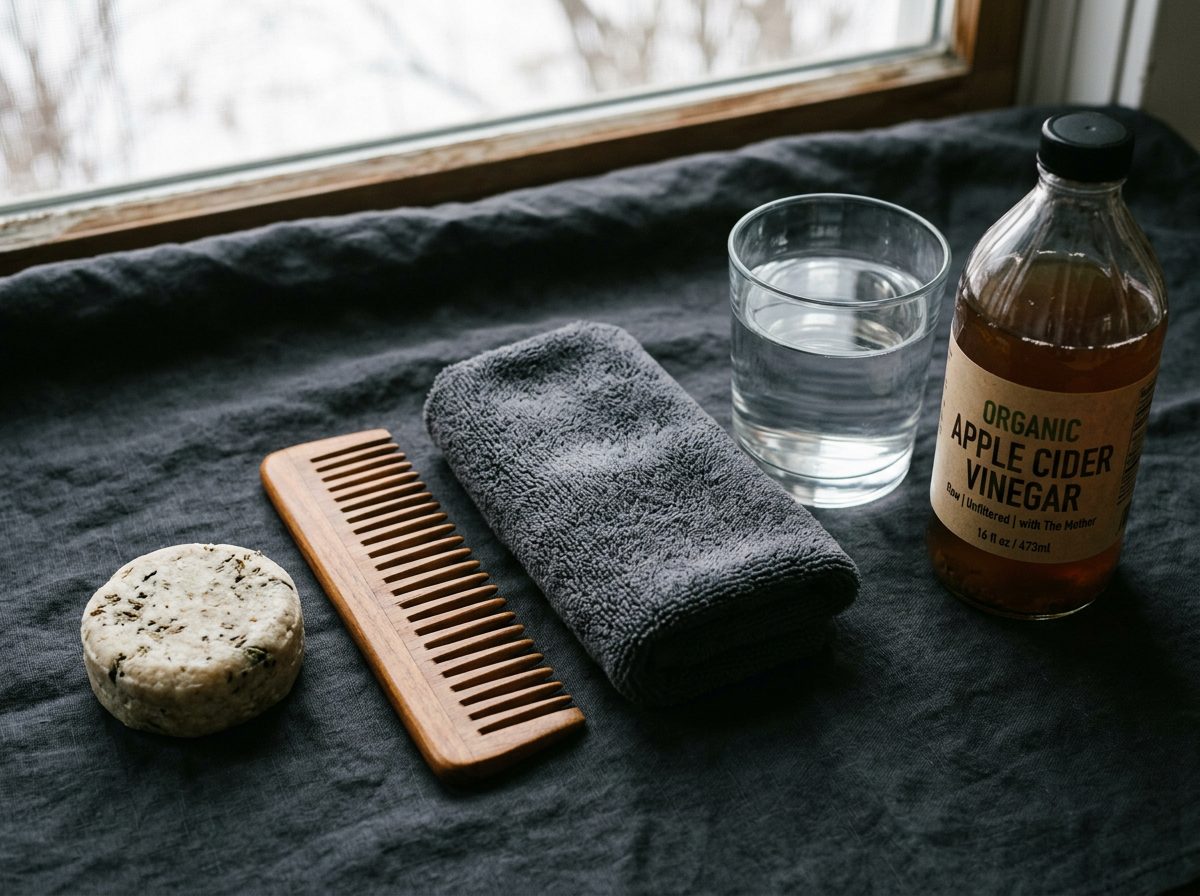
- Brush gently before the shower with a wide-tooth comb to remove tangles.
- Wet hair fully. Lather the bar between your hands first; don’t rub it onto your head.
- Massage the lather into your scalp with your fingertips, not your nails.
- Let the suds run through the lengths. No scrubbing.
- Finish with a diluted apple cider vinegar rinse (1 tablespoon per 500 ml water) to flatten the cuticle and reduce tangling.
- Squeeze (don’t twist) water out with a microfibre towel or old cotton t-shirt.
How often should you wash?
Twice a week is plenty for most people during the postpartum phase. Over-washing dries the scalp and makes the new baby hairs harder to manage. Between washes, dry-brush your scalp gently to redistribute sebum.
What about the new growth?
Around month 6–9 you’ll start to see short, often wispy hairs forming a halo at your hairline. They’re the regrowth. Avoid:
- Aggressive heat styling on the hairline
- Tight ponytails and slick buns — they break baby hairs immediately
- Silicone-heavy serums that smother the new follicles
Most parents see normal density return between 12 and 18 months postpartum.
When to call a doctor
Postpartum shedding should taper off by month 9–12. Talk to a GP or dermatologist if you experience any of the following:
- Patchy, coin-sized bald spots (could indicate alopecia areata)
- Shedding still increasing after month 9
- Brittle nails, fatigue and cold intolerance — possible postpartum thyroiditis
- Iron-deficiency symptoms (very common in breastfeeding parents)
FAQ
Will biotin shampoo help? Topical biotin is largely a marketing claim — biotin doesn’t penetrate the skin enough to affect hair production. Diet, sleep and iron status do.
Is salt-water tangling worse postpartum? Yes. Stick to sulfate-free, plant-based washes and rinse hair with fresh water after the beach.
Can I dye my hair during this phase? Wait until shedding has clearly slowed (around month 9). Highlights and bond-builders are kinder than full bleach.
Looking for a gentle, fragrance-free bar to use through the postpartum stretch? Browse our cold-process shampoo bars — six organic plant oils, no synthetic surfactants, made for sensitive scalps.