


Last updated: September 26, 2026
Introduction: “Natural” Doesn’t Mean Vegan
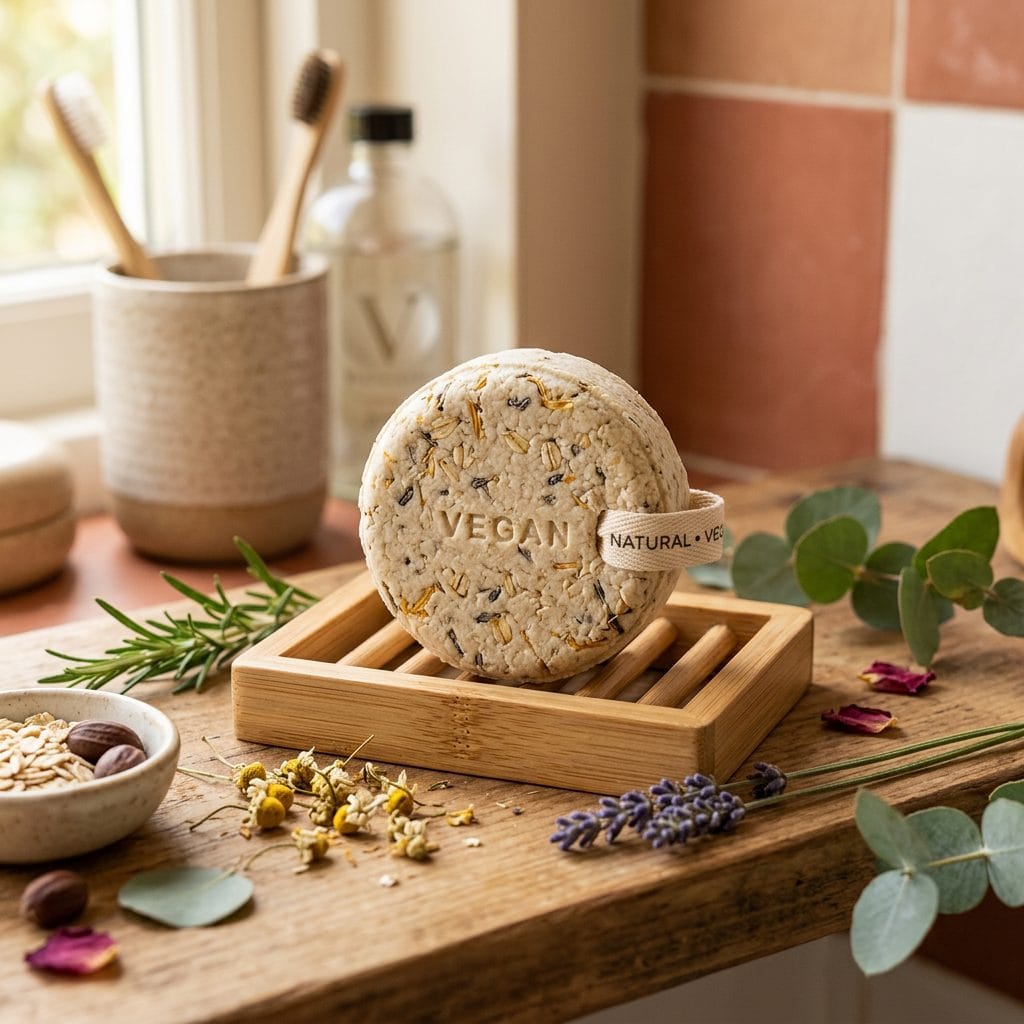
You’ve made the switch to eco-friendly shampoo bars. You’re reducing plastic waste, supporting sustainable brands, and feeling good about your choices. But here’s a question that might surprise you: Is your “natural” shampoo bar actually vegan?
The assumption is understandable. If a product is marketed as “natural,” “handmade,” or “eco-friendly,” it must be plant-based, right? Wrong. Many of the most popular natural shampoo bars contain animal-derived ingredients—some obvious, some surprisingly hidden.
Vegan vs. Cruelty-Free: Not the Same Thing
Before we dive into ingredients, let’s clarify two commonly confused terms:
Cruelty-free means the product wasn’t tested on animals. It says nothing about whether animal ingredients are used. A shampoo bar can contain honey or beeswax and still be labeled cruelty-free.
Vegan means the product contains zero animal-derived ingredients—no honey, no milk proteins, no lanolin, no animal fats. It’s a stricter standard.
You can have:
- Vegan + Cruelty-Free (ideal)
- Vegan but NOT Cruelty-Free (rare, but possible if tested on animals)
- Cruelty-Free but NOT Vegan (very common in “natural” products)
Why This Matters
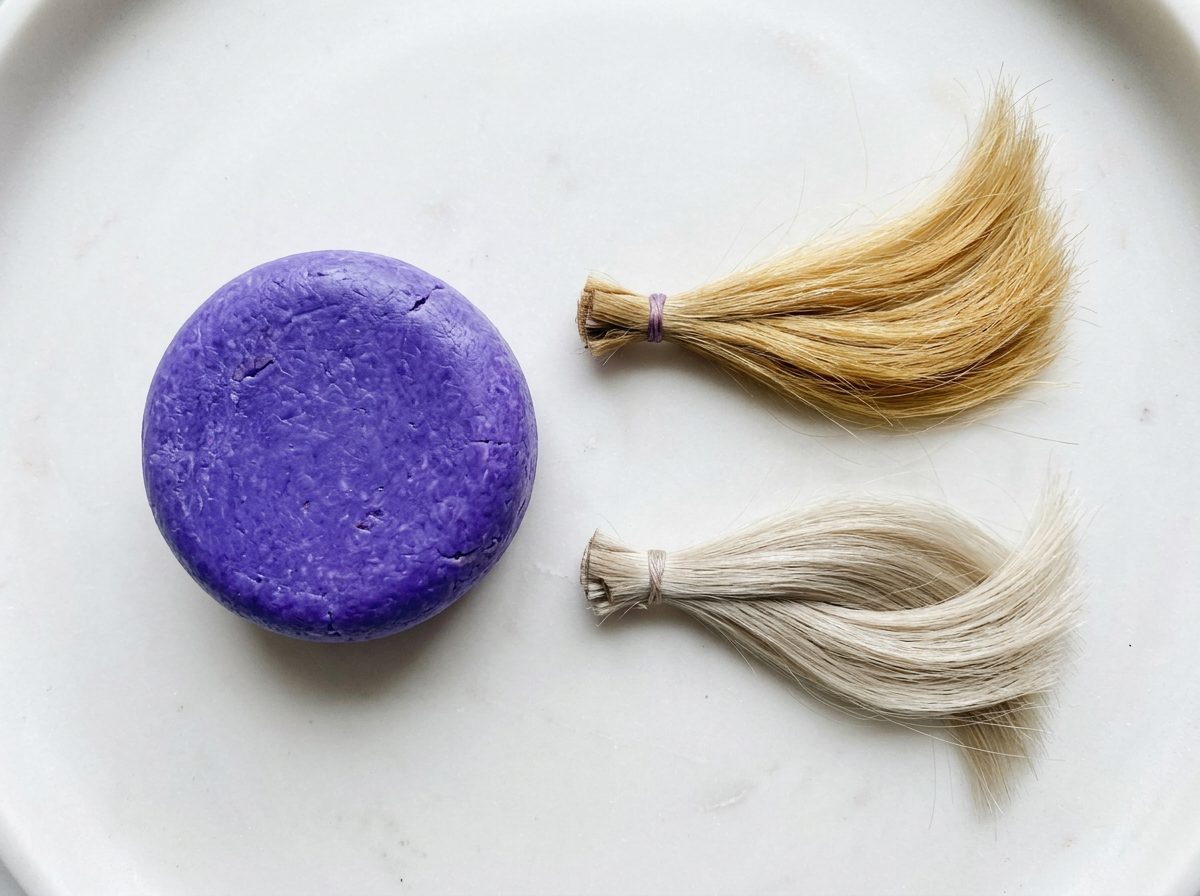
For ethical vegans, the reason is obvious: using animal byproducts contributes to animal exploitation, even if the animals aren’t killed in the process (e.g., bees for honey, sheep for lanolin).
But there are other reasons to care:
- Allergies – Milk proteins, lanolin, and silk can trigger allergic reactions
- Environmental impact – Animal agriculture is resource-intensive (water, land, emissions)
- Transparency – If a brand hides animal ingredients, what else aren’t they disclosing?
Now let’s expose the hidden animal ingredients lurking in your shampoo bar.
Hidden Animal Ingredients in a Supposedly Vegan Shampoo Bar
These are the most common animal-derived ingredients you’ll find in “natural” shampoo bars. Some are obvious, but others might shock you.
1. Honey
What it is: Bee-produced nectar
Why it’s used: Humectant (attracts moisture), antibacterial properties, marketing appeal
Why it’s not vegan: Bees produce honey for their own nutrition; commercial honey harvesting exploits bee labor
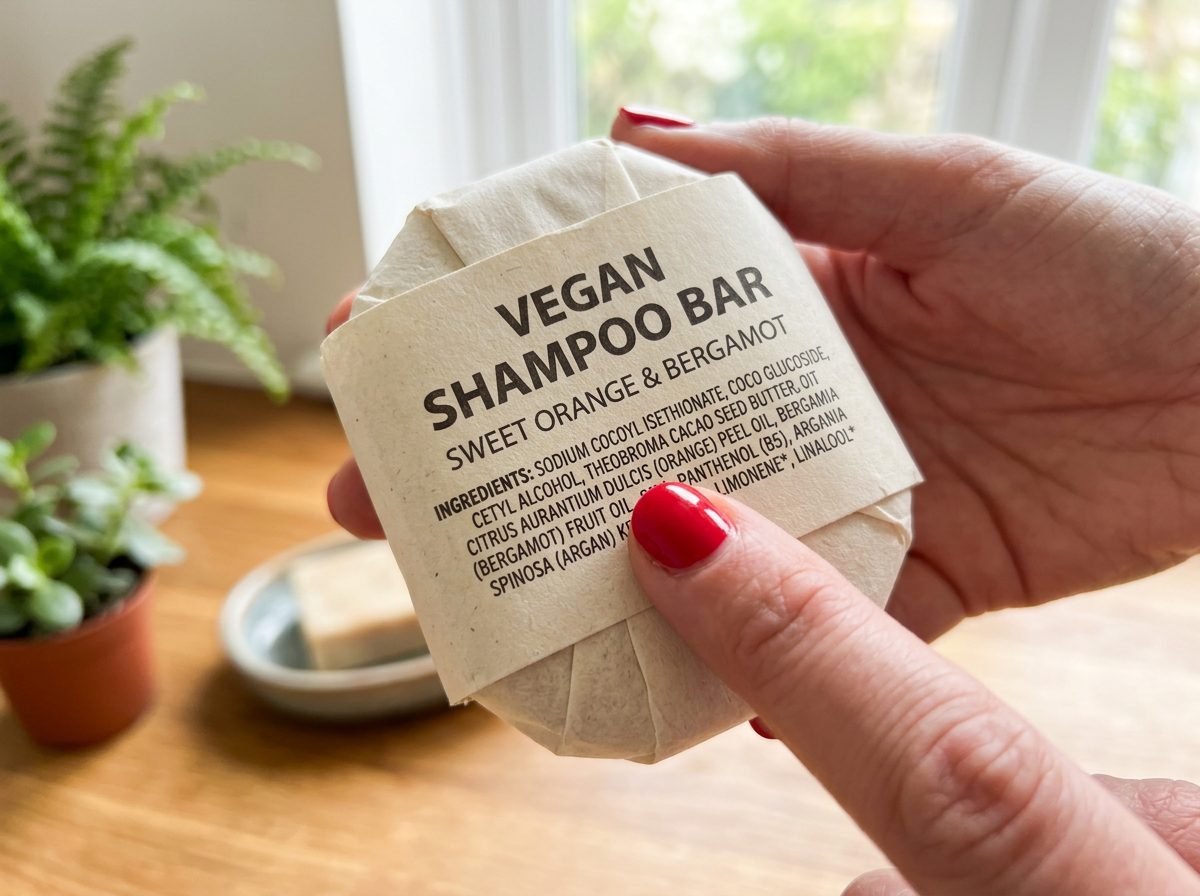
Honey is everywhere in handmade shampoo bars. It’s marketed as “natural,” “moisturizing,” and “antibacterial,” but it’s not necessary. Plant-based humectants like glycerin (when plant-sourced) work just as well.
2. Beeswax
What it is: Wax produced by honeybees to build honeycombs
Why it’s used: Texture, hardness, water resistance in bars
Why it’s not vegan: Harvested from beehives, same ethical concerns as honey
Beeswax is often used to make shampoo bars harder and more water-resistant. But plant-based waxes (like candelilla wax or carnauba wax) achieve the same effect.
3. Lanolin
What it is: Grease extracted from sheep’s wool
Why it’s used: Moisturizer, emollient, softens hair
Why it’s not vegan: Derived from sheep, often from wool industry byproducts
Lanolin is common in moisturizing shampoo bars for dry or curly hair hair. It’s effective, but it’s also a common allergen. Plant-based alternatives (shea butter, jojoba oil) work just as well without the ethical or allergy concerns.
4. Milk Proteins (Casein, Whey)
What they are: Proteins derived from cow’s milk, goat’s milk, or sheep’s milk
Why they’re used: Strengthen hair, add shine, conditioning properties
Why they’re not vegan: Dairy byproducts
Milk proteins are often marketed as “natural protein treatments” in shampoo bars. But plant proteins (rice protein, oat protein, quinoa protein) provide the same benefits without supporting the dairy industry.
5. Silk Proteins (Hydrolyzed Silk)
What it is: Protein extracted from silkworm cocoons
Why it’s used: Adds shine, strengthens hair, improves texture
Why it’s not vegan: Silkworms are boiled alive in their cocoons to extract the protein
Silk proteins sound luxurious, and they do work well for shine and strength. But the extraction process kills thousands of silkworms. Plant-based alternatives (hydrolyzed wheat protein, soy protein) deliver similar results.
6. Keratin
What it is: Protein derived from animal hooves, horns, feathers, or hair
Why it’s used: Repairs damaged hair, strengthens strands, smooths cuticle
Why it’s not vegan: Animal-derived (usually from slaughterhouse waste)
Keratin treatments are popular for damaged or chemically treated hair. The protein is structurally similar to human hair, so it bonds well. But plant-based proteins can achieve similar repair without animal byproducts.
7. Goat Milk
What it is: Milk from goats
Why it’s used: Moisturizing, creamy lather, gentle on sensitive skin
Why it’s not vegan: Dairy product
Goat milk soap is a staple in the handmade soap world. It’s marketed as gentle and natural, but it’s not vegan. Plant-based milks (coconut milk, oat milk, almond milk) can be used in soap-making with similar results.
8. Tallow
What it is: Rendered beef or sheep fat
Why it’s used: Traditional soap-making ingredient, creates hard bars with creamy lather
Why it’s not vegan: Animal fat
Tallow is less common in modern shampoo bars, but it still appears in traditional soap-based bars. It’s cheap and effective, but obviously not vegan. Plant-based oils (coconut oil, olive oil, shea butter) are standard replacements.
9. Carmine (Cochineal)
What it is: Red dye made from crushed cochineal insects
Why it’s used: Natural pink/red coloring
Why it’s not vegan: Requires killing insects
Carmine is rare in shampoo bars but can appear in pink or red-tinted products. It takes 70,000 insects to produce one pound of dye. Plant-based colorants (beetroot powder, hibiscus) are vegan alternatives.
Sneaky Ingredient Names (Animal-Derived or Ambiguous)
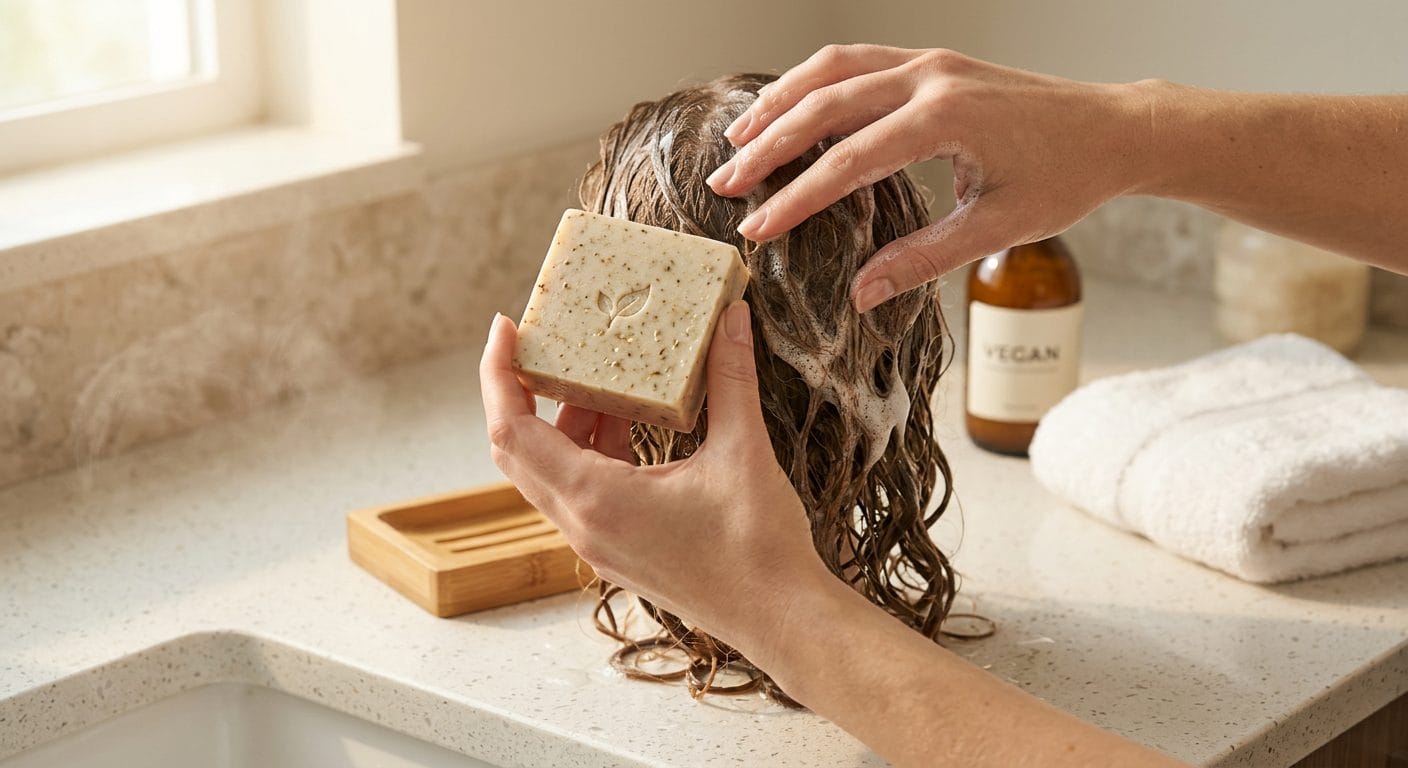
Some ingredients can be vegan or animal-derived depending on the source. Brands often don’t disclose which version they use, so you’ll need to ask directly.
Stearic Acid
What it is: Fatty acid used for texture and hardness
Sources: Can be derived from animal fat (tallow) OR plant oils (palm, coconut, shea)
How to verify: Email the brand: “Is your stearic acid plant-derived or animal-derived?”
Glycerin (Glycerol)
What it is: Humectant and moisturizer
Sources: Can be from animal fat (tallow) OR plant oils (coconut, soy, palm)
How to verify: Most modern glycerin is plant-based, but always confirm with the manufacturer
Lecithin
What it is: Emulsifier (helps oil and water mix)
Sources: Usually soy-based (vegan), but can be egg-derived (not vegan)
How to verify: If labeled “soy lecithin,” it’s vegan. If just “lecithin,” ask the brand.
Lactic Acid
What it is: pH adjuster, exfoliant
Sources: Usually vegan (fermented from corn or beets), but can be dairy-derived
How to verify: Most lactic acid in cosmetics is vegan, but confirm if you’re concerned
Cholesterol
What it is: Moisturizer and emollient
Sources: Almost always animal-derived (from wool or animal brains)
How to verify: Assume it’s not vegan unless explicitly stated otherwise
Pro Tip: If a brand is vegan, they’ll usually say so loudly. If they don’t mention it, assume ingredients could be animal-derived and ask.
Vegan Surfactants & Alternatives
Surfactants are the cleansing agents in shampoo. Fortunately, most modern surfactants are vegan, but there are exceptions.
Vegan Surfactants (Plant-Based)
These are safe for vegans:
- Cold-process soap (saponified plant oils) – Made from plant oils such as coconut (sometimes palm, verify sourcing)
- Coco-Glucoside – Coconut oil + glucose (plant-based)
- Decyl Glucoside – Corn + coconut (plant-based)
- Lauryl Glucoside – Coconut + glucose (plant-based)
- Sodium Cocoyl Isethionate (SCI) – Coconut-derived
Non-Vegan Surfactant to Avoid
- Sodium Tallowate – Made from tallow (animal fat)
- Found in traditional soap bars, rare in modern shampoo bars
Note: Even vegan surfactants can be palm oil free-derived. If you avoid palm oil for environmental/ethical reasons (orangutan habitat destruction), verify sourcing.
Palm Oil: The Vegan Dilemma
Here’s where the vegan shampoo bar conversation gets complicated: palm oil.
Is Palm Oil Vegan?
Technically, yes. Palm oil is plant-based, so it’s not an animal product.
Is Palm Oil Ethical?
Absolutely not—if you care about animal welfare and ecosystems.
The Problem:
- Palm oil production has destroyed 90% of orangutan habitat in Indonesia and Malaysia
- It’s the leading cause of deforestation in Southeast Asia
- Elephants, tigers, and rhinos are also threatened by palm plantations
- “Sustainable” palm oil (RSPO-certified) is still linked to habitat destruction
What Ethical Vegans Do
Many vegans avoid palm oil for the same reason they avoid animal products: it harms animals. If you’re vegan for environmental or animal welfare reasons, palm oil undermines those values.
Natural Answer’s Stance
Natural Answer shampoo bars are 100% palm oil-free. Every ingredient is traced to ensure zero palm-derived surfactants, oils, or additives. This is rare in the shampoo bar industry, where palm oil is the cheap default.
If you’re looking for vegan and palm-free shampoo bars, this distinction matters.
Conclusion: Vegan Shampoo Bars That Don’t Compromise
It is possible to find shampoo bars that are:
- 100% vegan (no animal ingredients)
- 100% palm oil-free (no habitat destruction)
- 100% plastic-free (zero waste packaging)
- Effective (actually cleans hair)
But you have to do your homework. Don’t assume “natural” or “eco-friendly” means vegan. Check ingredient lists, email brands, and look for third-party certifications.
What to Watch For
- Hidden animal ingredients: Honey, lanolin, milk proteins, silk
- Ambiguous ingredients: Glycerin, stearic acid (verify plant-sourced)
- Palm oil: Technically vegan, ethically questionable
- Self-declared vegan claims: Always verify
Why Choose Natural Answer?
Natural Answer shampoo bars are:
- 100% vegan – Verified zero animal ingredients (no honey, lanolin, milk, silk)
- 100% palm oil-free – cold-process soap from organic plant oils, no palm-derived additives
- 100% plastic-free – Glass jars, paper labels, zero plastic waste
- cold-process soap (pH 9–10) – pair with ACV rinse to restore scalp balance
- Transparent sourcing – Full ingredient traceability
If you’re serious about vegan, palm-free, zero-waste haircare, Natural Answer delivers on all fronts.
Try Natural Answer’s vegan, palm oil-free shampoo bars today and support a brand that values transparency, ethics, and effectiveness.