


Last updated: October 12, 2026
Key takeaways
- Hard water is the most common cause — calcium and magnesium ions bind to soap molecules and form film instead of bubbles.
- Lather the bar in your palms first, then apply foam to a fully saturated scalp; rubbing the bar directly on hair creates uneven soap deposits.
- A cold-process shampoo bar produces a small, creamy lather by design — it contains no synthetic foam-boosters.
- An apple cider vinegar rinse (1 tablespoon per 500 ml water) removes the mineral film responsible for waxy hair in hard-water areas.
- Match the bar formula to your hair type: oily roots call for a lighter, higher-coconut bar; dry or coarse hair benefits from a richer superfat formula.
You bought a shampoo bar, watched the YouTube tutorials, and now you’re staring at a wet brick that won’t foam. Something’s wrong. Almost always, that something is one of seven specific issues — and almost all of them are fixable in your current shower.
Here’s the full troubleshooting guide for a shampoo bar not lathering.
1. Your water is hard
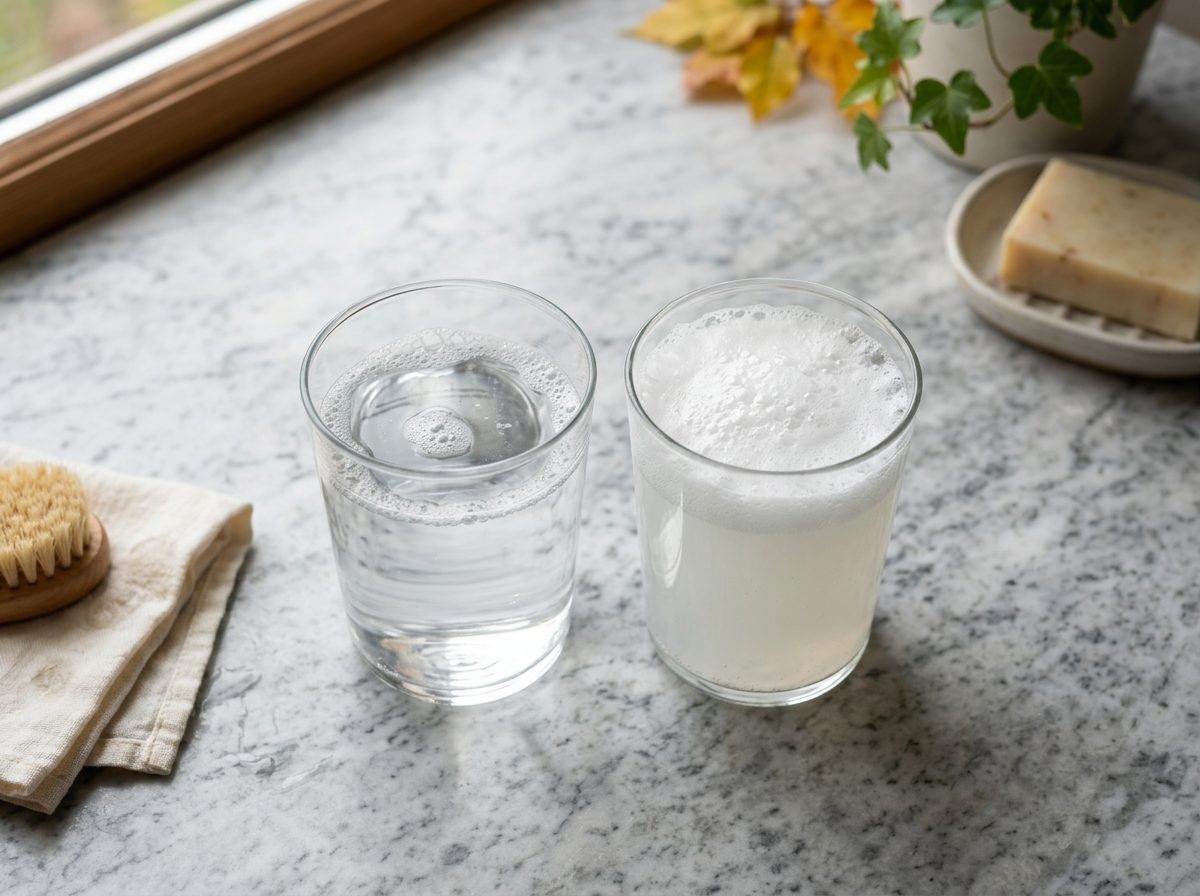
Calcium and magnesium ions in hard water bind to soap molecules and form an insoluble film instead of bubbles. This is the single most common reason a real cold-process bar refuses to foam.
Quick test: rub the bar in a glass of distilled or boiled-and-cooled water. If it foams there but not in your shower, your water is the issue.
Fix:
- Use less bar and more massage time. Fight the urge to rub harder.
- Lather between your hands first, not directly on hair.
- Finish with an apple cider vinegar rinse (1 tablespoon per 500 ml water).
- Long-term: install an inline shower filter that targets calcium.
2. You’re not wetting your hair enough
People used to liquid shampoo squeeze a dollop into damp hair. Bars need more water than that. Dry sections of hair won’t lather; they’ll just absorb soap and feel sticky.
Fix: stand under the shower for 30 full seconds. Massage water into the scalp until it’s saturated, then wet the lengths thoroughly. Then apply the bar.
3. The bar itself is too dry
Bars stored on a flat ceramic dish without drainage form a hard, slick outer layer. That layer doesn’t release soap easily. The same thing happens to bars that have been sitting on a shop shelf for many months in dry warehouses.
Fix: wet the bar fully and let it soak for 10 seconds in warm water before each use. After a few washes, the outer layer dissolves and the bar lathers normally again.
Long-term storage: use a draining dish or wooden soap saver. Never leave a bar in a pool of water (different problem — that one melts it).
4. Heavy product build-up on your hair
If you’ve been using silicone serums, leave-in conditioners or wax-based stylers, your hair shaft is essentially shrink-wrapped. The bar can’t penetrate to the scalp where the lather actually forms.
Fix: do one clarifying wash with a bar specifically designed for it (or a sulfate-based shampoo, just this once). Then switch back to your normal bar. Lather should be normal from wash two onwards.
5. You’re rubbing the bar against your head
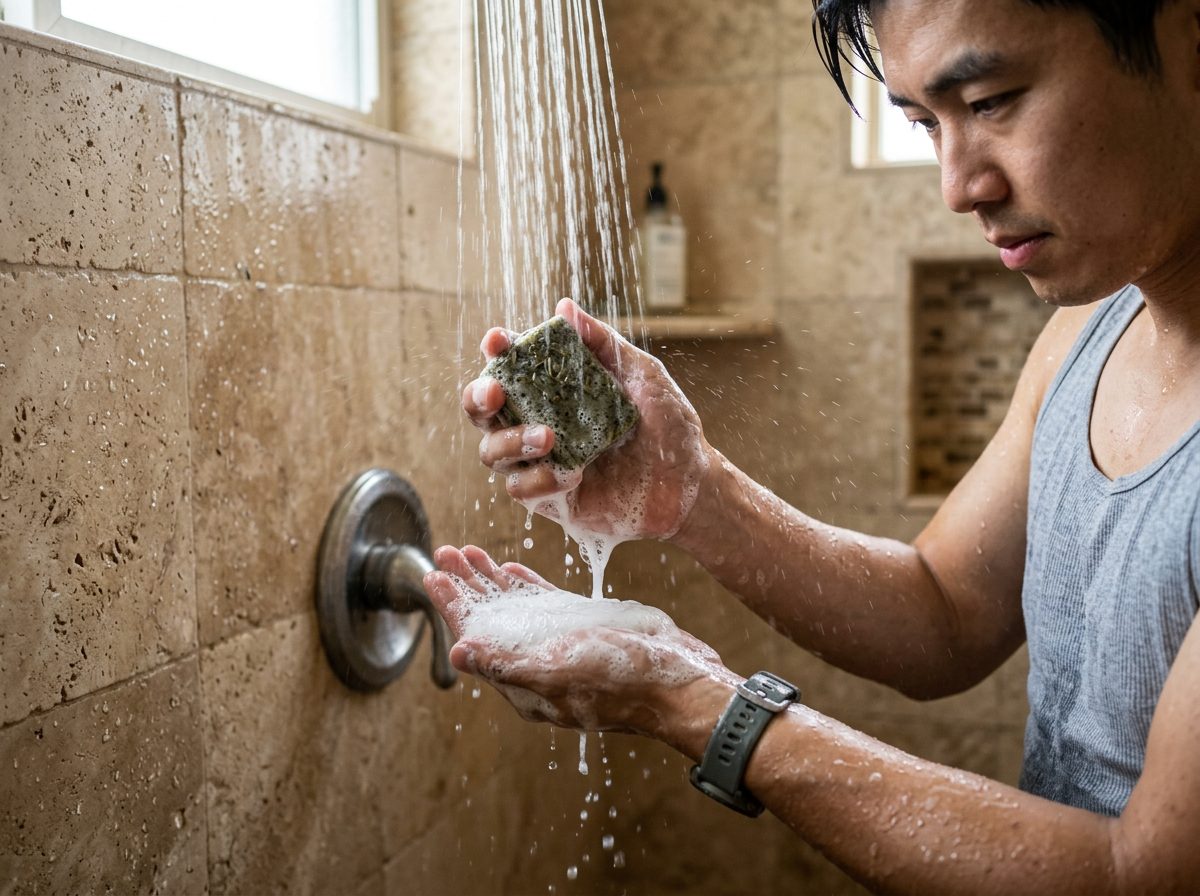
Direct rubbing of the bar against the scalp deposits too much soap in one spot and not enough across the rest. The deposited zone goes waxy. The rest stays under-cleaned.
Correct technique:
- Rub the bar between your hands 4–5 times to make foam in your palms.
- Apply foam to the scalp with fingertips, not nails.
- Massage for 60 seconds.
- Let foam run through lengths during rinse.
6. The bar is unsuited to your hair
Some bars are heavily superfat (extra unsaponified oil). They condition beautifully but lather quietly. If your bar is marketed as “ultra-conditioning” and your hair is fine and oily, the formula is fighting you.
Fix: match the bar to your hair type. Oily roots → lighter bar with higher coconut percentage. Dry, coarse hair → richer superfat bar.
7. The bar is the wrong kind
“Shampoo bar” is now a marketing umbrella for two completely different products:
- Real cold-process saponified bars — oils + lye, alkaline pH, classic soap chemistry. (Ours.)
- Synthetic detergent bars — pressed surfactant pellets in bar form, often pH-buffered, behave like solid liquid shampoo.
The two require different techniques. If you’re using a synthetic bar and expecting it to behave like a saponified one (or vice versa), you’ll be confused.
Read the ingredient list. If you see a clean list of saponified oils and glycerin, it’s cold-process. If you see Sodium Cocoyl Isethionate or other long surfactant names, it’s a detergent bar bar.
Quick lather diagnostic flowchart
- Does the bar foam in distilled water? No → bar issue (storage, age). Yes → continue.
- Does it foam between your hands at home? No → hard water. Yes → continue.
- Does it foam between your hands but not on hair? No → product build-up. Yes → continue.
- Does it foam on hair only after 60+ seconds of massage? Then your bar and water are fine; you need slightly more massage time.
FAQ
Should a shampoo bar foam as much as a liquid shampoo? No. Liquid foaming volume comes mostly from synthetic foam-boosters. A small, creamy lather is normal for cold-process.
How long should a wash take with a bar? 60–90 seconds of scalp massage. About the same as a liquid wash done properly.
If lather is fine but hair feels waxy, what’s wrong? That’s a hard-water rinse issue. Add the ACV rinse and the wax disappears.
Want a bar that lathers reliably even in tougher water? Try our six-oil cold-process bars — balanced for European water hardness.