


Last updated: October 12, 2026
Key takeaways
- Shampoo bars offer consistent, predictable results with a 7–14 day transition; no-poo demands 4–12 weeks and delivers variable outcomes depending on hair type and lifestyle.
- The baking soda no-poo method (pH 9) is not recommended — it alkalises the hair shaft and causes cumulative damage that a vinegar rinse only partly reverses.
- Shampoo bars are compatible with normal styling products and silicones (with periodic clarifying washes); no-poo is practically incompatible with most modern stylers.
- Water-only no-poo has the lowest possible eco footprint; a cold-process shampoo bar is a strong second, replacing roughly three plastic bottles per bar.
- Most people settle on a middle path: a cold-process shampoo bar two to three times per week, with water-only rinses on other days and one clarifying wash per month.
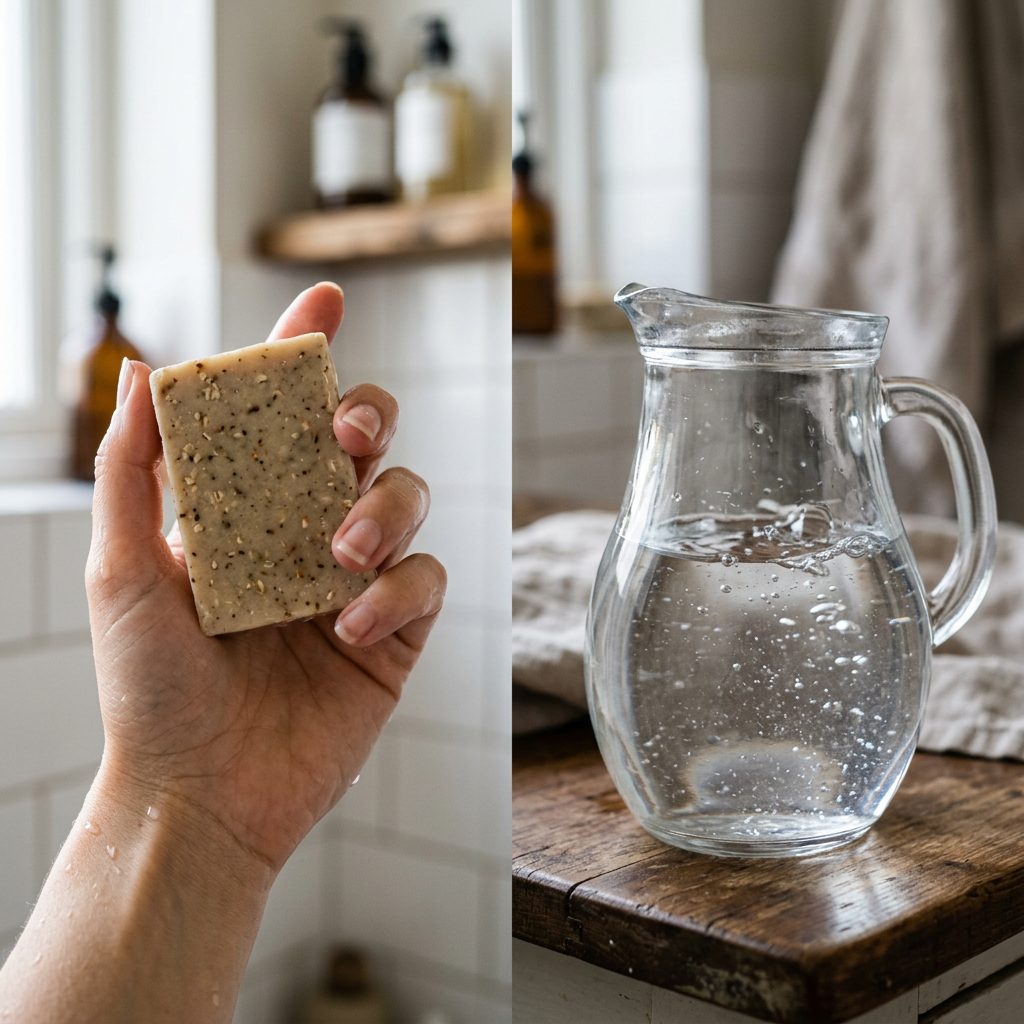
Two paths lead away from conventional liquid shampoo. The first is the shampoo bar — a real saponified soap of plant oils, plastic-free and concentrated. The second is “no-poo” — abandoning shampoo altogether and replacing it with water, baking soda + vinegar, or only conditioner.
People often try both. Some stick with one forever. Most settle into a middle path. Here’s an honest, hair-type-specific guide to shampoo bars vs no poo.
What “no-poo” actually means
The term covers a few different methods, all rejecting traditional shampoo:
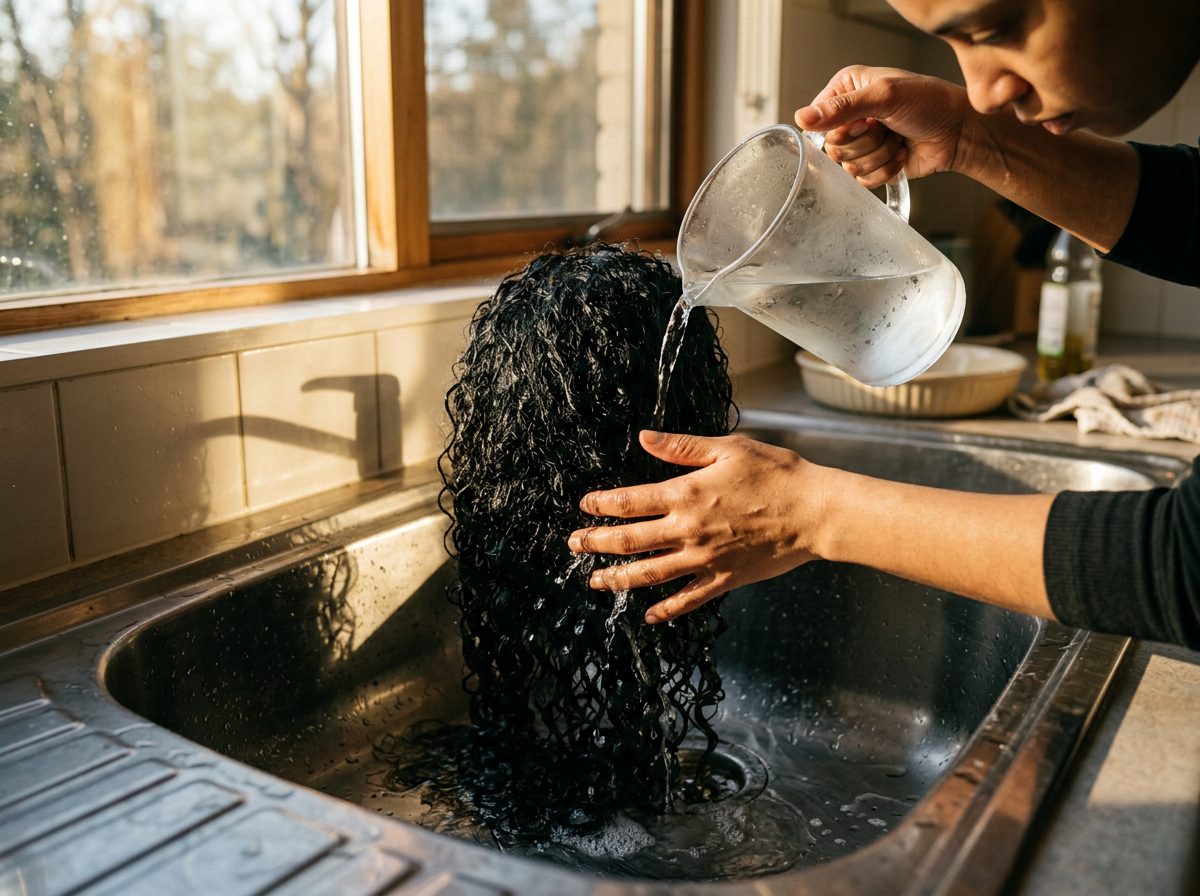
- Water-only (WO): just water and scalp massage
- Co-wash (conditioner-only): mild conditioner used to clean
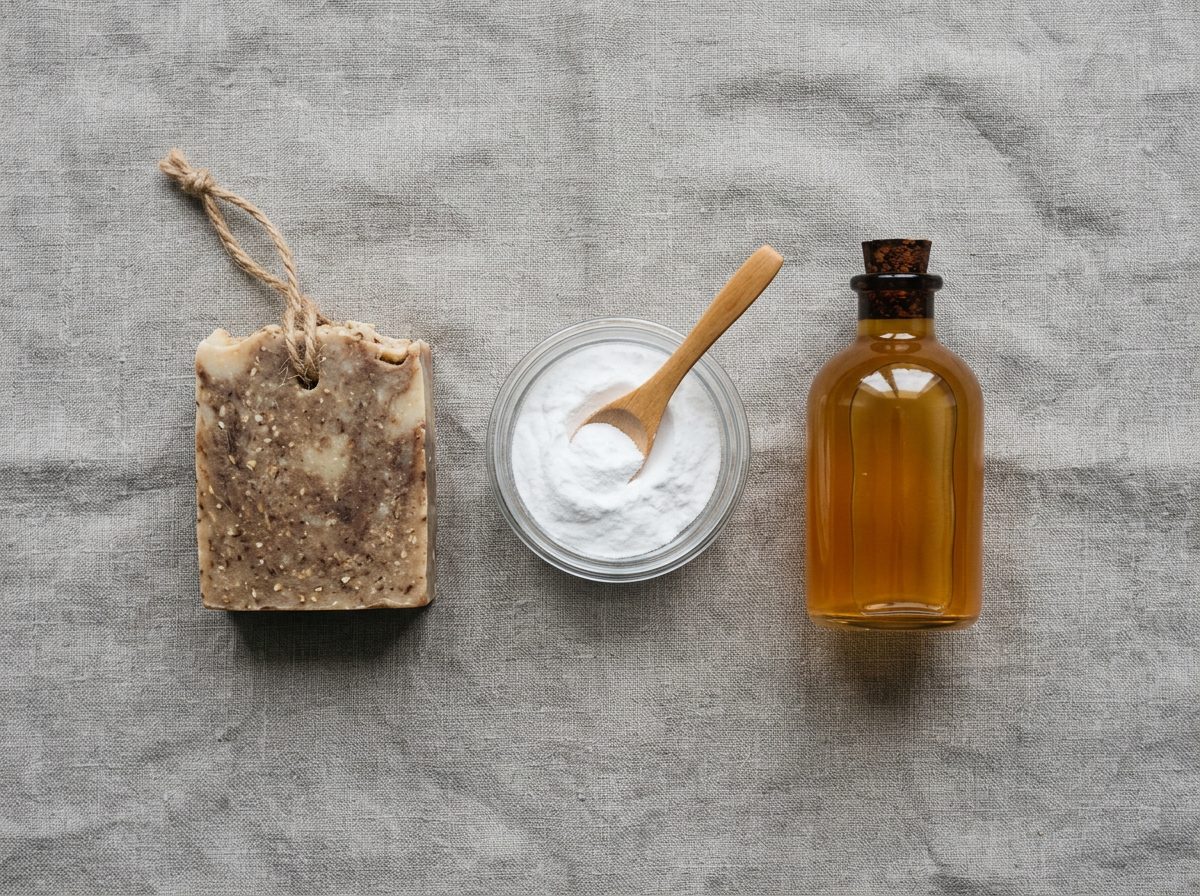
- Baking soda + ACV: baking soda paste to wash, vinegar rinse to follow (NOT recommended — harsh on the hair shaft)
- Rye flour wash: niche method using fermented or fresh rye flour as cleanser
What a real shampoo bar is
A six-oil cold-process bar like Natural Answer’s is plant oils saponified with sodium hydroxide into soap, with naturally produced glycerin. It cleans through real soap chemistry — not detergents, not surfactants — and is completely plastic-free.
The honest shampoo bars vs no poo comparison
Hair feel
- Shampoo bar: Predictable. Same lather, same finish, every wash.
- No-poo: Wildly variable. Some weeks beautiful, some weeks oily and weird.
Transition difficulty
- Shampoo bar: 7–14 days while sebum recalibrates from over-cleansing.
- No-poo: 4–12 weeks. Many people quit during week 3.
Smell
- Shampoo bar: Light or unscented depending on bar.
- No-poo: Often has a “hair smell” between washes — not bad, just present.
Compatibility with styling products
- Shampoo bar: Works with normal styling products. Silicones build up over time, but a clarifying wash resets it.
- No-poo: Practically incompatible with silicones, mousses, and most modern stylers.
Eco footprint
- Shampoo bar: Roughly 1 bar replaces 3 bottles. Plastic-free packaging, lower transport weight.
- No-poo: The lowest possible footprint. Just water.
Cost
- Shampoo bar: €0.20–€0.40 per wash for premium bars.
- No-poo: Effectively free.
Hair-type compatibility
| Hair type | Shampoo bar | No-poo |
|---|---|---|
| Fine + oily | Excellent | Hard — oil redistribution slow |
| Medium + balanced | Excellent | Workable |
| Thick + dry | Excellent (rich bar) | Often great |
| Curly | Excellent with acid rinse | Often great (co-wash) |
| Color-treated | Good with acid rinse | Risky — build-up issues |
| Very oily scalp | Good | Tough; flares acne and odour |
Shampoo bars vs no poo: downsides nobody mentions
Shampoo bars
- Hard water can make them feel waxy — an acid rinse fixes it but adds a step
- You have to learn how to lather correctly
- Storage matters — a wet flat dish destroys bars in weeks
No-poo
- Several months of greasy “transition” hair before scalp recalibrates
- Baking soda, despite popularity, is pH 9 (alkaline) and can damage the hair shaft over time
- Many sweat-heavy lifestyles (athletes, manual labour, hot climates) are incompatible
- Social discomfort — people will notice during transition
The middle path most people end up on
- Wash with a mild cold-process shampoo bar 2–3 times per week
- Acid rinse with diluted apple cider vinegar 1–2 times per week
- Water-only rinse on in-between days when needed
- One clarifying wash per month if using styling products
This combination keeps your scalp microbiome happy, your hair clean, and your environmental footprint low without the multi-month transition pain of strict no-poo.
Shampoo bars vs no poo: what about baking soda?
The classic “no-poo” baking soda method is the worst-of-both-worlds. Baking soda is far more alkaline than soap, swells the cuticle, and weakens the hair shaft over months. The vinegar rinse mitigates only some of the damage. We strongly recommend against this method — both as a soap maker and as anyone who’s read a hair-shaft pH study.
FAQ
Is a shampoo bar “no-poo”? No. Shampoo is broadly defined as anything that cleans hair other than water-only. A bar is true shampoo, just in a different form.
Can I co-wash with a shampoo bar? The bar is the wash, not the conditioner. You can use a separate conditioning bar afterwards, but they don’t substitute for one another.
How long does scalp recalibrate when switching from liquid shampoo to a bar? 7–14 days for most. Faster than no-poo, but still real.
Want the simplest, low-footprint wash without the no-poo transition? Try our cold-process shampoo bars — six organic plant oils, palm-oil-free, plastic-free.