


Last updated: October 12, 2026
Key takeaways
- A palm-oil-free shampoo bar produces roughly 3 times less CO2e per wash than a typical plastic-bottled liquid shampoo.
- Packaging is the largest single driver: a paper wrap carries a carbon footprint around 15 times lower than a 300 ml HDPE bottle.
- Not all shampoo bars are greener — palm-oil-based bars can match or exceed the footprint of a conventional liquid shampoo.
- Switching one person saves approximately 5 kg CO2e per year; a household of four saves around 20 kg CO2e annually.
- Beyond carbon, bars eliminate plastic packaging entirely and avoid palm-oil land-use change.
“Shampoo bars are better for the planet” is one of those marketing claims people repeat without ever pulling the math. Sometimes the math is dramatic. Sometimes it’s a rounding error. Let’s actually crunch it.
Here’s a transparent look at the shampoo bar carbon footprint compared to a typical liquid shampoo bottle, in real numbers.
What we’re actually comparing

One 90 g cold-process shampoo bar replaces, in real-world wash counts, roughly 250–350 ml of liquid shampoo. We’ll use 300 ml as a fair midpoint. So the comparison is:
- Bar: 1 × 90 g paper-wrapped cold-process bar
- Liquid: 1 × 300 ml plastic-bottled liquid shampoo
What goes into the shampoo bar carbon footprint
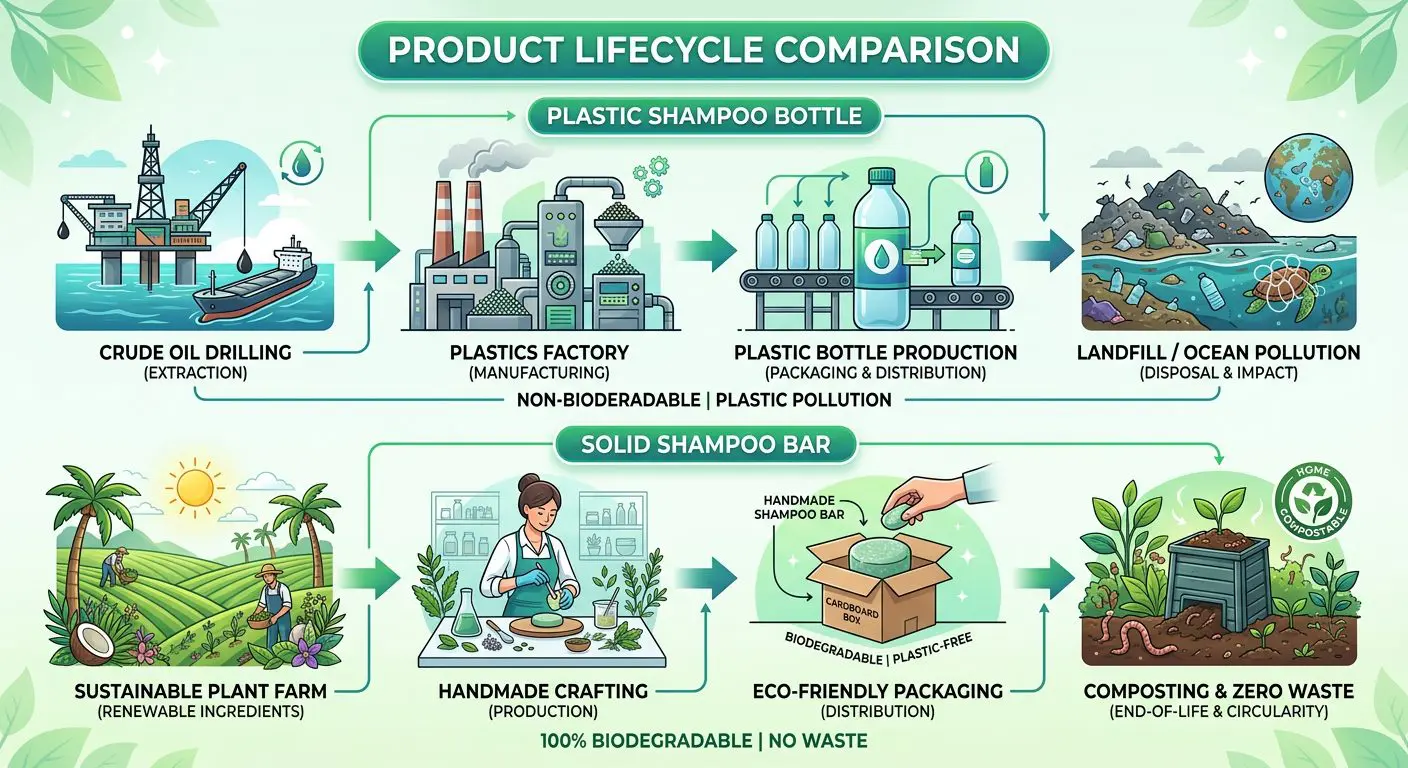
Roughly four buckets, in descending order of impact for shampoo:
- Packaging: the bottle itself
- Transport weight: the water in liquid shampoo is mostly… water
- Ingredients: palm oil, surfactants, preservatives
- Use phase: hot water and energy in your shower
Use phase is the same for both products. Where they diverge is the first three.
Packaging

A typical 300 ml HDPE plastic bottle weighs around 28 g. HDPE has a manufacturing footprint of roughly 1.9 kg CO2e per kg of plastic produced. So per bottle:
- 0.028 kg × 1.9 = 0.053 kg CO2e per bottle
A paper-wrapped shampoo bar uses around 4 g of recycled cardboard per wrap, with a footprint of roughly 0.9 kg CO2e per kg of recycled paperboard:
- 0.004 kg × 0.9 = 0.0036 kg CO2e per wrap
Packaging delta: roughly 15× less for the bar.
Transport weight
Liquid shampoo is around 80% water. Shipping water from factory to warehouse to retailer to your doorstep adds non-trivial fuel. Per 300 ml bottle, that’s about 240 g of water moved.
A bar contains effectively zero water and weighs ~94 g (bar + wrap). For an equivalent number of washes:
- Liquid shipping mass per wash: ~10 g
- Bar shipping mass per wash: ~3 g
Average road-freight footprint is roughly 0.062 kg CO2e per tonne-km. Across a typical European supply chain (say 800 km warehouse to door), the difference per wash is small but compounds across millions of washes per brand.
Transport delta: roughly 3–4× less for the bar.
Ingredients
This is where bars don’t always win automatically. The decisive variable: palm oil.
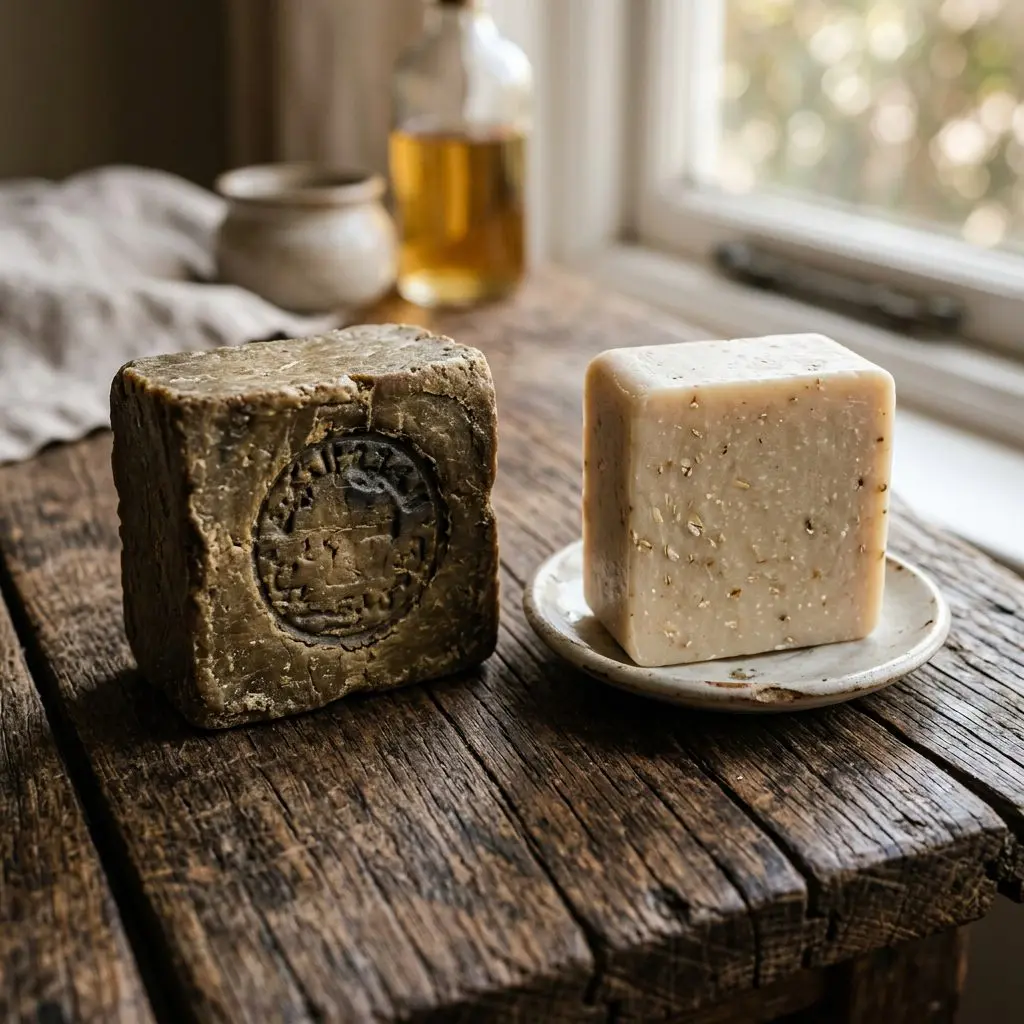
A typical commercial shampoo bar uses sodium palmate (saponified palm oil) as the bulk ingredient because it’s cheap. Palm oil’s land-use footprint — especially from non-RSPO Indonesian/Malaysian sources — can push a bar’s ingredient footprint higher than a synthetic-surfactant liquid.
Natural Answer bars are 100% palm-oil-free, including derivatives. We use olive, coconut, castor, shea, sweet almond and rice bran. Footprints per kg of these oils (cradle-to-gate, average sources):
- Olive oil: ~6.3 kg CO2e/kg
- Coconut oil: ~2.5 kg CO2e/kg
- Sweet almond oil: ~3.8 kg CO2e/kg
- Rice bran oil: ~1.9 kg CO2e/kg
For comparison, sodium lauryl sulfate (SLS) production sits around 2.0–3.0 kg CO2e/kg. So our oil blend is in the same range as conventional surfactants, with no land-use displacement of rainforest.
Per-wash shampoo bar carbon footprint comparison
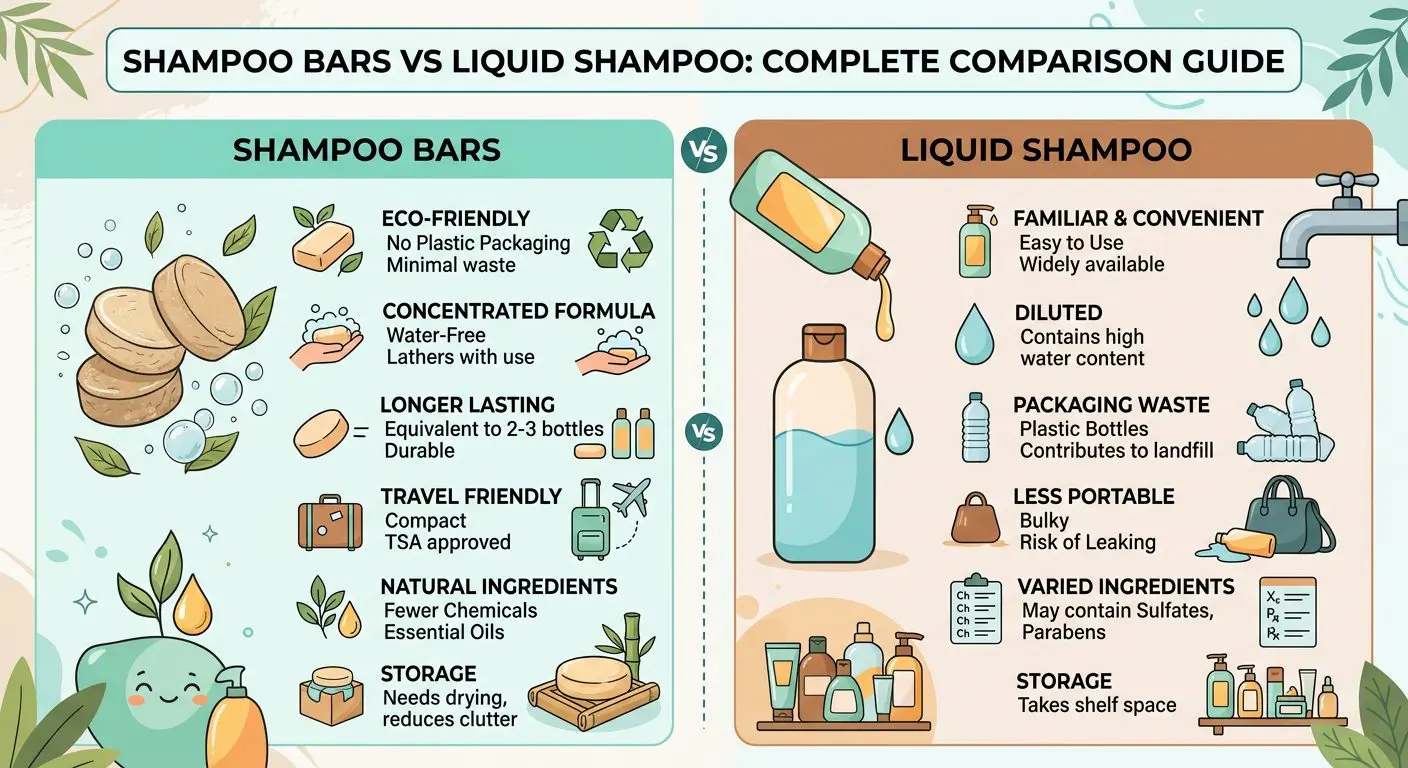
Pulling everything together for one full wash, including packaging amortised across washes:
- Cold-process palm-oil-free bar: ~0.013 kg CO2e per wash
- Typical drugstore liquid shampoo: ~0.045 kg CO2e per wash
That’s roughly a 3× reduction per wash. Not 100× like some marketing claims, but a meaningful, defensible difference.
The shampoo bar carbon footprint across a year of washing
Average European washes ~3 times per week = 156 washes a year. Switching one person to a palm-oil-free bar saves roughly:
- 5 kg CO2e per year (equivalent to driving about 35 km in a typical petrol car)
Per household of four: ~20 kg CO2e/year. Multiply by a city, country, or continent and the savings are real.
The bigger numbers (the part you can’t multiply)
Carbon is one axis. The others are:
- Plastic: 0 grams of plastic packaging per bar vs ~28 g per bottle. Each Natural Answer bar avoids one plastic bottle entering the waste stream.
- Microplastic: bars don’t shed microplastic during use; some liquid shampoos do.
- Palm-oil land-use: palm-oil-free bars protect orangutan and rainforest habitats.
- Offset programme: trees are planted to offset manufacturing and shipping.
FAQ
Are all shampoo bars equally green? No — palm-oil-based bars can have a higher footprint than liquid shampoo. Always check the ingredient list.
Is recycled plastic packaging “as good” as a bar? Closer, but the energy to recycle and re-bottle still beats no bottle at all.
Does refill liquid shampoo close the gap? Significantly, yes. Refills are an underrated middle path. Solid bars are still cleaner per wash.
Want a shampoo bar with the math actually working in its favour? Browse our palm-oil-free six-oil bars — plastic-free, real numbers behind every claim.