


Last updated: September 10, 2026
Long hair demands more from a shampoo than short hair does. Every wash is a balancing act: clean the scalp without stripping the lengths, detangle without breakage, and maintain moisture all the way to the ends.
If you’ve been struggling with dryness, tangles, or limpness at the lengths, your shampoo may be the culprit. The right shampoo bar, formulated for length and moisture retention, can transform long hair care.
—
Why Long Hair Has Unique Cleansing Needs
The Length-Moisture Problem
Long hair faces a fundamental challenge: the natural oils produced by your scalp have a much longer journey to travel. By the time sebum reaches mid-lengths and ends, it is insufficient to provide adequate protection and moisture.
This leaves long hair prone to:
- Dry, brittle ends that split and break
- Uneven texture — oily roots, dry lengths
- Tangles and knots that cause mechanical breakage during detangling
- Reduced shine at the lengths compared to roots
Hard Water Makes It Worse
If your water is hard (above 200 mg/L calcium carbonate), mineral deposits coat every strand. On long hair, this buildup:
- Creates a rough, porous cuticle surface that tangles easily
- Blocks moisture absorption in the lengths
- Dulls colour and natural shine
- Makes the hair feel stiff and difficult to manage after washing
A shampoo bar designed for hard water actively removes these mineral deposits rather than leaving them behind as many conventional shampoos do.
What Long Hair Actually Needs From a Shampoo Bar
- Gentle cleansing agents that clean the scalp without stripping the lengths
- Conditioning plant oils that smooth the cuticle and prevent tangles
- No heavy silicones that create buildup over time
- Cold-process soap (pH 9–10) — pair with ACV rinse to seal the cuticle and restore scalp pH after washing
- Hard water compatibility — rinses cleanly without mineral residue
—
How to Apply a Shampoo Bar to Long Hair
Application technique matters far more for long hair than for short. Getting it right prevents the most common complaints: tangles, dryness at the ends, and a waxy feeling after rinsing.
Step-by-Step Application
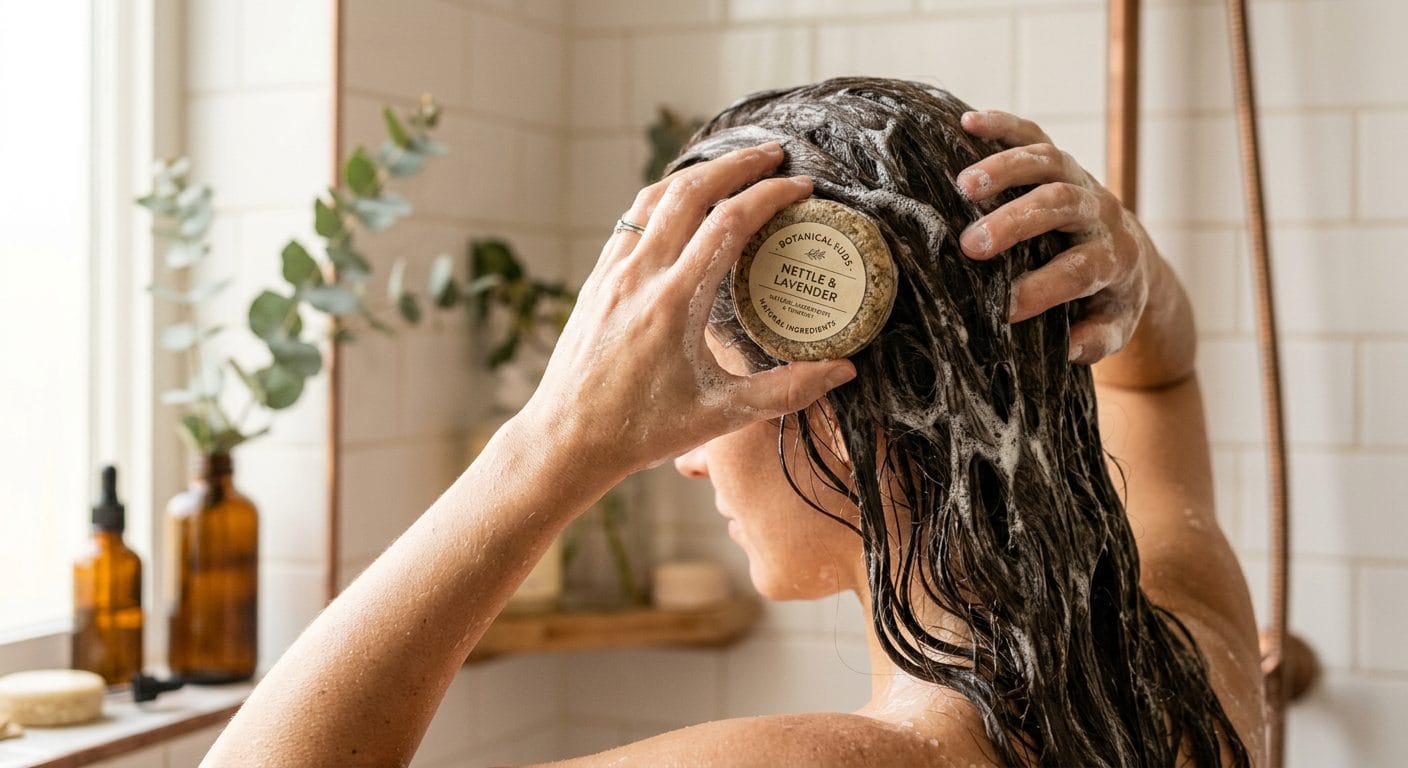
- Saturate your hair completely before touching the bar. Long hair requires more water than you think. Rinse for a full 60 seconds under warm (not hot) water.
- Lather the bar in your hands first, then apply the foam. Never rub the bar directly along the lengths — this creates friction, tangles, and uneven product distribution.
- Massage the lather into your scalp using your fingertips in small circular motions. Work from the nape of the neck forward.
- Let the lather run through the lengths as you rinse. For most long hair, this is sufficient to cleanse the mid-lengths and ends without additional application.
- Rinse thoroughly and slowly. This is the single most important step for long hair. Incomplete rinsing leaves residue that weighs hair down and causes the dreaded “waxy” feeling. Allow water to run through for at least 90 seconds.
The Cold Rinse Finish
Before stepping out of the shower, give your hair a final 15-second rinse with cooler water. This closes the cuticle, locking in moisture and dramatically increasing shine. It also helps prevent frizz as hair dries.
Transition Period for Long Hair
When switching from conventional shampoo to a shampoo bar, long hair may go through a 1-4 week transition period. This is normal — your scalp is adjusting to life without synthetic detergents and silicone coatings.
- Week 1-2: Hair may feel waxy or heavy. This is silicone residue from your old products being cleared.
- Week 3-4: Scalp oil production normalises. Hair starts to feel lighter and cleaner for longer.
- After 4 weeks: Most users report significantly better moisture balance, reduced breakage, and improved manageability.
Tip: An apple cider vinegar rinse (1 tablespoon in 500 ml water, applied after shampooing and rinsed out) can accelerate the transition by removing silicone buildup and closing the cuticle.
—
Best Shampoo Bars for Long Hair: What to Look For
Key Ingredients for Long Hair Success
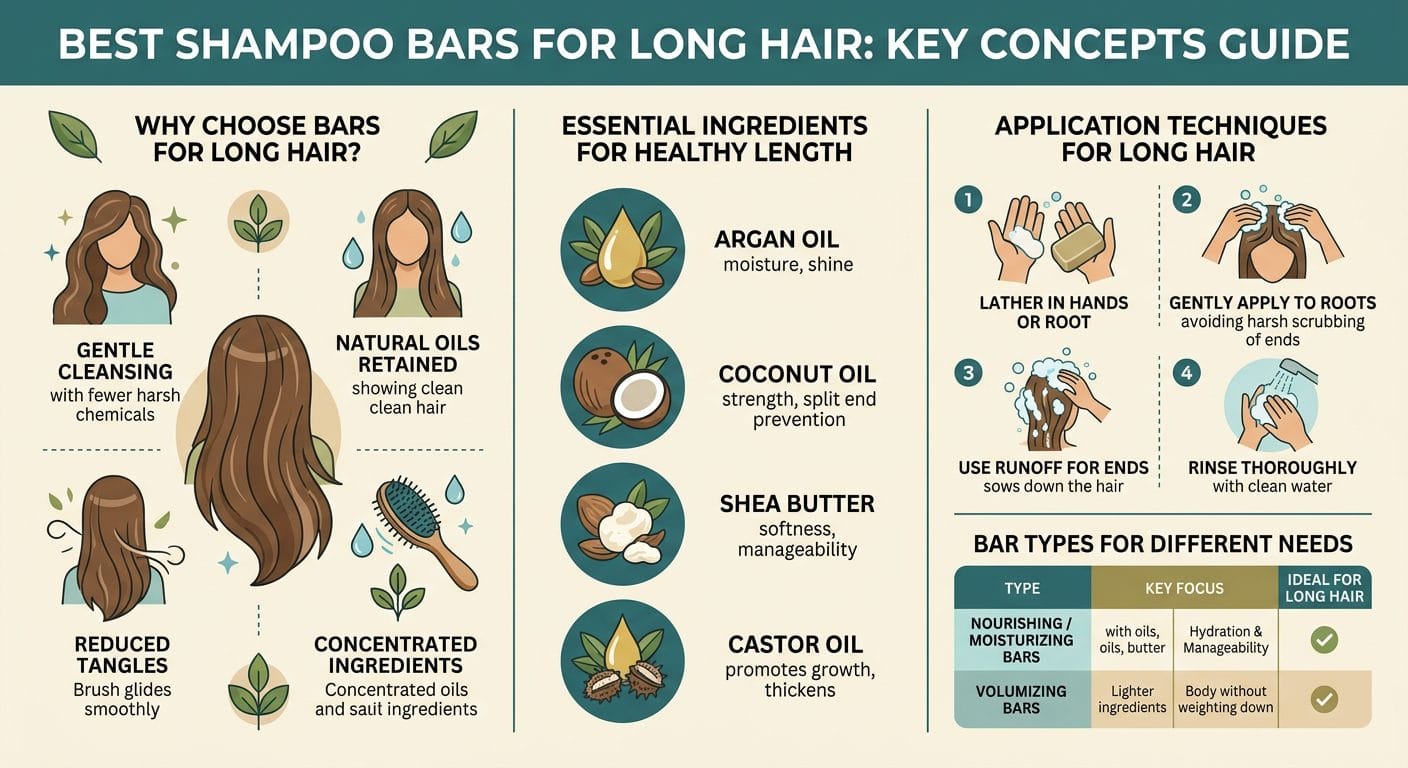
When reviewing any shampoo bar for long hair, check the ingredient list for these:
- Castor Oil (Ricinus Communis) — adds slip and detangling properties; helps prevent mechanical breakage
- Coconut Oil (Cocos Nucifera) — penetrates the hair shaft to reduce protein loss
- Argan Oil (Argania Spinosa) — smooths the cuticle, adds shine, reduces frizz
- Shea Butter (Butyrospermum Parkii) — conditions ends, seals moisture without heaviness
- Jojoba Oil (Simmondsia Chinensis) — mimics natural sebum; balances scalp without adding weight
Ingredients to Avoid for Long Hair
- Sodium Lauryl Sulfate (SLS) — far too stripping for the delicate ends of long hair
- Dimethicone or Cyclomethicone — silicones that build up over time, creating weight and blocking moisture
- High-pH soap bases (above pH 7) — raise the cuticle, cause frizz and tangles in long hair
Natural Answer Shampoo Bars for Long Hair
Natural Answer bars are cold-processed from 6 organic plant oils, with no synthetic surfactants, silicones, or preservatives. Their hard water formula includes a conditioning rinse mechanism that works particularly well for long hair in mineral-rich water.
Key benefits for long hair:
- Removes mineral deposits from hard water without stripping natural oils
- Rich in castor and argan oil for detangling and shine
- Leaves lengths moisturised and manageable, not coated or waxy
- Concentrated formula lasts 2-3x longer than a bottle of liquid shampoo
—
Long Hair Care: Common Questions
Can I use a shampoo bar on colour-treated long hair?
Yes — and in fact, a gentle shampoo bar is often better for colour-treated long hair than a conventional shampoo. Sulfate-free bars clean without stripping colour molecules. The key is following cold-process soap bars (pH 9–10) with an ACV rinse to close the cuticle and lock in colour.
My long hair feels tangled after using a shampoo bar. What am I doing wrong?
The most common causes are: insufficient rinsing, applying the bar directly to the lengths (instead of lathering in your hands first), or hard water mineral deposits. Try an apple cider vinegar rinse after shampooing, and ensure you rinse for at least 90 seconds after washing.
Do I still need conditioner with a shampoo bar?
Most people with long hair find that a conditioner or leave-in treatment is still beneficial, at least for the mid-lengths and ends. A shampoo bar cleans the scalp and provides some conditioning, but very long hair — below shoulder length — generally benefits from an additional moisturising step at the ends.
How long does one shampoo bar last for long hair?
For long, thick hair used 3-4 times per week, a 60-80g bar typically lasts 4-6 weeks. This compares favourably with a 250 ml bottle of liquid shampoo, which tends to last 6-8 weeks for the same hair type. The cost per wash is usually similar or lower with a bar.
—
Ready to try a shampoo bar designed for long hair in hard water? Shop our collection and experience the difference a properly formulated bar makes for your length.
Have questions about choosing the right bar for your long hair? Contact us — we’re here to help.