


Last updated: May 11, 2026
Short hair looks effortless — but it only looks that way when the scalp is clean, the roots have lift, and the cut moves freely. Weighed-down, over-conditioned, or mineral-coated hair collapses against the head and makes even a fresh cut look flat.
If your short hair lacks volume after washing, or your scalp gets oily quickly, your shampoo may be the problem. A well-formulated shampoo bar, designed for scalp health and lightweight cleansing, can give short hair exactly the lift and freshness it needs.
—

Why Short Hair Has Specific Shampoo Requirements
Scalp Proximity Changes Everything
Short hair lives close to the scalp. This means:
- Every product residue is visible. Build-up that might go unnoticed on long hair sits right at the root on short hair, flattening the style.
- Sebum spreads more evenly across short hair, which can mean quicker oiliness at the roots.
- Scalp health is immediately visible — redness, flaking, or irritation cannot be hidden under length.
- Volume depends entirely on root lift, which requires clean, residue-free hair shafts from root to tip.
The Problem with Conventional Shampoo on Short Hair
Many conventional liquid shampoos contain silicones and heavy conditioning agents that add weight to the hair shaft. On long hair, this can feel like smoothness. On short hair, the same ingredients simply make hair flat and limp.
Additionally, hard water mineral deposits coat every strand, and on short hair that deposit sits right at the root — the exact place where you need lightness and lift.
What Short Hair Needs From a Shampoo Bar
- Thorough scalp cleansing without heavy conditioning at the roots
- Lightweight oils that do not add weight — jojoba, argan, and hemp are ideal
- No silicones or heavy butters that flatten fine or short hair
- Hard water compatibility — leaves no mineral film on the shaft
- pH balance around 5.0-5.5 that keeps the cuticle smooth for natural shine
—
Short-Hair Washing Routine with a Shampoo Bar
Short hair is quicker to wash but requires more attention to scalp massage technique to ensure a thorough clean at the roots.
Step-by-Step Routine for Short Hair
- Wet the scalp thoroughly. Short hair needs less time to saturate than long hair, but make sure the entire scalp is wet before applying product.
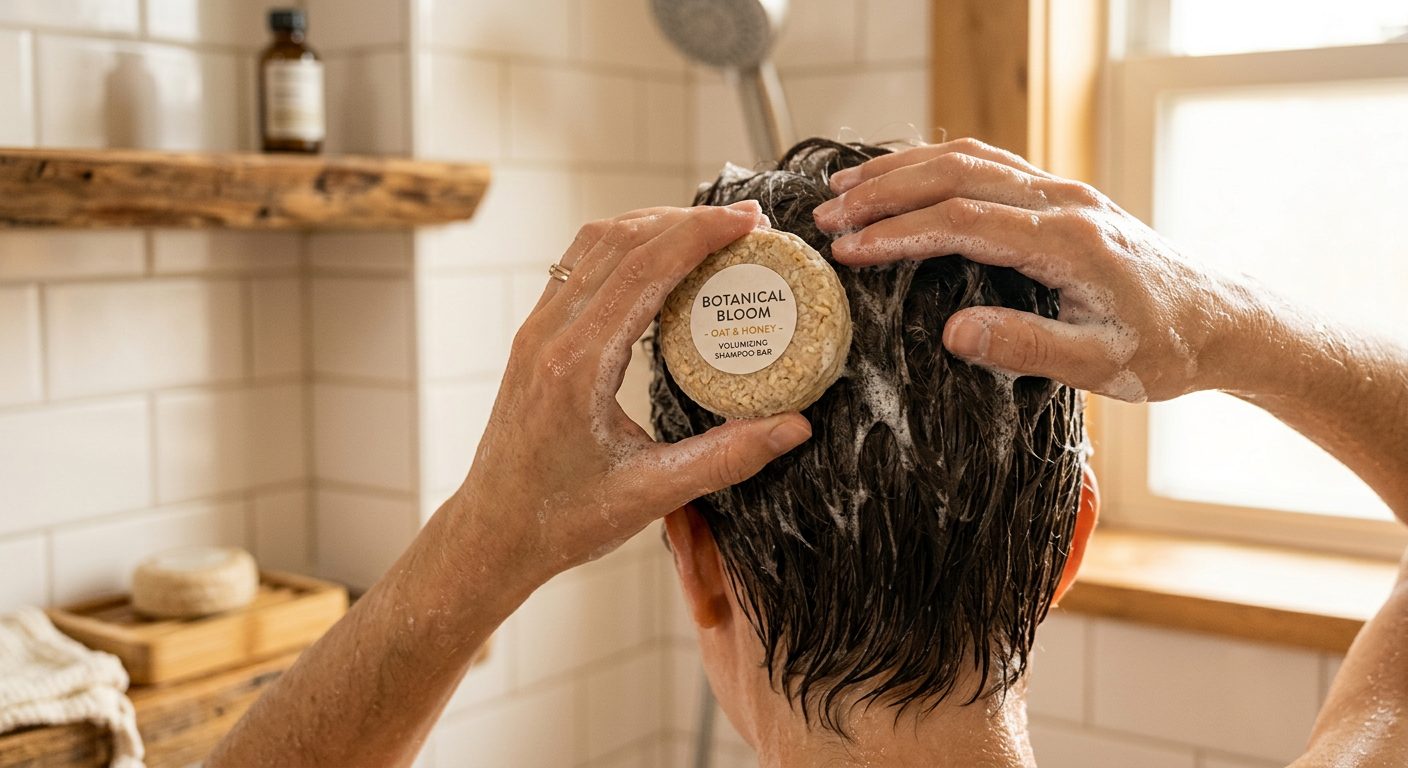
- Lather the bar in your palms until you have a rich foam. Apply the foam directly to the scalp — not to the hair itself.
- Massage with your fingertips, not your nails. Use firm circular motions across the entire scalp — crown, temples, nape, and behind the ears. This is where short hair benefits most: proper scalp massage stimulates circulation and ensures a deep clean.
- Work quickly through the lengths — for most short cuts, the lather that runs from the scalp during rinsing is enough to cleanse the rest of the hair without additional application.
- Rinse thoroughly with warm water, then finish with a 15-second cool rinse. The cool rinse closes the cuticle and gives short hair maximum shine and lift as it dries.
How Often to Wash Short Hair with a Shampoo Bar
Most people with short hair wash every 1-3 days. Shampoo bars, because they are gentler than synthetic detergents, can typically be used daily without over-drying the scalp. However, as your scalp adjusts to a bar-based routine (usually 2-4 weeks), you may find that washing less frequently becomes comfortable as sebum production normalises.
—
Volume Tips: Getting Maximum Lift with a Shampoo Bar
Technique for Volume at the Root
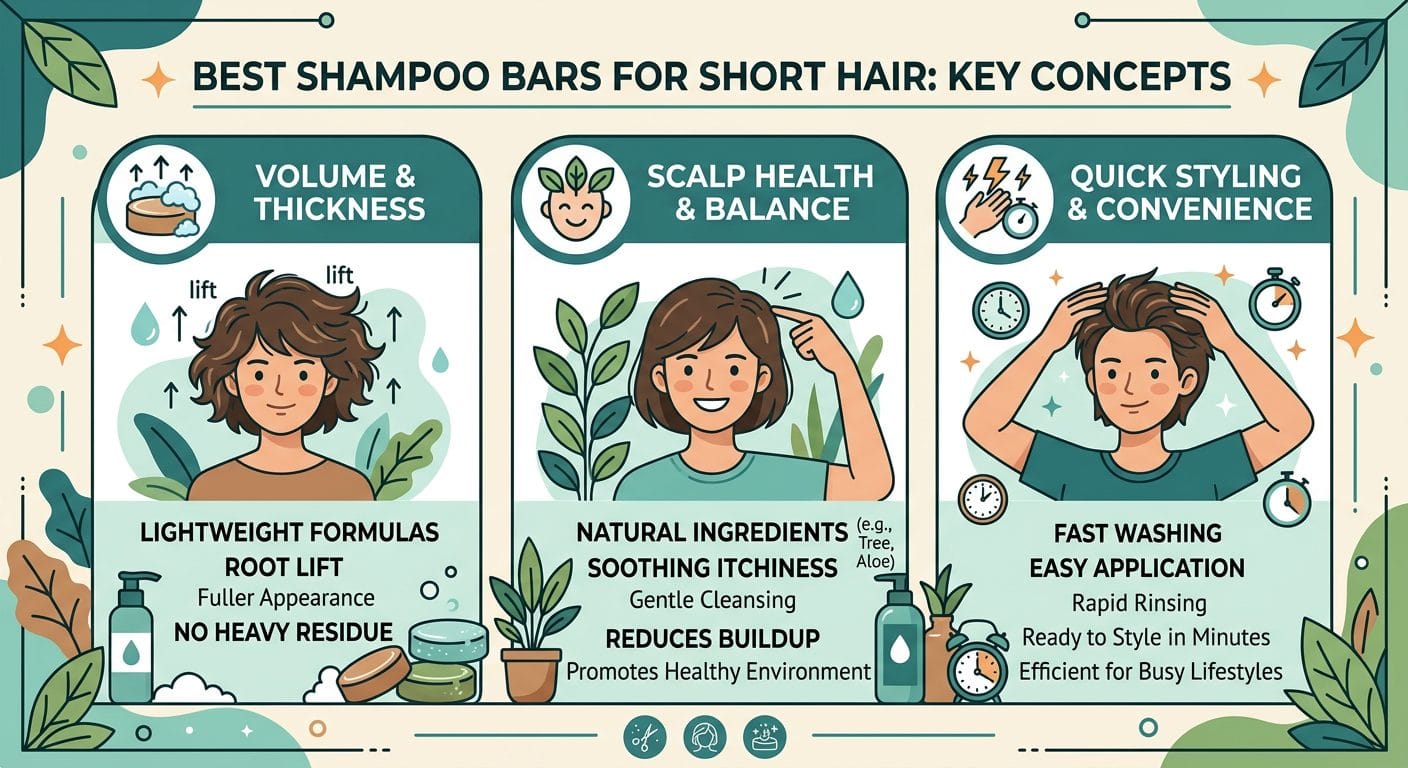
- Always apply lather to the scalp only, not to the lengths. This prevents any product residue from weighing down the roots.
- Rinse with your head upside down — this allows water to run along the hair shaft from root to tip while gravity works in your favour, lifting the root away from the scalp.
- Use the cool rinse. Cool water contracts the cuticle and the hair shaft slightly, creating a firmer structure that holds volume better than heat-opened hair.
- Let hair air-dry partially before using any heat. Hair dried on a diffuser while still damp holds volume better than hair that is towel-dried aggressively before drying.
Hard Water and Short Hair Volume
Mineral deposits from hard water are a major cause of flat, limp roots on short hair. The calcium and magnesium from hard water form a film on every hair shaft, adding invisible weight and reducing the hair’s natural spring.
A shampoo bar specifically formulated for hard water removes this mineral coating with every wash. Users in hard water areas often report a dramatic improvement in volume when switching from a conventional shampoo that leaves mineral residue behind.
Best Shampoo Bar Ingredients for Volume
- Jojoba Oil — balances scalp without adding weight; the closest to natural sebum of any plant oil
- Hemp Seed Oil (Cannabis Sativa) — lightweight, rich in omega fatty acids, does not coat the hair shaft
- Argan Oil — smooths the cuticle for shine without heaviness
- Nettle Extract — traditional scalp tonic, helps regulate sebum production and improve root thickness
Avoid for volume: shea butter, cocoa butter, heavy conditioning agents, or any bar marketed primarily as a “moisturising” or “conditioning” bar — these are better suited to dry long hair that needs weight.
—
Best Shampoo Bars for Short Hair: Common Questions
My short hair gets oily within a day of washing. Can a shampoo bar help?
Yes — and this is one area where shampoo bars often outperform liquid shampoos. Over-stripping the scalp with harsh detergents triggers compensatory oil production: the scalp over-produces sebum to replace what was stripped. Gentle shampoo bars clean effectively without this stripping effect, allowing the scalp to settle into a healthier, lower-oil production cycle over 3-4 weeks.
Will a shampoo bar work on my fine, short hair without weighing it down?
A good shampoo bar should not weigh fine short hair down at all. The key is to avoid bars with heavy conditioning oils (coconut butter, shea butter) at high concentrations, and to ensure you rinse thoroughly. If your hair feels heavy after using a bar, incomplete rinsing is the most likely cause.
I have a sensitive scalp. Is a shampoo bar gentler?
Most people with sensitive scalps find shampoo bars significantly gentler than conventional shampoo. The absence of synthetic detergents, preservatives (like parabens), and artificial fragrance removes the most common irritants. Natural shampoo bars made from saponified plant oils have a long history of use on sensitive skin.
Can I use the same shampoo bar on my face or body?
Many natural shampoo bars — especially cold-processed bars made from the same oils used in facial bars — can be used on the body. Using a shampoo bar on the face depends on your skin type; those with oily or normal skin often find it works well, while those with dry or sensitive facial skin may prefer a dedicated facial bar.
—
Ready to Make the Switch?
Ready to experience the benefits of a natural shampoo bar? Browse our complete collection of cold-processed soap bars — each one made with 6 organic plant oils and zero synthetic additives.
Ready to try a shampoo bar designed for short hair in hard water? Shop our collection and discover why short-haired people love the simplicity and results of a quality bar.
Questions about which bar is best for your short style? Contact us — we’re here to help.