


Last updated: October 14, 2026
What Sulfates Really Are in Sulfate-Free Shampoo Talk
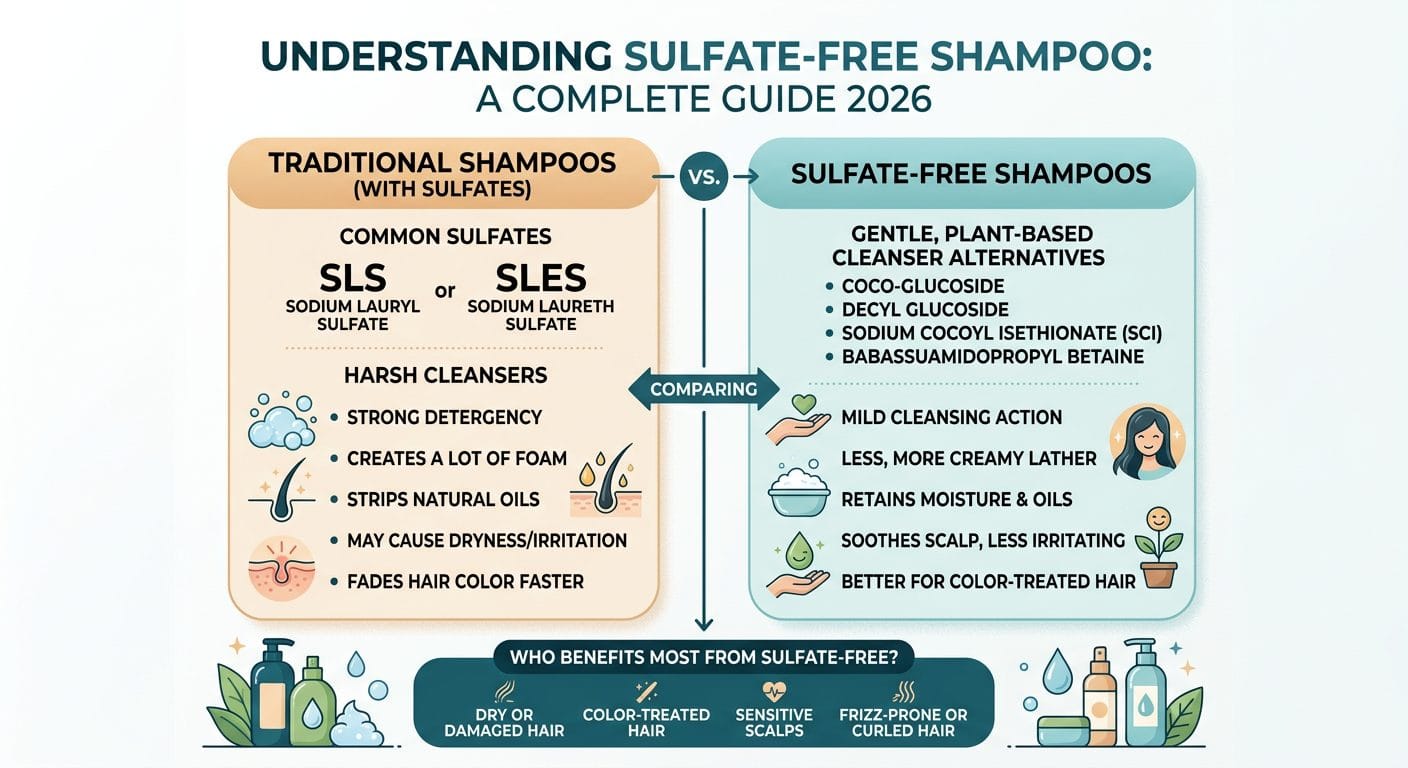
Walk into any drugstore and pick up a shampoo bottle. Chances are, one of the first ingredients you’ll see is either Sodium Lauryl Sulfate (SLS) or Sodium Laureth Sulfate (SLES). These are sulfates—powerful surfactants that have dominated the haircare industry for decades.
But what exactly are they?
SLS (Sodium Lauryl Sulfate) is a synthetic detergent created by reacting lauryl alcohol with sulfuric acid. SLES (Sodium Laureth Sulfate) is SLS that’s been ethoxylated (a chemical process that makes it slightly less harsh). Both are anionic surfactants, meaning they create a negative electrical charge that lifts dirt and oil from your hair and scalp.
Why Are Sulfates Used in Shampoo?
There are three main reasons sulfates dominate the shampoo market:
- Foaming power – Sulfates create that satisfying lather we’ve been conditioned to associate with “clean”
- Cleansing effectiveness – They strip oil and buildup aggressively
- Cost-effectiveness – They’re cheap to produce at industrial scale
Where Do Sulfates Come From?
This is where it gets interesting. While sulfates can be petroleum-derived, many brands now source them from coconut or palm oil to claim “natural” origins. But here’s the catch: even coconut-derived sulfates are chemically harsh. The source doesn’t change how they interact with your hair and scalp.
And if you’re concerned about palm oil’s environmental impact (orangutan habitat destruction, deforestation), you should know that SLES is frequently palm-derived, even when companies don’t disclose it.
Health & Safety Concerns
The sulfate debate isn’t new, but research over the past decade has given us clearer answers about their effects.
Skin Barrier Disruption
SLS and SLES are known skin irritants. They work by breaking down the lipid barrier that protects your skin and scalp. While this makes them effective at removing oil, it also means they remove the protective oils your scalp needs.
A 2018 study in the Journal of the American Academy of Dermatology found that sulfates can increase transepidermal water loss (TEWL)—essentially, they make your scalp lose moisture faster, leading to dryness, flaking, and irritation.
Scalp Sensitivity
If you’ve ever experienced:
- Itching after shampooing
- Redness or inflammation on your scalp
- Excessive dryness or flaking
- Burning sensation when shampoo runs into your eyes
…there’s a good chance sulfates are the culprit. People with eczema, psoriasis, or sensitive skin are particularly vulnerable.
Environmental Impact
Beyond personal health, sulfates pose environmental concerns:
- Aquatic toxicity – Both SLS and SLES are toxic to fish and aquatic organisms
- Biodegradability issues – While technically biodegradable, they break down slowly and can accumulate in waterways
- Manufacturing pollution – Sulfate production generates chemical waste
The Palm Oil Connection
Here’s something most brands won’t tell you: SLES is often derived from palm oil. The ethoxylation process starts with lauryl alcohol, which typically comes from either petroleum or palm kernel oil. Given the cost, palm is the more common source.
If you’re choosing sulfate-free products for environmental reasons, you’re on the right track. But make sure your “gentle alternative” isn’t just swapping one palm-derived chemical for another.
The “Sulfate-Free” Marketing Trick
Not all “sulfate-free” shampoos are created equal. Some brands simply replace SLS with other harsh surfactants and slap “sulfate-free” on the label.
The Sneaky Replacements
Watch out for these sulfate alternatives that are technically sulfate-free but just as harsh:
- Sodium C14-16 Olefin Sulfonate – Often used in “natural” shampoos, but it’s chemically similar to SLS
- Ammonium Lauryl Sulfate (ALS) – Not technically SLS, but equally irritating
- Sodium Myreth Sulfate – Another sulfate variant with similar harshness
The lesson? “Sulfate-free” doesn’t automatically mean “gentle.” You need to check the full ingredient list.
Gentle Surfactant Alternatives (The Good Ones)
So what should you look for in a truly gentle shampoo? Here are the surfactants that actually deliver on the “gentle cleansing” promise:
1. Coco-Glucoside
Derived from coconut oil and fruit sugars, coco-glucoside is one of the gentlest surfactants available. It’s biodegradable, non-irritating, and produces a light lather. Perfect for sensitive scalps and daily washing.
2. Decyl Glucoside
Made from corn glucose and coconut oil, decyl glucoside is extremely mild and often used in baby shampoos. It’s completely biodegradable and safe for sensitive skin.
3. Cold-Process Soap (Saponified Plant Oils)
This is the star ingredient in high-quality cold-process soap bars. Cold-process soap is made from saponified plant oils with lye, produces a rich creamy lather, and is pH 9–10. Pair with an apple cider vinegar rinse to restore scalp balance. Gentle enough for daily use and effective at removing buildup.
Important note: cold-process soap can be derived from either coconut or palm oil. Always verify the source with the manufacturer if you’re avoiding palm oil.
4. Lauryl Glucoside
Another plant-based glucoside, lauryl glucoside is mild, biodegradable, and works well in combination with other gentle surfactants.
5. Sodium Cocoyl Isethionate (SCI)
Derived from coconut oil, this is typically used as a secondary surfactant (to boost foam and mildness). It’s gentle, but some people with coconut allergies may react to it.
Cold-Process Soap vs. Syndet Bars: Two Sulfate-Free Options
If you’re exploring sulfate-free shampoo, you need to understand the difference between cold-process soap bars and syndet bars. Both are sulfate-free. Both can work well with the right routine.
Cold-Process Soap Bars vs. Syndet Bars
Cold-process soap bars are made through saponification (mixing plant oils with lye). The result is an alkaline (pH 9-10) bar that:
- Lifts oil and buildup well, with a rich, creamy lather
- Is made from simple plant oils, with no synthetic surfactants
- Can leave a film in hard water if you skip the rinse step
- Feels soft and smooth when you finish with an acidic rinse
The fix is easy. Rinse with apple cider vinegar (1 tbsp in 1 cup of water). The acid smooths the hair cuticle and clears mineral film from hard water.
Syndet bars (short for “synthetic detergent”) are made with surfactants like SCI and decyl glucoside instead of saponified oils. They:
- Sit at a lower pH than soap
- Don’t form soap scum in hard water
- Usually lather less than soap
- Are a fair choice if you prefer to skip the vinegar rinse
Why Cold-Process Soap Is a Great Sulfate-Free Choice
Cold-process soap bars give you:
- Gentle cleansing – cold-process soap is much milder than SLS
- Hard water control – a vinegar rinse clears mineral film, so your hair rinses clean in any water
- Scalp balance – the acidic rinse restores your scalp’s natural acidity
- Eco-friendly packaging – No plastic bottles
- Concentrated formula – One bar lasts 50-80 washes
Conclusion: Is Sulfate-Free Shampoo Worth It?
After examining the science, ingredients, and real-world results, the answer is clear: Yes, sulfate-free shampoo is worth it for most people.
The Bottom Line
- Sulfates (SLS, SLES) are harsh – They strip natural oils, irritate scalps, and damage hair over time
- “Sulfate-free” doesn’t guarantee gentle – Check for sneaky replacements like olefin sulfonates
- Cold-process soap is a great sulfate-free option – Gentle, eco-friendly, and effective with an ACV rinse
- Palm oil matters – Many “gentle” surfactants are still palm-derived; verify sourcing
- Transition takes patience – Give your scalp 3-4 weeks to adjust
Why Choose Natural Answer Shampoo Bars?
Natural Answer cold-process soap bars offer:
- 100% sulfate-free (cold-process soap, gentle cleansing)
- 100% palm oil-free (cold-process soap from plant oils, verified sourcing)
- cold-process soap (pH 9–10) (pair with ACV rinse to restore scalp balance)
- Hard water routine (soap + ACV rinse works in any water hardness)
- Zero plastic packaging (glass jars, paper labels)
- European handmade quality (small-batch production)
If you’re ready to switch to sulfate-free shampoo without compromising effectiveness or supporting palm oil deforestation, Natural Answer cold-process soap bars deliver on all fronts.
Try Natural Answer’s sulfate-free, palm oil-free cold-process soap bars today and experience the difference gentle, effective cleansing makes.