


Last updated: October 12, 2026
Key takeaways
- Shampoo bars pass through any airport security without liquid restrictions and eliminate leak risk in hostel lockers.
- Holding the bar in hand throughout the shower — rather than setting it down — is the primary way to avoid contact with shared public surfaces.
- A small aluminum tin or mesh bag is the correct container; plastic ziplocks trap moisture and promote mould.
- In tropical climates above 80% humidity, use a perforated tin or hang a mesh bag between showers so the bar dries properly.
- One 90 g bar typically covers five to seven weeks of solo travel for an average user, hand-washing included.
You arrive at a hostel in Lisbon, Berlin, or Bangkok with two big concerns: how to shower in a stall used by 11 other people that day, and what shampoo to bring on a plane. Shampoo bars solve both at once — if you handle them correctly.
Here’s the practical hygiene guide for using shampoo bars for hostels and other shared bathrooms.
Why shampoo bars for hostels beat a bottle
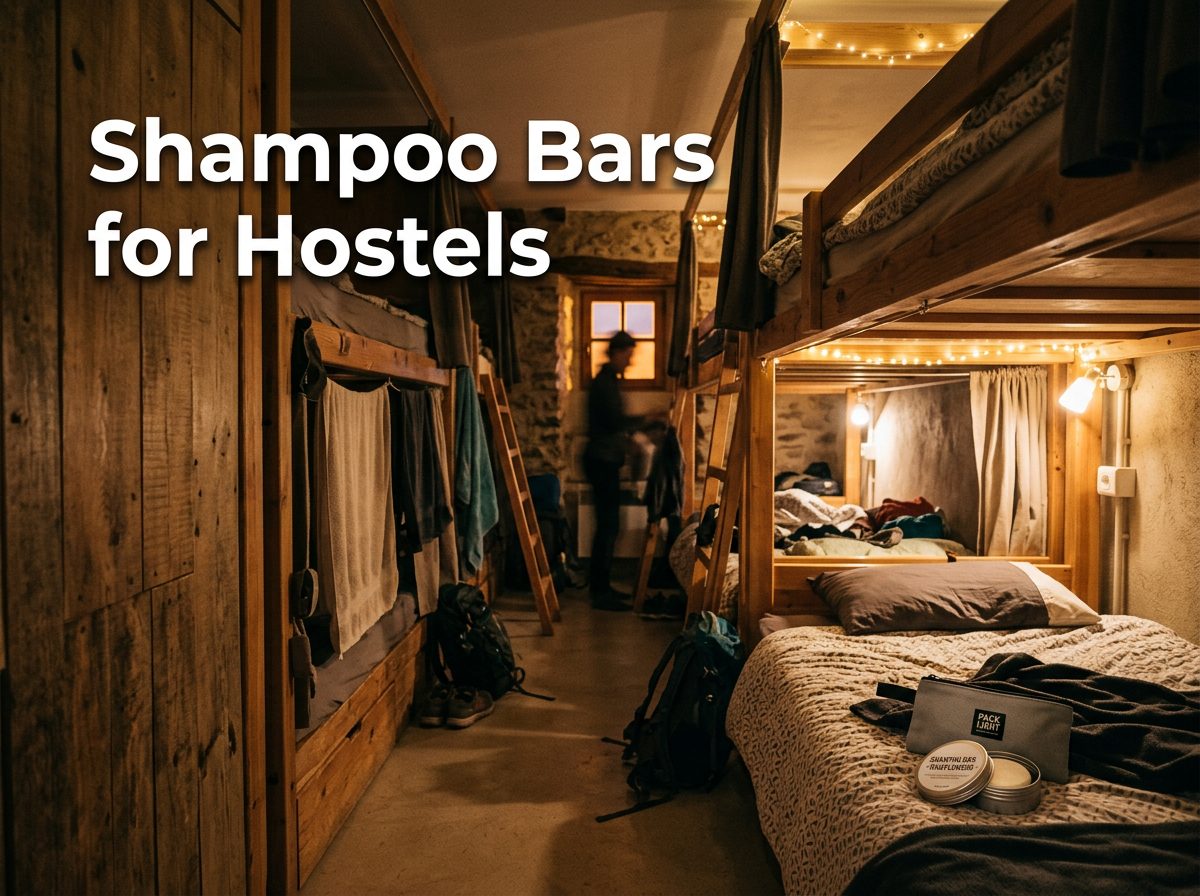
- No liquid restrictions: bars travel through any airport in any quantity
- No leak risk: a half-used bottle of shampoo in a hostel locker is a packing nightmare; a bar in a tin is bulletproof
- Lighter: a 90 g bar covers 6 weeks of travel; that’s worth real backpack grams
- Multipurpose: works as shampoo, body wash, hand soap, sometimes laundry pre-treatment
- Plastic-free: aligns with the values most “responsible travel” brands now market against
The hostel-shower hygiene problem
A bar of soap that touches a public shower floor, soap dish, or shared shelf has had contact with foreign skin bacteria, soap scum, and mould. Most of those organisms don’t survive long on a soap surface (the alkaline pH is mildly hostile), but the perception is uncomfortable and the practical risk isn’t zero.
The hygiene system
1. Use a tin or pouch for transport and storage
A small aluminum tin or a beeswax-coated cotton pouch keeps the bar enclosed while wet, away from public surfaces, and contained inside your locker. Avoid plastic ziplocks — they trap moisture and grow mould.
2. Hold the bar — never set it down on shared surfaces
Public shower trays, soap dishes, and shelves are the contamination vector. Hold the bar in your hand from start to finish of the shower. The bar dissolves slightly faster, but the gain in hygiene is worth it.
3. Rinse before storing
Rinse the bar under fresh running water for 5 seconds before putting it back in the tin. This removes any soap-scum film, public-shower water residue, or your own dirt.
4. Use a mesh bag for double duty
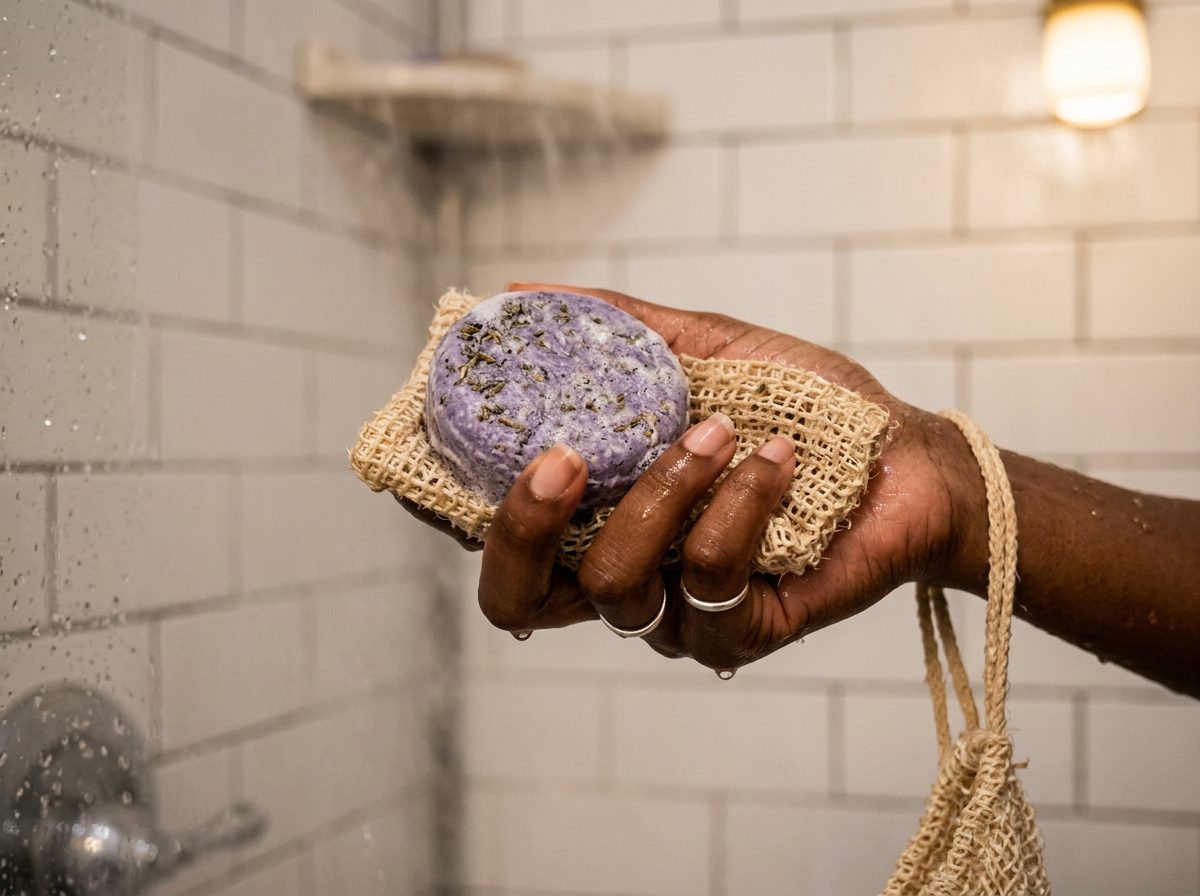
A small drawstring mesh bag (sisal or muslin) holds the bar and acts as a wash mitt. The bar foams through the mesh; you wash with the bag itself; the bar dries inside the bag without touching anything else. Particularly good for hostel-bathroom situations.
5. Dry the bar before packing for transit
If your bar is still wet when you pack out, mould risk is real over 2–3 days. Squeeze excess water out (gently), let it air-dry for 10 minutes if your travel timing allows, then store in the tin.
Storage options for shampoo bars for hostels on the road
- Aluminum tin with rubber gasket: watertight, cheap, indestructible
- Sisal mesh pouch: dries inside the pouch, dual-use as a wash mitt
- Beeswax-coated cotton: breathable, eco-friendly, wears out in ~6 months
- Bamboo travel case: looks great, less practical than tins
Hostel laundry use
Pre-treat sweat-stained collars or muddy hems with a wet bar. Rub the bar into the stain, leave 5 minutes, then hand-wash or send to the hostel washer. Works on cotton and most synthetics. Doesn’t replace stain-specific treatment for blood, oil, or red wine.
Bar as hand soap
Many hostels charge for soap or skip it entirely in shared sinks. Your bar handles handwashing perfectly. One bar covers a 6-week trip with hand-washes included.
What about hot, humid climates?
Tropical destinations are tough on bars. Air humidity above 80% slows drying. Two adjustments:
- Use a fully-perforated tin or a mesh bag, not a sealed container
- Hang the bag in your bunk, not in your toiletry kit, between showers
- Cut the bar in half before the trip — smaller pieces dry faster
Shared-bathroom etiquette
- Don’t leave your bar in the public shower stall — ever
- Don’t use the hostel-provided soap dishes; use your tin
- Wipe your stall after use as a courtesy — soap residue makes the next person slip
- Rinse the bar before re-entering the shared shelf zone
Multi-month travel: maintaining shampoo bars for hostels
If you’re on the road for 3+ months, expect the bar to behave a little differently after long humid storage. It may feel slightly sticky on the outside. The fix: a quick warm-water rinse and a 30-second hand lather restore normal performance.
One full-size 90 g bar covers 5–7 weeks of solo travel for an average user. Two bars in a tin cover most 3-month gap-year trips.
FAQ
Will airport security take my shampoo bar? No. Bars are solid and don’t fall under the 100 ml liquid rule. Pack them in any quantity in carry-on or checked luggage.
Can a bar replace conditioner? Partially. Cold-process bars leave more conditioning fatty acids than sulfate liquids. For long or curly hair, pack a small conditioning bar separately.
Should I worry about bedbugs and bars? Bedbugs don’t live in soap. Hostel hygiene concerns about bedbugs are about mattresses and luggage, not bathroom products.
Want a tough little bar built for shared bathrooms? Browse our travel-friendly cold-process bars — durable, plastic-free, plane-legal.