



Last updated: October 12, 2026
Key takeaways
- Puberty-driven sebum surges make teen scalps oilier and more reactive to harsh surfactants and synthetic fragrances.
- Mild cold-process bars with a balanced oil blend avoid the strip-rebound cycle that accelerates oiliness over time.
- Ingredients to avoid include heavy butters, dominant coconut oil, strong essential oils, and fragrance listed without disclosure.
- One unscented bar can replace shampoo, face wash, and body wash, reducing the number of daily irritants.
- A 7–14 day transition period is normal when switching; it does not indicate the bar is making acne worse.
Adolescence reorganises the skin’s whole oil-production system. The scalp suddenly outputs three times more sebum than at age ten. Acne can extend beyond the face to the hairline, scalp, and even the upper back. The shampoo a teen uses sits on all of those areas for several minutes.
Choosing the right shampoo bars for teens isn’t a magic acne fix, but it can stop products from making things worse, simplify a bathroom shelf full of half-used bottles, and teach a useful lesson about what’s actually in skincare.
Why teen scalp gets oilier and more reactive
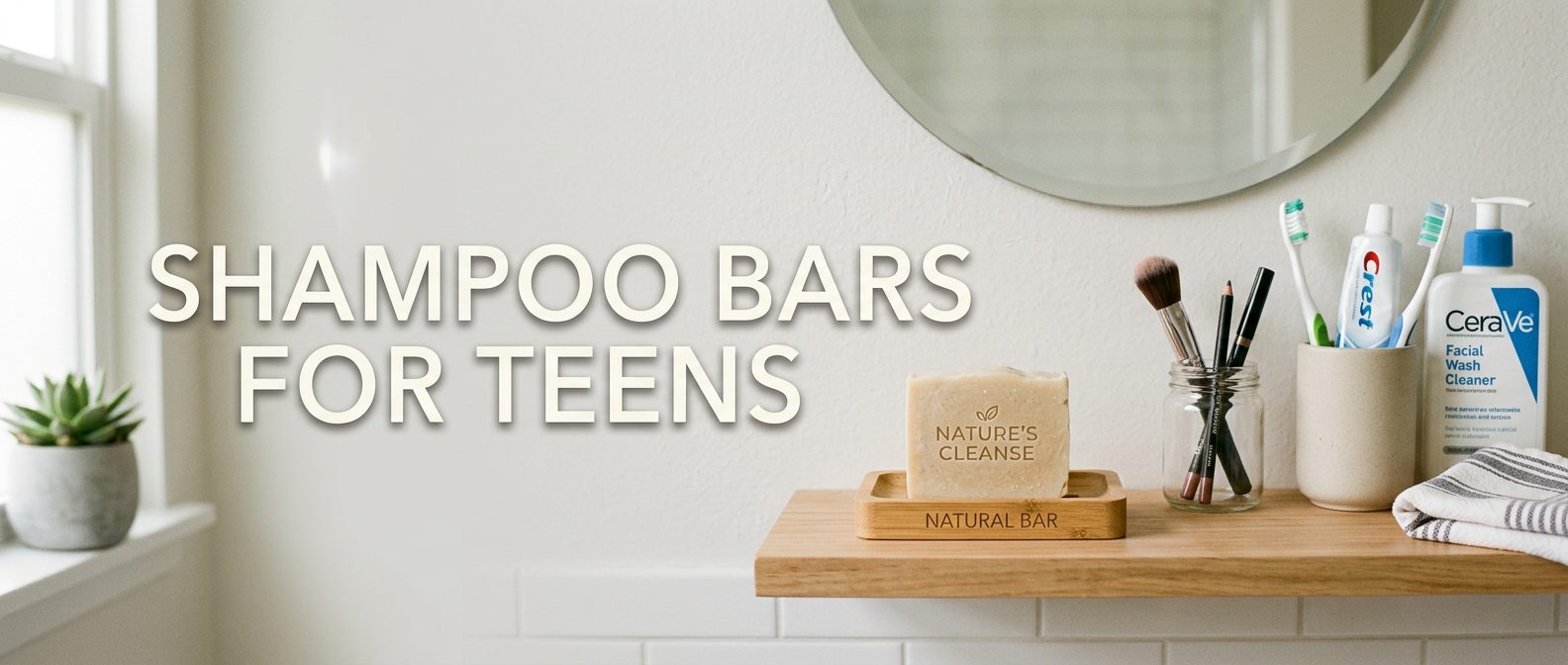
Sebaceous glands respond to androgens (testosterone and related hormones) that surge in puberty. The scalp, hairline, chest, back, and face all have dense sebum-producing follicles. Result:
- Hair gets greasy faster — often within 24 hours of washing
- Acne can appear along the hairline (“pomade acne”) and on the back of the neck
- Skin reacts more strongly to fragrances, dyes, and synthetic surfactants
- Some teens get “scalp acne” — tender bumps in the scalp that are usually a mix of folliculitis and inflamed sebum
Why standard teen shampoo can fail where shampoo bars for teens win
Drugstore shampoos marketed to teens tend to over-promise (deep clean! charcoal! detox!) and over-deliver on stripping surfactants. The cycle:
- Strong sulfate cleanser strips sebum aggressively
- Scalp signals glands to produce more oil to compensate
- Hair feels greasy faster
- Teen washes more often
- Cycle accelerates
The same bottles often pile on synthetic fragrance and silicone for “softness,” which traps oil along the hairline and triggers more breakouts.
What a real cold-process bar offers
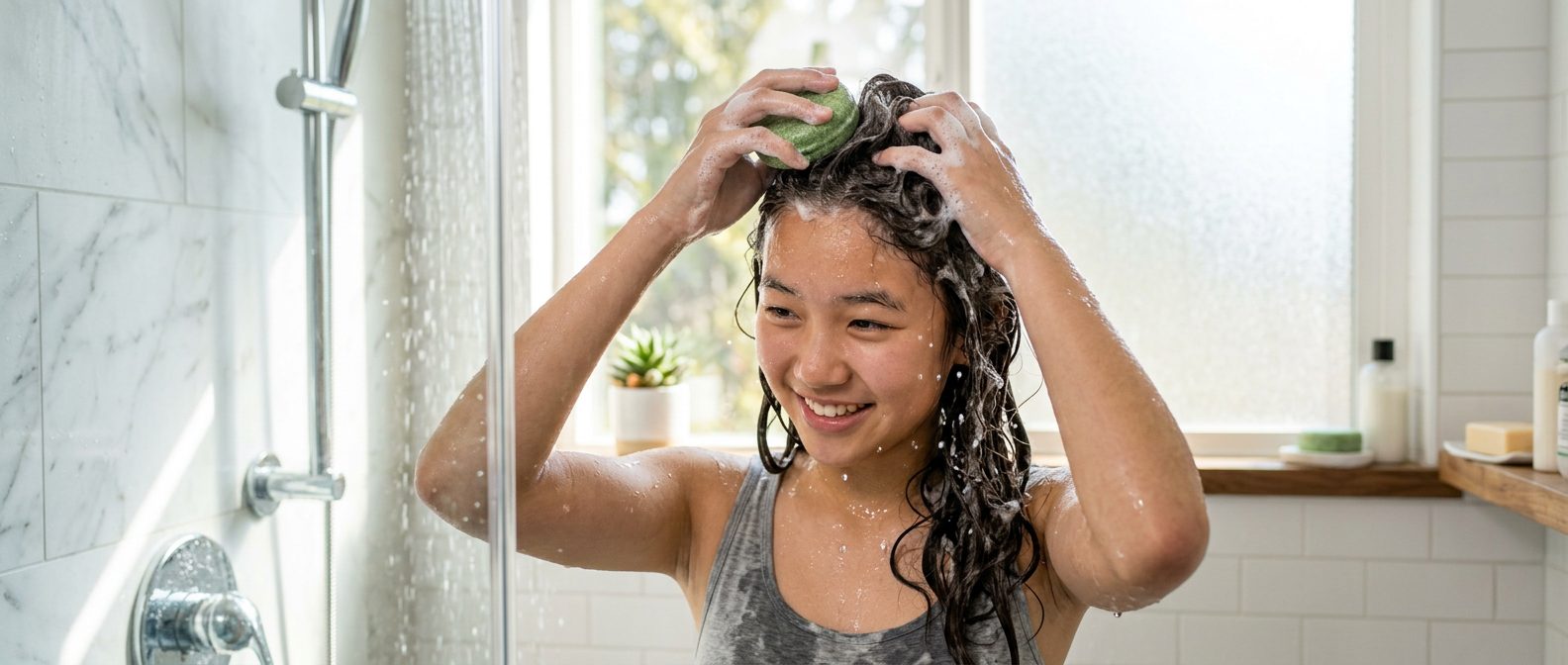
- Six ingredients (in our case) instead of 25+ — less to react to
- No SLS, SLES, or synthetic fragrance bombs
- No silicone build-up to trap oil
- Glycerin (naturally produced during saponification) supports the skin barrier
- One bar replaces shampoo + face wash + body wash for travel and sleepovers
What to avoid in shampoo bars for teens
- Heavy butter-based bars (high cocoa butter, mango butter) — too rich, can clog hairline pores
- Coconut-oil-dominant bars without balance — coconut is comedogenic for some teens
- Strong essential oil bars — can irritate already-reactive skin
- Bars marketed as “extra moisturising” — usually too rich for an oily teen scalp
What to look for instead
- Balanced six-oil bar with moderate coconut percentage
- Mild or no fragrance
- Activated charcoal or green clay occasionally (once a week max)
- Listed superfat under 7%
- Vegan, palm-oil-free, cruelty-free
A starter routine with shampoo bars for teens
- Brush hair with a clean, soft brush before showering. Replace the brush every 3 months — old brushes are bacteria condos.
- Wash hair every other day (not daily). Lather between hands, apply to scalp only.
- Rinse with cool water at the end — reduces inflammation.
- Apple cider vinegar rinse 2×/week (1 tablespoon in 500 ml water).
- Don’t apply leave-in product near the hairline.
- Wash pillowcases twice a week.
Hairline acne specifically
“Pomade acne” or hairline pimples often come from products dripping down. Reducing the variables helps:
- Apply hair styling products only mid-length and below.
- Wash forehead and hairline last during showers, after the shampoo has been rinsed away.
- Skip thick conditioner near the scalp on workout days.
- If you wear a hat or hood, wash the inside of it weekly.
Acne body wash via the same bar
For body acne (back, shoulders, chest), the same six-oil bar works as a body wash. Lather, apply, wait 60 seconds before rinsing. The light cleansing without harsh sulfates often works better than acne-marketed body washes that over-strip.
Bars with salicylic acid or benzoyl peroxide are not standard cold-process bars — they’re medicated. Talk to a dermatologist before adding one to a routine.
What the bar can’t do
A shampoo bar will not:
- Cure cystic acne — that needs medical treatment
- Reverse hormonal scalp issues
- Replace a properly formulated face wash
It can support a calmer skin barrier, simplify a bathroom shelf, and remove a few common irritants from daily exposure.
FAQ
Will a shampoo bar make oily teen hair worse at first? Possibly for 7–14 days — the “transition” period as scalp recalibrates from over-cleansing. Pushing through usually works.
Can a teen use the same bar as a parent? Yes, if it’s mild and well-formulated. One unscented bar shared across a family is fine.
Are there any ingredients teens with acne should avoid in shampoo specifically? Heavy silicones, mineral oil, comedogenic synthetic emollients, and any “fragrance” listed without disclosure.
Looking for a simple, mild bar that won’t over-strip a teen scalp? Browse our cold-process bars — six organic plant oils, palm-oil-free, fragrance options for sensitive skin.