


Last updated: October 12, 2026
Key takeaways
- Most shampoo bar problems — poor lather, waxiness, and excess dryness — are caused by hard water or incorrect technique, not the bar itself.
- Cold-process bars are sulfate-free and salt-free, making them gentler on color-treated hair than most dedicated color-protect shampoos.
- The environmental benefit of a bar depends on its ingredient list: bars made with palm oil can have a higher carbon footprint than synthetic liquid shampoo.
- The cost per wash for a quality shampoo bar is typically lower than for liquid shampoo, despite the higher unit price.
- The transition from liquid shampoo to a bar typically lasts 7 to 14 days — far shorter than a no-poo method transition of four to twelve weeks.
Try to switch to a shampoo bar and you’ll get unsolicited advice from at least three friends, two stylists, and an algorithmic TikTok. Some of it is useful. Most of it is myth, marketing leftover, or generalisations from a single bad bar someone tried in 2019.
Here are 10 shampoo bar myths, debunked.
Myth 1: “Shampoo bars dry out your hair”
The truth: Some bars do, especially coconut-heavy ones used without an acid rinse. Most balanced six-oil bars actually leave more conditioning fatty acids on the hair shaft than sulfate liquid shampoos. The “drying” reputation comes from cheap commercial bars and incorrect technique (no ACV rinse, hard water, daily washing).
Myth 2: “You can’t use shampoo bars on color-treated hair”
The truth: Cold-process bars are sulfate-free and salt-free — the two main ingredients that strip colour. With an acid rinse to keep the cuticle closed, bars actually preserve colour better than many “color-protect” bottles. The myth comes from old soap bars that were dye-stripping.
Myth 3: “Bars only work for short hair”
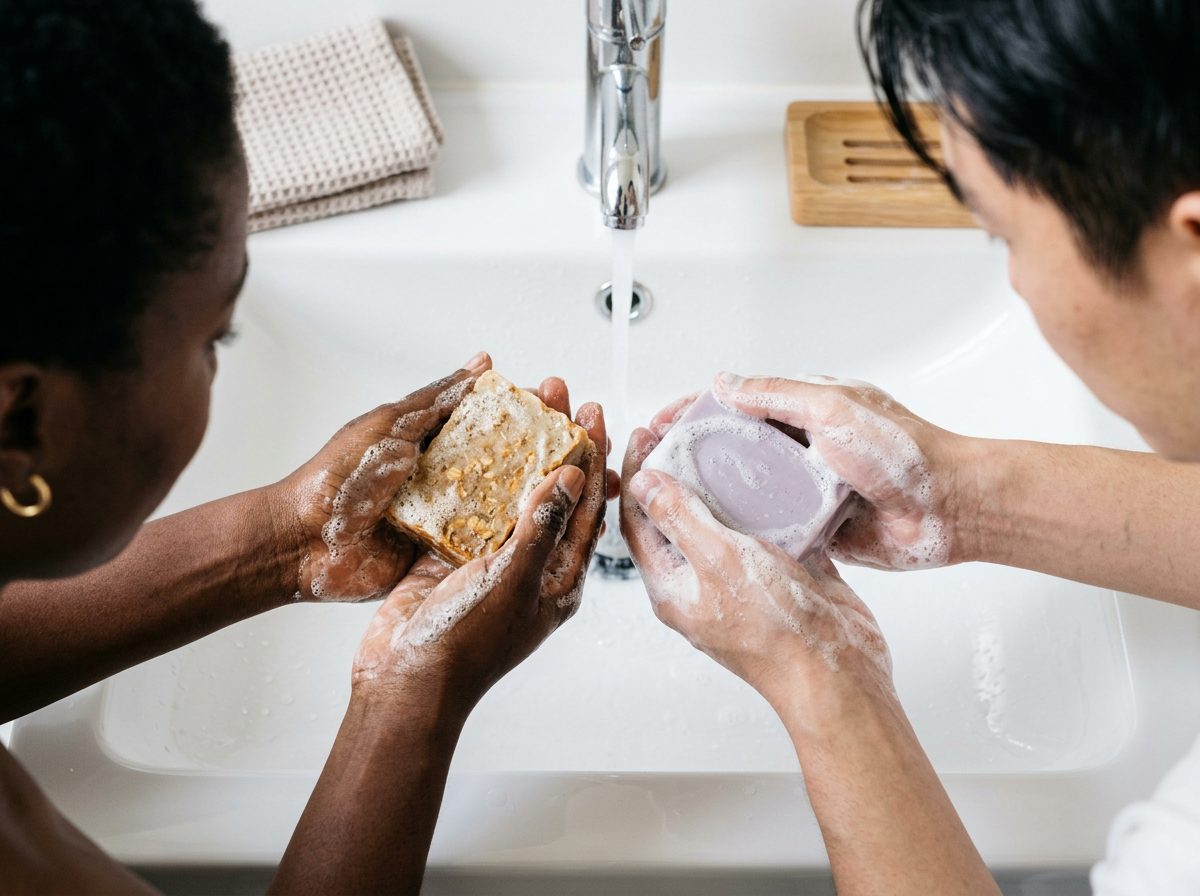
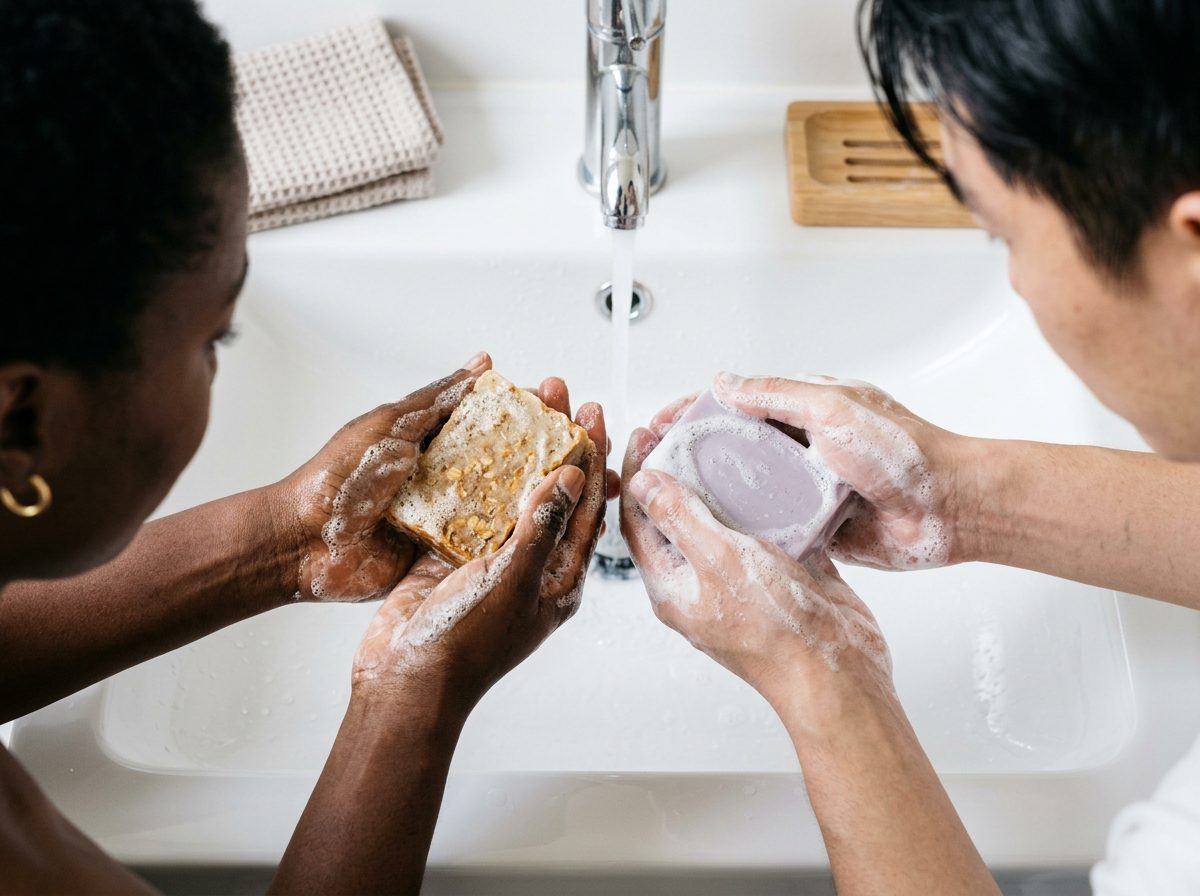
The truth: Length doesn’t change shampoo chemistry. Long hair benefits from the lower stripping action of a balanced bar. Technique matters: lather only on scalp, let foam run through lengths during rinse, finish with ACV. Plenty of long-hair users live happily with bars.
Myth 4: “Bars cause an awful greasy transition phase”
The truth: The transition phase is real but mild — usually 7–14 days. Symptoms: slightly greasier roots than usual, scalp recalibrating from over-washing. Compare to “no-poo” transitions of 4–12 weeks. Most people barely notice the bar transition if they were already washing every other day.
Myth 5: “All shampoo bars are eco-friendly”
The truth: Bars made with palm oil (sodium palmate) can have a worse environmental footprint than a synthetic liquid shampoo. The eco win is real for palm-oil-free, plastic-free, locally produced bars. Always read the ingredient list. “Natural” on the front of the box doesn’t mean palm-free.
Myth 6: “You shouldn’t use bars in hard water”
The truth: Hard water is a real challenge but not a deal-breaker. Solutions: an apple cider vinegar rinse after each wash, smaller bar doses, lather between hands instead of rubbing on the head, and a shower filter for extreme hardness. Millions of bar users live in hard-water regions with no waxiness.
Myth 7: “Bar shampoo doesn’t really clean as well as liquid”
The truth: Cleaning effectiveness comes down to surfactant action and contact time. A real cold-process bar lathered for 60 seconds cleans hair perfectly well. The myth is partly perceptual — liquid shampoo’s bigger foam looks more dramatic but doesn’t translate to better cleaning.
Myth 8: “Lush bars and Aleppo bars and Castile bars are all the same”
The truth: They’re three different chemistries.
- Castile / Aleppo: traditional saponified oil bars, pH 9–10
- Lush-style “shampoo bars”: often detergent bars (sodium cocoyl isethionate base), pH ~5.5
- Modern cold-process bars (like ours): saponified six-oil bars with balanced fatty acid profiles, pH 9–10
They behave differently, require different techniques, and aren’t interchangeable.
Myth 9: “Bars are too expensive per gram”
The truth: Bars look more expensive per piece (€10–15 per bar vs €5–10 per bottle) but provide more washes. Per wash, bars often work out cheaper, especially because users naturally use less product per wash. Annual cost for an average user: €36–48 for bars vs €48–60 for bottles.
Myth 10: “If a bar isn’t lathering, it’s a bad bar”
The truth: 90% of “bad lather” complaints trace to one of three things: hard water, insufficient wetting, or product build-up on the hair from previous shampoos. The bar is rarely the problem. Diagnose by lathering the bar in distilled water in a sink — if it foams there but not in your shower, it’s your water or your hair, not the bar.
Bonus myth: “Bars make hair smell weird”
The truth: Cold-process bars have a softer, less “perfume-bomb” scent than liquid shampoos. To users accustomed to heavily fragranced shampoo, the lighter scent reads as “weird” for the first week. After two weeks, most people prefer it.
Where the shampoo bar myths come from
Three sources, in roughly equal weight:
- Old commercial bars: 1990s-era cheap soap bars marketed as “shampoo” that were unbalanced and over-drying
- Liquid shampoo marketing: brands invested in bottles have a financial reason to discourage bar use
- Misinformation chains: someone tries one bad bar, complains online, others repeat it without context
The fix is the same as for any consumer category: read the ingredient list, learn the technique, give a good bar a real two-week trial.
FAQ
Will I need a conditioner with a shampoo bar? Sometimes. Long, dry, or curly hair often benefits from a separate conditioning bar or leave-in. Short or oily hair often doesn’t.
Are bars OK during pregnancy? Yes, especially fragrance-free options. Avoid bars with essential oils on the pregnancy-caution list.
Will my hair stylist hate that I’m using bars? Some will, some won’t. Tell them what you’re using so they can recommend the right primer or pre-treatment for chemical services.
Want to test the truth for yourself? Browse our cold-process shampoo bars — six oils, palm-oil-free, full ingredient transparency.