


Last updated: October 15, 2026
Introduction

Chemical treatments—perms, relaxers, keratin straightening, Brazilian blowouts—fundamentally alter your hair’s structure. The cuticle is opened, bonds are broken and reformed, and your hair becomes significantly more porous and vulnerable to damage.
Most shampoo bars are soap-based with pH 9-10, which can strip chemically treated hair, cause frizz, and shorten the life of expensive treatments. This guide explains why detergent-based (synthetic detergent) shampoo bars are essential for chemically treated hair and how to choose the right one.
Why Chemically Treated Hair Needs Special Care
What Chemical Treatments Do to Your Hair

Permanent waves (perms): Break disulfide bonds, reform them in curled patterns
- Result: Increased porosity, weakened protein structure
- Vulnerability: Color fading, breakage, dryness
Chemical relaxers: Break disulfide bonds to straighten curly hair
- Result: Extremely high porosity, fragile hair shaft
- Vulnerability: Severe breakage, scalp sensitivity, protein loss
Keratin treatments / Brazilian blowouts: Coat hair with keratin proteins, seal with heat
- Result: Smoother cuticle, reduced porosity (temporarily)
- Vulnerability: Treatment can wash out with harsh surfactants
Chemical straightening (Japanese straightening): Similar to relaxers but stronger
- Result: Permanently straightened, highly porous, fragile
- Vulnerability: Extreme breakage risk, needs pH balance
pH Balance is Critical
Chemically treated hair needs pH 4.5-5.5 to:
- Keep cuticles closed
- Prevent further damage
- Maintain treatment longevity
- Reduce frizz and tangles
- Preserve color (if dyed)
Soap-based bars (pH 9-10): Will strip treatments, cause frizz, accelerate damage
Detergent bars (pH 5.5-6.5): Gentle, maintain treatment, reduce breakage
Best Ingredients for Chemically Treated Hair
Essential Ingredients
1. Mild surfactants (SCI, SCS, SLSa)
- Cleanses without stripping
- Maintains pH balance
- Preserves treatment integrity
2. Hydrolyzed proteins (keratin, silk, wheat)
- Repairs broken bonds
- Strengthens hair shaft
- Reduces breakage
3. Coconut oil / Shea butter
- Deep moisture for porous hair
- Reduces protein loss during washing
- Adds elasticity
4. Panthenol (Pro-Vitamin B5)
- Moisture retention
- Strengthens hair
- Adds shine
5. Citric acid
- Balances pH
- Closes cuticles
- Enhances shine
- Neutralizes hard water minerals
Ingredients to Avoid
❌ Strong sulfates (SLS) — Strip treatments, cause fading
❌ High pH (above 7) — Opens cuticles, accelerates damage
❌ Alcohol denat — Dries porous hair further
❌ Harsh clarifying agents — Remove treatment coatings
Why Natural Answer Products Shampoo Bars Work for Chemically Treated Hair
Our cold process soap bars suit fragile, porous, chemically treated hair for a simple reason — there is nothing synthetic in them:
1. Cold-Process Soap (pH 9–10) + ACV Rinse
- Closes cuticles after chemical treatments
- Prevents further damage
- Maintains treatment longevity (keratin lasts 3-5 months vs. 1-2 months with harsh shampoos)
2. Natural Cold-Process Cleansing
- No SLS, SCI, or synthetic surfactants
- Cleanses without stripping protective oils
- Safe for daily washing (if needed post-treatment)
3. Citric Acid for Hard Water
If you have hard water (most of Europe does), minerals will:
- Coat chemically treated hair, making it dull and stiff
- Accelerate treatment breakdown
- Cause scalp buildup
An acidic rinse after washing clears mineral film, keeping treated hair soft and manageable.
4. Protein + Moisture Balance
- Shea butter and coconut oil provide deep moisture
- Protein-rich formula strengthens weakened bonds
- Prevents the brittle/elastic extremes that damage treated hair
5. Palm Oil-Free & Vegan
- Cruelty-free formulation
- Gentle on sensitive scalps (relaxers can cause scalp damage)
- Sustainable production
How to Use Shampoo Bars on Chemically Treated Hair
Immediately After Treatment (Week 1-2)
Wait 48-72 hours before first wash (keratin/relaxer treatments)
When you do wash:
1. Wet hair thoroughly with lukewarm water (not hot—damages treatment)
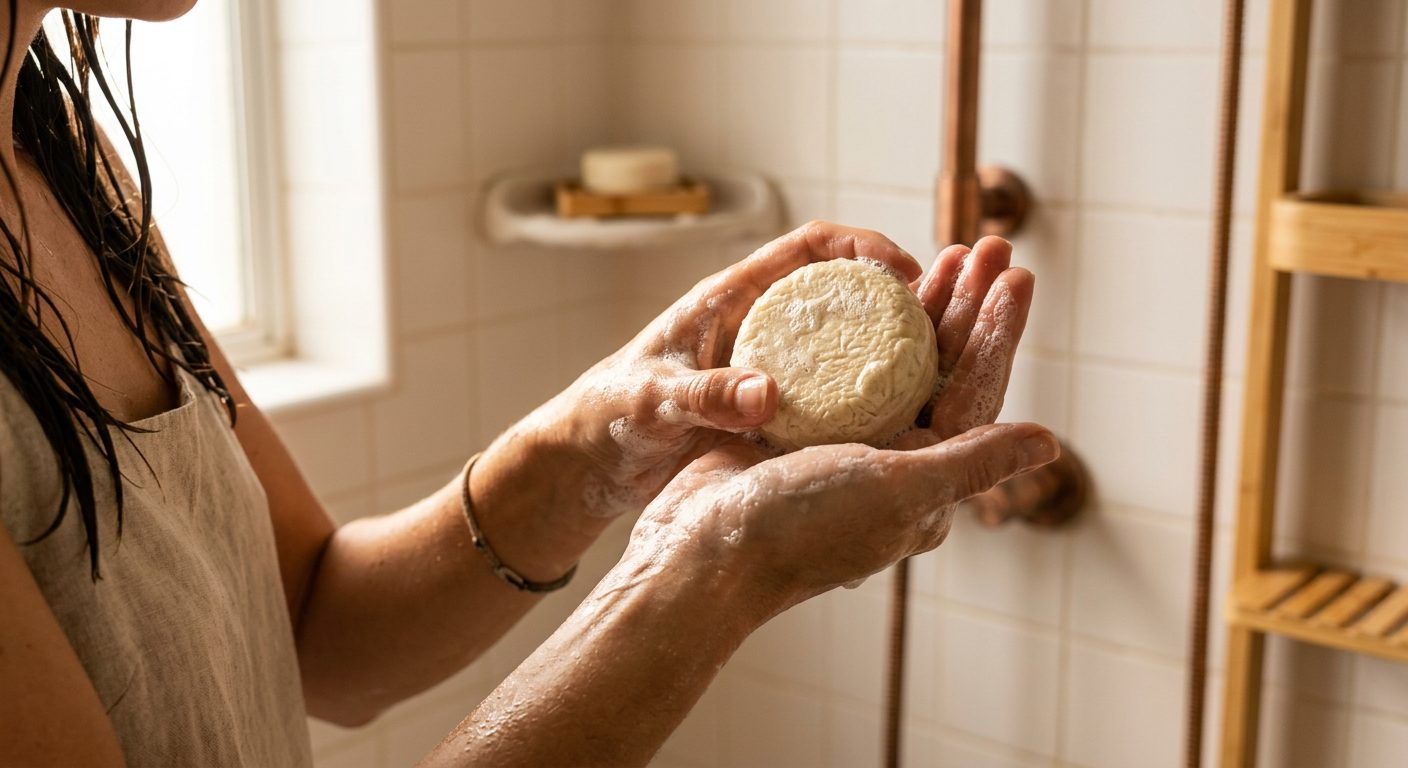
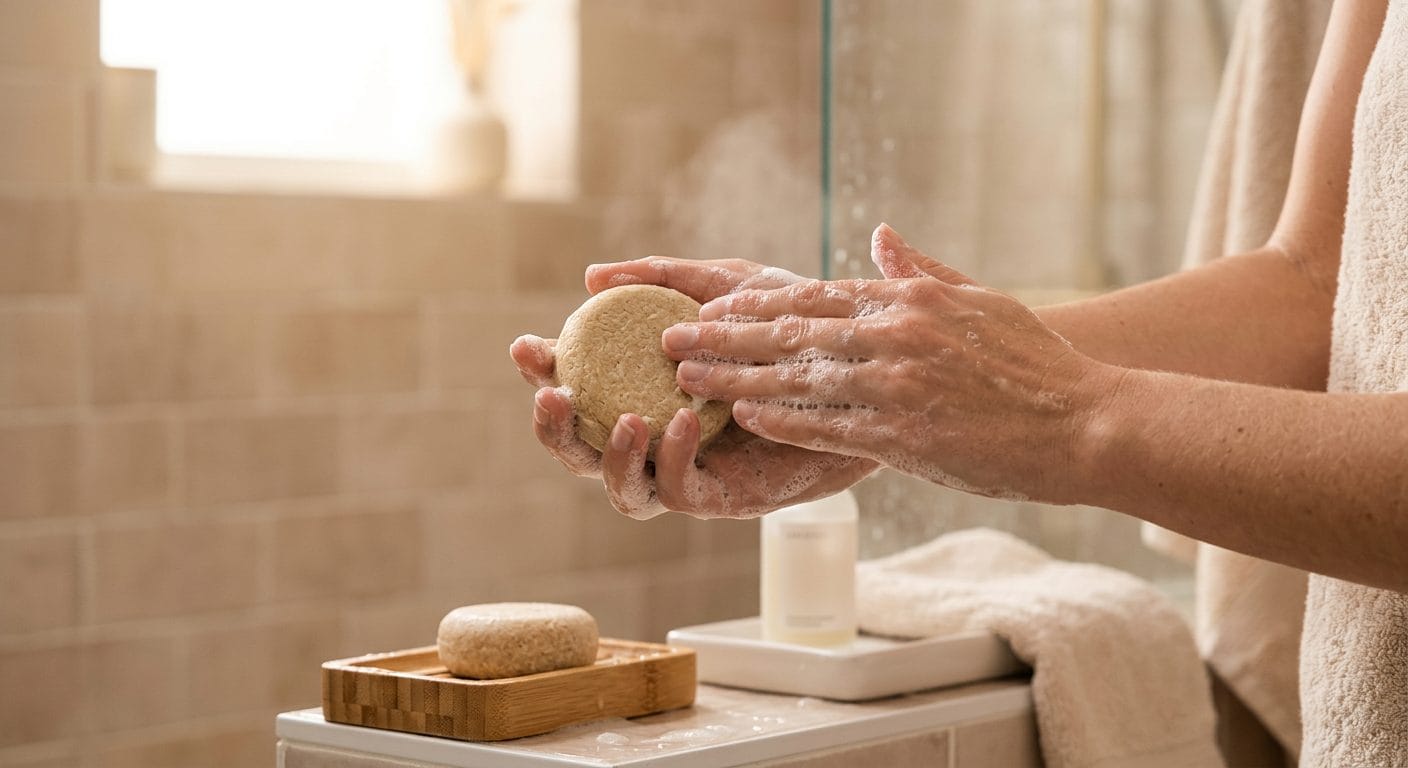
2. Glide bar gently over hair (don’t scrub scalp aggressively)
3. Create lather in hands first, then apply
4. Focus on scalp, let runoff cleanse lengths
5. Rinse thoroughly (2-3 minutes minimum)
6. Use an apple cider vinegar rinse to close cuticles further
Frequency: Once every 3-5 days initially
Ongoing Maintenance (Week 3+)
Wash frequency: 2-3 times per week (less is better for chemically treated hair)
Method:
1. Pre-wet hair with warm water for 60 seconds (opens cuticles slightly for cleaning)
2. Rub bar gently on scalp (avoid lengths if very damaged)
3. Massage lather into scalp with fingertips (not nails)
4. Rinse with cool water to seal cuticles
5. Optional: ACV rinse (1:4 ratio) for extra shine and pH balance
6. Deep condition every wash (leave-in conditioner or conditioner bar)
Hard Water Strategy
If your water is hard:
1. Always use an ACV rinse (neutralizes minerals)
2. Consider a shower filter (reduces mineral buildup)
3. Final rinse with distilled water (optional, for maximum softness)
Specific Chemical Treatment Guides
For Permed Hair (Loose Waves / Tight Curls)
Goal: Maintain curl pattern, prevent frizz, add moisture
Tips:
- Wash once every 3-4 days (over-washing loosens perms)
- Use lukewarm water only (hot water relaxes curls)
- Scrunch while washing (encourages curl definition)
- Never brush wet (use wide-tooth comb)
- Deep condition every wash
Expected lifespan: 3-6 months (detergent bars help extend this vs. 2-3 months with harsh shampoos)
For Relaxed Hair
Goal: Prevent breakage, maintain smoothness, protect scalp
Critical notes:
- Relaxed hair is EXTREMELY fragile (80% of original strength lost)
- Wash gently—do not scrub or tangle
- Focus on scalp health (chemical burns are common)
- Never skip conditioning
- Trim split ends regularly (every 6-8 weeks)
Warning signs of damage:
- Excessive shedding (more than 100 hairs/day)
- Hair breaks when stretched slightly
- White dots on broken ends (sign of extreme damage—see a professional)
Wash frequency: Once per week maximum (over-washing accelerates breakage)
For Keratin Treatments / Brazilian Blowouts
Goal: Extend treatment lifespan, maintain smoothness
Critical first 72 hours:
- Do NOT wash hair
- Do NOT tie hair up (creates creases)
- Do NOT exercise/sweat heavily
- Sleep on silk pillowcase
After 72 hours:
- Use detergent bars only (sulfates will strip treatment in 4-6 weeks)
- Wash once every 3-4 days
- Avoid hot water (breaks down keratin coating)
- Air dry when possible (heat reactivates but also damages)
Expected lifespan:
- With detergent bars: 3-5 months
- With sulfate shampoos: 1-2 months
- With soap bars: 2-4 weeks (treatment ruined)
For Japanese Straightening
Goal: Prevent breakage, maintain sleekness
Notes:
- Similar care to relaxers (extremely fragile)
- Requires protein treatments monthly
- Wash 1-2 times per week maximum
- Never bleach or color within 3 months of treatment
Common Mistakes (and How to Avoid Them)
⚠️ Mistake #1: Using Cold-Process Soap Without an Acidic Rinse
Why it fails: pH 9-10 temporarily opens cuticles — without an ACV rinse to close them, hair feels rough and treatments break down faster
Fix: Use cold-process soap (pH 9–10) and always follow with an ACV rinse (1:4 dilution) to restore cuticle pH to 4.5-6.5
❌ Mistake #2: Washing Too Frequently
Why it fails: Chemically treated hair needs oils to protect weakened structure
Fix: Wash every 3-4 days, use dry shampoo between washes
❌ Mistake #3: Hot Water Rinsing
Why it fails: Heat breaks down keratin, loosens perms/straightening, causes frizz
Fix: Lukewarm wash, cool final rinse
❌ Mistake #4: Skipping ACV Rinse in Hard Water Areas
Why it fails: Minerals coat hair, make it dull/stiff, accelerate treatment breakdown
Fix: Always use ACV rinse (1:4 ratio) or shower filter
❌ Mistake #5: Not Deep Conditioning
Why it fails: Chemically treated hair is porous and loses moisture rapidly
Fix: Deep condition every wash (leave-in 5-10 minutes)
Hard Water and Chemically Treated Hair
Why Hard Water is Especially Damaging
If your hair has been chemically treated, hard water is your worst enemy:
Problem 1: Mineral Buildup
- Calcium/magnesium coat porous hair shafts
- Creates stiff, dull, unmanageable hair
- Makes treatments look worse (defeats the purpose!)
Problem 2: pH Imbalance
- Hard water is slightly alkaline (pH 7.5-8.5)
- Raises hair’s pH, opens cuticles
- Accelerates treatment breakdown
Problem 3: Soap Scum (if using soap-based bars)
- Soap + hard water = sticky residue
- Coats chemically treated hair, looks greasy
- Requires clarifying (which strips treatments!)
The Natural Answer Solution
A true soap bar plus an acidic rinse:
1. Cleanses without leaving residue
2. Neutralizes hard water minerals during wash
3. ACV rinse restores hair’s natural pH after cleansing
4. No clarifying needed (preserves treatments)
Cities with very hard water: London, Paris, Brussels, Amsterdam, Munich, Vienna, Athens, Rome, Madrid, Barcelona
If you live here: You MUST use detergent bars + ACV rinse for chemically treated hair
When to Avoid Shampoo Bars Entirely
While detergent bars are excellent for most chemically treated hair, there are exceptions:
Don’t use shampoo bars if:
- Your hair is severely damaged (breaks when touched) → See a professional for protein treatments first
- You have active chemical burns on scalp → Wait until healed, use medicated shampoo
- Your stylist specifically prohibits it (some keratin treatments require specific aftercare)
In these cases: Use a gentle liquid sulfate-free shampoo temporarily, then transition to detergent bars once hair has recovered
The Bottom Line
Chemically treated hair is fragile, porous, and needs gentle, pH-balanced care. Detergent-based shampoo bars offer:
✅ pH 5.5-6.5 (ideal for treated hair)
✅ Gentle cleansing without stripping
✅ Extends treatment lifespan (keratin lasts 2-3x longer)
✅ Works in hard water (citric acid neutralizes minerals)
✅ Zero plastic waste (bonus: eco-friendly)
✅ €10-15 per bar = 60-80 washes (more affordable than salon shampoos)
If you’ve invested €100-500 in chemical treatments, spending €12 on a gentle, well-made shampoo bar that preserves that investment is the smartest decision you can make.
Shop our cold process soap bars — 100% natural ingredients → Natural Answer Products
Hard water in your area? Check our European Hard Water Guide to see your city’s mineral levels.
*Article created March 5, 2026. Last updated: March 5, 2026.*