


Last updated: October 15, 2026
 Introduction
 Introduction
How Aging Changes Your Hair (60+)
Biological Changes

Common Hair Concerns for Seniors
- Thinning / Hair Loss — Androgenetic alopecia, nutritional deficiencies, medication side effects
- Dryness — Reduced oil production, hormonal changes
- Brittleness — Cumulative damage, reduced protein production
- Gray/White Hair — No melanin, different texture (coarser or finer)
- Scalp Sensitivity — Thinner skin, reduced healing capacity
- Yellowing — Gray hair absorbs minerals, pollutants, nicotine (creates yellow tinge)
Why Shampoo Bars Are Ideal for Seniors
Physical Accessibility Advantages
1. Easy to Grip – Bar shape fits naturally in palm (no slippery bottles) – Ideal for arthritis, tremors, reduced hand strength – Can be used with one hand if needed – No need to squeeze/pump (common arthritis pain point)2. Cannot Spill or Leak – Safe for seniors with visual impairment – No wet floors = reduced fall risk – Travel-friendly (no TSA liquid restrictions) – Won’t leak in gym bags, suitcases3. Long-Lasting (Less Shopping) – 60-80 washes per bar = 2-3 months supply – Reduces trips to store (mobility challenges) – Cost-effective (€10-15 for 3 months vs. €5-8 monthly for bottles)4. Lightweight – 80-100g per bar vs. 300-500g for bottles – Easy to lift for seniors with weak grip – Reduces strain on wrists, hands5. No Small Print – Bars are simple—lather and use – No confusing ingredients lists to read (vision issues) – Easy for caregivers to explain
Hair Health Benefits for Aging Hair
1. Gentle Formulas – Superfatted cold process soap (pH 9–10, like Natural Answer’s) and mild detergent bars (pH 5.5-6.5) are both milder than most liquid shampoos – Superfatting leaves extra oil in the bar instead of stripping it from your hair (critical for dry senior scalps) – Sulfate-free options available in both formats2. Targeted Ingredients for Aging Hair – Proteins (strengthen thinning hair) – Natural oils (combat dryness) – Gentle surfactants (won’t irritate sensitive scalps)3. Hard Water Solution – Many seniors live in hard water areas (Europe, UK, US Southwest) – Detergent bars with citric acid, or a true soap bar plus a simple apple cider vinegar rinse, both prevent mineral buildup (major cause of dullness in gray hair)4. Environmental Benefits – Zero plastic waste – Sustainable (aligns with values of many seniors) – Handmade, small-batch production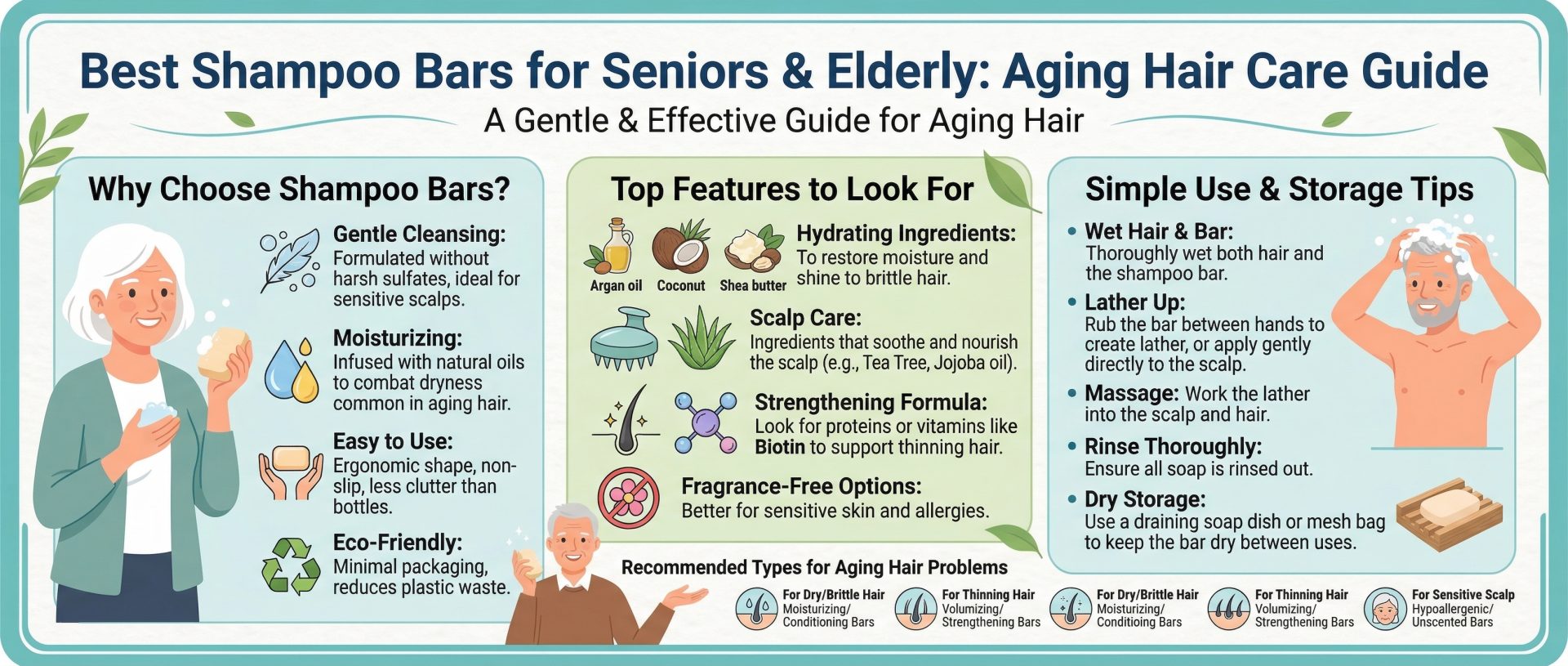
Best Ingredients for Senior Hair
Essential Ingredients
1. Saponified Plant Oils (Olive, Coconut, Shea Butter) – Superfatted cold process soap cleanses gently without stripping – Ideal for dry, thinning hair – pH 9-10: finish with a diluted ACV rinse2. Natural Oils (Coconut, Shea Butter, Argan) – Deeply moisturize dry scalps – Add shine to dull gray hair – Strengthen brittle hair shafts3. Proteins (Keratin, Silk, Wheat) – Thicken hair appearance – Strengthen fragile hair – Reduce breakage4. Panthenol (Pro-Vitamin B5) – Moisture retention – Adds volume to thinning hair – Soothes sensitive scalps5. Citric Acid – Balances pH – Neutralizes hard water minerals (prevents yellowing) – Adds shine to gray hair6. Rosemary Oil / Peppermint Oil – Stimulates scalp circulation – May promote hair growth – Refreshing scent7. Saponified Plant Oils (Cold Process Soap Base) – The base of a well-made cold process soap bar, like Natural Answer’s – Naturally moisturizing when the bar is superfatted – No synthetic surfactantsIngredients to Avoid
❌ Harsh sulfates (SLS, SLES) — Strip natural oils, irritate scalps ❌ Synthetic fragrances — Can trigger allergies, headaches ❌ Alcohol denat — Dries already-dry hair further ❌ Parabens — Potential hormone disruptors (seniors often have enough health concerns)Why Natural Answer Products Shampoo Bars Work for Seniors
Our cold process soap bars suit aging hair for reasons that have nothing to do with marketing:1. Cold Process Soap (pH 9–10) + Superfatted with 6 Plant Oils
- Won’t strip natural oils from dry scalps
- Safe for daily use (if needed)
- Ideal for thinning, fragile hair
2. Easy to Handle
- Smooth bar shape (no rough edges)
- Fits comfortably in aging hands
- Can be used seated (shower chair, bath)
- No bending or reaching for heavy bottles
3. Citric Acid for Hard Water
If you live in a hard water area (most of Europe does): – Prevents mineral buildup on gray hair (stops yellowing) – Leaves hair soft and manageable – No need for separate clarifying treatmentsHard water is especially problematic for gray hair because white hair absorbs minerals, turning yellow/brassy. An acidic rinse after washing prevents this — one tablespoon of apple cider vinegar in 250 ml of water.4. Hydrating Oils
- Shea butter and coconut oil combat age-related dryness
- Adds shine to dull gray hair
- Strengthens brittle hair shafts
5. No Palm Oil or Animal Testing
- Vegan and cruelty-free
- Gentle on sensitive scalps
- Sustainable production
6. Handmade in Small Batches
- Quality control (each bar checked)
- Fresh ingredients
- Supports small business
How to Use Shampoo Bars for Seniors
For Independent Seniors
Method 1: Direct Application 1. Wet hair thoroughly with warm water 2. Hold bar in dominant hand 3. Glide bar gently over hair (3-5 strokes) 4. Set bar down on soap dish 5. Massage lather into scalp with fingertips 6. Rinse thoroughly (2-3 minutes)Method 2: Lather in Hands First (Easier for Arthritis) 1. Wet bar and rub between hands to create lather 2. Apply lather to hair (no need to hold bar while washing) 3. Massage into scalp 4. RinseFrequency: 2-3 times per week (over-washing dries aging hair)For Caregivers Assisting Seniors
Setup: 1. Use a non-slip shower chair (safety first) 2. Keep bar in easy-reach soap dish with drainage 3. Use lukewarm water (not hot—dries skin) 4. Have soft towel readyWashing: 1. Wet hair gently (avoid high pressure if scalp is sensitive) 2. Rub bar in hands to create lather 3. Apply lather to senior’s hair (avoid getting bar near face) 4. Massage scalp gently (improves circulation) 5. Rinse thoroughly (residue can cause itching) 6. Pat dry gently (don’t rub vigorously)Tips: – Talk through each step (reduces anxiety) – Check water temperature on your own wrist first – Be extra gentle around thinning areas – Watch for signs of discomfort (scalp sensitivity)For Nursing Homes / Assisted Living
Benefits: – One bar per resident (hygiene, no sharing bottles) – Easy inventory (bars don’t leak or spill) – Cost-effective (60-80 washes per bar) – Reduces fall risk (no slippery bottle puddles)Protocol: 1. Label each bar with resident name (use waterproof marker on soap dish) 2. Store in individual soap dishes with drainage 3. Train staff on proper use (lather in hands first) 4. Replace every 2-3 months or when depletedAddressing Specific Senior Hair Concerns
For Thinning Hair
Goal: Create volume appearance, strengthen remaining hairTips: – Use a lighter bar — a volumizing detergent formula or a lightly superfatted cold process soap (not heavy-oil bars) – Wash with lukewarm water (hot water weakens follicles) – Massage scalp during wash (stimulates circulation) – Rinse with cool water (closes cuticles, adds shine) – Consider rosemary oil bars (may promote growth)Avoid: – Over-washing (strips protective oils) – Harsh scrubbing (damages follicles) – Heavy conditioning (weighs down fine hair)For Gray/White Hair
Goal: Prevent yellowing, add shine, maintain brightnessCritical: Gray hair has NO melanin and absorbs everything—minerals, pollution, nicotine, chlorineTips: – Detergent bars with citric acid, or a true cold process soap bar, both prevent mineral yellowing when paired with the right rinse – With true soap, an acidic (ACV) rinse after washing prevents residue and dullness – Use purple shampoo bars 1x/week if yellowing occurs – Always use an ACV rinse in hard water areas (1:4 ratio), whichever bar type you choose – Avoid smoking near hair (nicotine stains white hair)Hard water cities with high yellowing risk: London, Paris, Brussels, Amsterdam, Munich, Vienna, Athens, RomeFor Dry, Brittle Hair
Goal: Deep hydration, reduce breakageTips: – Use an oil-rich bar — a superfatted cold process soap (shea butter, coconut oil) or an oil-rich detergent bar – Wash only 1-2 times per week (let natural oils accumulate) – Use leave-in conditioner after washing – Sleep on silk pillowcase (reduces friction breakage) – Trim split ends every 8-12 weeksAvoid: – Hot water (strips moisture) – Heat styling (hair dryers, curling irons) – Tight hairstyles (traction alopecia)For Sensitive Scalps
Goal: Gentle cleansing, reduce irritationTips: – Use fragrance-free or lightly scented bars – Test for allergies (patch test on arm first) – Massage gently (no scratching with nails) – Rinse extremely thoroughly (residue = itching) – See dermatologist if irritation persists (may be seborrheic dermatitis)Avoid: – Harsh surfactants (SLS) – Synthetic fragrances – Harsh SLS/SLES surfactants (strip natural oils) – Over-washing (dries scalp further)Hard Water and Aging Hair
Why Hard Water is Worse for Seniors
Gray/white hair is MORE susceptible to hard water damage than pigmented hair:Problem 1: Yellowing – Minerals (calcium, magnesium, iron) coat white hair – Creates yellow/brassy tinge – Looks dirty even when cleanProblem 2: Dullness – Mineral buildup blocks light reflection – Hair looks lifeless, agedProblem 3: Dryness – Minerals coat hair shaft – Prevents moisture absorption – Increases breakageThe Natural Answer Solution
A true soap bar plus an acidic rinse: 1. Neutralizes hard water minerals during wash 2. Prevents yellowing (keeps gray hair bright) 3. Leaves hair soft and manageable 4. No need for clarifying treatments (gentle on thinning hair)European cities with very hard water: London (260-320 ppm), Paris (220-300 ppm), Brussels (180-260 ppm), Amsterdam (160-220 ppm), Munich (280-340 ppm), Vienna (200-280 ppm)If you live in these cities: Pair whichever bar you use — detergent-based or true cold process soap — with an ACV rinse for healthy gray hairSafety Tips for Seniors Using Shampoo Bars
Preventing Falls
- Use non-slip shower mat (wet bar can drop and become slippery)
- Keep bar in drainage dish (not on shower floor)
- Sit while washing (shower chair or bath bench)
- Install grab bars (support when washing hair)
- Use good lighting (see what you’re doing)
For Vision Impairment
- Use tactile markers (wrap rubber band around your bar to identify it)
- Designate consistent location (always same soap dish)
- Lather in hands first (easier to control)
- Ask for help if uncertain (no shame in assistance)
For Arthritis / Limited Mobility
- Wet bar first (easier to lather)
- Use both hands to create lather (distributes pressure)
- Take breaks (rest hands if needed)
- Sit while washing (reduces strain)
- Consider bar-on-a-rope (easier to hold, won’t drop)
For Memory Issues (Dementia / Alzheimer’s)
- Keep routine consistent (same day, time, method)
- Use verbal cues (“Now we’re washing your hair”)
- Simplify steps (caregiver does most of the work)
- Avoid strong scents (can trigger agitation)
- Be patient (rushing causes anxiety)
Common Questions from Seniors
“Will it dry out my already-dry hair?”
Answer: It depends on the formula, not just whether it’s soap or detergent. A plain, unsuperfatted soap bar (pH 9-10) can dry hair out. A generously superfatted cold process soap — like Natural Answer’s — leaves extra oil in the bar so it doesn’t strip your hair the way a bare soap would.Natural Answer bars are generously superfatted with shea butter and coconut oil, so oil and butter stay on the hair after rinsing rather than being stripped away.“Can I use it if I have arthritis?”
Answer: Yes! Many seniors with arthritis prefer bars because: – No squeezing bottles (painful for arthritic hands) – Easy to grip (fits naturally in palm) – Can be used one-handed if needed – Lather in hands first if holding bar is difficult“Will it work in my hard water?”
Answer: Most European cities have hard water (London, Paris, Brussels, etc.). Regular shampoo bars will leave residue and cause yellowing in gray hair.Natural Answer bars are cold-process soap, so a weekly apple cider vinegar rinse neutralizes hard water minerals. This prevents yellowing and keeps hair soft.“Is it safe if I’m on blood thinners / medications?”
Answer: Shampoo bars for seniors are topical and don’t interact with medications. However: – If you have scalp sores (blood thinners can cause easy bruising), wash gently – Avoid bars with strong essential oils if you have allergies – Check with your doctor if unsure“Can my caregiver use the same bar?”
Answer: Technically yes (hygiene is fine if rinsed), but we recommend separate bars: – Prevents confusion – More hygienic – Different hair needs (your caregiver may have thicker hair, different concerns)“What if I forget how to use it?”
Answer: Keep instructions simple: 1. Wet hair 2. Rub bar on head 3. Massage 4. RinseIf memory issues progress, have caregiver wash your hair (no shame—it’s self-care).Cost Analysis for Seniors on Fixed Incomes
Shampoo Bars vs. Bottles
Shampoo Bar: – Cost: €10-15 per bar – Washes: 60-80 washes – Cost per wash: €0.13-0.25 – Lasts: 2-3 months (2-3x/week washing) – Annual cost: €40-60Liquid Shampoo (Drugstore): – Cost: €5-8 per bottle (300ml) – Washes: ~30 washes – Cost per wash: €0.17-0.27 – Lasts: 1 month (2-3x/week washing) – Annual cost: €60-96Liquid Shampoo (Salon): – Cost: €15-25 per bottle – Washes: ~30 washes – Cost per wash: €0.50-0.83 – Annual cost: €180-300Savings
Switching to shampoo bars saves seniors €20-240 per year compared to liquid options.Additional savings: – Longer-lasting (fewer trips to store = saved transport costs) – No spills/waste (full bar used, no product left in bottle) – Reduced need for clarifying treatments (hard water formula works)Caregiver Guide: Transitioning Seniors to Shampoo Bars
Step 1: Assess Current Routine
- What shampoo are they using now? (note ingredients, scent)
- How often do they wash? (2-3x/week is ideal for aging hair)
- Any scalp issues? (dryness, sensitivity, dandruff)
- Mobility limitations? (arthritis, tremors, vision)
Step 2: Choose the Right Bar
- For dry hair: An oil-rich bar — superfatted cold process soap (shea butter, coconut) or an oil-rich detergent bar
- For thinning hair: A lighter formula — volumizing detergent bar or lightly superfatted soap
- For sensitive scalps: Fragrance-free, whichever base you choose
- For hard water areas: Detergent bars with citric acid, or a true soap bar plus a weekly ACV rinse (essential either way!)
Step 3: Introduce Gradually
- Explain benefits (“easier to hold,” “won’t spill,” “lasts longer”)
- Do a test wash together (show them how)
- Keep old shampoo bottle for 1-2 weeks (reduces anxiety)
- Be patient (change is hard for seniors)
Step 4: Make It Easy
- Place bar in easy-reach dish with good drainage
- Mark dish with their name (if shared bathroom)
- Write simple instructions on waterproof card if needed
- Check in after first few washes (“How’s it going?”)
Step 5: Monitor and Adjust
- Ask about dryness, itching, tangles
- Watch for yellowing (sign of hard water—add ACV rinse)
- Switch bars if current one isn’t working
- Celebrate successes (“Your hair looks so shiny!”)