


Last updated: September 19, 2026
—
Introduction
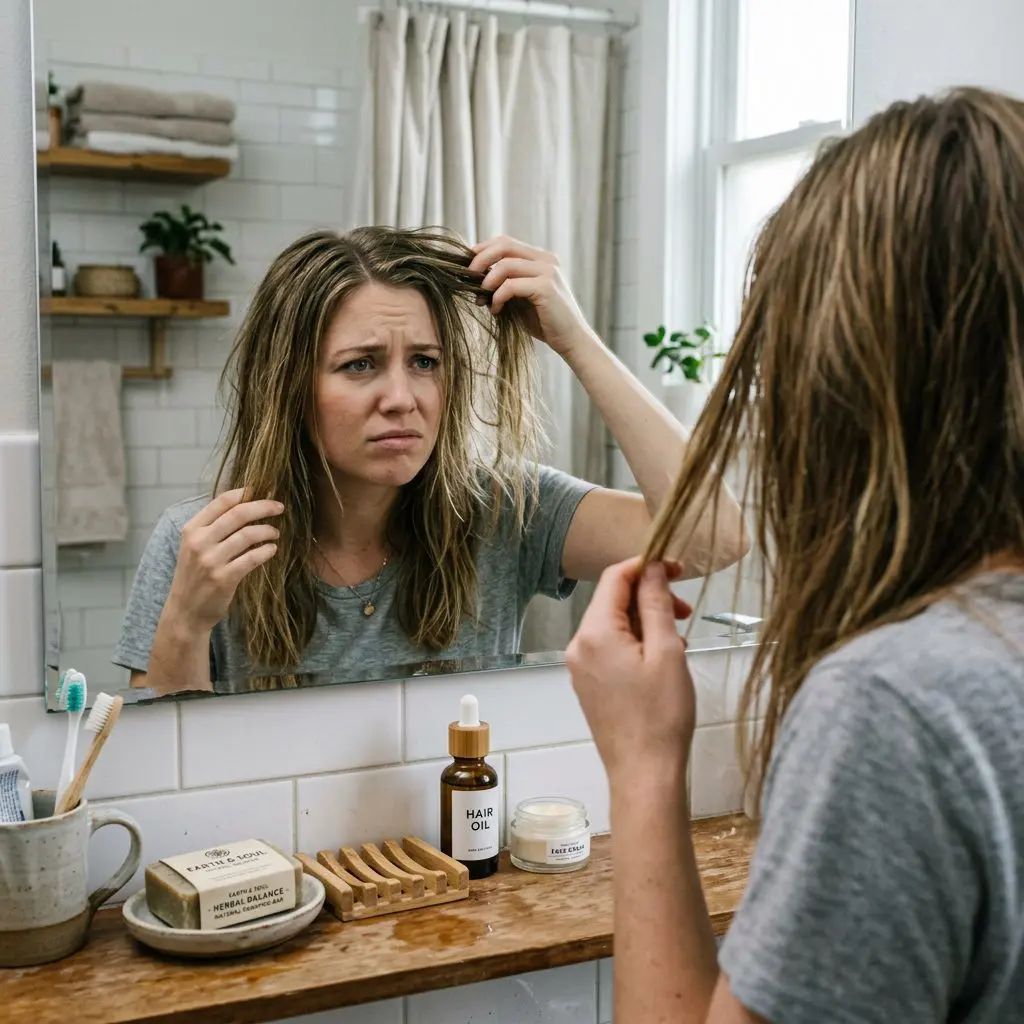
You made the switch to eco-friendly shampoo bars, excited to ditch plastic bottles and simplify your routine. But instead of bouncy, clean hair, you’re dealing with something that looks… greasy? Waxy? Like you haven’t washed it in a week?
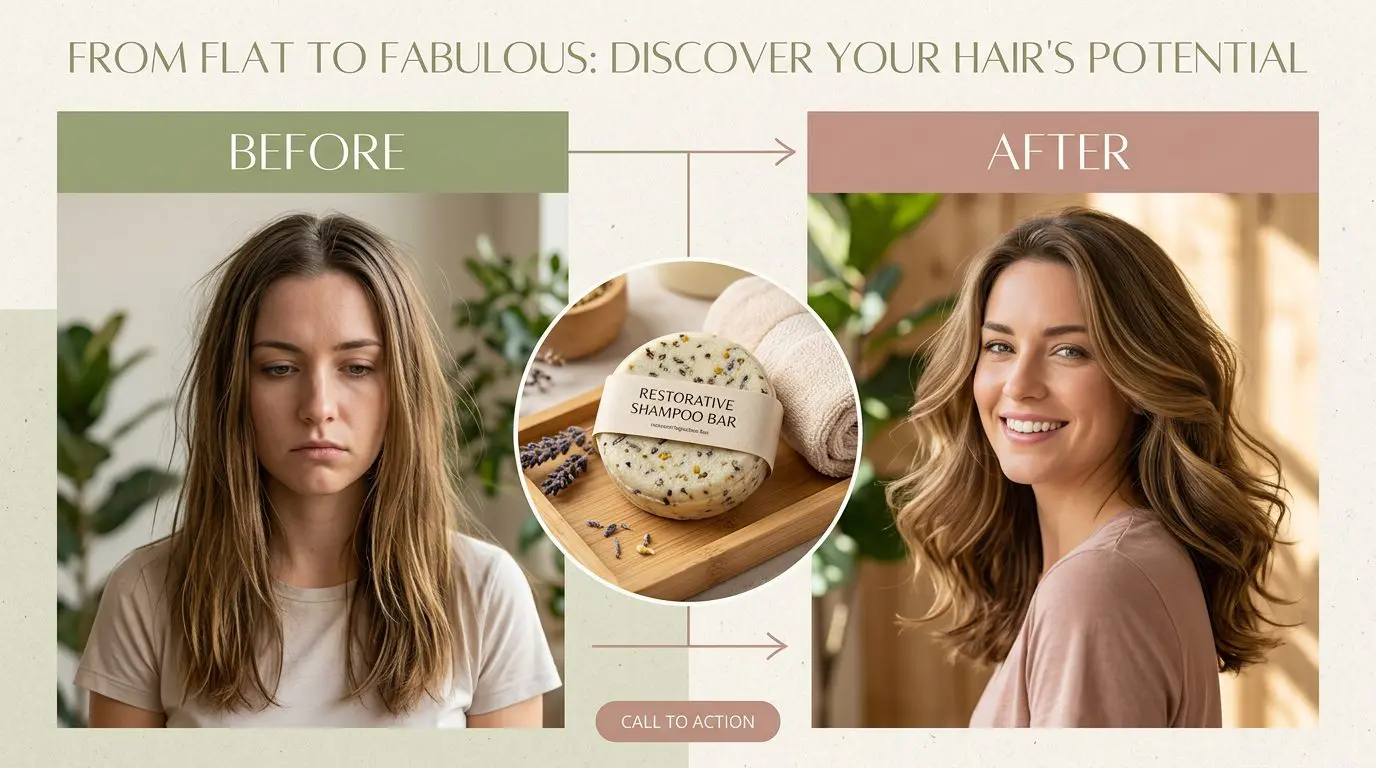
You’re not alone. The “greasy hair after shampoo bar” problem is one of the most common complaints—and it’s almost never the bar’s fault.
The good news: This issue is fixable. Usually within days, sometimes instantly once you identify the root cause.
In this guide, we’ll walk through the 7 most common reasons shampoo bars make hair look greasy, how to diagnose which one is affecting you, and the exact steps to fix it. By the end, you’ll know how to get clean, fresh hair that stays that way—without going back to plastic bottles.
—
If your roots are the problem, our Lavender & White Kaolin bar is the one to look at — the kaolin absorbs excess oil rather than adding to it. See all bars →
The 7 Most Common Causes (And How to Identify Yours)
1. Hard Water Buildup (The #1 Culprit)
What it looks like:
- Waxy, sticky residue (especially at the roots)
- Hair feels coated, heavy, or stiff
- Gets worse over time, not better
- More pronounced after using soap-based bars
Why it happens:
Hard water contains calcium and magnesium minerals. When these minerals meet soap-based shampoo bars, they form soap scum—a waxy, insoluble residue that clings to hair.
Even if you don’t have traditional soap bars, hard water minerals bind to hair over time, creating dull, heavy buildup that looks like grease but is actually mineral deposits.
Who’s affected:
- Most of Europe (especially Netherlands, Belgium, Germany, UK hard water areas)
- US Midwest and Southwest
- Anywhere with well water
The fix:
Immediate relief:
- 1. Apple cider vinegar rinse: Mix 2 tablespoons ACV in 2 cups water. After shampooing, pour over hair slowly, massage into scalp, let sit 1-2 minutes, then rinse thoroughly. This dissolves mineral deposits instantly.
- 2. cleansing shampoo (one-time reset): Use a clarifying/cleansing liquid shampoo once to strip buildup. Then switch to a hard-water-friendly bar.
Long-term solution:
- Switch to cold-process soap bars (like Natural Answer) and use a weekly ACV rinse. The acidic rinse neutralises mineral deposits so the soap rinses clean.
- Use an ACV rinse weekly (or after every wash if water is very hard).
- Look for a well-superfatted bar and finish with an acidic rinse (natural ingredients that bind to minerals before they bind to hair).
How to know if this is your issue:
Do an ACV rinse. If hair immediately feels lighter, cleaner, and less waxy, hard water buildup is your problem.
—
2. The Transition Period (Your Scalp is Adjusting)
What it looks like:
- Hair feels greasier than usual for 1-4 weeks
- Scalp produces more oil than before
- Gradually improves over time (not getting worse)
- Roots oily, ends may be dry
Why it happens:
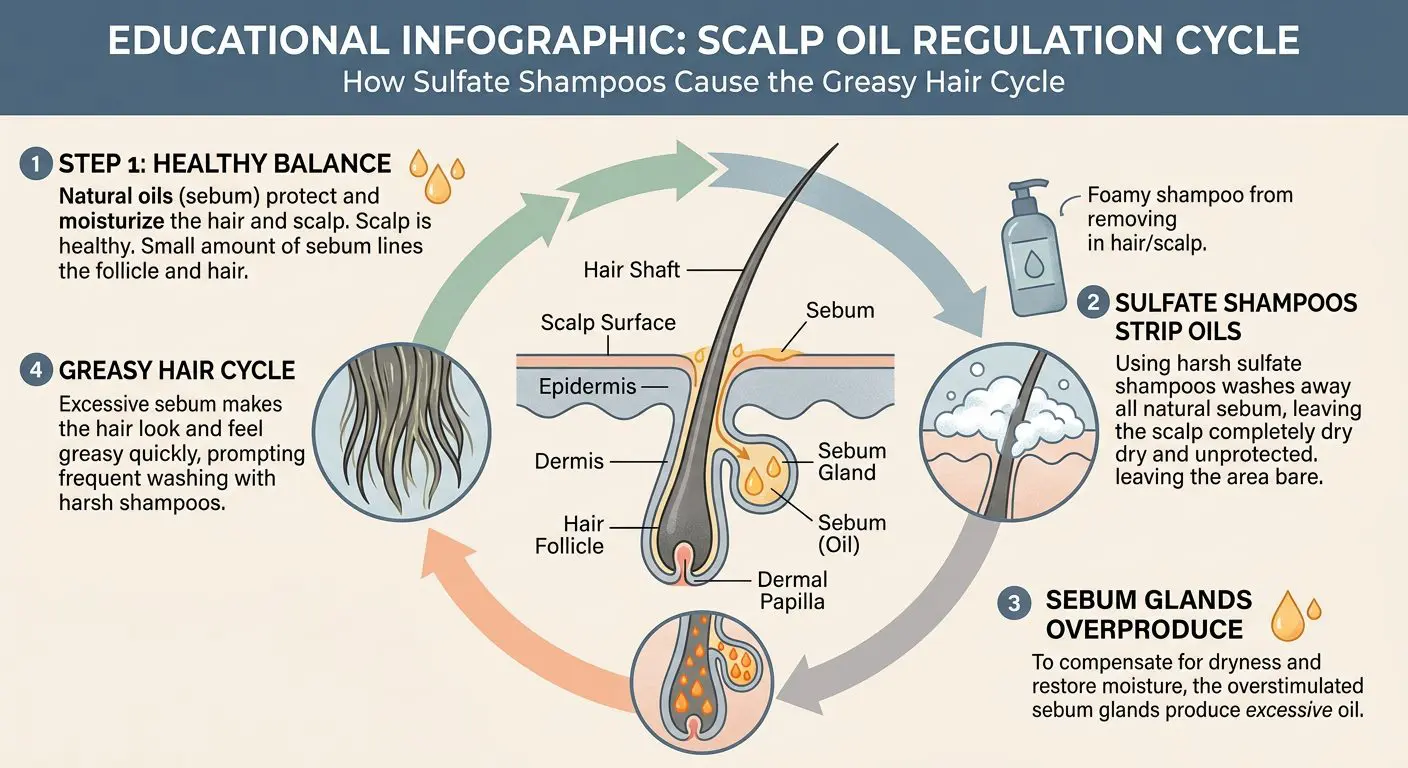
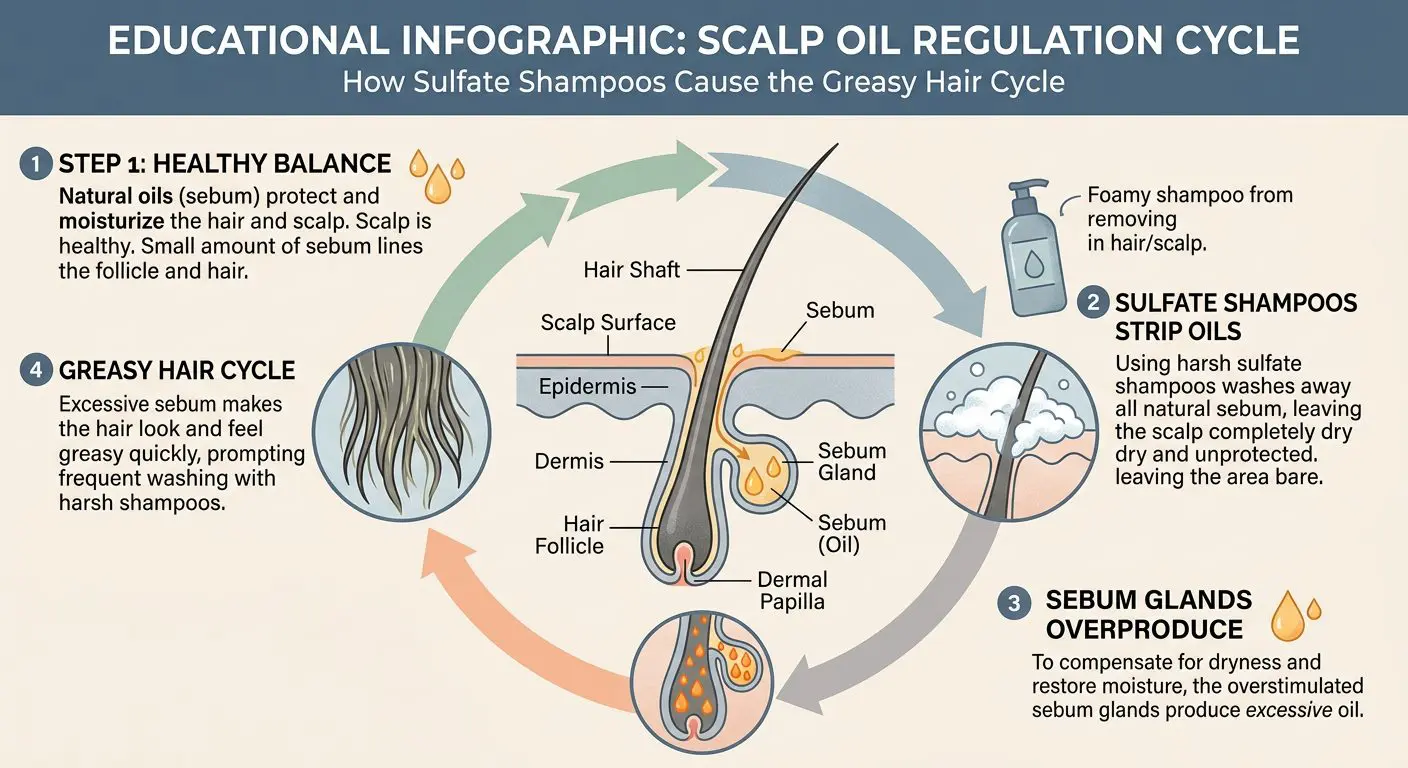
Liquid shampoos (especially sulfate-based ones) strip natural oils aggressively. Your scalp compensates by overproducing sebum to replace what’s lost.
When you switch to gentler shampoo bars, your scalp doesn’t immediately realize it doesn’t need to overproduce anymore. It takes 2-4 weeks for sebum production to recalibrate.
Who’s affected:
Anyone switching from sulfate shampoos (most liquid brands) to shampoo bars.
The fix:
During transition (weeks 1-4):
- 1. Wash every 2-3 days (don’t wash daily—this prolongs adjustment)
- 2. Use dry shampoo between washes (cornstarch or arrowroot powder works)
- 3. Rinse thoroughly (spend 2+ minutes rinsing to remove all residue)
- 4. Avoid over-conditioning (skip conditioner on roots, use only on ends)
- 5. Be patient (most people see improvement by week 3)
Week 3+ (recalibrated):
- Sebum production normalizes
- Hair stays fresh 3-4+ days between washes
- Natural shine returns (not grease)
How to know if this is your issue:
If you recently switched from liquid shampoo and the problem is improving slightly each week (not getting worse), you’re in transition. Stick with it.
—
3. Not Rinsing Thoroughly Enough
What it looks like:
- Hair looks clean immediately after washing, then feels heavy/greasy within hours
- Scalp itches or feels coated
- Random greasy patches (not evenly distributed)
Why it happens:
Shampoo bars are highly concentrated. A little goes a long way—but that means any residue left behind will make hair look greasy.
Many people don’t rinse long enough because they’re used to liquid shampoos that rinse out faster.
The fix:
- 1. Rinse for at least 2 minutes (yes, set a timer)
- 2. Flip hair upside down and rinse from multiple angles
- 3. Scrub your scalp with fingertips while rinsing to dislodge trapped lather
- 4. Rinse until water runs completely clear
- 5. Do a “squeak test”: Clean hair should feel slightly squeaky when you run fingers down a strand (not slippery or slick)
How to know if this is your issue:
Try rinsing for twice as long as usual on your next wash. If the greasy feeling disappears, insufficient rinsing was the problem.
—
4. Using the Wrong Type of Shampoo Bar for Your Water
What it looks like:
- Immediate waxy, sticky residue after washing
- Hair feels worse than before you washed it
- Problem started as soon as you tried the bar (no transition period)
Why it happens:
There are two main types of shampoo bars:
- 1. Soap bars (saponified oils using lye, pH 9–10): Can leave mineral deposits in hard water — solved with an ACV rinse
- 2. Syndet bars (synthetic detergent-based, pH 5–7): React less with minerals
If you’re using a soap bar in hard water, you’re essentially coating your hair with waxy soap scum every time you wash.
The fix:
If you have hard water:
- Use a cold-process soap bar with an ACV rinse (one part apple cider vinegar to four parts water, leave 30 seconds, rinse out)
If you have soft water:
- Both soap bars and natural shampoo bars work well
- You have more flexibility in choosing
How to test your water:
- Check your local water utility website for hardness levels
- DIY test: Shake soap in a jar of tap water. If it lathers easily = soft water. If cloudy, few suds = hard water.
- Hard water test strips (available online)
How to know if this is your issue:
If you have hard water AND your bar’s ingredients start with “saponified oils” or “sodium olivate/cocoate/palmate,” this is likely your problem. Pair your bar with an ACV rinse (1 tbsp per cup of water, pour over hair after shampooing, rinse out).
—
5. Over-Conditioning or Conditioning the Wrong Areas
What it looks like:
- Roots and scalp area feel greasy/heavy
- Ends may look fine
- Hair lacks volume, lies flat against head
Why it happens:
Conditioner is designed to add moisture and smooth the hair shaft. If you apply it to your scalp or roots—especially if you have fine or oily hair—it weighs hair down and can clog follicles, making scalp produce more oil.
The fix:
- 1. Apply conditioner only from mid-lengths to ends (never scalp/roots)
- 2. Use less conditioner than you think you need (bars are concentrated)
- 3. If you have very oily hair, skip conditioner entirely on some washes
- 4. Consider a conditioning bar instead of liquid conditioner (easier to control application)
- 5. Rinse conditioner out completely (another 1-2 minutes)
How to know if this is your issue:
Try washing without conditioner. If hair feels lighter and less greasy, you were over-conditioning.
—
6. Touching Your Hair Too Much
What it looks like:
- Hair looks clean after washing but gets greasy within a day
- Forehead/face breaks out (transfer of oil)
- Certain sections (bangs, face-framing pieces) greasier than others
Why it happens:
Your hands transfer oil, dirt, and bacteria to hair every time you touch it. If you’re constantly running fingers through your hair, playing with strands, or tucking hair behind ears, you’re coating it with oil.
The fix:
- 1. Keep hands away from hair (easier said than done, but crucial)
- 2. Tie hair back if you have a habit of touching it
- 3. Wash hands before touching hair (if you must style)
- 4. Don’t brush oil from scalp to ends (brush gently, don’t overdo it)
How to know if this is your issue:
Pay attention to your habits. Are you constantly touching, twirling, or adjusting your hair? That’s your culprit.
—
7. Diet, Hormones, or Overwashing
What it looks like:
- Excessive oil production regardless of shampoo type
- Gets worse during certain times of month (hormonal fluctuation)
- Oily skin, scalp, and hair together
Why it happens:
Sometimes the issue isn’t the shampoo bar at all—it’s internal factors:
- Hormonal fluctuations: Puberty, menstrual cycle, pregnancy, menopause can all spike sebum production
- Diet: High-glycemic foods, dairy, and processed foods increase oil production
- Overwashing: Washing daily (even with gentle bars) can trigger rebound oil production
- Stress: Cortisol affects sebaceous glands
The fix:
- 1. Wash less frequently: Stretch time between washes gradually (every 2 days → every 3 days → every 4 days). Use dry shampoo in between.
- 2. Adjust your diet: Reduce sugar, processed foods, and dairy for 2 weeks to see if it helps.
- 3. Manage stress: Exercise, meditation, adequate sleep all affect oil production.
- 4. Consult a dermatologist if oil production is severe or accompanied by scalp issues (dandruff, itching, inflammation).
How to know if this is your issue:
If you’ve ruled out all the other causes and the problem persists with multiple shampoo bars (both soap and natural), it’s likely an internal factor.
—
How to Diagnose YOUR Greasy Hair Problem (Decision Tree)
Use this flowchart to identify your specific issue:
STEP 1: Do you have hard water?
→ YES: Do an ACV rinse. Did it help instantly?
→ YES: Hard water buildup (Cause #1). Switch to natural shampoo bar + regular ACV rinses.
→ NO: Move to Step 2.
→ NO/UNSURE: Move to Step 2.
STEP 2: Did you recently switch from liquid shampoo to bars (within last 4 weeks)?
→ YES: Is the problem slowly improving each week?
→ YES: Transition period (Cause #2). Be patient, use dry shampoo, wait 2 more weeks.
→ NO, getting worse: Move to Step 3.
→ NO: Move to Step 3.
STEP 3: Are you rinsing for at least 2 full minutes after lathering?
→ NO: Insufficient rinsing (Cause #3). Try rinsing twice as long.
→ YES: Move to Step 4.
STEP 4: Is your shampoo bar soap-based (saponified oils) and you have hard water?
→ YES: Wrong bar type (Cause #4). Switch to natural shampoo bar.
→ NO: Move to Step 5.
STEP 5: Are you applying conditioner to your scalp or roots?
→ YES: Over-conditioning (Cause #5). Apply only to ends.
→ NO: Move to Step 6.
STEP 6: Do you frequently touch, play with, or adjust your hair throughout the day?
→ YES: Oil transfer from hands (Cause #6). Keep hands off hair.
→ NO: Move to Step 7.
STEP 7: Have you tried multiple shampoo bars (both soap and natural) with proper technique and the problem persists?
→ YES: Internal factors (Cause #7). Adjust diet, reduce wash frequency, see dermatologist if severe.
—
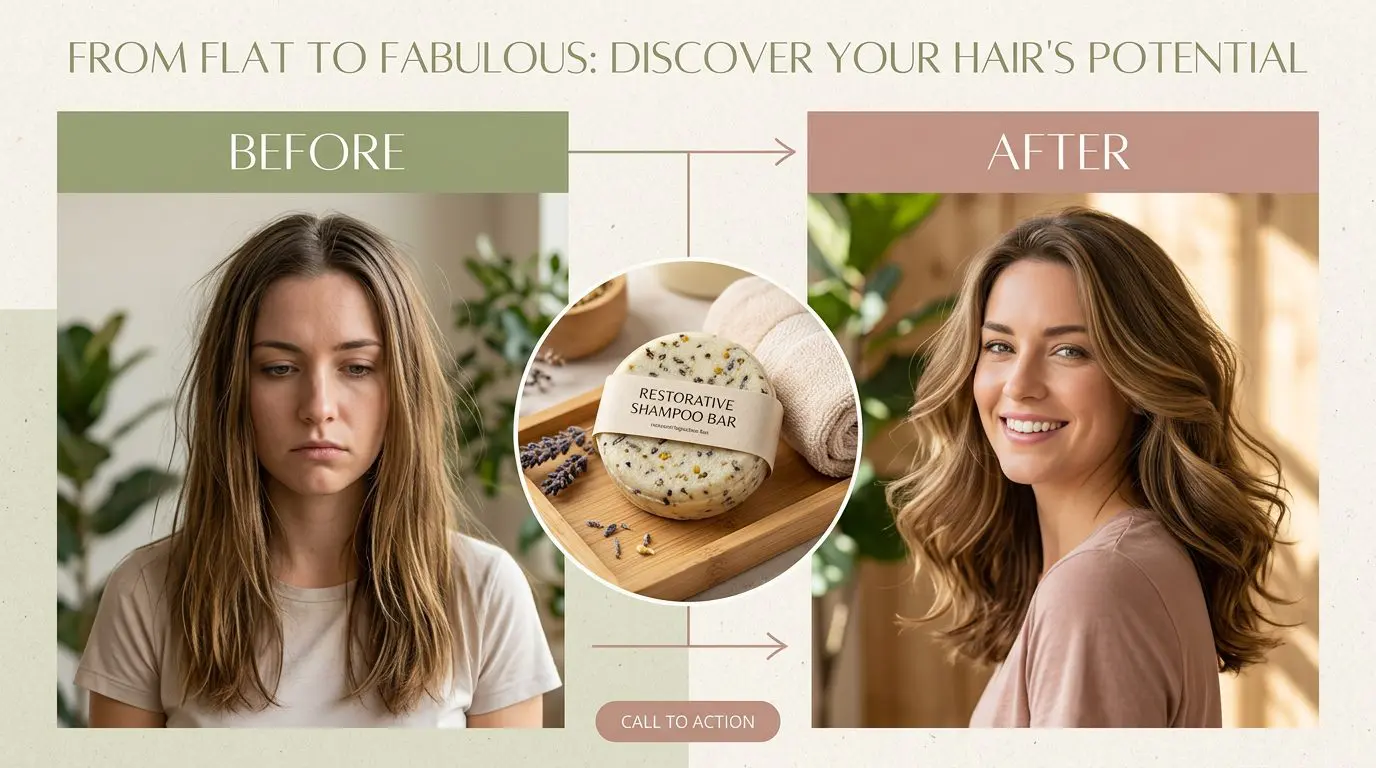
The Ultimate “Reset” Routine (When All Else Fails)
If you’ve been dealing with greasy hair for a while and nothing seems to work, try this deep-reset routine:
Day 1: Complete Clarification
- 1. Clarifying wash: Use a clarifying liquid shampoo plus an acidic rinse (one time only) to strip all buildup—hard water deposits, product residue, excess oil.
- 2. ACV rinse: 2 tablespoons ACV in 2 cups water. Pour slowly over hair, massage into scalp, let sit 2 minutes, rinse thoroughly.
- 3. Deep condition ends only: Apply conditioning mask from mid-lengths to ends (avoid scalp completely). Leave 5-10 minutes, rinse thoroughly.
- 4. Air dry: Avoid heat styling for this reset.
Day 2-4: Rest
Don’t wash. Use dry shampoo if needed. Let your scalp recalibrate.
Day 5: First Shampoo Bar Wash (Fresh Start)
- 1. Choose a natural shampoo bar (if you have hard water) or high-quality soap bar (if soft water).
- 2. Wet hair thoroughly: 60+ seconds. Hair should be completely saturated.
- 3. Lather the bar on scalp only: Work in sections. Don’t over-apply.
- 4. Massage scalp for 60-90 seconds: Put the bar down. Focus on scalp, not lengths.
- 5. Rinse for 2-3 minutes: Flip upside down, scrub scalp while rinsing, ensure all lather is gone. Do a squeak test.
- 6. Condition ends only: Apply sparingly from mid-lengths down. Rinse for 1-2 minutes.
- 7. Cool water final rinse: Close cuticles and reduce oil production.
Day 6+: Establish Routine
- Wash every 3 days (adjust based on your oil production)
- Use dry shampoo between washes
- Weekly ACV rinse if you have hard water
- Monitor how your hair responds—adjust frequency as needed
Within 2-3 washes using this reset routine, most greasy hair issues resolve.
—
Prevention: How to Keep Hair Fresh Longer
Once you’ve solved the greasy hair problem, maintain it with these habits:
1. Proper Storage of Your Shampoo Bar
A soggy bar = messy, wasteful, and can affect lather quality.
- Use a well-draining soap dish (slats or drainage holes)
- Store in a dry area away from direct shower spray
- Let the bar fully dry between uses (prevents mushiness)
2. Water Temperature
- Wash with lukewarm water (not hot—stimulates oil glands)
- Final rinse with cool water (closes cuticles, adds shine, reduces oil)
3. Washing Frequency
- Oily hair: Every 2-3 days (resist daily washing—it makes oil worse)
- Normal hair: Every 3-4 days
- Dry hair: Every 4-7 days
Use dry shampoo or texturizing spray between washes.
4. Scalp Care
- Don’t scratch with fingernails (stimulates oil production)
- Massage with fingertips during washing (improves circulation without irritation)
- Brush daily (distributes natural oils from roots to ends—prevents buildup at scalp)
5. Pillowcase Material
Cotton absorbs natural oils overnight, triggering your scalp to produce more. Switch to silk or satin pillowcases (gentler on hair and skin).
—
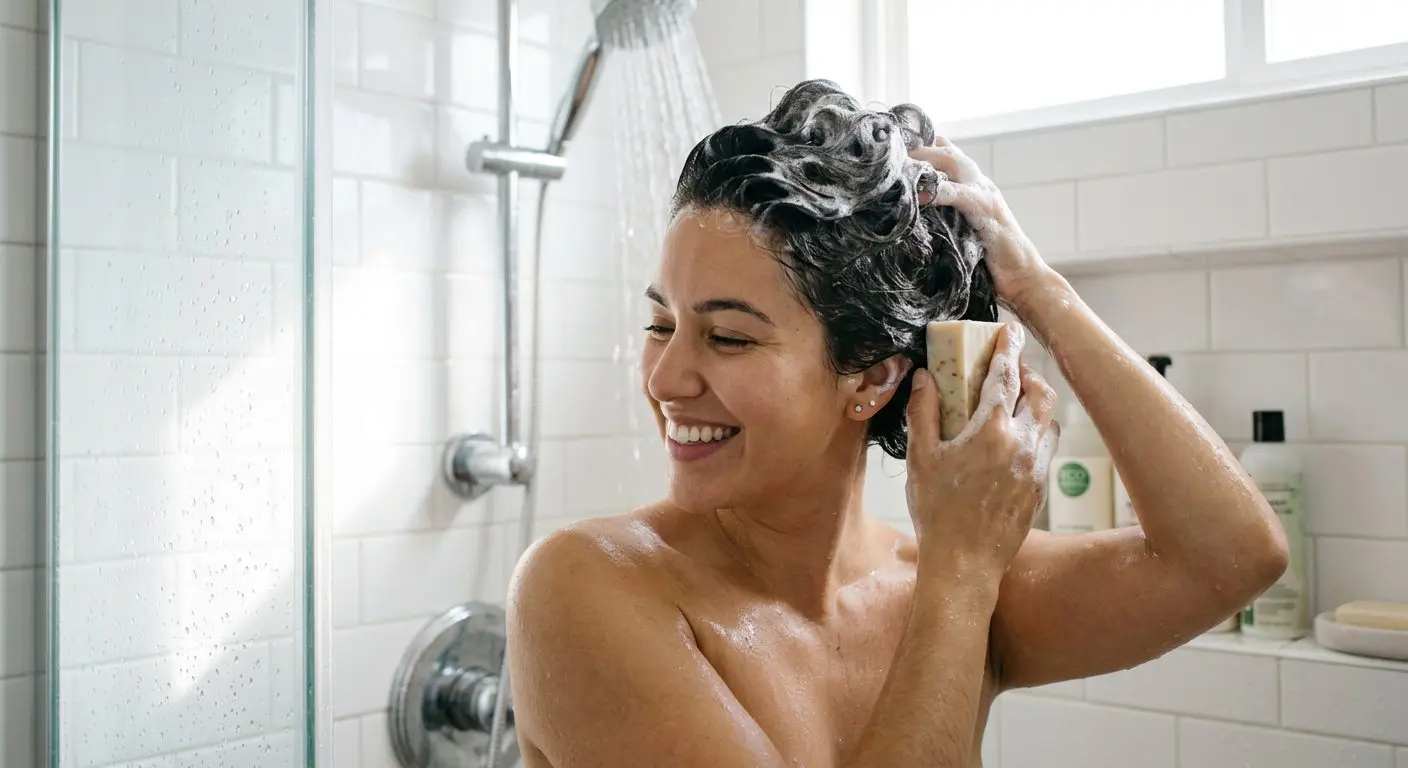
When to Switch Bars
Sometimes the bar itself just isn’t right for your hair. Consider switching if:
- You’ve tried all troubleshooting steps and the problem persists
- You confirmed you have hard water but your bar is soap-based
- Your bar contains ingredients your hair doesn’t like (heavy butters for fine hair, harsh sulfates for sensitive scalps)
- You’ve been using the same bar for 6+ weeks with zero improvement
Look for:
- cold-process soap bars for hard water: pair with a weekly ACV rinse (1:4 vinegar-to-water) to prevent mineral buildup
- Lightweight formulas for oily hair: Avoid heavy butters (shea, cocoa)
- Clarifying ingredients: Charcoal, clay, citrus oils, tea tree
- Clear ingredient list: Avoid vague “proprietary blends”
Natural Answer Shampoo Bars are cold-process soap (pH 9–10), formulated with six saponified plant oils. For hard water areas, pair with a weekly ACV rinse—it neutralises mineral buildup so the bar rinses clean without grease.
—
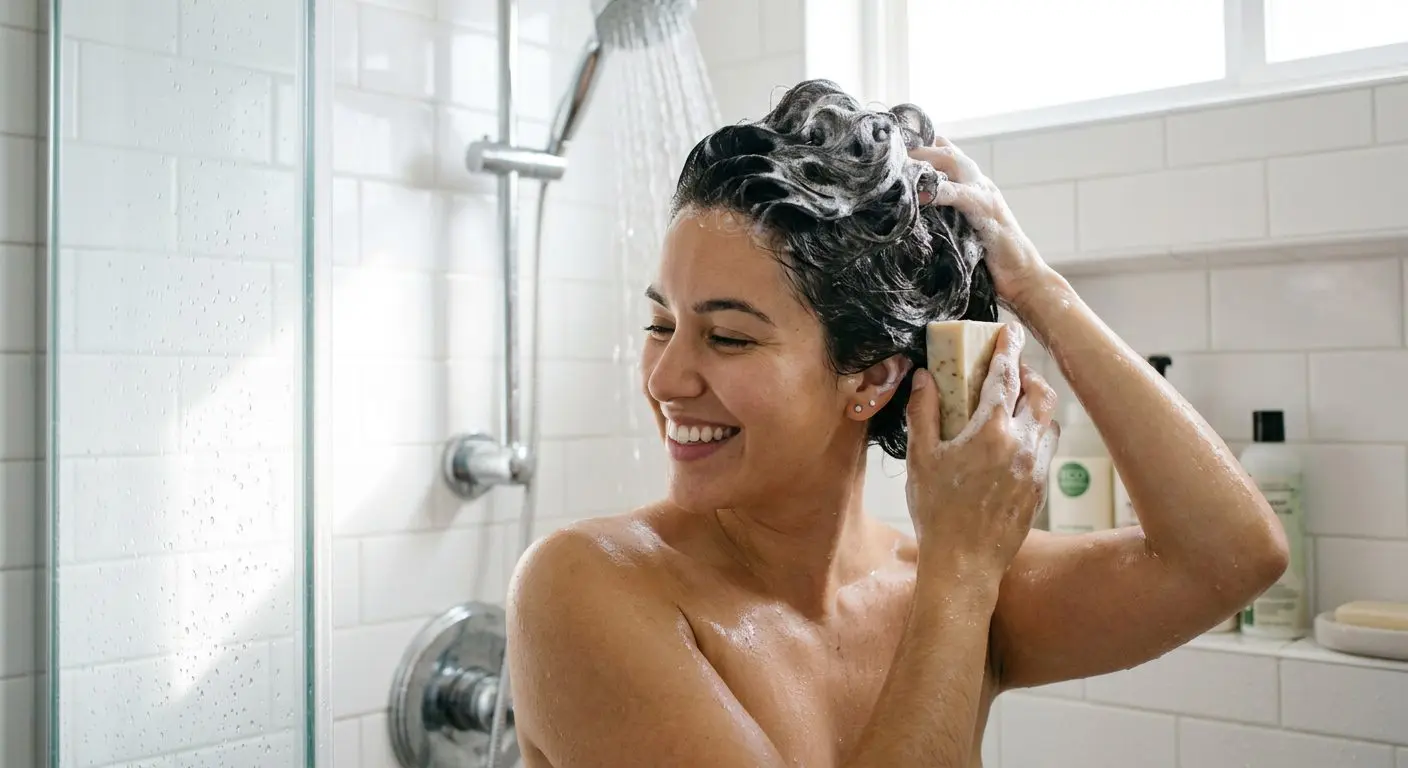
Real People, Real Solutions: Common Scenarios
Scenario 1: “My hair was fine for 2 weeks, now suddenly greasy”
Likely cause: Hard water buildup accumulating over time.
Solution: Do an ACV rinse to reset. Start using ACV rinses weekly. Consider switching to a natural shampoo bar if you’re using soap-based.
—
Scenario 2: “Shampoo bar made my hair greasy from day 1”
Likely causes: (1) Wrong bar type for your water, or (2) Not rinsing long enough.
Solution: Test your water hardness. If hard, switch to natural shampoo bar. Also try rinsing for 3+ minutes on next wash.
—
Scenario 3: “I switched from Pantene/Head & Shoulders and now my hair is a grease bomb”
Likely cause: Transition period. Your scalp is overproducing oil because it was stripped by sulfates for years.
Solution: Be patient. Use dry shampoo between washes. Wash every 2-3 days (not daily). Should normalize by week 3-4.
—
Scenario 4: “Only the roots are greasy, ends are dry”
Likely causes: (1) Over-conditioning at roots, (2) Not distributing natural oils from scalp to ends.
Solution: Apply conditioner only on ends. Brush daily to distribute sebum. Consider using a boar bristle brush.
—
Scenario 5: “I’ve tried 5 different bars and ALL make my hair greasy”
Likely causes: (1) Hard water (if all bars are soap-based), (2) Rinsing technique, (3) Conditioner overuse, (4) Internal factors (hormones, diet).
Solution: Do the “reset routine” (clarifying wash + ACV rinse). Switch to a natural shampoo bar. If problem continues, consider internal factors (see a dermatologist).
—
FAQs: Greasy Hair & Shampoo Bars
Q: How long does the “greasy transition period” last?
A: Most people adjust within 2-4 weeks. Some (especially if coming from very harsh sulfate shampoos) take 6 weeks. natural shampoo bars often have no transition period.
Q: Can I use regular vinegar instead of apple cider vinegar?
A: White vinegar works, but ACV is gentler and contains beneficial enzymes. Dilute either one (never use full-strength).
Q: Will my hair always be greasy if I use shampoo bars?
A: No. Once you solve the underlying issue (hard water, wrong bar type, technique, etc.), shampoo bars can make hair less greasy than liquid shampoos long-term.
Q: Do I need to use conditioner with shampoo bars?
A: Not necessarily. If you have oily hair, you may not need conditioner at all (or only on ends). If you have dry hair, condition mid-lengths to ends.
Q: Can I alternate between shampoo bars and liquid shampoo?
A: Yes, but it may prolong the transition period if you’re adjusting from sulfates. For best results, commit to bars for at least 4 weeks.
Q: How often should I do an ACV rinse?
A: Depends on water hardness. Very hard water: after every wash. Moderately hard: once weekly. Soft water: only when needed (every 2-4 weeks).
Q: Is it normal for hair to feel different (squeaky, tangly) right after washing with a shampoo bar?
A: Yes, especially with soap bars (higher pH). This is temporary. Hair should feel soft and normal once dry. If it stays tangled, use a bit more conditioner on ends or add an ACV rinse.
—
Conclusion: Clean Hair is Possible with Shampoo Bars
If your shampoo bar is leaving your hair greasy, the bar itself is rarely the problem. It’s usually a mismatch between bar type and water, technique issues, or a temporary transition period.
The fix:
- 1. Test your water hardness (use natural shampoo bars for hard water)
- 2. Rinse thoroughly (2+ minutes, until squeaky clean)
- 3. Be patient during transition (2-4 weeks if switching from sulfates)
- 4. Do ACV rinses (weekly for hard water)
- 5. Condition only the ends (never scalp/roots)
Once you dial in the right bar and technique for your hair and water type, shampoo bars deliver clean, fresh hair that often stays cleaner longer than with liquid shampoos—without the plastic waste.
Still struggling? Try the “reset routine” (clarifying wash + ACV rinse + natural shampoo bar). Most people see dramatic improvement within 1-2 washes.
Ready to solve your greasy hair problem for good? Identify your cause, apply the fix, and enjoy clean, healthy hair—the eco-friendly way.
—
Related reading
Greasy roots often come from waxy buildup — a clarifying rinse usually fixes it. If your bar isn’t lathering well, unrinsed product is leaving residue too.
The greasy phase passes. If you want a bar that helps it along, the kaolin in our Lavender & White Kaolin bar absorbs excess oil at the roots.
Related reading: the full transition-period guide: what to expect in the first 4–8 weeks.