


Last updated: September 27, 2026
What Are Silicones (And Why Are They Everywhere)?
Silicones are synthetic polymers (derived from silica/sand) added to hair products to create:
- Instant smoothness and shine
- Frizz control
- Heat protection
- Slip for detangling
Common silicones in shampoos and conditioners:
- Dimethicone
- Cyclomethicone
- Amodimethicone
- Cyclopentasiloxane
- Dimethiconol
Why brands love them:
- Cheap to produce
- Instant “wow” results
- Makes low-quality products feel luxurious
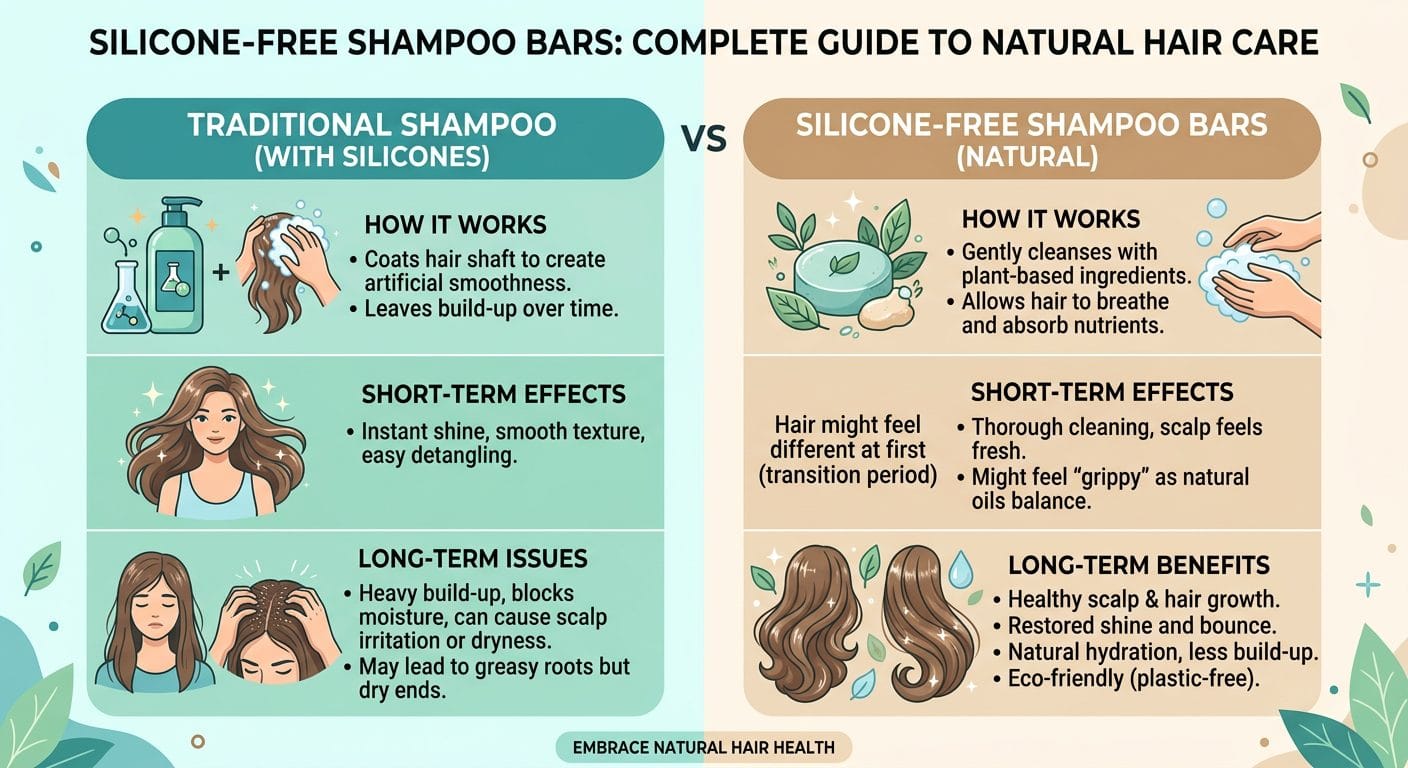
The catch: Silicones create a coating on your hair shaft—they don’t actually improve hair health, they just mask problems temporarily.
The Silicone Problem: Why “Smooth” Isn’t Always Healthy
How Silicones Work (And Why That’s a Problem)
The coating effect:
1. You apply silicone-containing product
2. Silicone molecules form a waterproof film on hair shaft
3. Hair feels instantly smooth, shiny, frizz-free
4. You think the product is “working”
What’s really happening:
- ❌ Hair isn’t healthier—it’s just coated
- ❌ Moisture can’t penetrate the shaft
- ❌ Natural oils from scalp can’t travel down hair
- ❌ Silicones accumulate with every wash
- ❌ Hair becomes dependent on silicones to feel smooth
The buildup cycle:
Week 1: Hair feels amazing (silicone coating is thin)
Week 2-4: Hair starts feeling heavy, dull
Week 5+: Hair looks greasy even after washing
Solution: Use clarifying shampoo to strip silicones
Result: Hair feels like straw (actual condition revealed)
Temptation: Go back to silicones for quick fix
Repeat cycle: Never actually improve hair health
Signs of Silicone Buildup
You might have silicone buildup if:
- Hair feels greasy or heavy hours after washing
- Products stop working (conditioner sits on top, doesn’t absorb)
- Hair looks shiny but feels rough
- Color doesn’t take evenly (silicones block dye penetration)
- Flat, limp hair with no volume
- Scalp feels itchy or produces more oil
- Hair tangles more than usual
The hard water connection:
In hard water areas, silicones trap minerals underneath the coating—creating a double buildup that’s even harder to remove.
Why Shampoo Bars Are Naturally Silicone-Free
The Bar Format Advantage
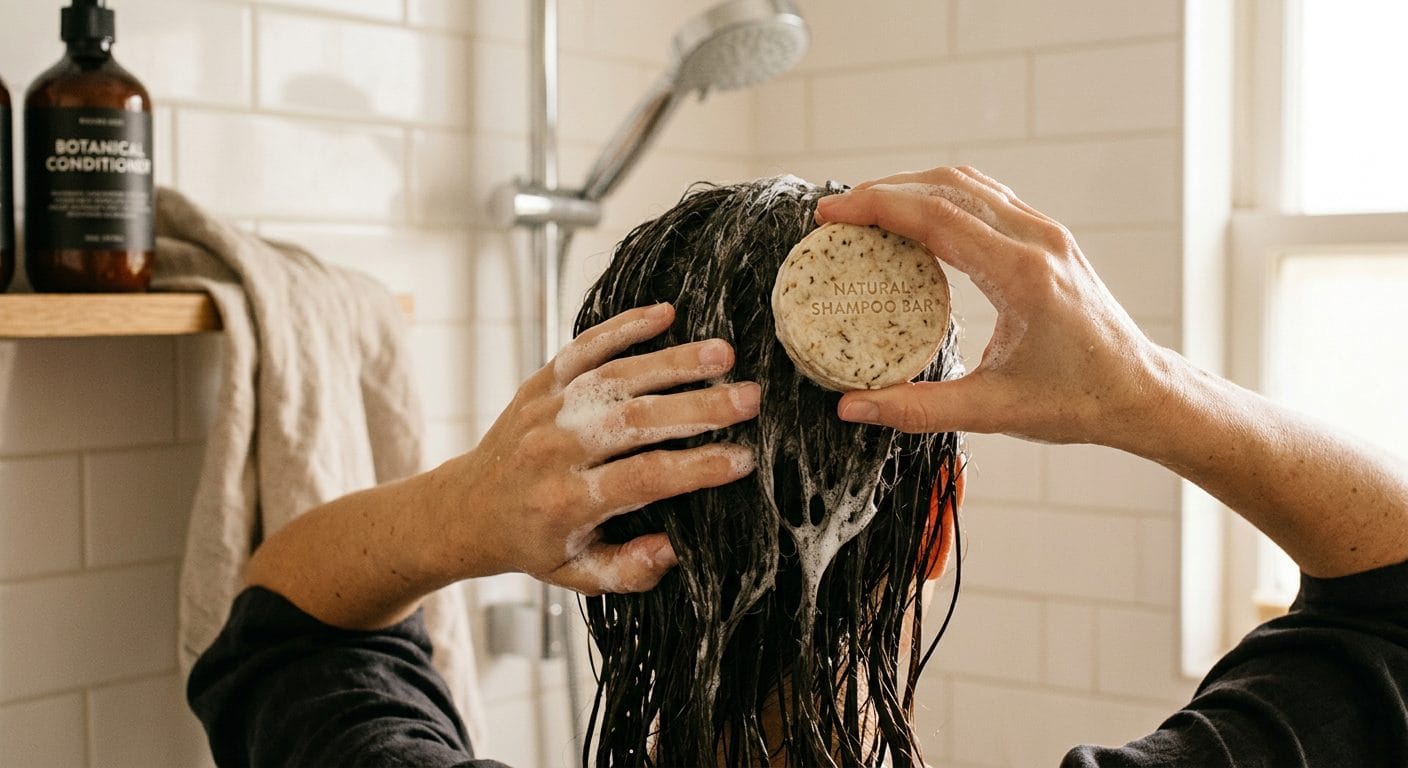
Shampoo bars are solid concentrates without the filler ingredients liquid shampoos need.
Liquid shampoos typically contain:
- 70-80% water
- Preservatives (parabens, phenoxyethanol)
- Emulsifiers (to blend water + oils)
- Thickeners (to create “rich” texture)
- Silicones (for slip and shine)
Shampoo bars contain:
- Concentrated surfactants (cleansing)
- Nourishing oils (moisture)
- Butters (conditioning)
- Essential oils (scent, scalp health)
- NO silicones needed (oils provide natural slip)
Why bars don’t need silicones:
Solid format uses natural oils and butters for conditioning:
- Argan oil (lightweight shine)
- Coconut oil (penetrating moisture)
- Shea butter (smoothing)
- Jojoba oil (mimics natural sebum)
These ingredients actually nourish hair instead of just coating it.
Benefits of Silicone-Free Shampoo Bars
Short-Term Benefits (Weeks 1-4)
After 2-4 weeks of silicone-free washing:
✅ Hair feels lighter – no coating weighing it down
✅ Better volume – especially for fine/thin hair
✅ Scalp feels cleaner – less itching, less greasiness
✅ Products work better – moisture actually penetrates
Long-Term Benefits (Months 2-6)
After 2-6 months of silicone-free washing:
✅ True hair health emerges – not just cosmetic improvement
✅ Natural shine – from healthy cuticle, not coating
✅ Less frizz – hair is actually hydrated, not just coated
✅ Stronger hair – less breakage, better elasticity
✅ Scalp balance – natural oil production normalizes
✅ Color lasts longer – no silicone barrier blocking dye
The honesty factor:
Silicone-free hair shows you the real condition of your hair. At first, this can be humbling (damaged hair looks damaged), but it allows you to address actual problems instead of masking them.
The Transition Period: What to Expect
Week 1-2: The “Adjustment” Phase
What happens:
- Hair may feel rough or dry (the silicone coating is gone)
- You might experience some frizz
- Hair texture feels different (this is your REAL hair)
Why it happens:
- Silicones provided artificial smoothness
- Your natural hair texture is revealing itself
- Cuticle needs time to adjust to natural moisture
What to do:
- Use a clarifying wash (removes residual silicones)
- Condition generously (mid-lengths to ends)
- Consider an apple cider vinegar rinse (closes cuticle)
- Be patient—this is temporary
Week 3-4: Stabilization
What happens:
- Hair starts responding to natural oils
- Texture improves
- Scalp oil production begins normalizing
Why it happens:
- Silicone buildup is fully removed
- Hair can absorb moisture again
- Natural sebum can travel down hair shaft
What to do:
- Continue consistent routine
- Don’t switch products (give it time)
- Focus on moisture (conditioning, leave-ins)
Month 2+: The Payoff
What happens:
- Hair feels genuinely healthier
- Natural shine emerges
- Volume and body increase
- Less dependency on products
Why it happens:
- Hair cuticle is smooth from proper hydration (not coating)
- Scalp has adapted to silicone-free care
- Natural hair structure is optimized
The breakthrough moment:
Most people report around week 4-6 their hair suddenly “clicks”—it feels better than it ever did with silicones.
How to Transition from Silicone Products to Bars
Step 1: Clarify First (Essential!)
Before your first silicone-free shampoo bar wash:
Use a clarifying shampoo or clarifying bar to strip all silicone buildup.
Why this matters:
- Silicone-free bars won’t remove existing silicone coating
- You’ll experience “wax” or “grease” if you don’t clarify first
- Starting fresh allows bars to work properly
How to clarify:
1. Wet hair thoroughly with warm water
2. Apply clarifying bar or shampoo
3. Lather well, let sit 3-5 minutes
4. Rinse thoroughly (twice)
5. Deep condition (mid-lengths to ends)
6. Now you’re ready for silicone-free bars
DIY clarifying option:
- Baking soda paste (1 tbsp baking soda + water)
- Apply to wet hair, massage gently
- Let sit 3-5 minutes, rinse thoroughly
- Follow with apple cider vinegar rinse
- Condition well
Step 2: Choose the Right Silicone-Free Bar
For fine/thin hair:
- Lightweight formula (argan, jojoba oils)
- Avoid heavy butters (shea in high amounts)
- Look for volumizing ingredients (panthenol)
For thick/coarse hair:
- Richer formula (shea butter, coconut oil)
- Moisturizing focus
- Strengthening proteins (keratin, wheat protein)
For curly/coily hair:
- Maximum moisture (shea butter, coconut oil)
- Gentle cleansers (superfatted cold-process soap)
- Avoid sulfates completely
For damaged/color-treated:
- Repair-focused (argan oil, panthenol)
- Acidic finishing rinse (protects color, smooths cuticle)
- Avoid clarifying bars until transition is complete
Step 3: Adjust Your Routine
Old routine (with silicones):
- Shampoo daily (silicones build up fast)
- Heavy conditioning (to combat silicone dryness)
- Heat tools daily (silicones provide heat protection)
New routine (silicone-free):
- Shampoo every 2-3 days (natural oils can do their job)
- Lighter conditioning (hair isn’t stripped anymore)
- Reduce heat (hair is healthier, needs less styling)
Pro tip: Many people find they can wash LESS often without silicones—natural oils actually reach the hair shaft now.
Step 4: Be Patient (The Hardest Part)
Timeline expectations:
- Days 1-7: Possible roughness, adjustment phase
- Weeks 2-3: Improvement begins, but not “there” yet
- Weeks 4-6: Breakthrough moment (hair feels great)
- Months 2-6: Continued improvement, true hair health
Don’t give up at week 1! Most people quit during the initial adjustment, right before results appear.
Natural Alternatives to Silicones in Shampoo Bars
Plant-Based Oils (Penetrating Moisture)
Coconut oil:
- Penetrates hair shaft (doesn’t just coat)
- Reduces protein loss during washing
- Adds natural shine
Argan oil:
- Lightweight, non-greasy
- High in vitamin E (antioxidant)
- Smooths cuticle naturally
Jojoba oil:
- Mimics natural sebum
- Balances scalp oil production
- Great for all hair types
Butters (Natural Conditioning)
Shea butter:
- Softens and smooths hair
- Seals moisture in cuticle
- Anti-inflammatory (soothes scalp)
Cocoa butter:
- Richer conditioning (thick/coarse hair)
- Creates slip for detangling
- Long-lasting moisture
Mango butter:
- Lighter than shea (fine hair)
- UV protection
- Adds shine without weight
Proteins (Hair Strengthening)
Hydrolyzed wheat protein:
- Strengthens hair shaft
- Improves elasticity
- Adds body and volume
Keratin:
- Hair’s natural protein
- Repairs damage
- Smooths cuticle
Silk protein:
- Adds softness and shine
- Conditions without weight
- Great for fine hair
Humectants (Moisture Retention)
Panthenol (pro-vitamin B5):
- Attracts moisture from air
- Thickens hair shaft
- Adds shine
Glycerin:
- Natural humectant
- Softens hair
- Improves moisture retention
Aloe vera:
- Hydrating
- Soothing (scalp)
- Adds shine
Acidic Rinses (Cuticle Smoothing)
Apple cider vinegar:
- Lowers pH (closes cuticle)
- Natural shine without silicones
- Removes residue
Citric acid:
- chelating action (binds minerals before they deposit on hair)
- working with minerals (hard water)
- Adds gloss
Why these work better than silicones:
These ingredients improve hair structure instead of just coating it. The results take longer but they’re real and lasting.
Silicone-Free Bars + Hard Water
The Double Challenge
Problem:
- Hard water minerals make hair feel rough
- Without silicones to coat/mask roughness, hard water effects are more noticeable
- Many people switch to silicone-free bars, experience roughness, and blame the bars
The truth: It’s not the bar—it’s the water.
Solution: Silicone-free bars WITH natural oils
Look for bars that contain:
- Citric acid (binds minerals before they deposit)
- Sodium citrate (prevents mineral re-deposition)
- EDTA (powerful chelator, synthetic)
Why this works:
- Chelators bind to minerals and remove them
- Hair stays smooth WITHOUT silicone coating
- You get the benefits of silicone-free care without hard water roughness
Natural Answer approach:
Our bars are formulated for hard water:
- cold-process soap base (pH 9–10), paired with an ACV rinse for hard water areas
- natural plant oils (superfatted, nourishing)
- Natural oils (coconut, argan) for slip and shine
- NO silicones needed
👉 Shop Hard Water-Friendly Shampoo Bars
DIY Silicone-Free Hair Rinses
Apple Cider Vinegar Rinse (Weekly)
Why it replaces silicones:
- Closes cuticle (creates smoothness naturally)
- Adds shine without coating
- Removes mineral buildup (hard water)
How to make:
1. Mix 1-2 tablespoons ACV + 1 cup cool water
2. After shampooing/conditioning, pour over hair
3. Let sit 1-2 minutes
4. Rinse with cool water
Result: Silky, shiny hair without synthetic coating
Rice Water Rinse (Twice per month)
Why it replaces silicones:
- Contains inositol (strengthens hair)
- Natural proteins smooth cuticle
- Adds shine and body
How to make:
1. Soak 1/2 cup rice in 2 cups water for 30 minutes
2. Strain and save the water
3. After shampooing, pour rice water over hair
4. Massage for 2-3 minutes
5. Rinse with cool water
Result: Stronger, shinier hair from natural proteins
Aloe Vera Gel Leave-In (Daily)
Why it replaces silicones:
- Natural slip for detangling
- Hydrates without weight
- Defines curls (curly hair)
How to use:
1. Mix 1 tablespoon pure aloe vera gel + 1 cup water
2. Pour into spray bottle
3. Spray on damp hair after washing
4. Comb through, air dry or style
Result: Frizz control and moisture without buildup
Common Myths About Silicone-Free Hair Care
Myth 1: “Silicone-free means rough, frizzy hair”
The truth: Initial roughness is from REMOVING silicones (revealing your real hair texture). After 4-6 weeks, silicone-free hair is smoother and healthier than coated hair.
Myth 2: “You need silicones for heat protection”
The truth: Silicones provide SOME heat protection, but you can use:
- Argan oil (natural heat protectant)
- Grapeseed oil
- Commercial heat protectant sprays (non-silicone versions exist)
Better yet: reduce heat styling (silicone-free hair needs less manipulation to look good).
Myth 3: “Silicone-free shampoos don’t work in hard water”
The truth: Silicone-free bars with natural oils work BETTER in hard water than silicone products.
Why: Silicones trap minerals underneath the coating—creating a double buildup. cleansing bars remove minerals completely.
Myth 4: “Natural oils will make my hair greasy”
The truth: Natural oils in shampoo bars are different from oils you apply to dry hair.
- Shampoo bar oils are formulated to rinse clean
- They’re balanced with surfactants
- They don’t leave residue like applying pure coconut oil would
Exception: If you have very fine, oily hair, choose bars with lightweight oils (argan, jojoba) instead of heavy ones (coconut, shea in high amounts).
Myth 5: “Silicone-free means ‘all-natural’”
The truth: Silicone-free ≠ automatically natural.
You can have:
- Silicone-free bars with synthetic surfactants (still better than silicones)
- “Natural” products with silicones (silicones are derived from sand—technically “natural”)
What matters: Ingredients that improve hair health vs. just coating it.
Silicone-Free for Different Hair Types
Fine/Thin Hair
Benefits:
- Maximum volume (no coating weighing hair down)
- Less greasy buildup
- Hair looks thicker (natural body emerges)
Best ingredients:
- Lightweight oils (argan, jojoba)
- Panthenol (thickens hair shaft)
- Proteins (adds body)
Avoid:
- Heavy butters (shea in high amounts)
- Too much coconut oil
- Over-conditioning
Thick/Coarse Hair
Benefits:
- True moisture (penetrates shaft instead of coating)
- Better manageability
- Reduced frizz over time
Best ingredients:
- Shea butter (conditioning)
- Coconut oil (penetrating moisture)
- Keratin (smoothing)
Avoid:
- Harsh sulfates (SLS)
- Over-clarifying (strips natural oils)
Curly/Coily Hair
Benefits:
- Curls are defined naturally (not by silicone coating)
- Moisture retention improves
- Less shrinkage (hair is truly hydrated)
Best ingredients:
- Shea butter (moisture)
- Coconut oil
- Aloe vera (curl definition)
- Gentle cleansers (cold-process soap)
Avoid:
- Sulfates (too drying)
- Skipping the acidic rinse (an alkaline finish opens the cuticle and causes frizz)
- Protein overload (balance moisture + protein)
Pro tip: Curly hair community (r/curlyhair) has been silicone-free for years—they pioneered the “Curly Girl Method” which avoids silicones + sulfates.
Color-Treated Hair
Benefits:
- Color lasts longer (no silicone barrier blocking dye)
- Better dye penetration (future color treatments)
- True color vibrancy (not dulled by coating)
Best ingredients:
- Argan oil (color protection)
- UV protectants (vitamin E)
- Acidic finishing rinse (protects color, smooths cuticle)
Avoid:
- Clarifying too often (can fade color)
- Skipping the acidic rinse (an alkaline finish opens the cuticle and releases color molecules)
Environmental Impact: Why Silicone-Free Matters
Silicones in the Environment
The biodegradability problem:
Most silicones (especially cyclic silicones like D4, D5, D6):
- Don’t readily biodegrade
- Accumulate in waterways
- Persist in soil/sediment
- Potential endocrine disruptors
Regulations:
- EU has restricted D4, D5 in rinse-off products (2020+)
- Canada classified D4, D5 as toxic substances
- Many brands reformulating to avoid scrutiny
The microplastic concern:
Some research suggests silicones may contribute to microplastic pollution in waterways (though debate continues on classification).
Shampoo Bars: The Eco-Friendly Choice
Silicone-free shampoo bars combine:
✅ No silicones (biodegradable ingredients only)
✅ Zero plastic packaging (paper, tins)
✅ Concentrated formula (1 bar = 2-3 bottles)
✅ Lower carbon footprint (no water shipping weight)
✅ Minimal waste (bars last months)
Environmental win-win: Better for your hair AND the planet.
FAQs
Q: Can I use silicone-free shampoo bars if I have very dry hair?
A: Yes! Dry hair often NEEDS silicone-free care—silicones were coating your hair and preventing real moisture from penetrating. After transition (4-6 weeks), most people find their hair is less dry.
Q: Will I need a clarifying shampoo if I go silicone-free?
A: Less often. Silicone-free products don’t build up as fast. You might clarify once per month (instead of weekly) to remove mineral deposits if you have hard water.
Q: Do silicone-free bars lather less?
A: No—lather comes from surfactants, not silicones. Quality natural bars lather beautifully, especially in soft/moderate water.
Q: Can I use heat tools with silicone-free hair?
A: Yes, but use a heat protectant spray/serum (non-silicone versions available). Better yet: reduce heat styling—healthy hair needs less manipulation.
Q: How do I know if my current products contain silicones?
A: Read the ingredient list. Look for words ending in “-cone” or “-siloxane” (dimethicone, cyclomethicone, amodimethicone, etc.).
Q: Will my hair grow faster without silicones?
A: Silicones don’t affect growth rate (that’s genetic). But healthier hair means less breakage = length retention (appears to grow faster).
Final Thoughts
Switching to silicone-free shampoo bars is one of the best decisions for long-term hair health.
Key takeaways:
✅ Clarify FIRST to remove existing silicone buildup
✅ Expect 4-6 week transition period (be patient!)
✅ Silicone-free bars in hard water areas NEED natural oils
✅ Natural oils + butters replace silicones effectively
✅ Better for hair health + environment
The honesty test: Silicone-free hair shows you the truth about your hair’s condition—and gives you the chance to truly improve it.
Ready to experience real hair health?
👉 Shop Natural Answer Shampoo Bars – 100% silicone-free, formulated for hard water, natural oils + butters.
—
Related guides:
- Shampoo Bar Transition Period: What to Expect
- Best Shampoo Bars for Hard Water: Complete Guide
- Best Clarifying Shampoo Bars: Deep Clean Guide
- Common Shampoo Bar Mistakes (And How to Fix Them)
Ready to Make the Switch?
Ready to experience the benefits of a natural shampoo bar? Browse our complete collection of cold-processed soap bars — each one made with 6 organic plant oils and zero synthetic additives.