


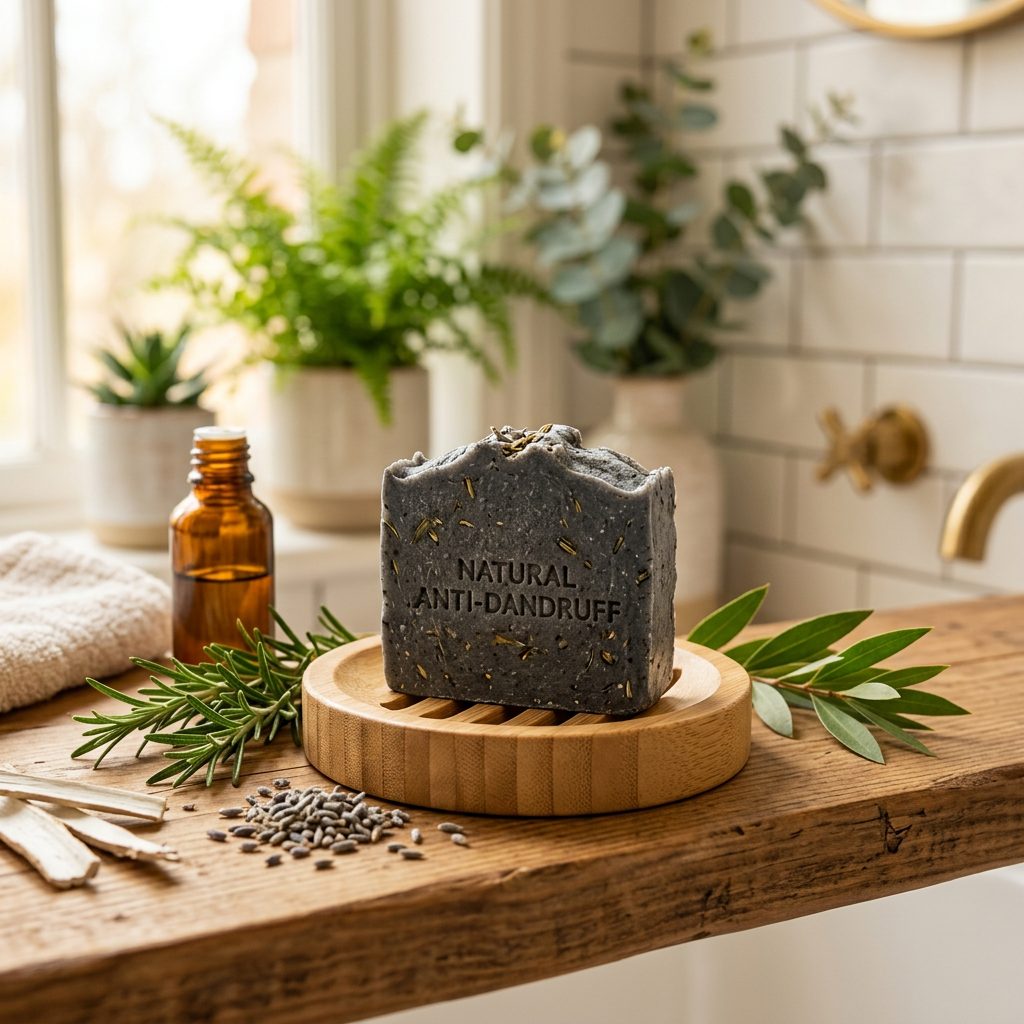
Last updated: October 17, 2026
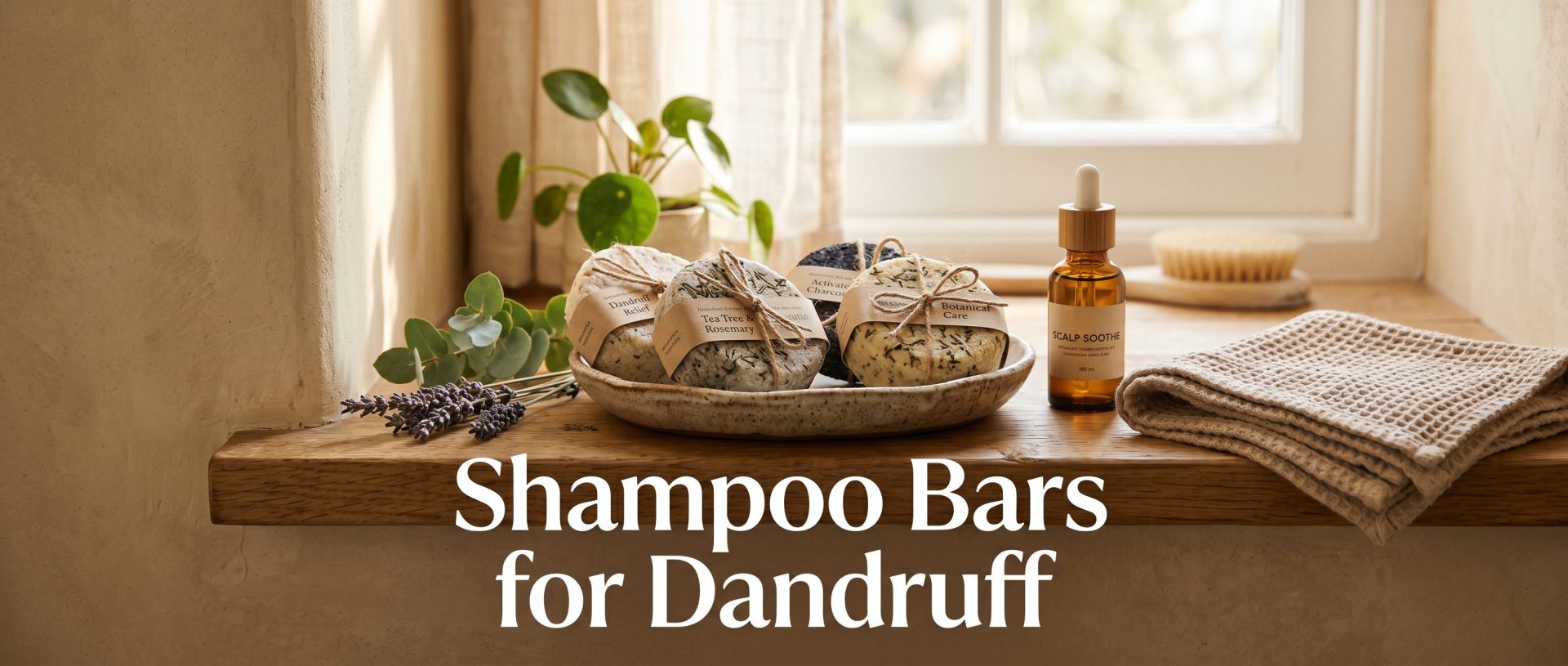
If you have dandruff, you know how frustrating it is. White flakes on your shoulders, an itchy scalp, and the constant worry that people will notice. You’ve probably tried every medicated shampoo on the shelf. This is your complete guide to shampoo bars dandruff treatment—what causes different types of flaking and which bars actually fix it.
The short answer: Yes, shampoo bars can work for dandruff—if you choose the right one.
The key is understanding why you have dandruff in the first place, and matching your bar to the cause. Not all dandruff is the same, and not all shampoo bars are formulated to address it.
What Causes Dandruff?
Before you can treat dandruff, you need to know what’s causing it. There are several culprits:
1. Malassezia Yeast Overgrowth
This is the most common cause. Malassezia is a naturally occurring fungus on everyone’s scalp, but when it overgrows, it feeds on scalp oils and produces oleic acid, which irritates the skin and causes flaking.
Treatment: Antifungal ingredients (tea tree oil, neem oil, zinc pyrithione)
2. Seborrheic Dermatitis
A chronic inflammatory condition that causes greasy, yellowish flakes and redness. Often triggered by stress, hormones, or weather changes.
Treatment: Anti-inflammatory ingredients (coal tar, salicylic acid, sulfur)
3. Dry Scalp
Not actually dandruff, but often mistaken for it. Caused by lack of moisture, cold weather, or harsh shampoos. Flakes are small, dry, and white (not oily).
Treatment: Moisturizing oils (coconut, jojoba, argan)
4. Product Buildup
Silicones, heavy oils, and styling products accumulate on the scalp, creating flakes that look like dandruff.
Treatment: Clarifying ingredients (clay, activated charcoal)
5. Hard Water Mineral Deposits
Calcium and magnesium from hard water create a layer on your scalp that looks like flakes. Often mistaken for dandruff.
Treatment: Chelating agents (citric acid, ACV rinse)
6. Contact Dermatitis
An allergic reaction to shampoo ingredients (fragrances, preservatives, sulfates).
Treatment: Gentle, fragrance-free formulas
Bottom line: If you have persistent dandruff, consider seeing a dermatologist for an accurate diagnosis. But for mild-to-moderate cases, the right shampoo bar can make a huge difference.
Can Shampoo Bars Help with Dandruff?
Absolutely—if formulated correctly.
In fact, shampoo bars have some advantages over liquid shampoos for dandruff:
Benefits of Shampoo Bars for Dandruff
1. No Silicones
Most liquid shampoos contain silicones that create buildup on your scalp, trapping flakes and making dandruff worse. Shampoo bars rarely contain silicones, allowing your scalp to breathe.
2. Higher Concentration of Active Ingredients
Liquid shampoos are 70-80% water. Shampoo bars are concentrated, meaning more antifungal/anti-inflammatory ingredients per wash.
3. Natural Antifungal Oils
Tea tree oil, neem oil, and rosemary oil are natural antifungals that work against Malassezia yeast—the #1 cause of dandruff.
4. An Acidic Rinse for Scalp pH
Healthy scalps have a pH of 4.5-5.5. Many liquid shampoos are too alkaline (pH 7+), disrupting the scalp’s natural barrier. Cold-process soap bars are alkaline too (pH 9–10), so pair them with an ACV rinse (1 tbsp in 1 cup water) to bring the scalp back to that pH.
5. Gentle Cleansing
Harsh sulfates (SLS, SLES) strip your scalp’s natural oils, triggering rebound oil production—which feeds Malassezia yeast and worsens dandruff. Shampoo bars with mild surfactants (saponified plant oils, coconut-derived cleansers) clean effectively without stripping.
6. Better for Hard Water
Hard water minerals can irritate your scalp and cause flaking. Bars formulated for hard water prevent this.
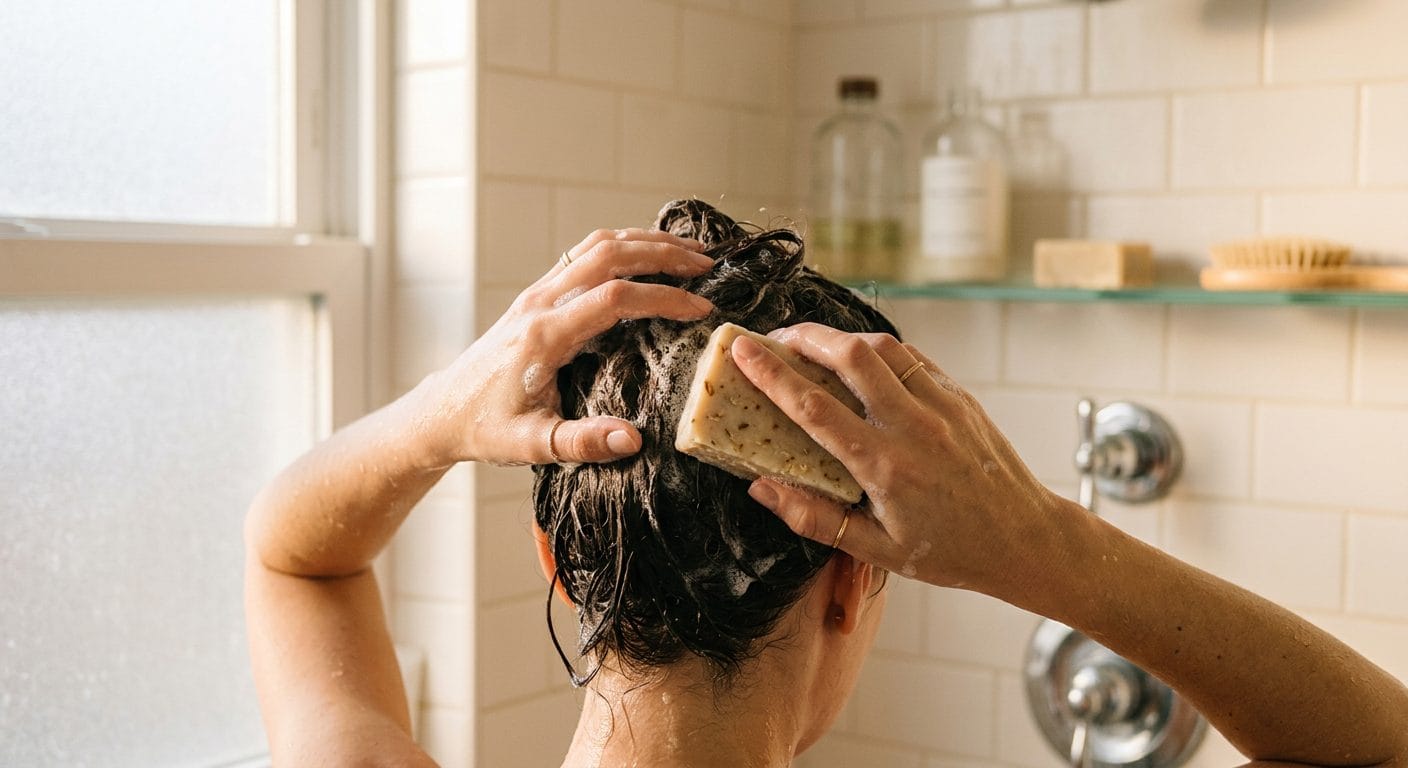
Best Ingredients for Anti-Dandruff Shampoo Bars
Antifungal Ingredients (Fight Malassezia Yeast)
#### 1. Tea Tree Oil
The gold standard for natural dandruff treatment. Studies show 5% tea tree oil is as effective as some medicated shampoos for reducing flakes and itchiness.
How it works: Antifungal and antibacterial properties kill Malassezia yeast without harsh chemicals.
Look for: Bars with tea tree oil in the first 5 ingredients (higher concentration).
#### 2. Neem Oil
Used in Ayurvedic medicine for centuries. Powerful antifungal and anti-inflammatory properties.
How it works: Inhibits fungal growth and soothes irritated scalps.
Bonus: Also treats lice and scalp infections.
#### 3. Rosemary Oil
Stimulates blood flow to the scalp, reduces inflammation, and has mild antifungal properties.
How it works: Improves scalp health overall, creating an environment where Malassezia can’t thrive.
#### 4. Peppermint Oil
Cooling, soothing, and mildly antifungal. Reduces itchiness and provides immediate relief.
How it works: Menthol cools the scalp and reduces the urge to scratch (which worsens flaking).
#### 5. Eucalyptus Oil
Antifungal and anti-inflammatory. Often combined with tea tree oil for maximum effect.
How it works: Penetrates the scalp to kill yeast while soothing irritation.
Anti-Inflammatory Ingredients (Reduce Redness & Itching)
#### 1. Salicylic Acid
A beta-hydroxy acid (BHA) that exfoliates dead skin cells and reduces inflammation.
How it works: Breaks down flakes so they’re easier to rinse away. Also reduces scalp redness.
Note: Can be drying—pair with moisturizing oils.
#### 2. Sulfur
Found in many medicated dandruff shampoos. Slows skin cell turnover and has antifungal properties.
How it works: Reduces the rate at which your scalp sheds skin cells (fewer flakes).
Downside: Can smell bad (like rotten eggs) and dry out hair.
#### 3. Coal Tar
Prescription-strength ingredient for severe seborrheic dermatitis.
How it works: Slows skin cell growth and reduces inflammation.
Rare in shampoo bars due to strong odor and potential side effects. Stick to natural alternatives unless prescribed by a dermatologist.
Moisturizing Ingredients (Prevent Dry Scalp)
#### 1. Coconut Oil
Penetrates the scalp to provide deep moisture. Also has mild antifungal properties.
Best for: Dry scalp (not oily dandruff).
#### 2. Jojoba Oil
Balances scalp oil production. Moisturizes without being greasy.
Best for: Combination scalps (oily roots, dry ends).
#### 3. Argan Oil
Rich in vitamin E and fatty acids. Soothes irritated scalps and adds moisture.
Best for: Sensitive, inflamed scalps.
#### 4. Shea Butter
Ultra-moisturizing. Reduces dryness-related flaking.
Best for: Very dry scalps (use sparingly if you have oily hair).
Clarifying Ingredients (Remove Buildup)
#### 1. Activated Charcoal
Draws out impurities, excess oil, and product buildup from the scalp.
Best for: Dandruff caused by buildup or oily scalps.
#### 2. Bentonite Clay
Absorbs excess oil and toxins. Gently exfoliates dead skin cells.
Best for: Oily scalps with stubborn flakes.
#### 3. Apple Cider Vinegar (ACV)
Balances scalp pH, dissolves buildup, and has mild antifungal properties.
How to use: As a rinse (1 tablespoon ACV in 1 cup water) after shampooing.
Chelating Agents (Hard Water Protection)
#### 1. Citric acid / EDTA
Binds to minerals in hard water, preventing them from depositing on your scalp.
Why it matters: Hard water minerals irritate the scalp and create fake “flakes.”
#### 2. Tetrasodium EDTA or Sodium Citrate
Stronger chelators for very hard water.
Critical if you have hard water + dandruff. Without this, even the best anti-dandruff bar won’t work.
How to Choose the Right Anti-Dandruff Shampoo Bar
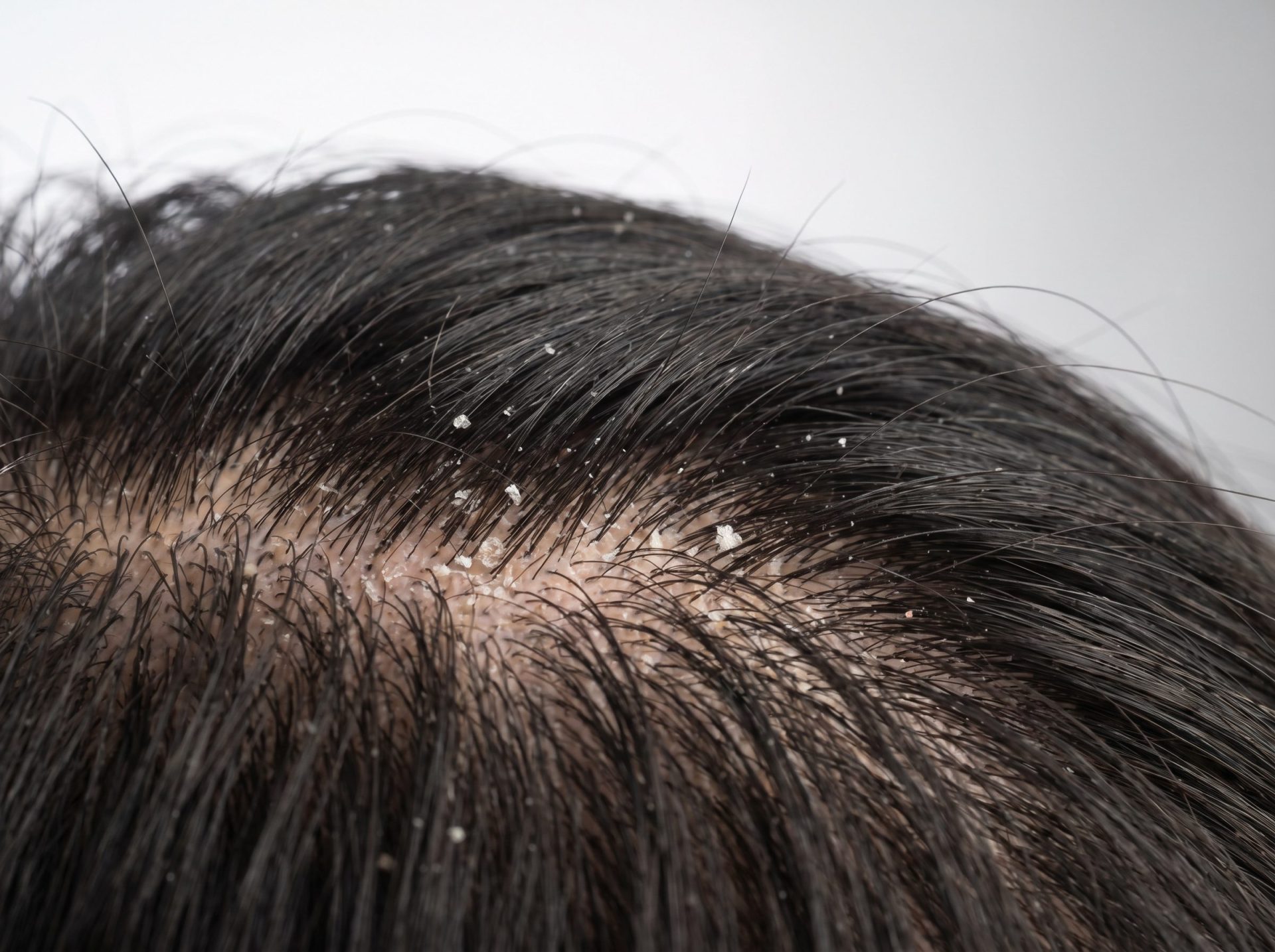
Step 1: Identify Your Dandruff Type
| Symptom | Likely Cause | Ingredients to Look For |
|———|————–|————————-|
| White, oily flakes + itching | Malassezia yeast | Tea tree oil, neem oil, rosemary oil |
| Greasy, yellowish flakes + redness | Seborrheic dermatitis | Salicylic acid, sulfur, tea tree oil |
| Small, dry flakes + tight scalp | Dry scalp | Coconut oil, jojoba oil, shea butter |
| Flakes after using styling products | Product buildup | Activated charcoal, bentonite clay |
| Flakes + hard water residue on faucets | Hard water minerals | vinegar, citric acid or sodium citrate |
Step 2: Check the Surfactants
Avoid bars with harsh sulfates (SLS, SLES). They strip your scalp’s natural oils, worsening dandruff.
Look for:
- saponified plant oils
- coconut-derived cleansers
- Sodium Coco-Sulfate (SCS)
These are gentle enough for sensitive, flaky scalps.
Step 3: Check the pH
Your scalp’s natural pH is 4.5-5.5. Alkaline products (pH 7+) can disrupt your scalp’s microbiome if you leave them on. An acidic rinse fixes this.
Note: Cold-process soap bars (like Natural Answer) have pH 9–10 — always follow with an ACV rinse to restore scalp pH balance and reduce dandruff triggers.
Choose: cold-process soap bars (pH 9–10) paired with an ACV rinse to restore scalp pH after washing. Syndet bars (pH 4.5-5.5) are a different type of bar that needs no rinse.
Step 4: Consider Your Water Type
If you have hard water, you MUST use an acidic rinse (ACV) or a bar with a chelator (citric acid, EDTA). Otherwise, minerals will build up on your scalp and look like dandruff—even if you don’t actually have dandruff.
Signs of hard water:
- White residue on faucets
- Soap doesn’t lather well
- Hair feels coated after washing
Solution: An acidic rinse — vinegar, citric acid or sodium citrate.
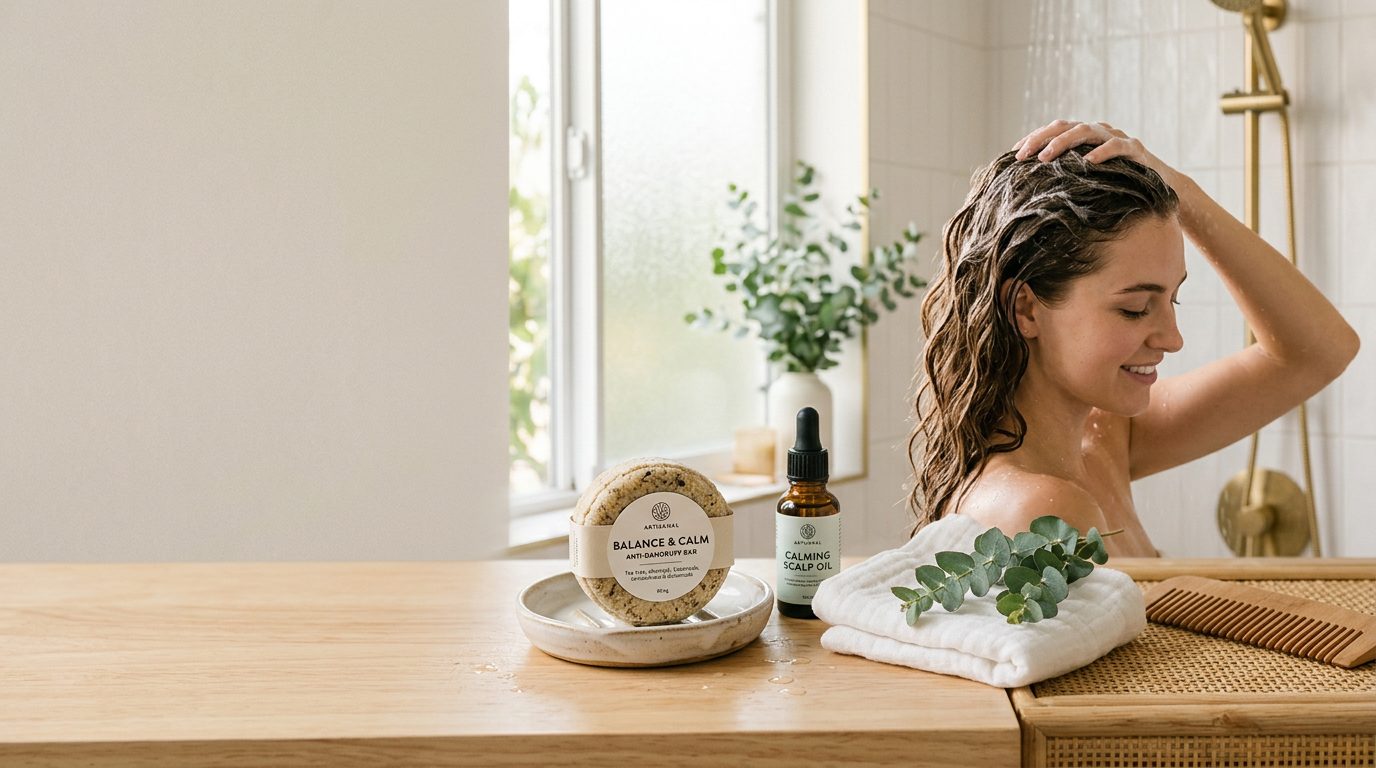
How to Use Shampoo Bars for Dandruff
Before Your First Use
1. Do a clarifying wash to remove any silicone buildup from previous shampoos. This ensures the bar can work effectively.
2. Consider an ACV rinse (1 tablespoon apple cider vinegar in 1 cup water) to reset your scalp’s pH.
During Shampooing
1. Wet your hair thoroughly with warm water
2. Wet the bar and lather it in your hands (don’t rub it directly on your scalp—this can irritate)
3. Massage the lather into your scalp for 2-3 minutes (this is key—antifungal ingredients need time to work)
4. Focus on your scalp, not your hair (dandruff is a scalp issue, not a hair issue)
5. Rinse thoroughly with cool water
After Shampooing
1. Optional ACV rinse (1-2x per week) to balance pH and remove any residue
2. Use a light conditioner on your ends only (avoid the scalp—heavy conditioners can worsen dandruff)
3. Dry your scalp completely—damp scalps encourage fungal growth
Frequency
- First 2 weeks: Wash 3-4x per week to aggressively combat flakes
- After improvement: Reduce to 2-3x per week to maintain results
Don’t over-wash. Washing daily can irritate your scalp and trigger more oil production, which feeds Malassezia yeast.
The Adjustment Period
When you switch from liquid shampoo to a bar, expect a 2-4 week adjustment period. Your scalp is recalibrating after years of sulfate stripping and silicone buildup.
During this time, you might experience:
- Increased flaking (as buildup is removed)
- Oilier or drier scalp than usual
- Different hair texture
This is normal. Stick with it. Most people see significant improvement by week 3-4.
Pro tip: If you’re experiencing a lot of buildup during the transition, do weekly ACV rinses to speed up detoxification.
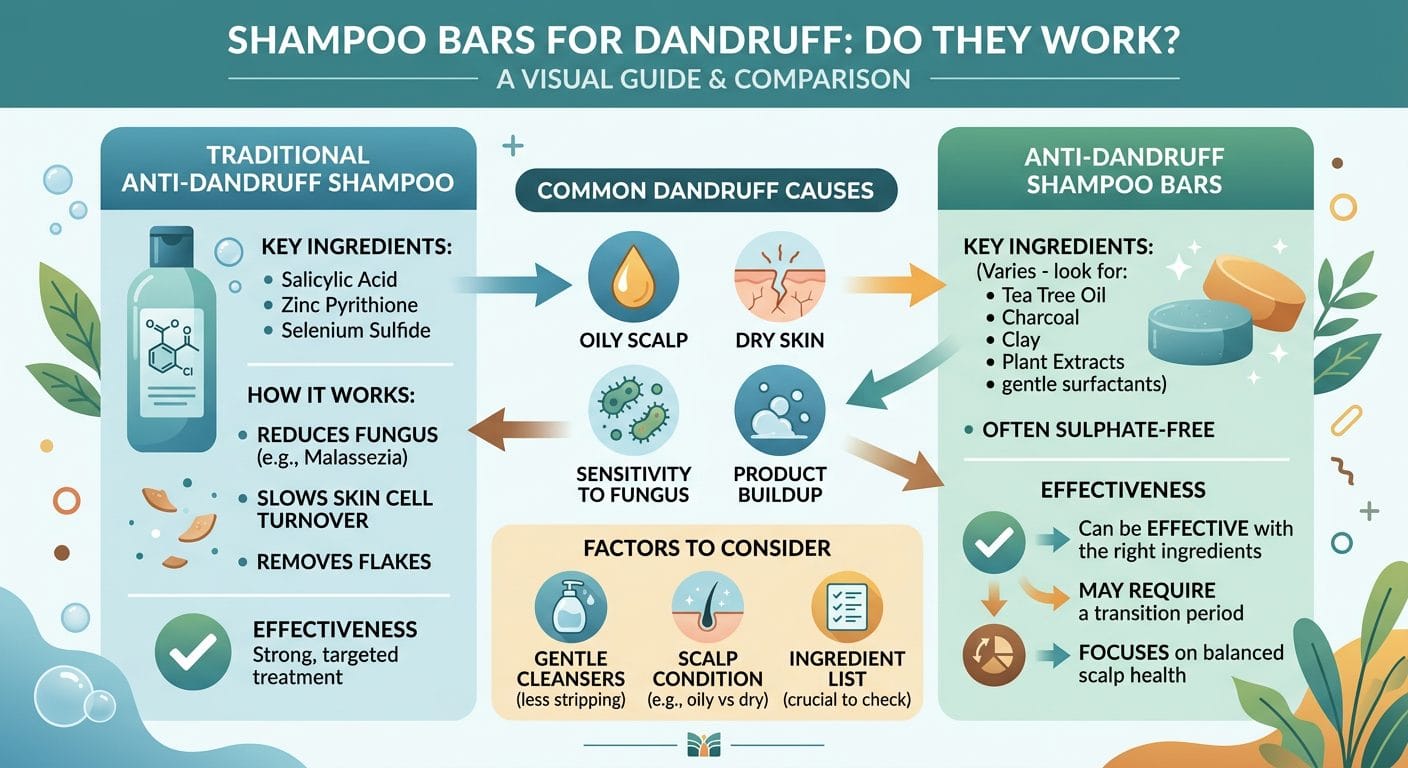
Hard Water + Dandruff: A Dangerous Combo
If you have both dandruff and hard water, you’re fighting a two-front battle:
1. Malassezia yeast causing flakes
2. Minerals creating scalp irritation and fake flakes
Standard anti-dandruff bars won’t work unless they also address hard water.
What happens without a chelator or an acidic rinse:
- Calcium and magnesium deposit on your scalp
- They create a layer that looks like dandruff
- They prevent antifungal ingredients from penetrating
- Your scalp becomes more alkaline (pH 7+), encouraging yeast growth
The result? You blame the shampoo bar for “not working,” when the real problem is your water.
Solution: Find a bar that combines:
- Antifungal ingredients (tea tree oil, neem oil)
- Cold-process soap or a syndet base
- An ACV rinse (1 tbsp in 1 cup water) to dissolve minerals and restore scalp pH to 4.5-5.5
This combination is the most reliable way to treat dandruff in hard water.
Common Mistakes When Using Shampoo Bars for Dandruff
1. Giving Up Too Soon
It takes 2-4 weeks to see results. Most people quit after 1 week because the adjustment period includes temporary flaking.
2. Not Massaging Long Enough
Antifungal ingredients need time to work. Massage your scalp for 2-3 minutes—not 30 seconds.
3. Skipping the ACV Rinse After Soap Bars
Cold-process soap (pH 9–10) raises the scalp pH temporarily — follow with an ACV rinse (diluted apple cider vinegar) to restore balance and prevent dandruff triggers. Pair Natural Answer bars with your own ACV rinse for this reason.
4. Ignoring Hard Water
If you have hard water and don’t use an acidic rinse or a chelating bar, you’ll never solve your dandruff—no matter how good the antifungal ingredients are.
5. Applying Conditioner to Your Scalp
Conditioner can clog pores and trap oils, worsening dandruff. Apply only to mid-lengths and ends.
6. Over-Washing
Washing daily strips your scalp’s natural oils, triggering rebound oil production that feeds Malassezia yeast. Stick to 2-4x per week.
7. Using Hot Water
Hot water opens pores and irritates your scalp. Use lukewarm water to wash, cool water to rinse.
Do Shampoo Bars Work Better Than Medicated Shampoos?
It depends on the severity of your dandruff.
| Severity | Best Option |
|———-|————-|
| Mild dandruff (occasional flakes, minor itching) | Natural shampoo bar with tea tree oil |
| Moderate dandruff (consistent flakes, regular itching) | Shampoo bar with tea tree + neem oil |
| Severe dandruff (large yellow flakes, redness, pain) | Medicated shampoo (zinc pyrithione, ketoconazole) |
| Seborrheic dermatitis (chronic, greasy, inflamed) | Dermatologist-prescribed treatment |
For most people, a quality anti-dandruff shampoo bar is enough. Studies show that 5% tea tree oil performs comparably to 1% zinc pyrithione (the active ingredient in Head & Shoulders).
When to see a doctor:
- Dandruff doesn’t improve after 4 weeks
- Severe redness, pain, or bleeding
- Hair loss in affected areas
- Spreading to eyebrows, beard, or chest
Benefits of Shampoo Bars Over Liquid Shampoo for Dandruff
1. No Silicones
Silicones trap flakes, sweat, and oil on your scalp—making dandruff worse. Shampoo bars rarely contain silicones.
2. Higher Concentration of Active Ingredients
Bars are concentrated (no water filler), so you get more antifungal power per wash.
3. Scalp pH Care
Cold-process soap bars are pH 9–10. An ACV rinse brings the scalp back to pH 4.5-5.5, supporting a healthy scalp microbiome. Liquid shampoos often have pH 6-8.
4. No Harsh Sulfates
SLS and SLES irritate sensitive scalps and worsen dandruff. Shampoo bars use gentler surfactants.
5. Better for Hard Water
Liquid shampoos struggle to lather in hard water, leaving residue that irritates your scalp. Bars formulated for hard water prevent this.
6. Eco-Friendly
No plastic bottles, smaller carbon footprint, biodegradable ingredients.
7. Cost-Effective
One bar lasts 2-3 months, replacing 2-3 bottles of liquid shampoo.
What to Expect: Results Timeline
- Week 1: Increased flaking (detox phase—this is normal)
- Week 2: Flaking stabilizes, itching starts to reduce
- Week 3: Noticeable reduction in flakes, less itching
- Week 4+: Scalp feels healthier, flakes minimal or gone
If you don’t see improvement by week 4, re-evaluate:
- Are you using an ACV rinse or a chelating bar if you have hard water?
- Are you massaging for 2-3 minutes per wash?
- Do you finish every wash with an ACV rinse (if you use a soap bar)?
- Could it be a different scalp condition (see a dermatologist)?
Frequently Asked Questions
Do shampoo bars cure dandruff permanently?
No—dandruff is typically a chronic condition that requires ongoing management. Shampoo bars control symptoms, but if you stop using antifungal ingredients, flakes may return.
Can I use a regular shampoo bar if I have dandruff?
Only if it contains antifungal ingredients (tea tree oil, neem oil). Regular bars without these won’t address the underlying cause.
How often should I use an anti-dandruff shampoo bar?
2-4x per week. Over-washing can worsen dandruff by stripping your scalp’s natural oils.
Will shampoo bars work if I have hard water and dandruff?
Only if you use an acidic (ACV) rinse or a bar with a chelator like citric acid. Without these, minerals will build up and prevent the antifungal ingredients from working.
Can shampoo bars make dandruff worse?
It can worsen dandruff if you skip the ACV rinse — the alkaline pH (9–10) temporarily disturbs scalp balance. Follow cold-process soap bars with an ACV rinse every wash.
Are natural anti-dandruff bars as effective as medicated shampoos?
For mild-to-moderate dandruff, yes. Studies show 5% tea tree oil is as effective as 1% zinc pyrithione. For severe cases, medicated shampoos or prescription treatments may be necessary.
Can I alternate between a shampoo bar and medicated shampoo?
Yes—some people use a medicated shampoo 2x per week and a shampoo bar the other days. This can reduce chemical exposure while maintaining results.
How long does an anti-dandruff shampoo bar last?
2-3 months with proper storage (well-draining dish). Since you’ll wash 2-4x per week (not daily), it may last even longer.
Final Thoughts: The Right Bar Makes All the Difference
Not all shampoo bars are created equal when it comes to dandruff. The key is choosing a bar that:
1. Contains antifungal ingredients (tea tree oil, neem oil)
2. Fits a pH routine that works (cold-process soap at pH 9–10 plus an ACV rinse, or a syndet bar at pH 4.5-5.5)
3. Comes with an ACV rinse (or a chelator) if you have hard water
4. Uses gentle surfactants (saponified plant oils, coconut-derived cleansers)
Most importantly: Give it time. The adjustment period can include increased flaking, but by week 3-4, you should see significant improvement.
If you have hard water, this is non-negotiable—find a bar designed for it, or you’ll never solve your dandruff, no matter how good the antifungal ingredients are.
—
Ready to ditch the flakes? Look for shampoo bars with tea tree oil, and add an ACV rinse if you have hard water. Your scalp—and your shoulders—will thank you.
Ready to Make the Switch?
Ready to experience the benefits of a natural shampoo bar? Browse our complete collection of cold-processed soap bars — each one made with 6 organic plant oils and zero synthetic additives.