


Last updated: October 12, 2026
Prêt à faire la transition ?
Découvrez notre collection complète de shampooings solides — chacun fabriqué à partir de 6 huiles végétales biologiques et zéro additif synthétique.
What Is Hydroxyapatite and Why Does It Matter?
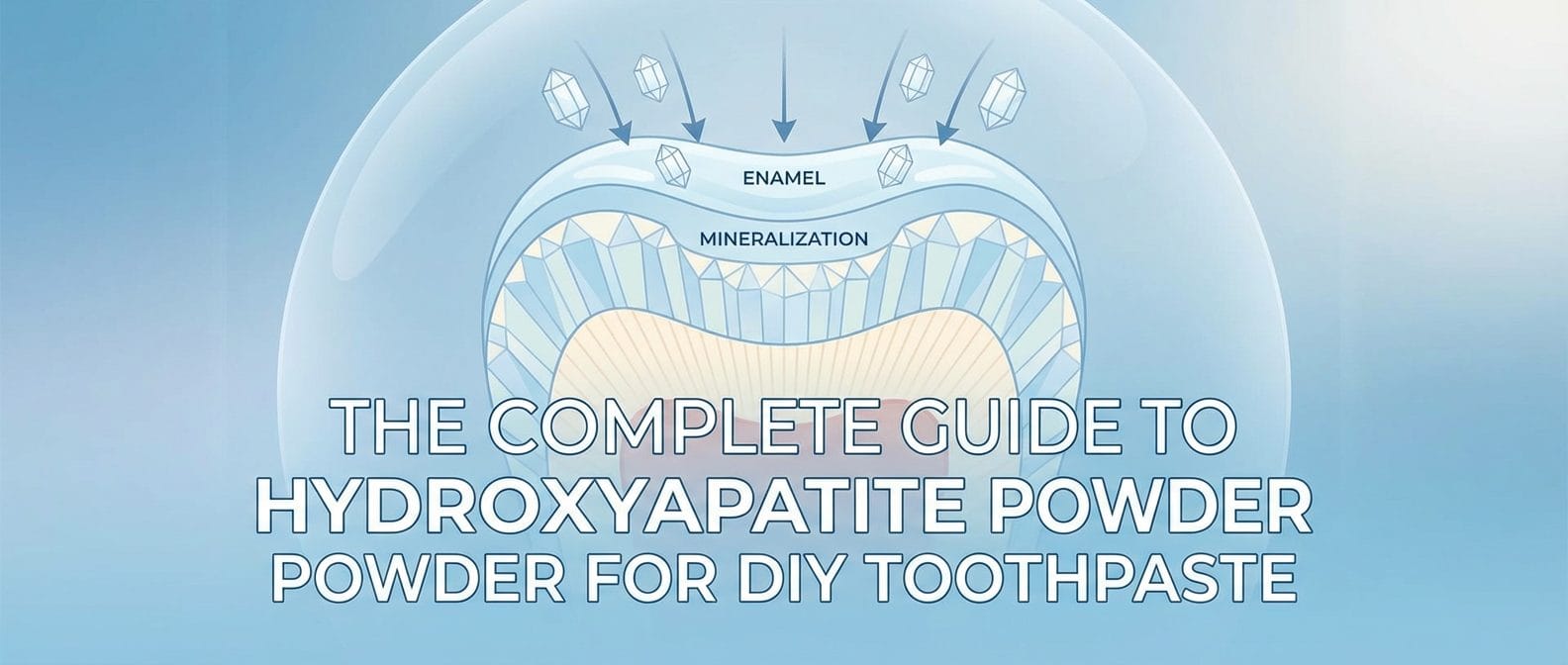
Hydroxyapatite (HAP) is a calcium phosphate mineral that makes up 97% of your tooth enamel and 70% of your dentin. When you brush with HAP powder, you are applying the exact same mineral your teeth are built from — not a synthetic substitute, not a different compound that “kind of” works. It is the real thing.Originally developed by NASA in the 1970s for astronauts experiencing tooth damage in zero gravity, HAP has been the standard in Japanese dentistry for over 40 years. It is now gaining serious traction in Europe and North America as people look for fluoride-free alternatives that actually work.The key difference from fluoride: fluoride creates fluorapatite (a different compound) on your tooth surface. HAP bonds directly as the same mineral, filling microscopic scratches and early cavities with the exact material your body already uses. Multiple clinical studies confirm HAP is as effective as fluoride for remineralization. For a detailed comparison, see our Hydroxyapatite vs Fluoride guide.The Science: How Hydroxyapatite Works at the Molecular Level
Understanding how HAP works helps you use it more effectively. Here is what happens at the microscopic level when you brush with hydroxyapatite powder.Your Enamel Structure
Tooth enamel is not a smooth surface — it is made of tightly packed rods called enamel prisms, each about 5 micrometers wide. Between these prisms are tiny gaps called interprismatic spaces. When acid from food, drinks, or bacteria attacks your teeth, it dissolves the mineral bonds in these spaces first, creating microscopic holes that widen over time. This is demineralization — the first step toward cavities.The Remineralization Mechanism
When HAP particles contact your enamel, something remarkable happens. The calcium and phosphate ions in HAP are attracted to the negatively charged surface of your teeth. Nano-sized HAP particles (60 nanometers) are small enough to penetrate deep into the enamel tubules — the microscopic channels running from the surface to the dentin layer. Larger 40-micron particles deposit on the surface, forming a protective layer.A landmark 2011 study by Huang and colleagues demonstrated that nano-HAP particles actually fuse with the existing enamel crystal structure, creating a new layer that is chemically and structurally identical to natural enamel. This is not a coating that washes away — it becomes part of your tooth.What the Research Shows
The evidence for HAP is substantial and growing:- Ohta et al. (2007): Demonstrated that nano-HAP toothpaste reduced white spot lesions by 68% compared to fluoride toothpaste in a controlled clinical trial.
- Huang et al. (2011): Showed that nano-HAP particles penetrate enamel tubules and integrate with the crystal lattice, creating a permanent repair layer.
- Tschampe et al. (2019): Found that HAP-based oral care products achieved remineralization comparable to 1450 ppm fluoride in a European clinical setting.
- Bossù et al. (2021): Confirmed that nano-HAP particles remineralize enamel subsurface lesions more effectively than amine fluoride, particularly in early-stage caries.
HAP for Specific Dental Conditions
Hydroxyapatite is not just for general oral care. Research shows it is particularly effective for several common dental problems.Dentin Hypersensitivity (Sensitive Teeth)
If cold drinks or hot food make you wince, HAP can help. Sensitive teeth occur when the enamel thins or gums recede, exposing dentin tubules that lead directly to nerve endings. Nano-HAP particles are small enough to physically plug these tubules, blocking the pathway that triggers pain signals.Clinical studies show significant sensitivity reduction within 2-4 weeks of consistent use. Unlike desensitizing toothpaste that uses potassium nitrate to temporarily numb nerves, HAP provides a structural repair — the tubules stay plugged because the HAP integrates with your tooth structure.White Spot Lesions
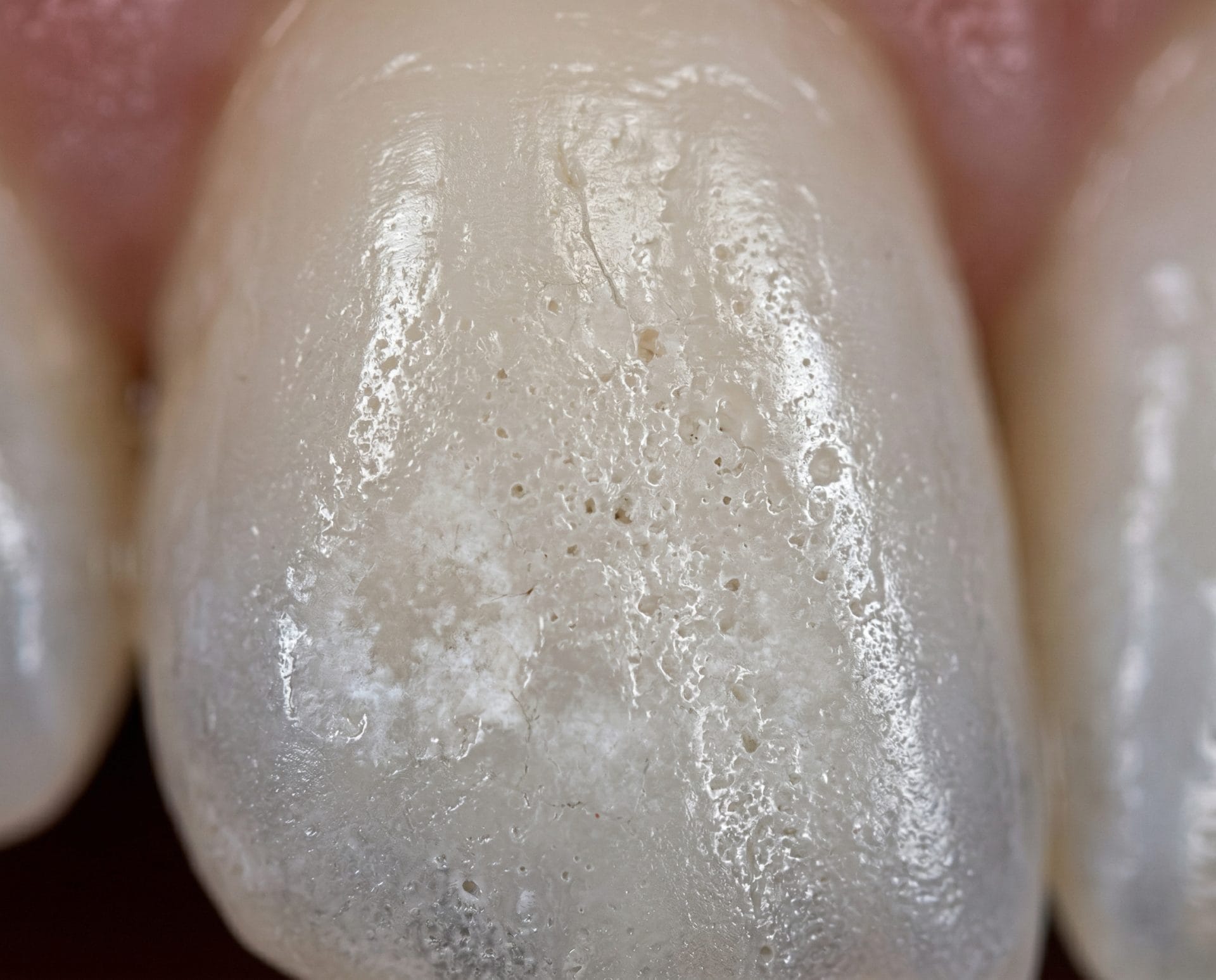
Those chalky white patches on teeth are early signs of demineralization. They are common after orthodontic braces and in areas with prolonged plaque exposure. Nano-HAP has been shown to reduce or eliminate white spot lesions by redepositing mineral in the affected areas. A study published in the Journal of Nanomaterials found visible improvement in white spot lesions after just 4 weeks of nano-HAP application.Acid Erosion
If you have acid reflux, drink a lot of citrus, or swim frequently (pool water is acidic), your enamel faces constant acid attack. HAP provides a way to restore what acid strips away. Using HAP powder after acid exposure — ideally 30 minutes after, once your mouth’s pH has normalized — deposits fresh mineral to replace what was dissolved.Bruxism (Teeth Grinding)
Grinding wears down enamel mechanically. While HAP cannot undo severe structural damage, it can remineralize the micro-scratches that grinding creates, making the enamel surface more resistant to further wear. Pair HAP with a night guard for the best results.Receding Gums
When gums recede, the exposed root surface (cementum) is softer and more vulnerable than enamel. HAP can help mineralize and protect these exposed areas. See our gum massage recipe below for a targeted approach.HAP and Your Electric Toothbrush
If you use an electric toothbrush, you might wonder whether HAP works with it. The short answer: it works even better.Why the Combination Works
Sonic toothbrushes operate at 30,000-40,000 vibrations per minute. These vibrations create dynamic fluid activity that drives the HAP-water mixture deep between teeth and into enamel micro-fissures — areas you cannot reach with a manual brush. The ultrasonic motion essentially powers the nano-HAP particles into places they would not penetrate through brushing alone.Optimal Technique
- Wet your brush head and dip it in HAP powder.
- Brush at a 45-degree angle to your gumline for 2 minutes.
- Let the brush do the work — do not scrub hard.
- Spit, but do not rinse for 30 minutes. This gives HAP time to bond with your enamel.
HAP in Professional Dentistry
If your dentist has never heard of hydroxyapatite, that does not mean it is not legitimate — it means dental education in Western countries has been slow to update.The Japanese Standard
Japan has used HAP in dentistry since the 1970s. Sangi Corporation launched the first HAP toothpaste (Apagard) in 1978. Today, HAP toothpaste holds over 40% market share in Japan. Japanese dental schools teach HAP as a standard remineralization therapy.European Adoption
Europe is catching up. The European Commission’s Scientific Committee on Consumer Safety has assessed HAP as safe for oral use. German and French dental researchers have published extensively on HAP efficacy. The shift is happening — but slowly, because dental schools teach what they were taught, and most Western curricula still center on fluoride.Why Some Dentists Are Skeptical
The main reasons dentists cite for avoiding HAP: lack of familiarity, no pharmaceutical marketing (unlike fluoride products which have major corporate backing), and the simple fact that fluoride works well enough. But “works well enough” is not the same as “best available option” — and the safety profile of HAP (non-toxic if swallowed) makes it a clearly better choice for families with young children.Environmental Benefits: Why HAP Is the Zero-Waste Choice
Every year, approximately 1.5 billion toothpaste tubes end up in landfills globally. Most are impossible to recycle because they combine plastic with metal and residual product. HAP powder from Natural Answer Products ships in reusable glass jars — zero plastic, zero waste.Beyond packaging, consider what goes down your drain. Commercial toothpaste contains SLS (sodium lauryl sulfate), triclosan, microbeads, and artificial dyes. These chemicals enter wastewater systems and eventually surface water. HAP powder is pure calcium phosphate — a mineral that occurs naturally in soil and water. When it washes down your drain, it is indistinguishable from naturally occurring mineral deposits.If you care about reducing your environmental footprint, switching from tube toothpaste to HAP powder in glass jars is one of the simplest, most impactful changes you can make in your bathroom.HAP vs Other Natural Alternatives
Not all “natural” toothpaste alternatives are created equal. Here is how HAP compares.Baking Soda Alone
Baking soda cleans and neutralizes acid, but it does not remineralize. It is an abrasive cleaner — good for surface stains, useless for repairing enamel. HAP does both: it cleans and rebuilds.Charcoal Toothpaste
Activated charcoal is trendy but problematic. A 2019 review in the Journal of the American Dental Association found no evidence that charcoal whitens teeth effectively, and raised concerns about enamel abrasion. Charcoal is gritty and can actually damage your enamel with regular use. HAP, by contrast, bonds with and repairs enamel rather than scraping it.Xylitol
Xylitol reduces cavity-causing bacteria by preventing them from sticking to teeth. It is a useful supplement, but it does not remineralize enamel. Xylitol and HAP work well together — xylitol reduces bacteria while HAP repairs the damage bacteria already caused. That is why several of our recipes below include xylitol.Clay-Based Toothpaste
Bentonite and other clays have detoxifying properties, but they are primarily mechanical cleaners. They do not deposit mineral into your enamel. HAP does. Our bentonite recipe below combines both for people who want the deep-clean feeling of clay with the remineralization power of HAP.Neem and Herbal Toothpaste
Neem, clove, and other herbs have legitimate antibacterial properties. But antibacterial action alone does not rebuild enamel. Think of it this way: herbal toothpaste is like cleaning a wound, while HAP is like healing the wound. Both are useful, but only HAP restores lost mineral.How to Transition from Commercial Toothpaste
Switching from a tube of Colgate to a jar of white powder feels weird at first. Here is how to make it stick:Week 1: The Adjustment Period
- Expect the texture to surprise you. HAP powder feels different — slightly gritty (40-micron) or silky-smooth (nano). Your mouth is not used to it yet.
- Do not expect foam. Commercial toothpaste foams because of SLS (sodium lauryl sulfate). HAP powder does not foam. That does not mean it is not cleaning — foam is a cosmetic feature, not a functional one.
- The taste is neutral. Pure HAP has no flavor. If you miss mint, add a drop of peppermint oil to your recipe (see below).
- Keep your old toothpaste as backup. It is fine to alternate while you adjust. No need to go cold turkey.
Week 2-3: Building the Habit
- Notice the difference. Most people report their teeth feel smoother and cleaner after 2-3 weeks. That is the HAP bonding with your enamel.
- Experiment with recipes. Try the simple powder first, then graduate to a full toothpaste recipe once you are comfortable.
- Track sensitivity changes. If you had sensitivity before, you should start noticing improvement by week 3.
Month 1 and Beyond
- Dentist visit. Go for a checkup after 2-3 months. Let your dentist see the results — they may be surprised.
- Refine your recipe. Adjust the ratio of HAP to other ingredients based on what feels right for your mouth.
- Tell your friends. Seriously — this is how the movement grows.
Your Results Timeline: What to Expect
Setting realistic expectations helps you stick with HAP. Here is what most users experience:- Day 1-7: Unusual texture, no visible change. Teeth may feel slightly “squeaky” clean after brushing.
- Week 2-3: Sensitivity begins to decrease for most users. Teeth feel smoother to the tongue.
- Month 1: Noticeable improvement in sensitivity. Morning breath may be less intense (HAP is not a breeding ground for bacteria the way sugary toothpaste residue can be).
- Month 2-3: If you had early white spot lesions, they may start fading. Your dentist might notice smoother enamel surfaces during probing.
- Month 6: Full remineralization of early lesions. Significant sensitivity reduction. Teeth appear slightly brighter (not bleached — just smoother and more reflective).
Dosage and Usage Protocol
Getting the right amount matters. More is not better — it just wastes product.Recommended Amounts by Age
- Adults: ¼ teaspoon (approximately 0.5g) per brushing, twice daily.
- Children (2-6 years): A light dusting on a wet brush — roughly half the adult amount. Safe if swallowed.
- Children (7-12 years): ⅛ teaspoon per brushing.
Timing Tips
- Morning: Brush after breakfast, not before. This gives HAP the maximum contact with any acid-weakened enamel from your meal.
- Evening: Brush right before bed. Saliva production drops during sleep, so the HAP residue stays on your teeth longer without being washed away.
- After acidic drinks: Wait 30 minutes after consuming citrus, wine, or soda before brushing. Acid softens enamel, and brushing too soon can cause abrasion. Rinsing with water immediately after acid exposure is fine.
What to Avoid
- Do not eat or drink anything acidic for at least 30 minutes after brushing with HAP.
- Do not rinse immediately after brushing — let the HAP residue sit on your teeth.
- Do not use metal utensils if your recipe contains bentonite clay.
DIY Recipes: From Beginner to Advanced
Recipe 1: The 10-Second Method (Beginner)
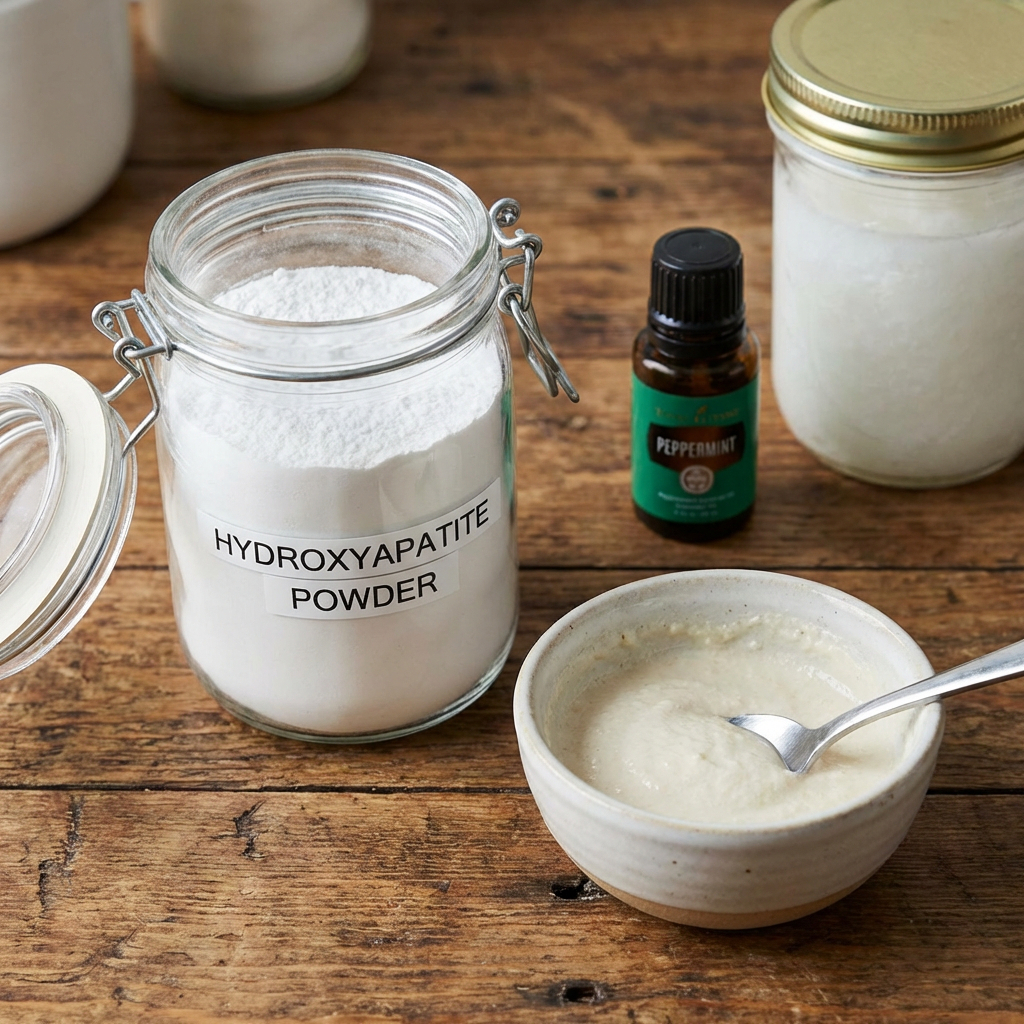
Wet your toothbrush. Dip it in the powder. Brush. Done. This is all you need.Ingredients: Hydroxyapatite powder (any grade)Cost per brushing: Approximately €0.24 for nano, €0.15 for 40-micron (based on 20g jar prices)Recipe 2: Coconut-HAP Toothpaste
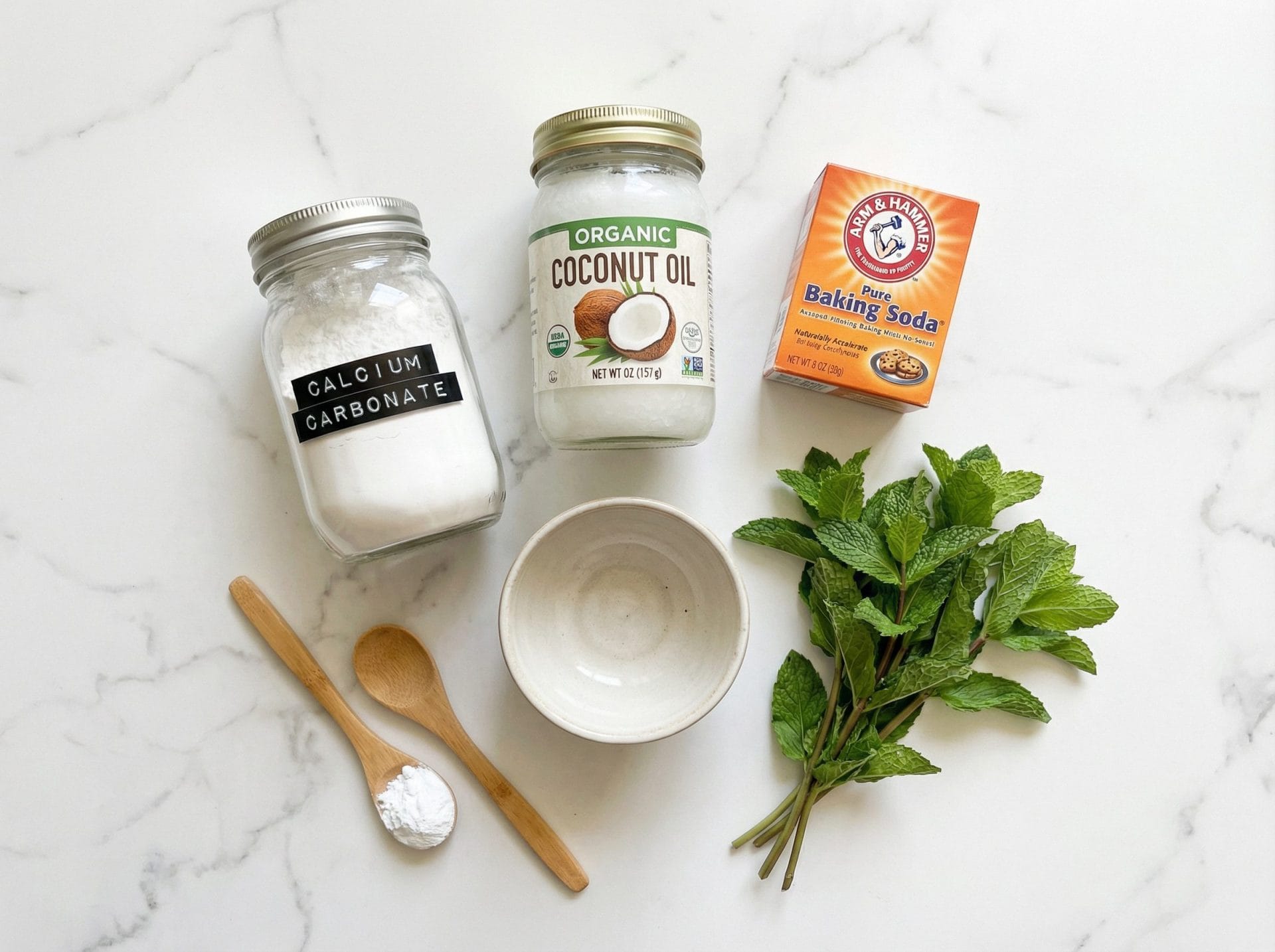
The most popular DIY toothpaste base. Coconut oil provides antibacterial lauric acid and a pleasant texture.- 2 tablespoons coconut oil (softened, not melted)
- 1 tablespoon hydroxyapatite powder
- 1 tablespoon baking soda
- 10 drops peppermint essential oil (or 1 teaspoon xylitol for sweetness)
- Pinch of sea salt (optional)
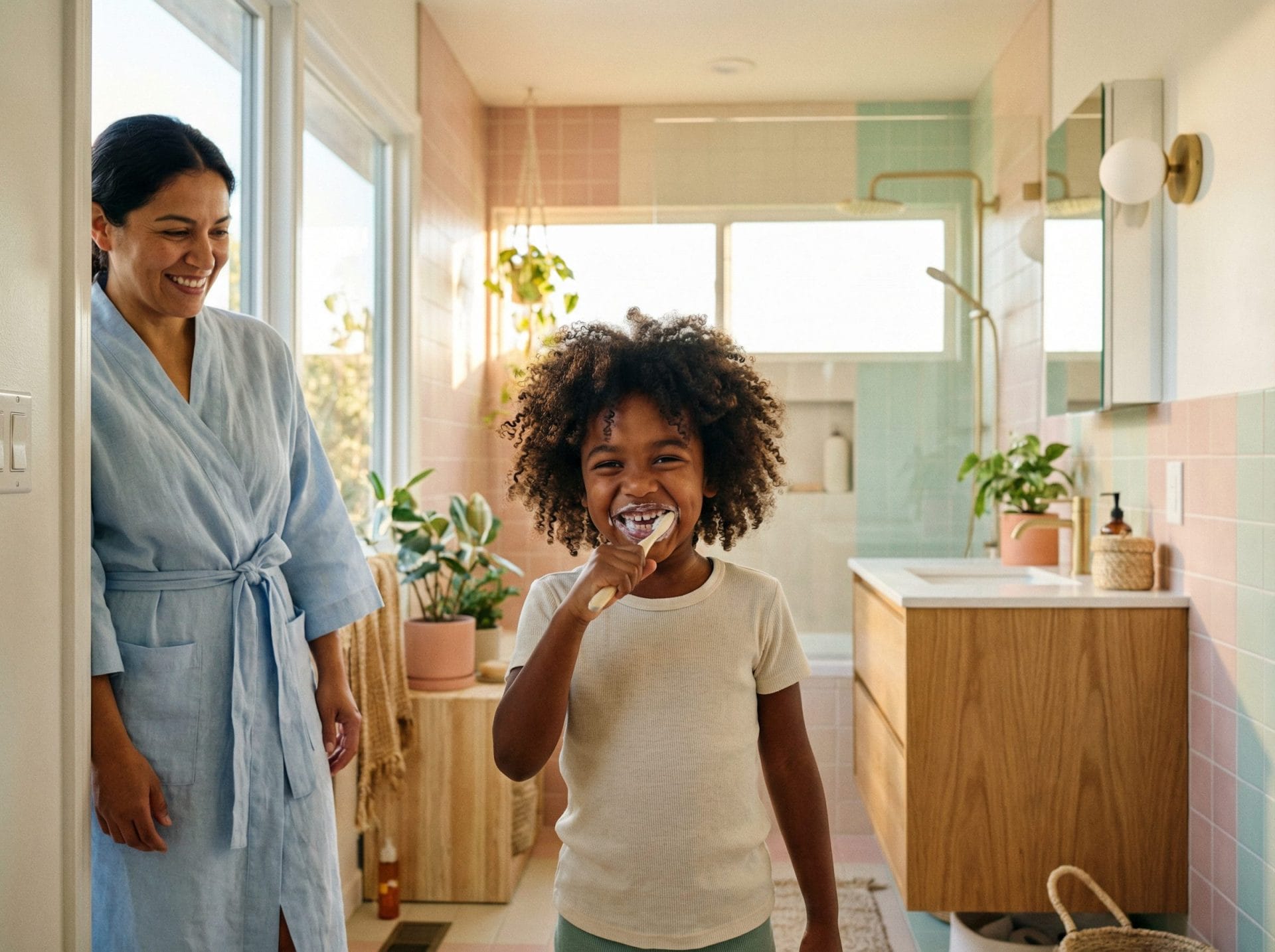
Recipe 3: Cacao-HAP Toothpaste (Kid-Friendly)
Yes, chocolate toothpaste. Raw cacao contains theobromine, which has been shown in studies to remineralize enamel even better than fluoride. Kids love the taste.- 2 tablespoons coconut oil
- 1 tablespoon hydroxyapatite powder
- 1 tablespoon raw cacao powder (not cocoa — raw cacao)
- 1 teaspoon xylitol (for sweetness)
- 5 drops vanilla extract
Recipe 4: Bentonite-HAP Deep Clean Paste
For people who want extra cleaning power. Bentonite clay draws out toxins and adds abrasion for stain removal.- 2 tablespoons coconut oil
- 1 tablespoon hydroxyapatite powder
- 1 tablespoon food-grade bentonite clay
- 1 tablespoon baking soda
- 5 drops clove essential oil (antibacterial, numbing for sensitivity)
- 5 drops tea tree oil (antimicrobial)
Recipe 5: HAP Mouthwash Concentrate
Most commercial mouthwashes kill ALL bacteria in your mouth — including the good ones. This one does not.- 1 cup distilled water
- ½ teaspoon hydroxyapatite powder
- 1 teaspoon xylitol
- 5 drops tea tree oil or clove oil
- 1 teaspoon baking soda (pH balancer)
Recipe 6: HAP Gum Massage Paste
For gum health and recession prevention. Massage into gums with a clean finger after brushing.- 1 tablespoon coconut oil
- 2 teaspoons hydroxyapatite powder (higher concentration for targeted application)
- 3 drops myrrh essential oil (traditional gum remedy)
- 2 drops frankincense oil (anti-inflammatory)
Which HAP Grade Should You Use?
We offer two grades. Here is the quick version — for the full deep-dive, see our complete Nano vs 40 Micron guide.- Nano (60nm): Penetrates deep into enamel tubules for sub-surface repair. Best for sensitive teeth, early cavities, and maximum remineralization. Silky texture. Slightly higher price.
- 40 Micron: Sits on the enamel surface, providing a protective shield and polishing action. Best for surface protection, stain removal, and budget-conscious users. Slightly grainy texture.
The Real Cost Comparison: DIY vs Commercial
Let us talk money. Commercial “natural” toothpaste brands (Boka, Davids, Apagard) cost €8-15 per tube. A tube lasts about 6 weeks with twice-daily use. That is €70-130 per year.Our HAP powder at Natural Answer Products:- 20g jar (40-micron): €19.82 — lasts ~80 brushings (6 weeks) = €0.25/brushing
- 100g jar (40-micron): €49.00 — lasts ~400 brushings (6 months) = €0.12/brushing
- 100g jar (nano): €91.28 — lasts ~400 brushings (6 months) = €0.23/brushing
Safety: What You Need to Know
- Non-toxic if swallowed. Unlike fluoride, which carries fluorosis risk for children and acute toxicity at high doses, HAP is biocompatible — it is the same mineral your body uses. If your toddler swallows a mouthful, nothing happens.
- Recognized safe worldwide. The European Commission’s Scientific Committee on Consumer Safety has assessed HAP as safe for oral use. Over 40 years of clinical use in Japan with zero reported adverse effects.
- No known allergies. Pure calcium phosphate mineral has no reported allergic reactions in dental literature.
- Heavy metal testing. Our HAP is 99%+ pure and lab-tested for heavy metals. Not all HAP on the market can say this — always check.
Common Mistakes to Avoid
- Using too much. A little goes a long way. More powder does not mean better results — it just wastes product. ¼ teaspoon is plenty.
- Mixing with hot water. HAP is stable, but coconut oil melts at 24°C. If your recipe includes coconut oil, use room temperature ingredients.
- Storing in plastic. Glass jars only. HAP is inert, but plastic can leach chemicals into your paste over time.
- Expecting instant results. Remineralization takes weeks, not days. Give it at least 3-4 weeks before judging.
- Not brushing long enough. 2 minutes, twice daily. HAP needs contact time to bond with enamel.
- Using metal with bentonite recipes. As mentioned above — bentonite pulls metals from metal utensils into your paste.
- Rinsing immediately after brushing. Spit, but do not rinse for at least 30 minutes. The HAP residue continues working.
Related reading: our full step-by-step recipe for fluoride-free toothpaste at home.
Why Natural Answer Products?
- 99%+ purity, lab-tested for heavy metals. No fillers, no additives.
- Two grades, five sizes each. From 20g trial to 100g bulk. All in reusable glass jars.
- Ships worldwide. EU, US, UK, Canada, Australia. Free shipping over €60.
- Competitive pricing. 40-micron from €19.82 (20g), nano from €27.20 (20g).
Related reading: adapting this recipe if you have sensitive teeth.