


Last updated: October 12, 2026
Key takeaways
- Hydroxyapatite toothpaste relieves sensitivity by physically sealing exposed dentin tubules and rebuilding enamel, rather than merely blocking pain signals.
- Nano-hydroxyapatite has a 40-year clinical record in Japan and is recognised by Japanese dental authorities as an anticaries agent in the same regulatory category as fluoride.
- Mild sensitivity often improves within one to two weeks; moderate sensitivity typically responds by three to four weeks of consistent twice-daily use.
- Avoid rinsing with water immediately after brushing — leaving paste residue on teeth for at least 30 minutes measurably improves remineralisation.
- Hydroxyapatite is a food-grade ingredient safe to swallow, making it suitable for children, pregnant people, and adults seeking a fluoride-free dental routine.
Cold drinks make you wince. Hot coffee causes a sudden zing. Sweet desserts make you wonder if a nerve is unhappy. Tooth sensitivity affects roughly one in three adults at some point, and the standard sensitive-teeth toothpastes have been the same for 40 years: a tube of potassium nitrate or stannous fluoride that “blocks” pain signals or seals tubules.
There’s a different approach gaining ground: hydroxyapatite toothpaste for sensitive teeth. It doesn’t just block sensitivity. It actually rebuilds the layer that’s missing.
What’s actually happening in a sensitive tooth
Tooth sensitivity comes from one main mechanism: dentin tubules — tiny channels inside the tooth that lead toward the nerve — have been exposed. Cold, heat, sugar, or pressure stimulate fluid flow inside those tubules, which the nerve interprets as pain.
Tubules get exposed when:
- The enamel cap wears down (acid erosion, hard brushing, grinding)
- Gums recede and expose the softer cementum at the tooth root
- A filling fails or a crack develops
The traditional approach: chemically block the tubules so the fluid can’t move. The hydroxyapatite approach: physically remineralise the surface so the tubules are sealed naturally.
What hydroxyapatite is
Hydroxyapatite (HAP) is the calcium phosphate mineral that makes up roughly 97% of tooth enamel and 70% of dentin. It’s the natural building block of teeth.
Synthetic hydroxyapatite (also called nano-hydroxyapatite or nHA when in nanoparticle form) was developed by NASA in the 1970s for use in space — astronauts experienced enamel loss in microgravity. Japan adopted it for consumer toothpaste in the 1980s. It’s been a mainstream sensitivity and remineralisation ingredient there since.
How hydroxyapatite toothpaste for sensitive teeth relieves pain
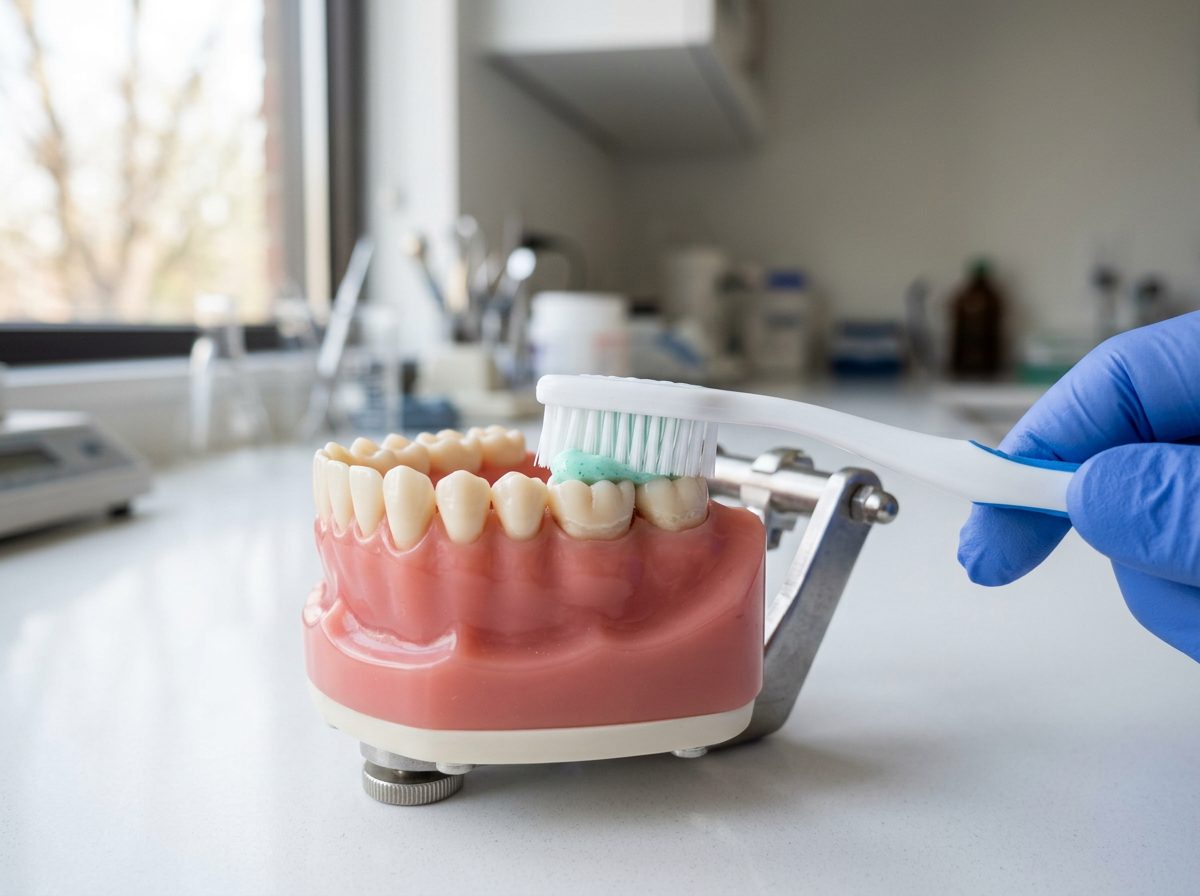
Three mechanisms working together:
1. Tubule occlusion
Hydroxyapatite particles are small enough to physically deposit in dentin tubules, mechanically blocking fluid flow. This is similar to what stannous fluoride does, but with the body’s own building material.
2. Surface remineralisation
HAP particles bind to acid-eroded enamel and fill in microscopic defects. Over weeks of use, the enamel surface becomes smoother and slightly thicker.
3. Buffering
HAP is mildly alkaline. Brushing with HAP raises mouth pH for 30–60 minutes after, neutralising the acidic environment that demineralises teeth.
Hydroxyapatite toothpaste for sensitive teeth vs traditional pastes
| Mechanism | Potassium Nitrate | Stannous Fluoride | Hydroxyapatite |
|---|---|---|---|
| How it works | Blocks nerve signal | Seals tubules with tin layer | Remineralises and seals with calcium phosphate |
| Time to relief | 2–4 weeks | 1–2 weeks | 1–2 weeks |
| Builds enamel | No | Slightly | Yes (long-term) |
| Safe to swallow | Generally yes (low dose) | Avoid swallowing | Yes (food-grade ingredient) |
| Staining risk | None | Mild yellowing in some users | None |
The Japanese clinical record
HAP toothpaste has been on the Japanese market for ~40 years. Their dental authorities recognise nano-hydroxyapatite as an “anticaries” agent — the same regulatory category as fluoride. Multiple clinical studies show comparable efficacy for cavity prevention and remineralisation.
The European market has been slower because fluoride is the established regulatory standard, but HAP has gained ground in Germany, France, and the Netherlands over the past 5–7 years.
Application routine for hydroxyapatite toothpaste for sensitive teeth
Twice-daily standard use
- Use a soft-bristle toothbrush.
- Apply a pea-sized amount of HAP toothpaste.
- Brush with light pressure for 2 minutes, paying attention to gum line and tooth surfaces.
- Spit but don’t rinse with water — let the residual paste continue to interact with enamel for at least 30 minutes.
- Avoid eating or drinking for 30 minutes after.
The “leave-on” trick
For active sensitivity flare-ups, dab a small amount of HAP toothpaste directly onto the sensitive area with a clean fingertip. Leave for 5 minutes. Rinse gently. Many users report relief within 24–48 hours of starting this technique.
Combining HAP with the rest of your dental routine
- Floss before brushing — clears food debris so the paste contacts more tooth surface.
- Skip alcohol-based mouthwash — it dries the mouth and counteracts remineralisation.
- Drink water after acidic foods rather than brushing immediately — brushing during peak acid attack erodes more enamel.
- Eat calcium-rich foods — remineralisation is supported by dietary calcium.
Realistic expectations
HAP isn’t a 24-hour fix:
- Mild sensitivity often improves within 1–2 weeks of consistent use
- Moderate sensitivity (cold drinks zinging regularly) usually improves at 3–4 weeks
- Severe sensitivity from significant gum recession may need dental treatment alongside HAP — the paste isn’t a replacement for clinical care
If pain is sharp, persistent, or localised to one tooth, see a dentist. Sensitivity can mask deeper issues like cracks or pulpal inflammation.
What about HAP for kids and pregnancy?
- Kids: HAP is widely used in Japan for kids’ toothpaste. The food-grade ingredient is safe to swallow, which makes it especially suitable for children who haven’t mastered spitting.
- Pregnancy: Many pregnant people develop pregnancy-related gingivitis and sensitivity. HAP is well-tolerated; no known contraindications.
The fluoride question
HAP doesn’t replace fluoride for everyone. People at high cavity risk may benefit from fluoride’s bacterial-suppression effect alongside HAP’s remineralisation. People wanting a fluoride-free routine, or who can’t tolerate fluoride, can use HAP as a complete alternative.
Talk to your dentist about your specific risk profile.
Related reading: our homemade recipe for sensitive teeth.
FAQ
How long until I notice less sensitivity? 1–4 weeks for most users with consistent twice-daily use.
Can I use HAP toothpaste with whitening strips? Yes — HAP can actually help recover from the temporary sensitivity strips can cause.
Does HAP toothpaste taste different? Most have a milder taste than fluoride pastes — less of the chemical “minty” bite.
Looking for a complete HAP toothpaste system or DIY ingredients? Browse our hydroxyapatite range — food-grade ingredients, transparent labelling, made for sensitive teeth.