


Last updated: August 28, 2026
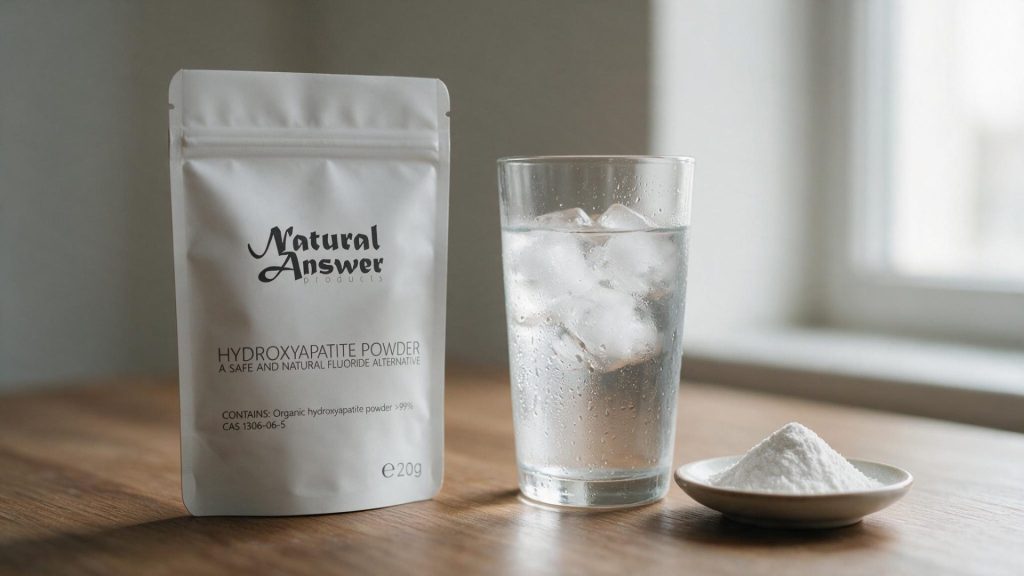
The most effective homemade toothpaste for sensitive teeth uses nano hydroxyapatite powder, which physically plugs the exposed dentin tubules that cause sensitivity — a structural repair rather than the nerve-numbing that potassium-nitrate desensitizing toothpastes rely on. Clinical trials report significant sensitivity reduction within 2–4 weeks of consistent use. The simple night paste below concentrates the effect where it matters, with no fluoride and nothing you can’t pronounce.
That Wince When You Drink Something Cold
Ice water. A spoonful of ice cream. Breathing in on a frosty morning. If any of those send a short, sharp jolt through a tooth, you are one of the hundreds of millions of people with dentin hypersensitivity — and you have probably already tried the standard fix.
The standard fix is a desensitizing toothpaste, and for many people it half-works: use it every day and the zings fade somewhat; skip it for a week and they come right back. There is a reason for that, and it is worth understanding before you mix your own alternative.
Why Your Sensitivity Toothpaste Stops Working When You Stop Using It
Under your enamel sits dentin, and dentin is not solid. It is threaded with thousands of microscopic channels called tubules that run straight from the surface to the nerve at the center of the tooth. Healthy enamel and gum tissue keep those channels sealed off. But when enamel wears thin or gums recede — from acid, hard brushing, grinding, or age — the tubule openings become exposed. Cold, heat, sweetness, or even air can now move fluid inside the tubules, and the nerve reads that movement as pain.
Many desensitizing toothpastes attack the signal, not the opening. Potassium nitrate — one of the most common actives for sensitivity — soaks through to the nerve and makes it less able to fire. It genuinely reduces pain, but it changes nothing about the exposed tubules: stop applying it and the nerve wakes back up. You have signed up for a subscription to numbness. Other formulas take a different route — stannous fluoride and bioglass ingredients block the tubules instead.
That second, mechanical approach is the one this article is about: plug the tubules — with the tooth’s own mineral, and without fluoride.
Hydroxyapatite: Filling the Holes Instead of Numbing the Nerve
Your enamel and dentin are built from a calcium phosphate mineral called hydroxyapatite. It is available as a pure powder, and at nano scale (60 nanometers) the particles are small enough to enter exposed dentin tubules, accumulate, and seal them with the same mineral the tooth is made of.
This distinction matters:
- It treats the cause. Sealed tubules cannot transmit fluid movement, so the pain trigger is physically blocked — not masked.
- The relief holds better. Because hydroxyapatite bonds to the tooth surface, the occlusion tends to hold between brushings better than a numbing effect does. The tubules can still re-open over time — acid, abrasion, and saliva work against any seal — so it works best as an ongoing habit.
- The evidence is strongest here. Dentin hypersensitivity is the best-studied use of nano hydroxyapatite: randomized controlled trials, including a 2014 double-blind trial by Vano and colleagues, report significant reductions within 2–4 weeks of consistent use. Laboratory studies also show it redeposits mineral on the thinned enamel that let the problem start.
- No fluoride required. Hydroxyapatite works through mineral deposition, so it suits anyone avoiding fluoride — and small amounts swallowed while brushing are not a concern.
Hydroxyapatite toothpaste has been on Japanese shelves since 1980, and Japan approved it as an anti-caries ingredient in 1993. If you have never heard of it, that says more about Western toothpaste marketing than about the mineral. The full science, including how it compares with fluoride mechanism by mechanism, is in our hydroxyapatite vs fluoride guide.
For sensitivity specifically, particle size matters: choose the nano (60nm) grade. The 40 micron grade polishes and protects well, but its particles are too large to enter a tubule, so it works on the surface rather than inside the channels. Details in the nano vs 40 micron comparison.
The Recipe: Sensitivity Night Paste
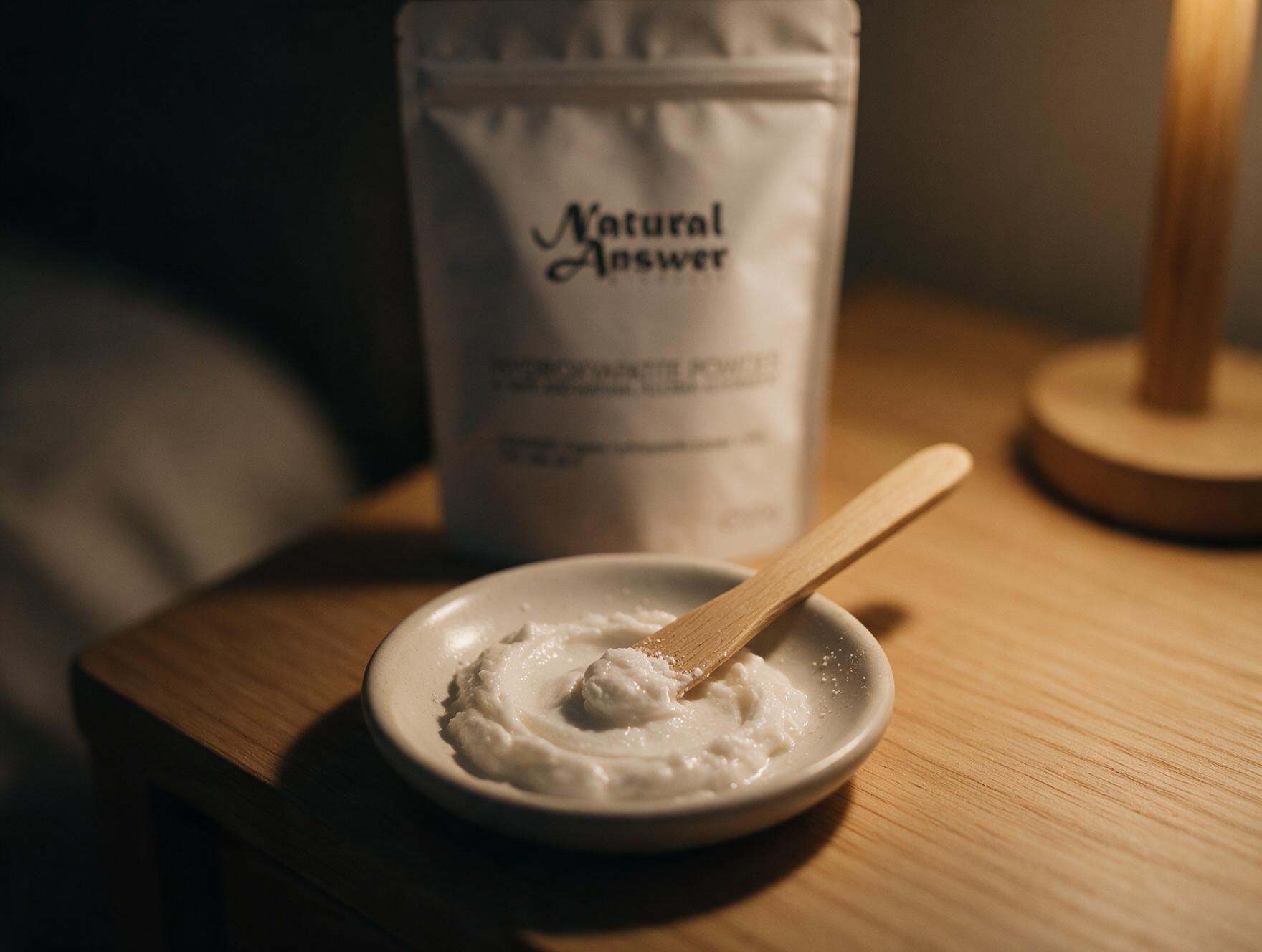
Daytime brushing with hydroxyapatite helps, but nighttime is when the real repair happens: saliva flow drops while you sleep, so whatever is on your teeth stays there for hours. This small-batch paste takes advantage of that. It is deliberately minimal — no oils, no strong flavors, nothing to reduce mineral contact with the tooth. The ratio keeps the nano hydroxyapatite at roughly the level used in finished hydroxyapatite toothpastes; more powder is not better — contact time is what does the work.
Ingredients
- 1 tablespoon pure aloe vera gel (food grade, no added alcohol)
- ¼ teaspoon nano hydroxyapatite powder (60nm)
- ¼ teaspoon fine xylitol
Instructions
- Stir the powder and xylitol into the aloe gel in a small dish until fully smooth — it takes under a minute.
- Mix a fresh batch each night, or keep it covered in the fridge for a few days at most. Aloe is perishable and the paste has no preservative; when in doubt, mix fresh.
How to use it
- Brush normally at bedtime and spit.
- Apply a thin layer of the paste onto the sensitive teeth with a clean soft brush. Massage gently along the gumline where dentin is usually exposed.
- Spit out the excess and skip the rinse, so a thin film stays on the teeth while you sleep.
- Use it nightly for two to four weeks. Once the zings fade, drop back to a few nights a week as maintenance — and mention what you are doing at your next dental checkup.
Most people notice the zings softening within two to four weeks. Relief tends to hold better between brushings than with a numbing paste, but tubules can re-open, so keep hydroxyapatite in your daily brushing routine after the night-paste course ends.
While You Are Repairing: Stop Re-Opening the Tubules
The paste seals tubules; your habits decide how fast new ones open. Three changes make the repair stick:
- Brush softer. A hard brush and heavy hand abrade thin enamel and push gums back — both create new exposure. Use a soft brush and let it glide.
- Wait 30 minutes after acid. Citrus, wine, soda, and coffee soften enamel temporarily. Brushing during that window scrubs softened mineral away. Rinse with water instead, and brush later.
- Mind the grind. If you wake with a tight jaw or your dentist mentions wear facets, ask about a night guard. Hydroxyapatite can repair micro-damage, but it cannot out-mineralize a nightly grinding habit.
And keep your dentist in the loop: sensitivity is occasionally a symptom of a crack or cavity that needs actual treatment, not toothpaste. If pain is sharp, lingering, or localized to one tooth, get it looked at first.
Once the night paste becomes routine, you can build hydroxyapatite into your whole regimen — daily brushing pastes, remineralizing mouthwash, and a gum-massage blend for receding gums are all in our complete DIY hydroxyapatite guide.
FAQ
Q: How long does it take for hydroxyapatite to help sensitive teeth?
A: Most clinical studies and user reports converge on 2–4 weeks of consistent daily use for a noticeable reduction. Relief tends to hold better between brushings than with a numbing paste, but the tubules can re-open over time, so it works best as an ongoing habit rather than a one-off cure.
Q: Is hydroxyapatite better than leading sensitivity toothpaste brands?
A: They overlap more than the marketing suggests. Most sensitivity ranges combine several actives: potassium-nitrate formulas calm the nerve, while stannous-fluoride or bioactive-glass formulas block the tubules and deposit mineral — the same occluding strategy hydroxyapatite uses. The real difference is the ingredient: nano hydroxyapatite seals tubules with the very mineral teeth are made of, and it does so without fluoride. Clinical research supports both approaches; which suits you depends on whether you want a fluoride-free routine.
Q: Can I just use plain hydroxyapatite powder instead of making a paste?
A: Yes, with the 40 micron grade: dipping a wet brush into that powder is a perfectly good daily method. Keep the nano grade for measured recipes like the night paste above, where a small amount is mixed into a base — finished toothpastes keep nano hydroxyapatite at modest levels, and so should you. The night paste adds value for sensitivity because it targets the affected spots and maximizes overnight contact time.
Q: Why do my teeth feel sensitive after I stopped fluoride toothpaste?
A: Usually because whatever replaced it does nothing for remineralization — most natural pastes are cleaning-only, so ongoing acid wear goes unrepaired and existing exposure gets worse. The fix is not necessarily returning to fluoride; it is choosing a fluoride-free ingredient that actively rebuilds mineral, which is exactly what hydroxyapatite does.
Learn more:
- The Complete Hydroxyapatite DIY Toothpaste Guide — daily pastes, mouthwash, and gum-care recipes
- Nano vs 40 Micron Hydroxyapatite: Why Particle Size Decides Results
- Hydroxyapatite vs Fluoride: The Full Comparison