


Last updated: October 6, 2026
One of the most common frustrations when switching to shampoo bars? Poor lather.
You’ve seen Instagram videos of people with mountains of bubbles cascading through their hair. But when you try it, you get… barely anything. Maybe a few sad bubbles. Or worse — sticky, waxy residue instead of lather.
Here’s the good news: Poor lather almost always comes down to technique or water quality, NOT the shampoo bar itself.
In this guide, we’ll break down exactly why your shampoo bar won’t lather — and 11 proven techniques to fix it.
Why Won’t My Shampoo Bar Lather? (How to Make Shampoo Bars Lather)
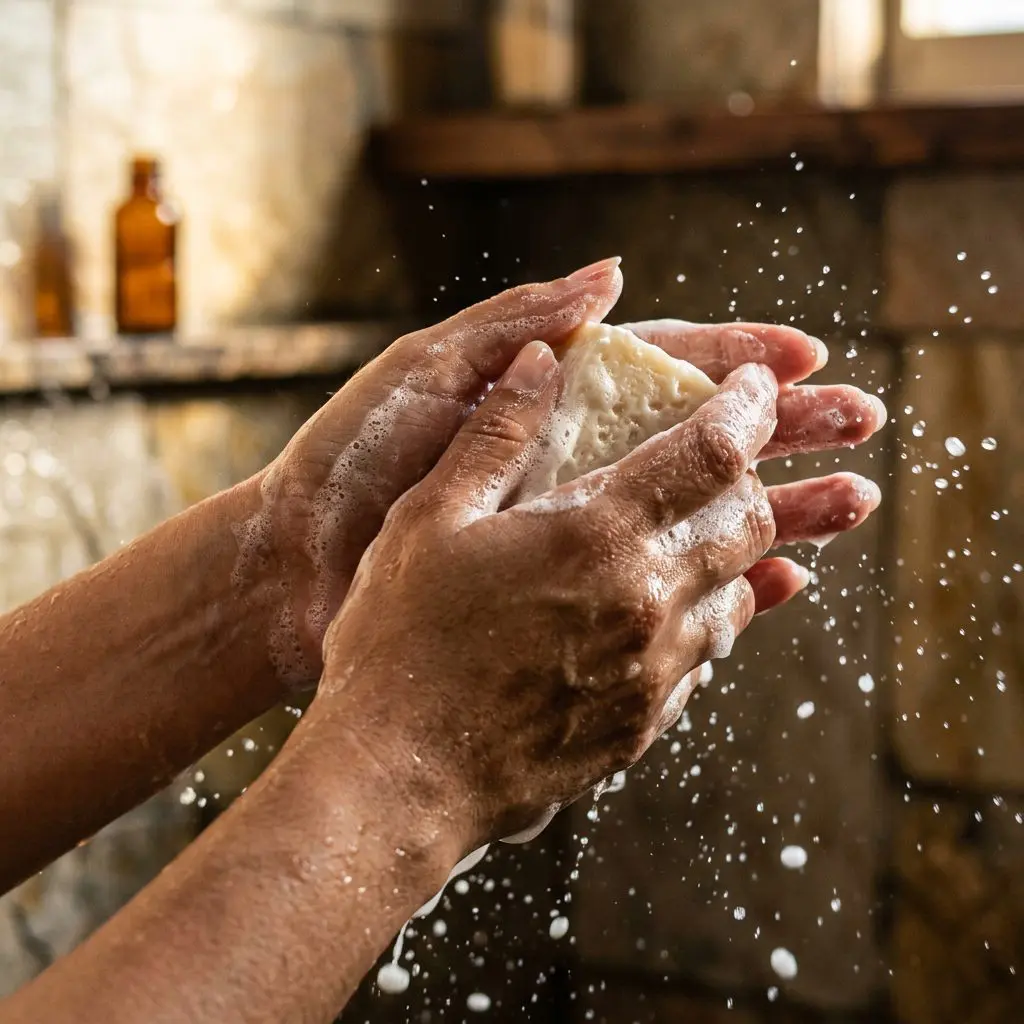
Before we dive into solutions, let’s talk about what’s actually preventing lather. Understanding the cause makes it much easier to fix.
1. Hard Water (The #1 Lather Killer)
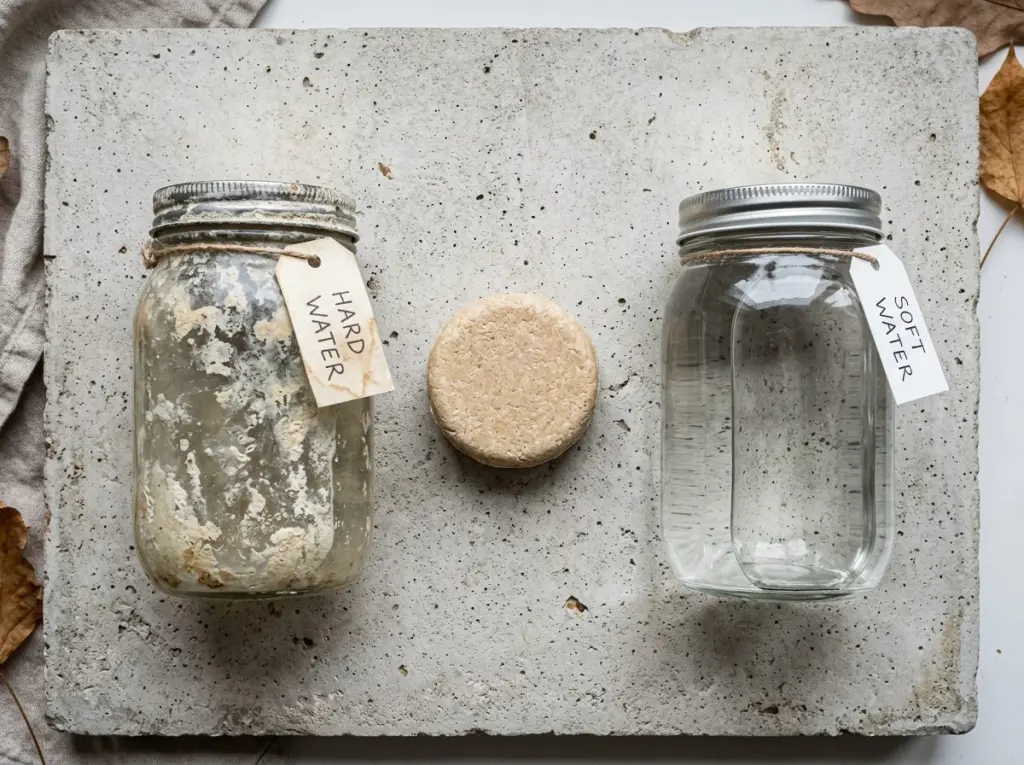
If you have hard water (high mineral content), those minerals bind with the ingredients in natural soap-based shampoo bars and prevent them from creating bubbles.
Instead of lather, you get a sticky, filmy residue — the same “soap scum” that builds up in your shower.
How to tell if you have hard water: – White mineral deposits on faucets or showerheads – Soap doesn’t lather well anywhere in your home – Cloudy spots on dishes after washing – Your shampoo bar creates very little lather no matter what you try
Solution: See tips #8-11 below (hard water-specific fixes).
2. Hair Isn’t Wet Enough
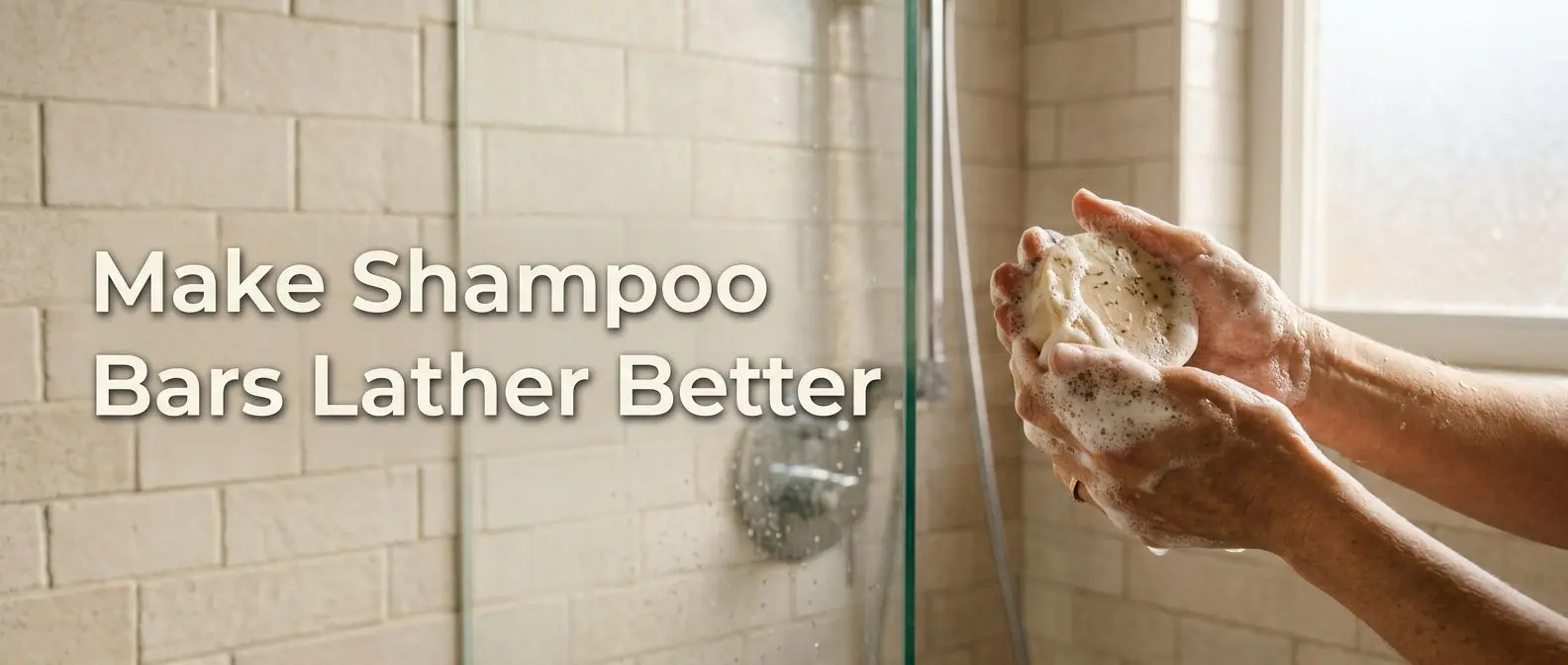
Shampoo bars need LOTS of water to create lather. If your hair is only damp (not soaking wet), the bar won’t activate properly.
Solution: Saturate your hair completely before applying the bar. We’re talking dripping-wet.
3. Product Buildup on Hair
If you have silicones, oils, or other styling products on your hair from previous washes, they create a barrier that prevents shampoo bars from lathering.
Solution: Do a clarifying wash (see tip #10) to remove buildup, then try again.
4. Using the Wrong Technique
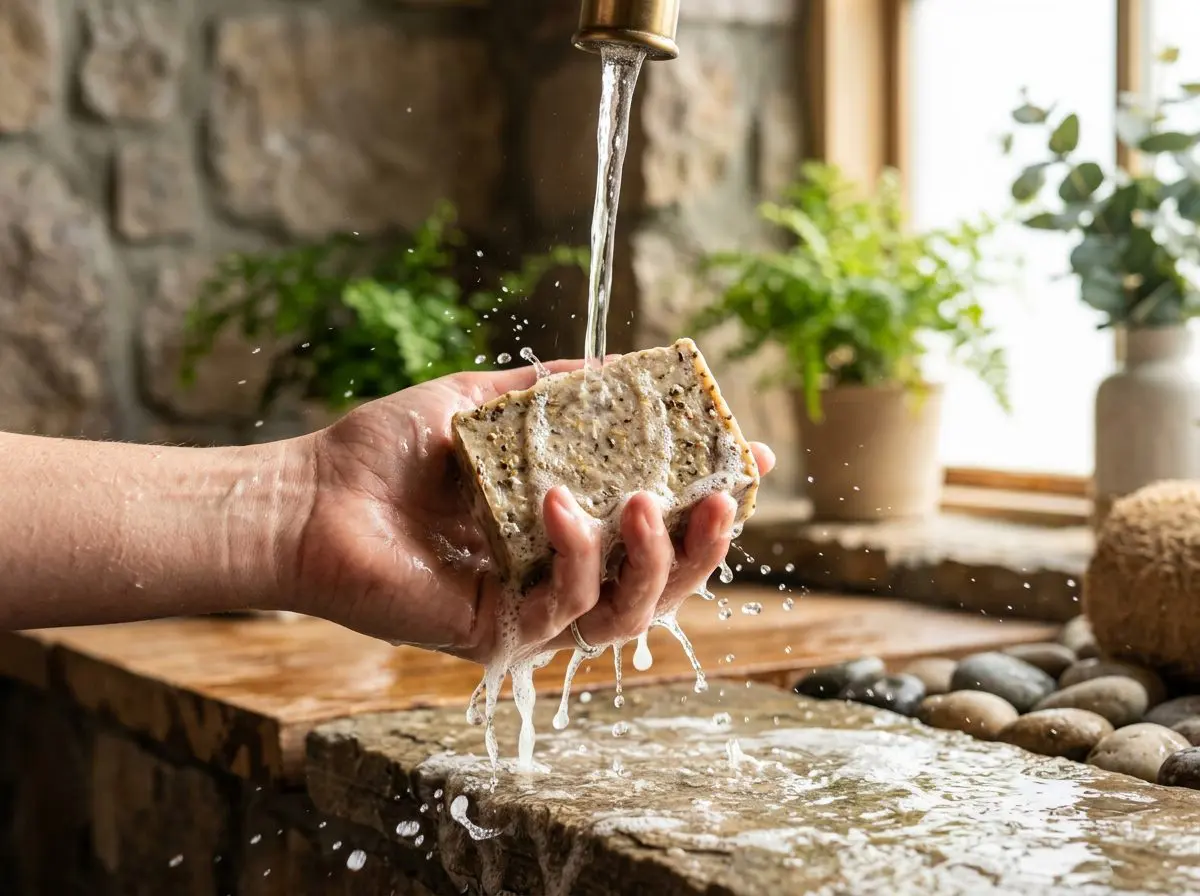
Shampoo bars require a different application technique than liquid shampoo. If you’re just rubbing the bar randomly on your head, you probably won’t get much lather.
Solution: Use the techniques in tips #1-5 below.
5. Your Bar Is Brand New (Or Very Old)
Brand new bars sometimes have a thin “film” on the surface that takes one wash to remove. Very old bars can dry out and lose their lathering ability.
Solution: For new bars, the first use is often the worst — it gets better. For old bars, try “reactivating” them (see tip #6).
6. Low-Quality or Poorly Formulated Bar
Not all shampoo bars are created equal. Some formulations simply don’t lather well, regardless of your technique.
Solution: If nothing else works, you might need to try a different brand or formulation.
I Expert Tips on How to Make Shampoo Bars Lather Better
Tip #1: Soak Your Hair COMPLETELY
This is the most important tip.
Before you even touch the shampoo bar, stand under the shower for 30-60 seconds and saturate every strand. Your hair should be dripping wet — not just damp.
Why it works: Water activates the surfactants (cleansing agents) in the bar. The more water, the more lather.
Pro tip: For long or thick hair, lift sections and make sure water reaches your scalp and roots. If the underlayers aren’t soaking wet, they won’t lather.
Tip #2: Warm Up the Bar Under Running Water
Before applying the bar to your hair, hold it under your shower stream for 5-10 seconds.
Why it works: Warming the bar softens the outer layer, making it easier to transfer product to your hair.
Pro tip: If you have very hard water, this step is especially important — it helps the bar start to dissolve before it hits the minerals in the water on your head.
Tip #3: Use the “Swipe and Massage” Technique
Instead of rubbing the bar all over your head randomly:
- Part your hair into sections (4-6 sections for thick/long hair, 2-3 for short/fine)
- Swipe the bar directly on your scalp in each section (2-3 swipes per section)
- Set the bar down
- Massage your scalp with your fingertips in circular motions
- Add small amounts of water as you massage (cupped hands work well)
Why it works: The “massage after applying” step is what actually creates lather. The bar deposits product, then your fingers + water + air create the bubbles.
Pro tip: Most people use WAY too much bar and not enough massaging. Try using half the amount of bar you think you need, then massage longer.
Tip #4: Build Lather in Your Hands First
If the direct-to-scalp method isn’t working, try this:
- Wet the bar thoroughly
- Rub it between your palms for 10-15 seconds to create lather in your hands
- Apply that lather to your scalp
- Massage to distribute
- Repeat if needed
Why it works: Creating lather in your hands first gives you more control and helps you see if the bar is actually lathering before you apply it.
Best for: Fine hair, sensitive scalps, or when you’re testing a new bar.
Tip #5: Add More Water (Not More Bar)
If you’re not getting enough lather, your first instinct might be to rub the bar on your head more. Resist this urge.
Instead, add more water.
How to do it: – Keep the bar out of your hair – Massage your scalp – Cup your hands under the shower stream to catch water – Pour water over your scalp while continuing to massage
Why it works: More bar without more water just creates sticky residue. More water activates the product already on your hair.
Pro tip: Do this 2-3 times during your wash. You’ll be amazed at how much lather appears.
Tip #6: “Reactivate” Old or Dry Bars
If your bar is old, has been sitting unused for weeks, or feels very dry and hard, try this:
- Soak the bar in a small dish of warm water for 2-3 minutes before your shower
- Use it while it’s still soft and “activated”
Why it works: Shampoo bars can dry out over time, especially if stored in low-humidity environments. A quick soak rehydrates the outer layer.
Warning: Don’t leave the bar soaking for more than 5 minutes, or it will start to dissolve and get mushy.
Tip #7: Use a Shampoo Bar Bag or Sisal Pouch
A shampoo bar bag is a small mesh or sisal pouch that you put your bar inside.
How to use it: 1. Put the bar in the pouch 2. Wet the pouch thoroughly 3. Rub the pouch on your scalp to create lather 4. Remove the bar and massage your scalp
Why it works: – The mesh creates friction, which helps generate lather – It protects your bar from breaking down too quickly – It exfoliates your scalp at the same time
Best for: Hard water, very short hair, or people who struggle with the direct application method.
Where to buy: Search for “shampoo bar bag” or “soap saver pouch” — they’re usually $3-8 online.
Tip #8: Use an Apple Cider Vinegar Pre-Rinse (Hard Water Fix)
If you have hard water, try this BEFORE shampooing:
- Mix 1-2 tablespoons apple cider vinegar with 1 cup of water
- Pour it over your wet hair before applying shampoo
- Rinse lightly (you don’t need to rinse it all out)
- Proceed with your shampoo bar as usual
Why it works: The acid in vinegar neutralizes some of the minerals in hard water, allowing the shampoo to lather better.
Pro tip: This is especially effective if you have mineral buildup from previous washes. After a few weeks of ACV pre-rinses, you might not need it every time.
Learn more: Shampoo Bars for Hard Water: Complete Guide
Tip #9: Install a Shower Filter
If you have very hard water, no amount of technique will give you great lather with a natural soap-based shampoo bar.
A shower filter removes calcium, magnesium, and other minerals BEFORE they reach your hair.
What to look for: – Filters that specifically target hardness minerals (not just chlorine) – KDF filters or Vitamin C filters work well – Expect to replace cartridges every 6-12 months
Cost: $30-80 for a good filter, $15-30 for replacement cartridges.
Why it’s worth it: Better lather, softer hair, less product buildup, and your shampoo bar will last longer.
Tip #10: Do a Clarifying Wash to Remove Buildup
If your shampoo bar used to lather well but suddenly stopped, you probably have product buildup.
Clarifying wash method: 1. Mix 1 teaspoon baking soda with 1 cup of warm water 2. Apply to wet hair and massage into your scalp 3. Rinse thoroughly 4. Follow with your regular shampoo bar
Why it works: Baking soda breaks down silicones, oils, and mineral deposits that block lather.
How often: Once every 2-4 weeks, or whenever you notice lather getting worse.
Warning: Baking soda is alkaline, so don’t use it too often (it can dry out your hair). Always follow with an ACV rinse to restore pH balance.
Tip #11: Switch to a Detergent-based-Based Shampoo Bar (Hard Water Solution)
If you’ve tried everything above and you STILL can’t get lather because of hard water, it might be time to switch to a detergent bar-based bar.
What’s the difference? – Soap-based bars (made from oils + lye) react badly with hard water – Detergent bars (synthetic detergent bars) need no rinse in hard water
Detergent bar brands: – Lush (most of their bars are detergent-based) – Ethique – HiBAR – Kitsch
Pros of detergent bars: – Lather in hard water – No transition period – pH-balanced
Cons: – Often more expensive – Not as “natural” as cold-process soap bars – Can be drying for some hair types
Learn more: Shampoo Bars vs Shampoo Soap: What’s the Difference?
Troubleshooting How to Make Shampoo Bars Lather Properly
“I Get Lather, But It’s Thin and Watery”
Possible causes: – Hair is too wet (yes, this is a thing!) – You’re using too little product – Your bar is low-quality or poorly formulated
Solutions: – Squeeze out excess water before applying the bar (your hair should be wet but not streaming) – Use a bit more product (2-3 extra swipes) – Try a different brand
“I Get Lather, But It Disappears Quickly”
Possible causes: – Hard water minerals are breaking down the lather – Your hair is very dirty or has product buildup – You need to add more water as you massage
Solutions: – Do an ACV rinse before shampooing (see tip #8) – Do a clarifying wash to remove buildup (see tip #10) – Keep adding water throughout your wash
“My Lather Is Thick and Creamy, But My Hair Still Feels Waxy”
Cause: This is likely hard water soap scum, not lather.
Solution: You need to address the hard water itself — see tips #8, #9, and #11.
“My Bar Lathers Fine on My Body But Not My Hair”
Cause: Hair has a different structure than skin — it’s more porous and can trap minerals and oils.
Solution: – Make sure your hair is completely soaking wet (not just damp) – Use more water while massaging – Try the “build lather in your hands first” method (tip #4)
Shampoo Bar Picks That Show How to Make Shampoo Bars Lather
For normal/soft water: – Banana & Coconut Bar — Rich, creamy lather – Lavender & Kaolin Clay — Luxurious foam – Shea Butter Bar — Moisturizing lather
For hard water: – Activated Charcoal Bar — Use with ACV rinse – Tea Tree & Rosemary — Clarifying lather – Consider a detergent bar bar if nothing else works
For fine/oily hair (needs lightweight lather): – Rosemary & Mint — Light, voluminizing foam – Lemon & Tea Tree — Refreshing lather
For thick/coarse hair (needs rich lather): – Indian Mystique — Deep-conditioning foam – Banana & Coconut — Creamy, rich lather
The Bottom Line
Getting great lather from a shampoo bar is part science, part technique.
The most important factors: 1. Soak your hair completely (dripping wet, not just damp) 2. Add more water (not more bar) while massaging 3. Address hard water (ACV rinse, shower filter, or detergent bar)
If you’ve tried all 11 tips above and you’re still struggling, it’s likely one of these three issues:
- Very hard water → You need a shower filter or detergent bar
- Product buildup → Do a clarifying wash
- Poor-quality bar → Try a different brand
With a little practice and the right techniques, you’ll be creating Instagram-worthy lather in no time.
Ready to find the perfect lathering bar? Shop our collection →
Related Articles: – How to Use Shampoo Bars: Complete Guide – Common Shampoo Bar Mistakes (And How to Fix Them) – Shampoo Bars for Hard Water: Complete Guide – How to Fix Greasy Hair After Switching to Shampoo Bars – How to Store Shampoo Bars (So They Last Longer)