


Last updated: September 27, 2026
Quick Answer
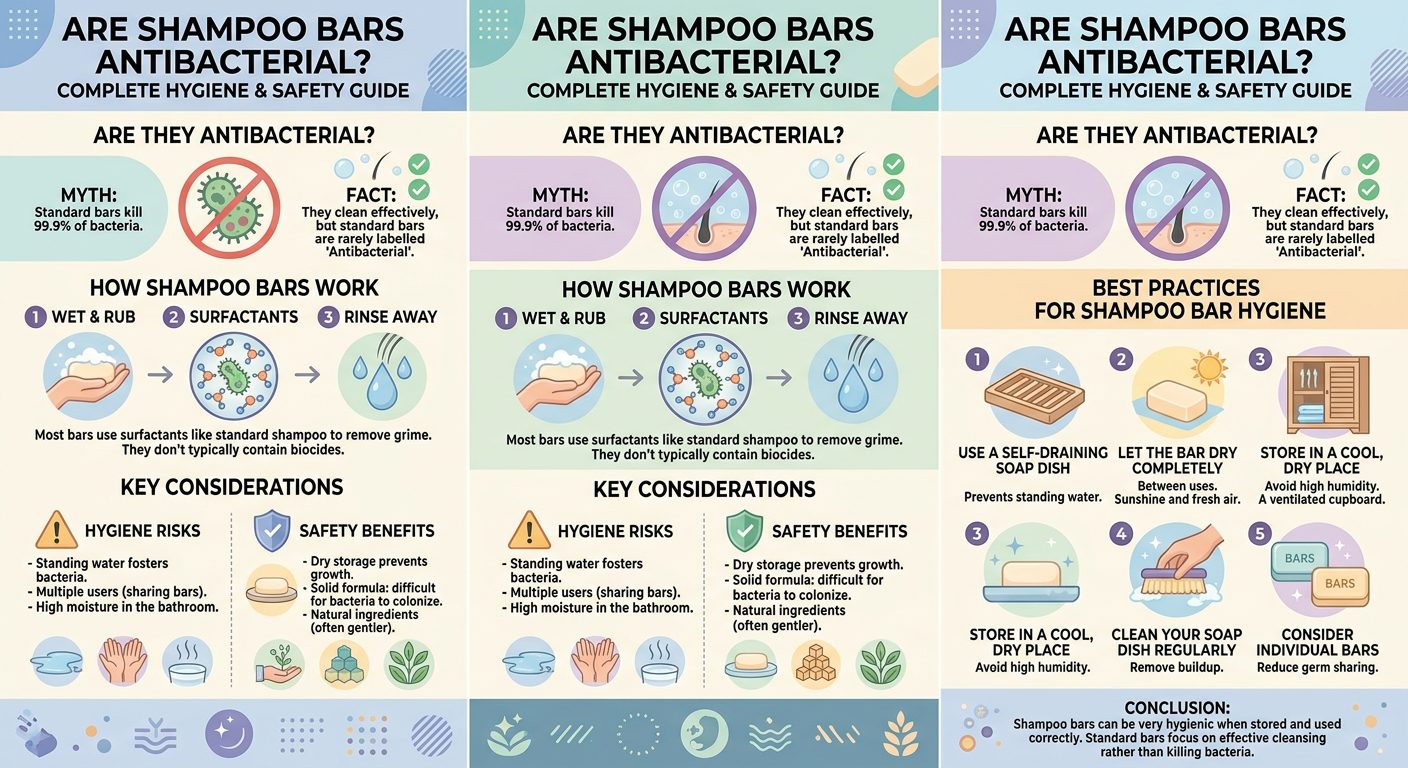
- Surfactants (cleansing agents) remove bacteria mechanically — washing away dirt, oil, and microbes
- Rinsing eliminates bacteria — water flushes away what the lather loosened
- Bacteria don’t thrive on dry bars — microbes need moisture to multiply
- Your scalp has natural defenses — healthy scalps manage bacteria without antibacterial products
How Shampoo Bars Clean Without Being “Antibacterial”
The Difference Between Cleaning & Killing
- Removes dirt, oil, dead skin, bacteria via mechanical action
- Surfactants surround microbes, lift them off scalp, rinse them away
- Effective for everyday hygiene (99%+ of people’s needs)
- Chemically destroy bacteria on contact
- Often unnecessary for healthy scalps
- Can disrupt scalp microbiome (more on this later)
How Surfactants Remove Bacteria
Step 1: Lathering- Surfactants (cleansing molecules) have two ends:
- They surround oil, dirt, and bacteria in tiny bubbles (micelles)
- Bacteria, sebum, dead skin cells get trapped in micelles
- Physical agitation (massaging scalp) loosens everything from hair/scalp
- Water washes away micelles (and everything trapped inside)
- Bacteria, oil, debris go down the drain
- Clean scalp remains
When You MIGHT Need Antibacterial Shampoo
Medical Conditions Requiring Antimicrobial Treatment
- Symptoms: Red, inflamed bumps (look like pimples), itchy, sometimes painful
- Cause: Bacterial infection (usually Staphylococcus aureus)
- Treatment: Medicated shampoo (chlorhexidine, benzoyl peroxide) + antibiotics if severe
- Not DIY: See a dermatologist for diagnosis
- Symptoms: Greasy, yellowish flakes; red, inflamed scalp; itching
- Cause: Overgrowth of Malassezia yeast (fungal, not bacterial)
- Treatment: Antifungal shampoos (ketoconazole, selenium sulfide, zinc pyrithione)
- Shampoo bars with antimicrobial ingredients: Tea tree oil, neem, coal tar
- Symptoms: Round, scaly patches; hair loss in affected areas; itching
- Cause: Fungal infection (dermatophytes)
- Treatment: Prescription antifungal medication (oral + topical)
- Not treatable with OTC shampoo alone
- When: After scalp surgery, chemotherapy, HIV/AIDS, organ transplant
- Why: Weakened immune system = higher infection risk
- Recommendation: Follow doctor’s orders (may prescribe antimicrobial shampoo temporarily)
For Most People: Regular Shampoo is Enough
If your scalp is healthy:- No redness, itching, or inflammation
- No open wounds or sores
- Normal dandruff (dry flakes, not greasy/yellowish)
- No diagnosed scalp condition
The Scalp Microbiome: Why You Don’t Want to Kill All Bacteria
What is the Scalp Microbiome?
Your scalp hosts trillions of microorganisms:- Bacteria (Staphylococcus, Propionibacterium, Corynebacterium)
- Fungi (Malassezia species)
- Other microbes (viruses, archaea)
- Protect against harmful pathogens (crowd out bad bacteria)
- Break down sebum (prevent excessive oiliness)
- Support skin barrier function (healthy scalp pH)
Disrupting the Microbiome: Unintended Consequences
What happens when you kill ALL bacteria:- Good bacteria die too (antibacterial products don’t discriminate)
- Bad bacteria repopulate faster (opportunistic pathogens take over)
- Chronic scalp issues develop (itching, flaking, irritation)
- Antibiotic resistance (overuse makes bacteria harder to treat when you actually need it)
Balance Over Sterility
Healthy scalp = balanced microbiome- Good bacteria outnumber bad bacteria
- Natural oils (sebum) are regulated (not too much, not too little)
- Skin barrier intact (prevents invaders from penetrating)
Natural Antimicrobial Ingredients in Shampoo Bars
Some shampoo bars include ingredients with mild antimicrobial properties. These are gentler than pharmaceutical antibacterials and support scalp health without nuking the microbiome.Tea Tree Oil
Properties: Antibacterial, antifungal, antiseptic Effective against: Dandruff-causing fungi (Malassezia), acne-causing bacteria Concentration: 1-5% is therapeutic; higher can irritate Best for: Oily scalps, mild dandruff, occasional folliculitis Note: Strong scent (medicinal), can be drying if overused—Neem Oil
Properties: Antibacterial, antifungal, anti-inflammatory Effective against: Scalp infections, dandruff, psoriasis Traditional use: Ayurvedic medicine for skin/scalp health Best for: Chronic scalp issues (seborrheic dermatitis, psoriasis) Note: Strong smell (earthy, medicinal), usually blended with other oils—Rosemary Oil
Properties: Antimicrobial, anti-inflammatory, circulation-boosting Effective against: Mild scalp irritation, dandruff prevention Additional benefits: May stimulate hair growth (improves blood flow) Best for: Scalp maintenance, not active infections Note: Pleasant scent (herbaceous), well-tolerated—Peppermint Oil
Properties: Antimicrobial, anti-inflammatory, cooling Effective against: Itchy scalp, mild bacterial overgrowth Additional benefits: Tingling sensation (feels invigorating), clarifying Best for: Oily scalps, summer heat (cooling effect) Note: Can be irritating if too concentrated (start low)—Eucalyptus Oil
Properties: Antibacterial, antifungal, anti-inflammatory Effective against: Dandruff, scalp infections, lice (traditional use) Additional benefits: Clarifying, refreshing Best for: Scalp detox, occasional deep cleanse Note: Strong scent (medicinal), avoid if sensitive—Charcoal (Activated Charcoal)
Properties: Absorbs impurities, detoxifies Effective against: Oil, dirt, product buildup (not bacteria directly) Additional benefits: Deep cleansing without stripping Best for: Oily scalps, occasional clarifying wash Note: Messy (turns lather gray/black), rinses clean—Apple Cider Vinegar (ACV)
Properties: Acidic (lowers scalp pH), mildly antimicrobial Effective against: Dandruff, mineral buildup, pH imbalance How it works: Acidic environment discourages bacterial/fungal growth Best for: Hard water areas (mineral removal), post-wash rinse Note: Not typically in bars (used as a rinse instead)—Are Shampoo Bars Sanitary? (Sharing & Storage Concerns)
Bacteria on the Bar Itself
Good news: Bacteria don’t thrive on dry surfaces.Why shampoo bars stay clean:- Low moisture — Bacteria need water to multiply; dry bars are hostile environments
- Alkaline pH — Most bars are pH 5-9 (bacteria prefer pH 6.5-7.5)
- Surfactants are self-cleaning — Cleansing molecules repel microbes
- No nutrients — Bars lack the organic material bacteria eat (unlike sponges, loofahs)
Sharing Shampoo Bars: Is It Safe?
Short answer: Yes, with caveats.Safe scenarios:- Sharing with household members (similar risk to sharing a towel)
- Healthy scalps (no infections, open wounds, or sores)
- Proper storage (bar dries between uses)
- Someone has a scalp infection (folliculitis, ringworm, lice)
- Someone has open wounds or sores on scalp
- Immunocompromised individuals (higher infection risk)
Proper Storage for Maximum Hygiene
1. Use a Draining Soap Dish- Slatted or perforated (allows water to drain away)
- Elevated (bar doesn’t sit in water puddle)
- Airflow underneath (speeds drying)
- Pat dry with towel after use (removes excess water)
- Store in well-ventilated area (not enclosed container while wet)
- Avoid shower ledge (constant humidity = slower drying)
- Don’t drop bar on shower floor (rinse thoroughly if it happens)
- Keep separate from body soap bars (prevents mix-up)
- Replace if bar develops mold (rare, but can happen if stored wet)
- Use a breathable travel case (mesh or vented container)
- Let bar dry completely before packing (prevents mushiness + bacteria growth)
- Wrap in paper towel if packing wet (absorbs moisture)
Hard Water & Bacteria: A Hidden Connection
How Hard Water Affects Scalp Health
Mineral buildup creates problems:- Clogs pores — Calcium/magnesium deposits trap oil, dead skin, bacteria
- Raises scalp pH — Alkaline environment encourages bacterial overgrowth
- Weakens skin barrier — Minerals irritate scalp, creating micro-damage (entry points for bacteria)
- Traps residue — Soap scum clings to hair/scalp (breeding ground for microbes)
Why Detergent-based Bars are Better for Scalp Health
Traditional soap bars in hard water:- React with minerals → soap scum (calcium stearate)
- Residue traps bacteria, oil, dead skin
- Scalp becomes itchy, prone to dandruff
- Do react with hard-water minerals (soap scum) — the included ACV rinse dissolves the residue
- Rinse clean after the ACV rinse step (no residue left to trap bacteria)
- ACV rinse restores scalp pH after the alkaline (pH 9–10) soap wash
Antibacterial Shampoo Bars: Do They Exist?
Medicated Bars (Pharmacy/Prescription)
Examples:- Benzoyl peroxide bars (acne-fighting, antibacterial)
- Sulfur bars (antifungal, antibacterial, for seborrheic dermatitis)
- Coal tar bars (antifungal, anti-inflammatory, for psoriasis)
Natural/Eco Shampoo Bars with Antimicrobial Ingredients
Examples:- Tea tree + neem bars (for dandruff, oily scalps)
- Charcoal + peppermint bars (clarifying, deep cleanse)
- Rosemary + eucalyptus bars (scalp health, circulation)
Hygiene Myths Debunked
Myth 1: “Bar soaps/shampoos are dirty because multiple people touch them”
Truth: Studies show bacteria don’t transfer from bar soaps to users. Surfactants are self-cleaning, and rinsing before use removes surface particles. You’re more likely to pick up bacteria from your phone or doorknob than a shampoo bar.—Myth 2: “Liquid shampoo is more sanitary than bars”
Truth: Pump bottles can harbor bacteria inside (especially if water gets in). Bars, when stored dry, are actually less prone to microbial growth. Sanitation depends on storage, not format.—Myth 3: “You need antibacterial shampoo to prevent scalp infections”
Truth: Healthy scalps don’t get infected easily. Regular washing removes bacteria adequately. Over-sanitizing can disrupt the microbiome, increasing infection risk long-term.—Myth 4: “Shampoo bars spread lice”
Truth: Lice can’t survive on dry surfaces (they need a human host + warmth + blood). Sharing combs/hats spreads lice, not shampoo bars. If someone has lice, avoid sharing anything that touches hair — but the bar itself isn’t the culprit.—Myth 5: “I need to disinfect my shampoo bar between uses”
Truth: Unnecessary. Rinsing under water is sufficient. Disinfecting (alcohol, bleach) damages the bar and wastes time. Your bar is cleaner than most surfaces you touch daily.—When to Worry: Signs of Scalp Infection
See a dermatologist if you experience:- Painful, pus-filled bumps (folliculitis, boils)
- Spreading redness/swelling (cellulitis — bacterial skin infection)
- Hair loss in patches (ringworm, alopecia areata)
- Severe itching + greasy yellow flakes (seborrheic dermatitis)
- Fever + scalp pain (abscess, serious infection)
Best Practices for Scalp Hygiene (Without Going Overboard)
1. Wash Regularly (But Not Excessively)
Frequency:- Oily hair: Every 1-2 days
- Normal hair: Every 2-3 days
- Dry hair: Every 3-5 days
2. Massage Your Scalp Thoroughly
Why it matters:- Loosens dirt, oil, dead skin, bacteria
- Improves circulation (supports healthy scalp)
- Ensures surfactants reach all areas (no missed spots)
3. Rinse Completely
Residue = problems:- Leftover shampoo clogs pores
- Mineral deposits (in hard water) trap bacteria
- Buildup creates itching, flaking, irritation
4. Dry Your Hair & Scalp
Why: Wet scalp = ideal environment for bacterial/fungal growthHow:- Towel-dry gently (pat, don’t rub — prevents hair breakage)
- Air-dry or blow-dry on cool (heat damages hair)
- Don’t go to bed with wet hair (creates warm, moist environment on pillow)
5. Clean Your Tools
Hairbrushes/combs:- Wash weekly (remove hair, soak in warm soapy water)
- Replace when bristles wear out
- Wash after 3-4 uses (bacteria accumulate)
- Don’t share towels (spreads bacteria, fungi, potentially lice)
- Wash regularly (sweat + oil + bacteria buildup)
6. Don’t Touch Your Scalp Excessively
Why: Fingers transfer bacteria, oil, dirt to scalp (and vice versa)When it’s okay:- Washing hair (obviously)
- Applying treatments (scalp massage, oil treatment)
- Scratching (damages skin, introduces bacteria)
- Picking at scalp (creates wounds = infection risk)
Special Considerations
Gym & Sports
After workouts:- Rinse scalp promptly (sweat creates bacterial breeding ground)
- Use a lightweight shampoo bar (no heavy residue)
- Dry hair thoroughly before putting it up (wet + tight = folliculitis risk)
- Wear flip-flops (prevents athlete’s foot, which can spread to hands → scalp)
- Don’t share towels/hair ties
Swimming Pools & Oceans
Chlorine/salt:- Both are mildly antimicrobial (reduce bacteria)
- But they also strip natural oils (weaken scalp barrier)
- Rinse hair immediately (removes chlorine/salt)
- Shampoo if hair feels coated (chlorine residue)
- Use conditioner (replaces stripped moisture)
Hospital/Medical Settings
If you work in healthcare:- Tie hair back (reduces surface area for bacteria to land on)
- Wash hair regularly (removes potential pathogens)
- No need for antibacterial shampoo (unless hospital policy requires it — rare)
The Bottom Line
Are shampoo bars antibacterial?- Most are not, and they don’t need to be
- Surfactants clean by removing bacteria, not killing them
- This is sufficient for healthy scalps
- Medical scalp conditions (folliculitis, severe dandruff, ringworm)
- Prescribed by a dermatologist
- Not for everyday use
- Wash regularly (but not excessively)
- Rinse thoroughly (especially in hard water)
- Let bar dry completely between uses (proper storage)
- Don’t over-sanitize (disrupts healthy microbiome)
- Finish with an acidic rinse — one tablespoon of apple cider vinegar in 250 ml of water — so no mineral film is left sitting on the scalp
- Consider ACV rinse (mildly antimicrobial, removes minerals)
Ready to Make the Switch?
Ready to experience the benefits of a natural shampoo bar? Browse our complete collection of cold-processed soap bars — each one made with 6 organic plant oils and zero synthetic additives.
Related reading: how to store shampoo bars and shampoo bar storage options compared.