


Last updated: October 12, 2026
Key takeaways
- Liquid shampoo is 75–85% water — every bottle you buy includes the cost of shipping and packaging that water.
- A solid shampoo bar weighs roughly one-eighth as much as the equivalent liquid for the same number of washes, reducing fuel use and CO₂e across the supply chain.
- Solid bars require no preservatives, because without water there is no medium for microbial growth.
- Switching from liquid to bar shampoo saves an average European adult 20–25% in annual hair-care costs.
- Each person who switches spares approximately 168 g of plastic packaging and six bottles from landfill per year.
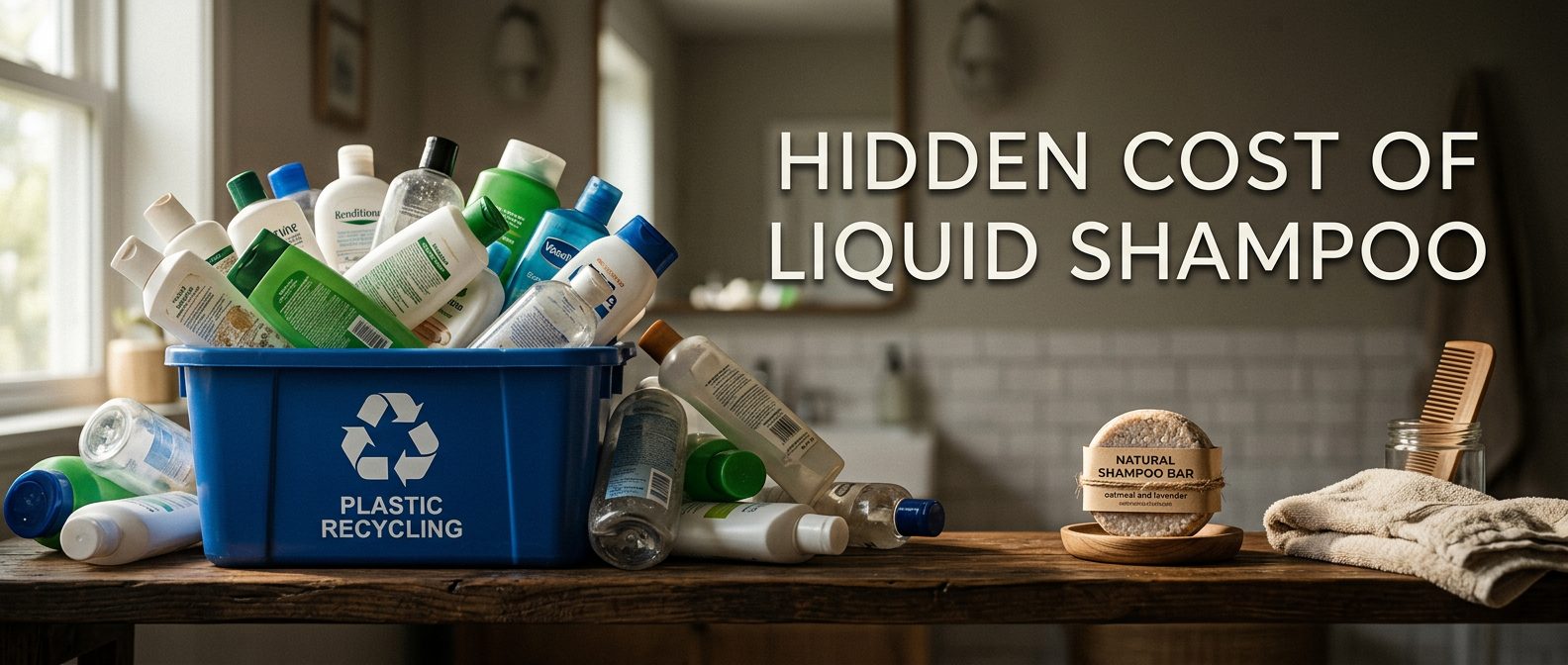
Open any 300 ml shampoo bottle and roughly 240 ml of what’s inside is water. The other 60 ml is the actual product. Then there’s the bottle itself, the cap, the label, the shipping fuel and the eventual recycling problem. By the time you wash your hair, you’ve paid for a lot of things that aren’t shampoo.
Here’s an honest look at the hidden cost of liquid shampoo — and what you can do about it.
The 80% water rule
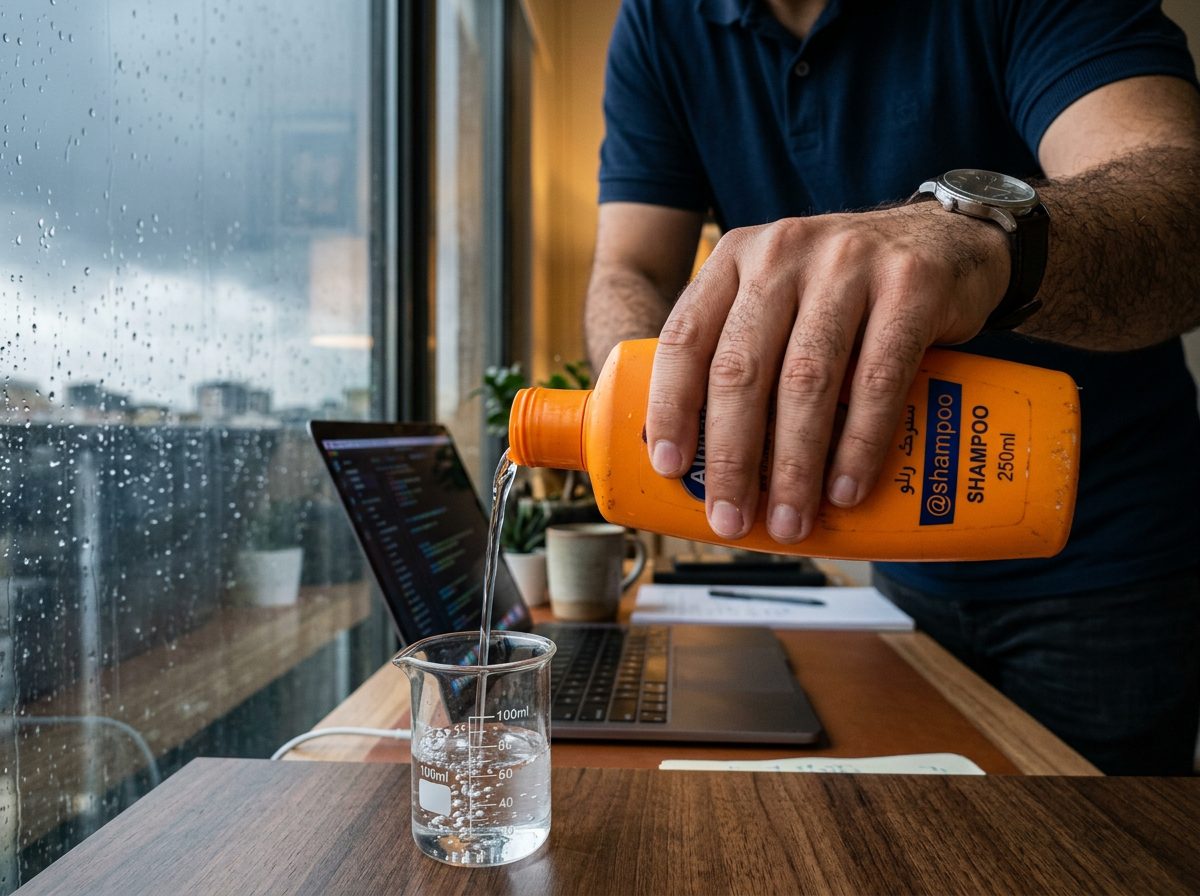
The largest ingredient on almost every commercial shampoo label is “Aqua” or “Water.” Standard liquid shampoo formulas are 75–85% water. The shampoo industry sells you a litre of water with about 250 ml of detergents and conditioners stirred in.
This isn’t a scandal. Water is the carrier that keeps the surfactants stable and pourable. But it does mean every bottle you carry home from the store, drag in a delivery van, and eventually toss in recycling is mostly water.
The plastic side of the hidden cost of liquid shampoo
A typical 300 ml HDPE shampoo bottle weighs ~28 grams. It needs:
- Petrochemical feedstock (oil or natural gas)
- Energy for polymerisation and moulding
- A separate cap, sometimes a different polymer that confuses recyclers
- A printed or stuck-on label that further reduces recycling yield
Globally, the World Wildlife Fund estimates 552 million shampoo bottles end up in landfill each year. Less than 30% of personal-care plastic bottles are actually recycled into new bottles — the rest get downcycled into lower-grade plastic or burnt.
The shipping side of the hidden cost of liquid shampoo
Water is heavy. Roughly 1 kg per litre. A pallet of liquid shampoo is mostly a pallet of water moving from factory to distribution centre to retailer to your house.
Compare to a pallet of solid bars: same number of washes, roughly 1/8 the weight. That ratio shows up in fuel, vehicle wear, port handling, and ultimately price.
The preservative cost
Water plus surfactants plus warmth = excellent bacterial growth medium. Liquid shampoos must contain preservatives to stop microbial spoilage:
- Methylisothiazolinone (MIT) and methylchloroisothiazolinone (CMIT/MIT) — common but increasingly limited in the EU due to allergy concerns
- Phenoxyethanol — widely used, well-tolerated
- Parabens — declining due to consumer concerns, replaced by other preservatives
Solid bars don’t need preservatives because there’s no water for microbes to grow in. That’s not a marketing line; it’s chemistry.
The “fragrance” cost
“Parfum” or “fragrance” on a shampoo label is permitted by EU regulation to be a single line item that can hide up to 100 individual fragrance chemicals. Some of those are phthalates, some are common allergens (limonene, linalool, geraniol), and some are simply not disclosed.
Liquid shampoo formulators usually need stronger fragrance loads to mask the smell of synthetic surfactants and preservatives. Solid bars need less because the base smells better to start with.
The shower-routine cost
A surprising follow-on cost: liquid shampoo encourages over-washing. The foam is so satisfying and the dispense is so easy that people use much more than they need. Bars require a more deliberate motion — rub once, lather, apply — which naturally rations product.
The result for most people: switching to a bar quietly cuts their wash quantity by 30–50%.
One-year financial breakdown
For an average European household washing hair 3 times per week:
- Liquid shampoo: roughly 6 large bottles per person per year. At €8 average per bottle = €48–€60 per year per person.
- Cold-process bar: 3–4 bars per person per year. At €12 each = €36–€48 per year per person.
That’s a 20–25% saving in pure cash terms, before any environmental accounting.
One-year material breakdown
Per person, switching to bars saves approximately:
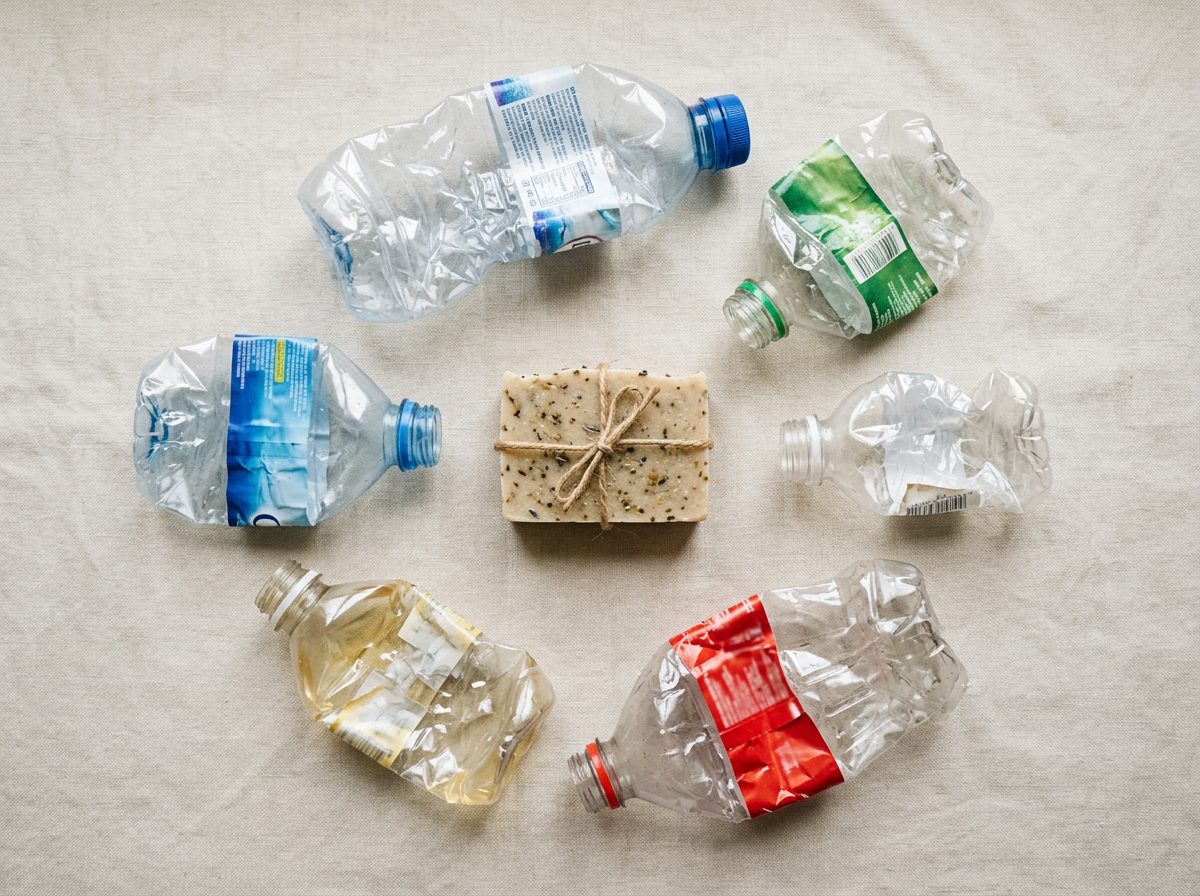
- 168 g of plastic packaging
- 1.4 litres of water shipped (yes, you’re shipping water around when you buy bottles)
- 5 kg CO2e equivalent — about 35 km of car driving
- ~6 plastic bottles spared from the recycling/landfill stream
The opportunity cost
The most overlooked hidden cost: shelf space and decision fatigue.
The average European bathroom holds 8–12 personal-care bottles. Each one was a separate purchase decision, requires monitoring for “running out,” and contributes to bathroom clutter. Switching to bars typically replaces 3–4 bottles with 1–2 small wrapped bars stored in a drawer.
Why the hidden cost of liquid shampoo matters more right now
The EU’s Single-Use Plastics Directive and Packaging and Packaging Waste Regulation are reshaping personal care from 2025 onwards. Brands face mandatory reuse and refill targets, recyclability mandates, and likely plastic taxes that will be priced into liquid shampoo.
The hidden cost of liquid shampoo is about to become a slightly less hidden cost on the shelf.
FAQ
Aren’t bars more expensive per bottle? Per bar, slightly. Per wash, cheaper. Per year, cheaper.
Doesn’t refilling fix this? Refill liquid shampoo cuts packaging significantly. It’s a strong middle path. Bars still beat refill on shipping weight and preservatives.
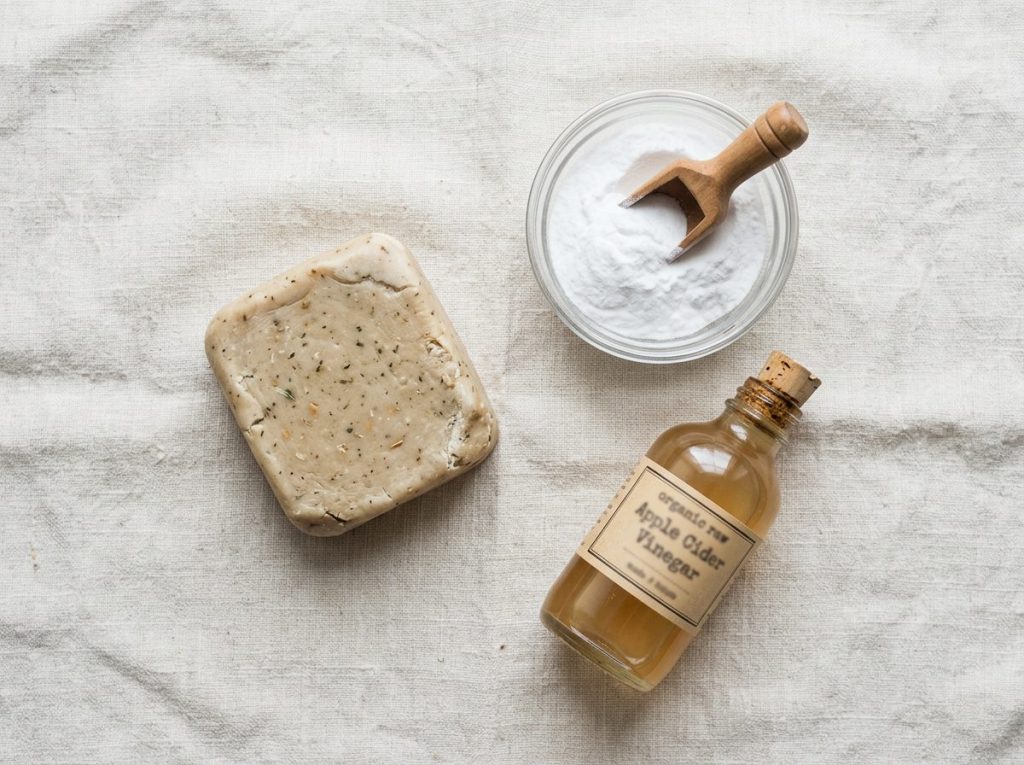
Do shampoo bars work for everyone? They work for most hair types. Hard-water households need an apple cider vinegar rinse to avoid waxy build-up.
Want to skip the water, the plastic, and the preservatives? Browse our cold-process shampoo bars — six organic plant oils, palm-oil-free, plastic-free.