


Last updated: October 12, 2026
Key takeaways
- Each of the six plant oils contributes a distinct property once saponified: olive for mildness and conditioning, coconut for lather, castor for foam stability and gloss, shea for hardness and creaminess, sweet almond for softness, and rice bran for antioxidants and hair-shaft compatibility.
- A single-oil bar — whether pure olive or pure coconut — is structurally unbalanced; a six-oil blend compensates for each oil’s individual limitations.
- Coconut oil must be kept to around 25–30% of total oils to deliver satisfying lather without drying the hair or scalp.
- Castor oil’s unique ricinoleic acid stabilises bubbles and attracts moisture, producing a measurable improvement in lather quality at just 5–8% of the formula.
- The formula contains no palm oil; shea, coconut, and castor in combination replicate palm’s structural role without the associated deforestation risk.
Most shampoo bar marketing stops at “made with natural plant oils.” That’s like saying a coffee is “made with beans.” Which oils, in what proportions, and what each contributes to the bar’s behaviour is where the actual product design lives.
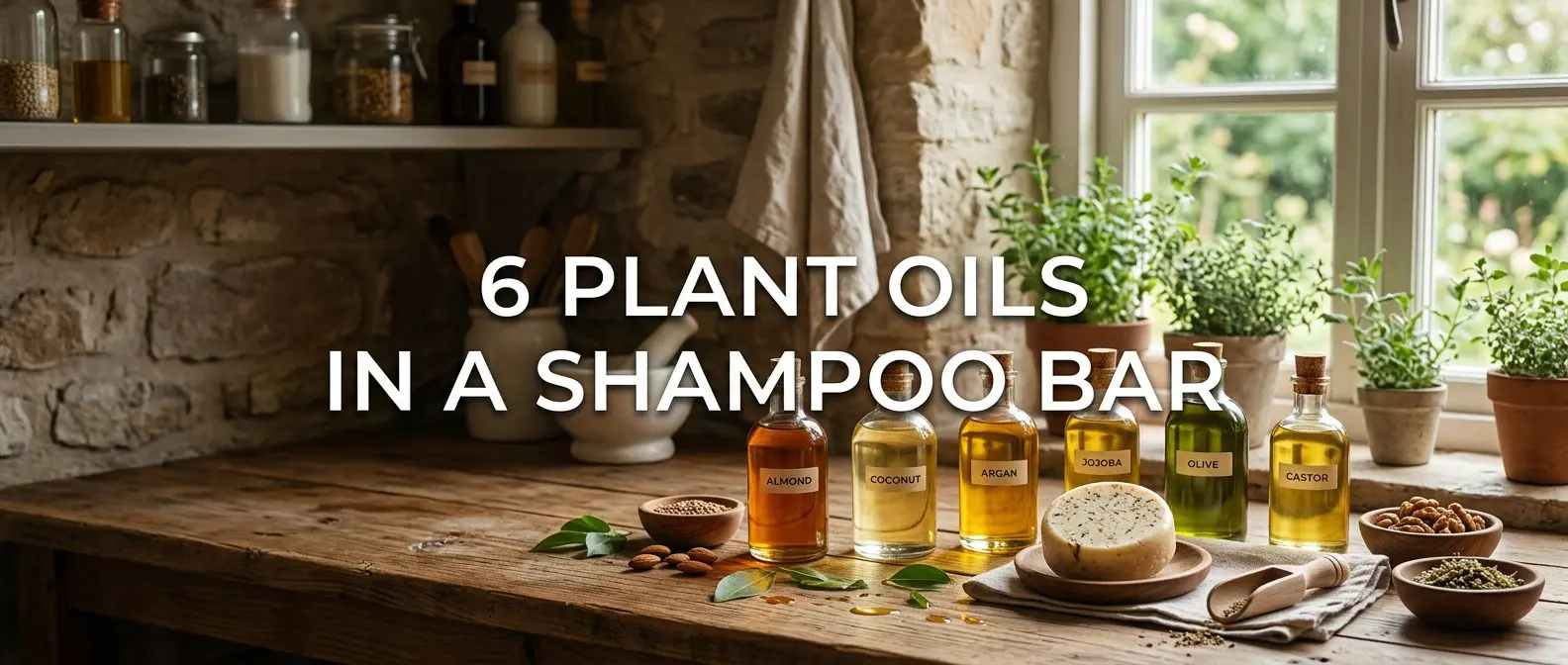
Here’s what each of the 6 plant oils in a shampoo bar — specifically the six in a Natural Answer formula — does once it’s saponified.
Why plant oils in a shampoo bar are blended
Each oil has a different fatty-acid profile. Once saponified, those fatty acids translate into specific bar properties:
- Lauric acid → big, fast-disappearing lather
- Oleic acid → conditioning, mildness, slow lather
- Stearic acid → bar hardness, creamy lather
- Ricinoleic acid → humectant pull, lather stabilisation
- Linoleic acid → gentle, lightweight feel, slight conditioning
A single-oil bar (pure olive Castile, or pure coconut) leans hard into one quality and lacks others. A balanced six-oil formula tries to give you the best of each.
1. Olive oil (sodium olivate)
Fatty acid profile: ~70% oleic, ~10% linoleic, ~13% palmitic
Contributes to: mildness, conditioning, low-foam creaminess, longevity
Olive oil produces a soft, low-lather, gentle bar. As the dominant oil, it gives a Castile-style soap with excellent skin tolerance but slow lather. As one of six, it provides the conditioning backbone without making the bar too soft.
Historical note: the Aleppo and Castile soap traditions are built on olive. The hair-and-skin tolerance of these bars across centuries is partly an olive-oil story.
2. Coconut oil (sodium cocoate)
Fatty acid profile: ~50% lauric, ~18% myristic, ~8% palmitic
Contributes to: big lather, fast cleansing, bar hardness
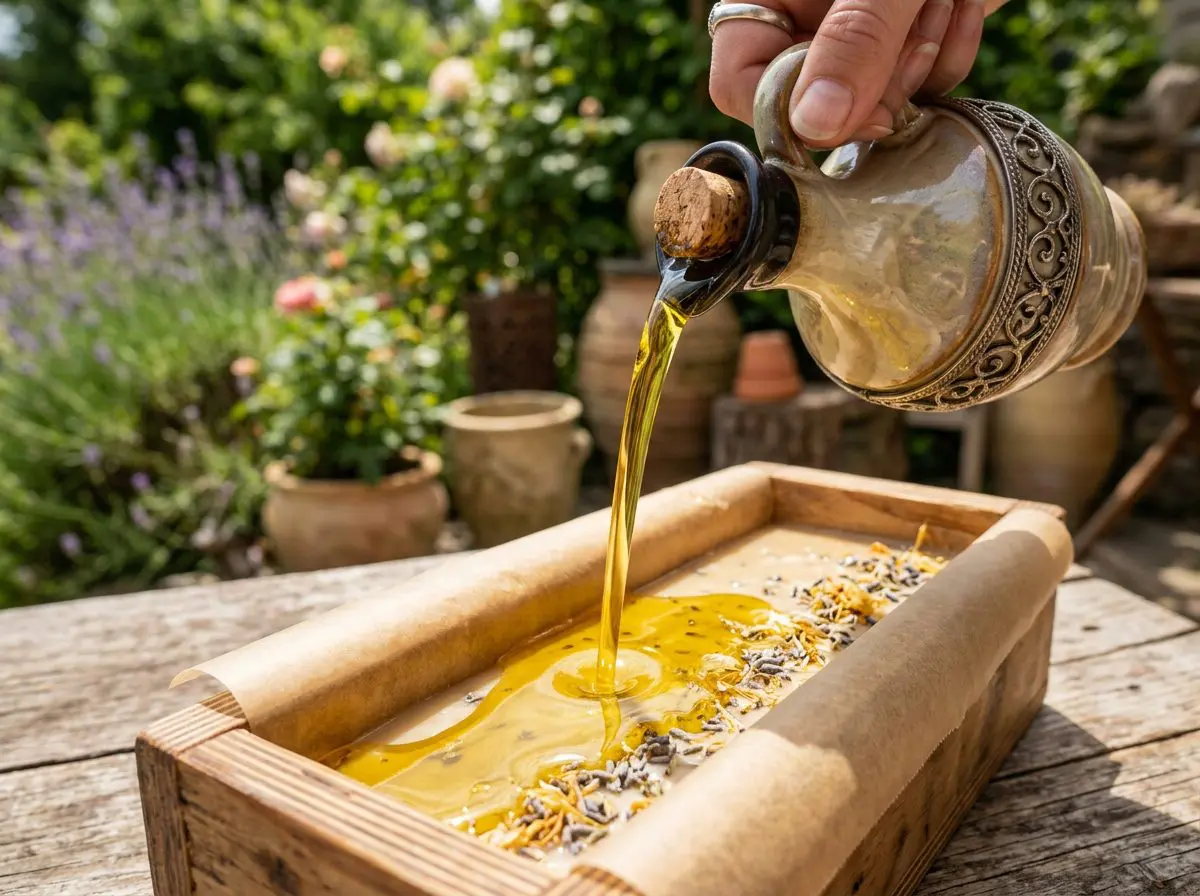
Coconut is the lather generator. Lauric and myristic acids create the foamy, satisfying suds people associate with washing. Without coconut (or palm), bars feel lazy in the lather department.
Too much coconut, though, makes a bar drying. The art is using enough for a satisfying lather without tipping past the dryness threshold — usually around 25–30% of total oils.
3. Castor oil (sodium ricinoleate)
Fatty acid profile: ~90% ricinoleic acid
Contributes to: humectant pull, bubble stability, gloss
Castor is unusual: ricinoleic acid is uncommon in other oils, and its hydroxyl group attracts water. In a bar, this means bigger, more stable bubbles and a humectant effect on the hair. It’s why bars with even 5–8% castor lather noticeably better than bars without it.
Castor also adds a mild gloss to dried hair. Many old-school hair tonics were just castor oil and alcohol.
4. Shea butter (sodium sheaate / sodium butyrospermate)
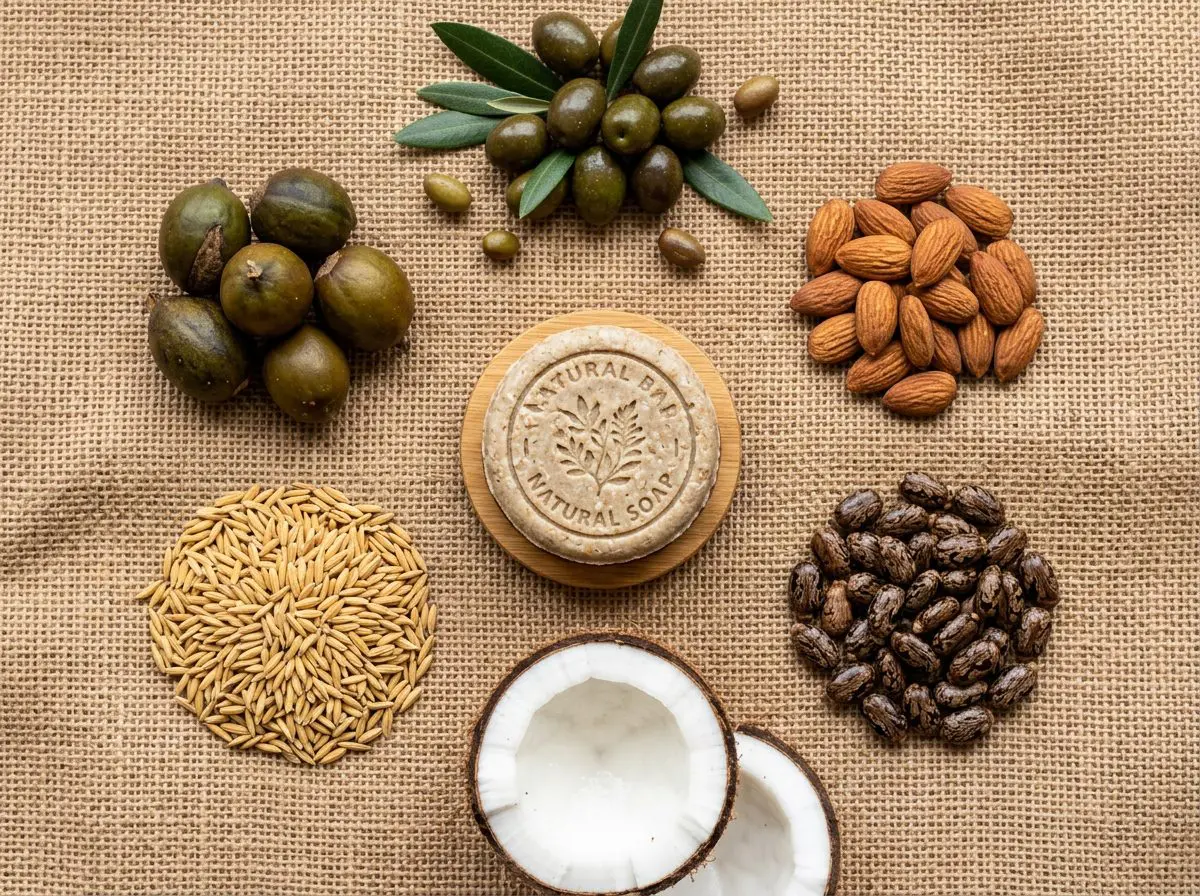
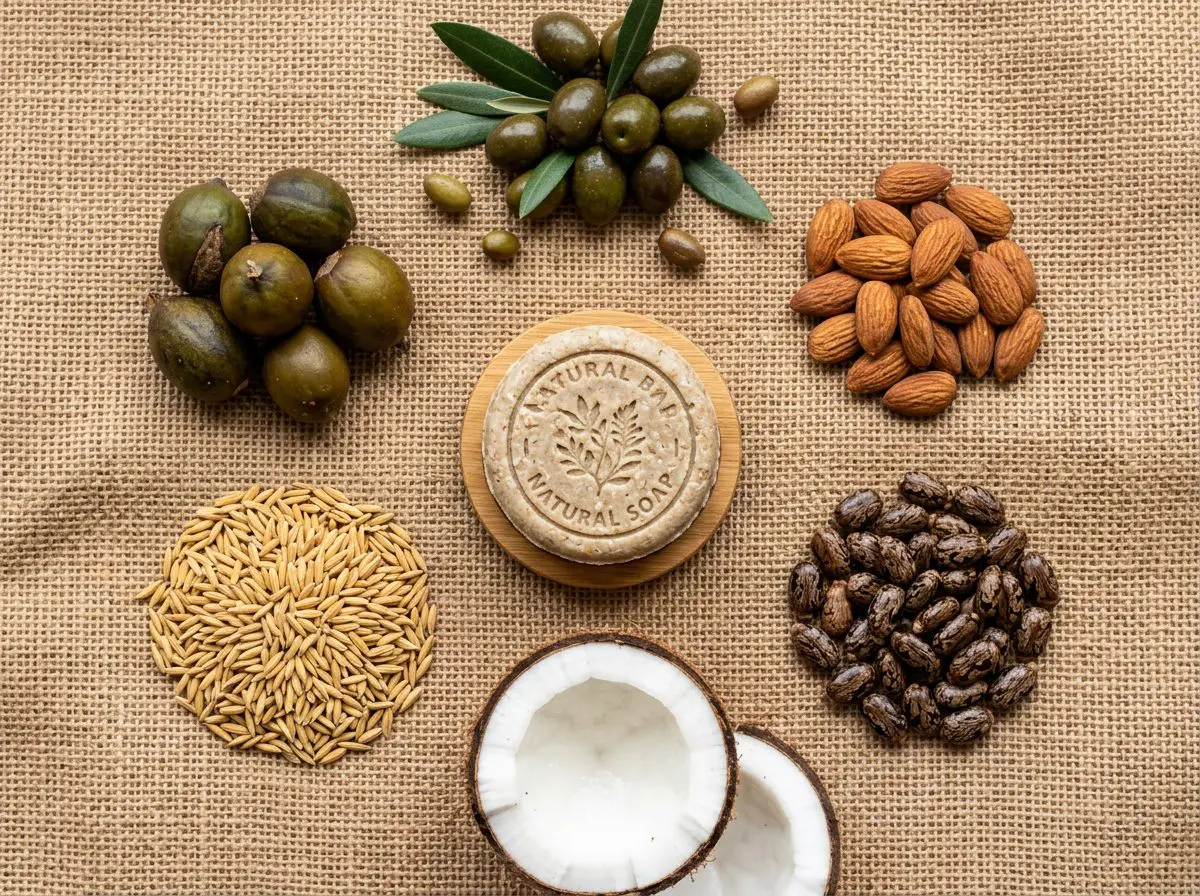
Fatty acid profile: ~45% oleic, ~40% stearic, ~5% linoleic
Contributes to: bar hardness, conditioning, creamy lather
Shea butter contributes stearic acid (which makes the bar hard, long-lasting, and gives a creamy lather) and oleic acid (which conditions). It also leaves a small amount of unsaponified fraction in the bar that provides natural antioxidants and an emollient feel after rinse.
5. Sweet almond oil (sodium amygdalate)
Fatty acid profile: ~70% oleic, ~20% linoleic, ~7% palmitic
Contributes to: softness, mildness, gentle conditioning
Sweet almond is similar to olive but with a higher linoleic-to-oleic ratio. It produces a softer, slightly more conditioning bar without the heavy weight some pure-olive bars develop.
6. Rice bran oil (sodium ricibate)
Fatty acid profile: ~40% oleic, ~35% linoleic, ~17% palmitic
Contributes to: antioxidants, light feel, hair-shaft compatibility
Rice bran is the hair-friendly oil. It contains:
- Tocopherols (vitamin E)
- Gamma-oryzanol (antioxidant unique to rice bran)
- Phytosterols
Even after saponification, traces of these compounds remain in the unsaponified fraction. Rice bran also has the right molecular weight to penetrate the hair shaft slightly — one of the reasons it shows up in expensive haircare oils.
The blend of plant oils in a shampoo bar in practice
A balanced six-oil bar like Natural Answer’s combines:
- ~30% olive (mildness, structure)
- ~25% coconut (lather, cleansing)
- ~10% castor (foam stability, gloss)
- ~15% shea (hardness, creaminess)
- ~10% sweet almond (softness)
- ~10% rice bran (antioxidants, hair compatibility)
(Exact percentages are formulation-specific. The qualitative behaviour is what matters.)
Why palm is missing from the plant oils in a shampoo bar
Palm and palm-kernel oils are cheap and saponify reliably. They produce hard, long-lasting bars. But:
- Palm-oil expansion drives tropical deforestation and orangutan habitat loss
- Even RSPO-certified palm has supply-chain ambiguity
- Sustainable substitutes (shea + coconut + castor combinations) achieve similar properties
Our bars are 100% palm-oil-free, including derivatives.
What about "natural" additives?
You’ll see bars with added clay, charcoal, herbs, or extra oils on the unsaponified side. These can be useful but aren’t the foundation:
- Kaolin clay: oil absorption for oily scalps
- Activated charcoal: mild clarifying effect
- Tocopherol (vitamin E): antioxidant, slows oil rancidity
- Essential oils: scent and minor scalp effects in tiny percentages
None of these change the core math: the six oils define the bar. Everything else is finesse.
FAQ
Why not just use one oil for simplicity? A single-oil bar is unbalanced. Castile (pure olive) lathers poorly; pure coconut bars are drying. Six oils balance the trade-offs.
Is more oil always better? No. Bars with too high a superfat (excess unsaponified oil) get sticky and go rancid faster.
Are vegan oils better than tallow for hair? Both saponify. Plant oils give different fatty-acid profiles and align with vegan/cruelty-free values.
Want to see all six oils on one ingredient list? Browse our six-oil shampoo bars — full transparency, palm-oil-free, plastic-free.