


Last updated: August 28, 2026
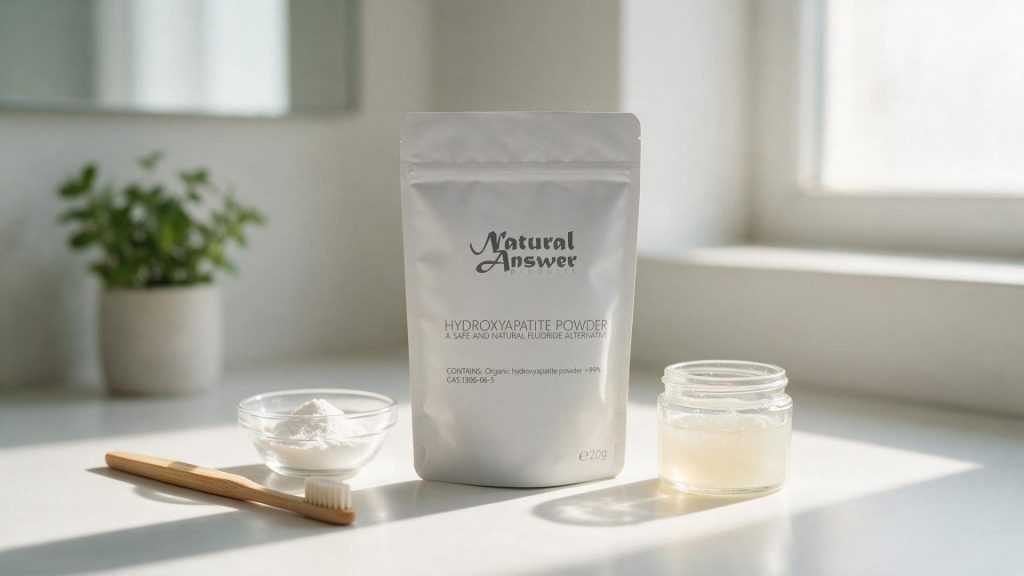
You can make effective fluoride-free toothpaste at home by combining hydroxyapatite powder — the same calcium phosphate mineral that makes up about 97% of your tooth enamel — with a simple base like aloe vera gel or coconut oil. Unlike baking-soda-only recipes, which clean but cannot repair enamel, hydroxyapatite actively remineralizes teeth — and in clinical trials, hydroxyapatite toothpaste has performed as well as fluoride toothpaste at preventing cavities. The recipe below takes five minutes and four ingredients.
Is Fluoride Toothpaste Actually Necessary?
Here is the honest answer: fluoride works, but it is not the only thing that works.
Fluoride works mainly on the tooth surface: it helps saliva rebuild lost mineral, makes that mineral more acid-resistant, and slows the bacteria that produce the acid. Decades of public health data support it. That is why your dentist recommends it.
So why do so many people want an alternative?
- Swallowing concerns. In the US, fluoride toothpaste carries a poison-control warning. EU labels are milder, but they still tell you to supervise brushing for children six and under and keep the amount to a pea, to minimise swallowing. Adults spit; toddlers often don’t.
- Fluorosis. Too much total fluoride during childhood — from water, supplements, and swallowed toothpaste together — can cause fluorosis: usually faint white flecks, occasionally mottling, on the adult teeth.
- Ingredient control. Commercial toothpaste often bundles fluoride with SLS (a foaming agent linked to canker sores in some people), artificial sweeteners, dyes, and titanium dioxide.
- Simple preference. Some people want to know exactly what goes in their mouth twice a day. That is a reasonable thing to want.
The problem is what most people switch to.
Why Most DIY Toothpaste Recipes Fail Your Teeth
Search “homemade toothpaste” and you will find hundreds of recipes built on baking soda, coconut oil, and essential oils. These recipes clean. They freshen breath. And they do nothing to rebuild your enamel.
Your teeth lose mineral every day. Acid from food, drinks, and plaque bacteria dissolves microscopic amounts of enamel in a process called demineralization. Fluoride’s real job is to tip that balance back toward repair. If you remove fluoride and replace it with nothing, you lose your repair mechanism. Cleaning alone does not fill microscopic enamel damage.
This is the gap that catches most DIY switchers — sometimes years later, in the dentist’s chair.
The Ingredient That Changes Everything: Hydroxyapatite
There is a fluoride-free ingredient that repairs enamel, and most people outside Japan have never heard of it.
Hydroxyapatite (HAP) is the calcium phosphate mineral your teeth are made of — about 97% of your enamel and about 70% of your dentin. When you brush with it, you apply the exact mineral your teeth already use, and it bonds to the surface, filling the microscopic defects that acid creates.
A few facts worth knowing:
- It has a track record. Hydroxyapatite toothpaste has been on Japanese shelves since 1980, and Japan approved it as an anti-caries ingredient in 1993 — the leading brand dominates the country’s premium toothpaste segment. The ingredient itself came out of NASA research in the 1960s, where a scientist working on semiconductors patented a way to grow hydroxyapatite crystals on tooth surfaces.
- The science is promising. In two randomised controlled trials, including a 2019 study by Schlagenhauf and colleagues, hydroxyapatite toothpaste performed as well as fluoride toothpaste at preventing cavities. Those trials used the microcrystalline form, and the research base is still small and largely industry-funded — so the honest summary is promising rather than settled. In laboratory studies, nano-sized particles have also been shown to integrate with the enamel crystal structure rather than just coating it.
- It is swallow-friendly. Hydroxyapatite is a calcium phosphate mineral — the same one teeth are built from. Small amounts swallowed during brushing are not a concern: regulators reviewing it for oral care found ingested particles simply dissolve in the stomach. It is still toothpaste, not food; keep the jar with the toothbrushes, not the snacks.
- It does more than protect. Studies show it reduces tooth sensitivity by plugging exposed dentin tubules, and it smooths enamel so teeth look naturally brighter.
For the full comparison of how the two minerals work, see our hydroxyapatite vs fluoride guide.
Your First Recipe: Smooth Aloe-Hydroxyapatite Toothpaste
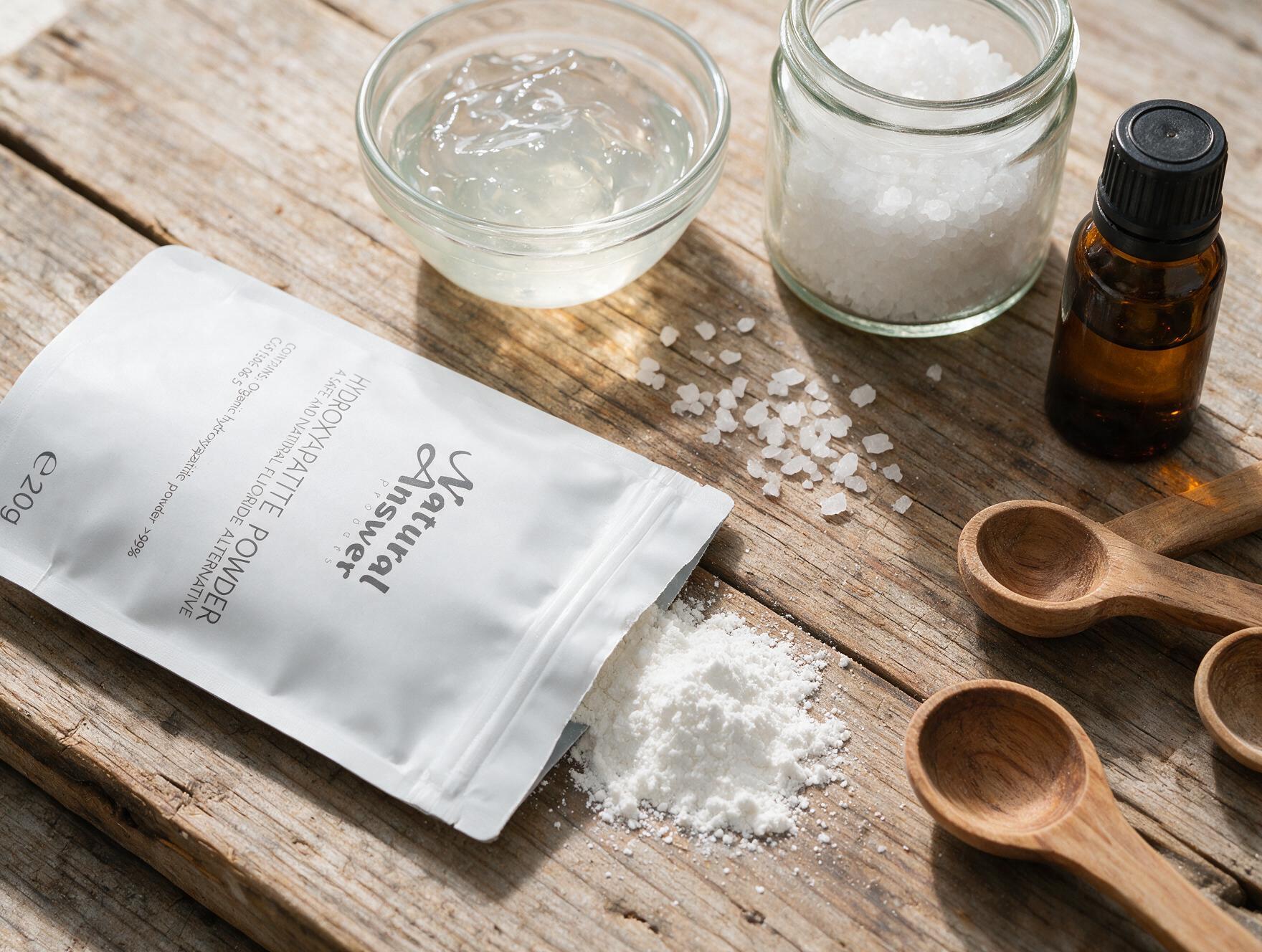
This is a beginner-friendly paste with a texture close to commercial gel toothpaste — no gritty baking soda, no oily mouthfeel. Aloe vera gel gives it a smooth glide and mild soothing properties, xylitol adds gentle sweetness and starves cavity bacteria, and hydroxyapatite does the repair work.
Ingredients
- 3 tablespoons pure aloe vera gel (food grade, no added alcohol)
- 1 tablespoon 40 micron hydroxyapatite powder, or 1 teaspoon of the nano (60nm) grade — nano is finer and more concentrated, so a smaller amount does the job and keeps the mix in line with the levels used in finished toothpastes (here is the difference)
- 1 teaspoon xylitol (fine-ground dissolves best)
- 5–8 drops peppermint essential oil (optional, for flavor — leave it out for children under six)
Instructions
- Spoon the aloe vera gel into a small glass jar.
- Add the hydroxyapatite powder and xylitol. Stir with a wooden or silicone spoon until fully smooth — about one minute.
- Add the peppermint oil and stir again.
- Cap the jar and store it in the fridge. Aloe is perishable; the paste keeps for about 2–3 weeks. Discard it sooner if the smell, colour, or texture changes.
How to use it
Scoop a pea-sized amount onto your brush and brush for two minutes, twice a day. Spit, but skip the rinse — leaving a thin film of hydroxyapatite on your teeth extends its contact time and improves remineralization. Avoid eating or drinking for 30 minutes afterward.
Even simpler option: skip the recipe entirely. Wet your toothbrush, dip it in plain 40 micron hydroxyapatite powder, and brush. That is a complete fluoride-free routine in one ingredient. (For the nano grade, stick to measured recipes like the one above — finished toothpastes keep nano hydroxyapatite at modest levels, and so should you.)
What to Expect When You Switch
A few honest notes for your first weeks:
- No foam. Foam comes from SLS, a detergent. Its absence does not mean your teeth are not getting clean.
- Different texture. A homemade paste feels different from a factory gel. Most people adjust within a week.
- Gradual results. Teeth typically start feeling smoother within two to three weeks. Sensitivity improvements and visible changes take longer. Remineralization is a rebuild, not a rinse.
- Keep your dentist. A fluoride-free routine is not a reason to skip checkups. Let your dentist track your enamel — the results tend to speak for themselves.
Once you are comfortable with this recipe, there is a whole world of variations — coconut oil bases, remineralizing mouthwash, even chocolate toothpaste for kids. You will find all of them in our complete hydroxyapatite DIY guide.
FAQ
Q: Is fluoride-free toothpaste as effective as regular toothpaste?
A: It depends entirely on what replaces the fluoride. Baking soda or charcoal recipes only clean — they cannot repair enamel. Hydroxyapatite-based toothpaste is the exception: in clinical trials it has performed as well as fluoride toothpaste at preventing cavities, while also remineralizing enamel and reducing sensitivity. The research base is still young, but it is the only DIY-friendly ingredient with that kind of evidence behind it.
Q: What is the best fluoride substitute in homemade toothpaste?
A: Hydroxyapatite powder. It is the same mineral your enamel is made of, so it repairs teeth with bioidentical material instead of forming a different compound the way fluoride does. Xylitol is a useful supporting ingredient because it reduces cavity-causing bacteria, but it does not remineralize on its own.
Q: How long does homemade hydroxyapatite toothpaste last?
A: An aloe-based paste keeps for about 2–3 weeks in the fridge. A coconut-oil-based paste keeps for around two weeks at room temperature. Pure dry powder lasts indefinitely in a sealed jar — which is why many people eventually switch to the simple dip-and-brush method.
Q: Can I use homemade fluoride-free toothpaste every day?
A: Yes. Hydroxyapatite is gentle enough for twice-daily use, and small amounts swallowed while brushing are not a concern. Just keep the abrasive ingredients (like baking soda) modest, brush with light pressure, and see your dentist for regular checkups as usual.
Learn more:
- The Complete Hydroxyapatite DIY Toothpaste Guide — 6 more recipes, dosage protocols, and transition tips
- Hydroxyapatite vs Fluoride: The Full Comparison
- Nano vs 40 Micron Hydroxyapatite: Which Grade Fits You?