


Last updated: August 28, 2026
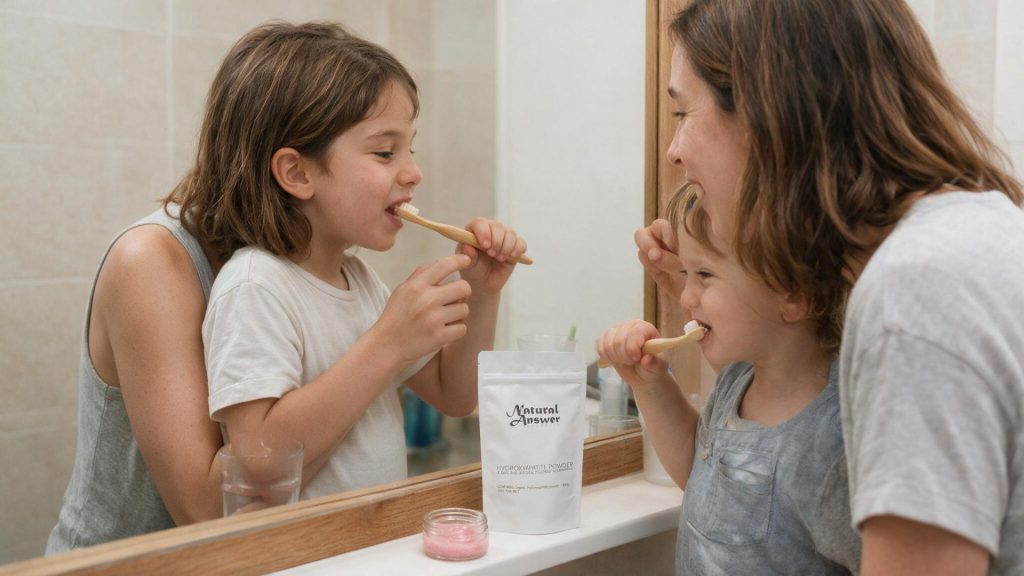
The best homemade toothpaste for kids uses hydroxyapatite powder — the same mineral children’s tooth enamel is made of. In clinical trials it has matched fluoride toothpaste at preventing cavities, and small amounts swallowed during brushing are not a concern. That matters, because young children swallow a good share of whatever toothpaste is on their brush. The strawberry recipe below takes five minutes, tastes like dessert, and takes most of the swallowing worry out of brushing.
The Worry Every Parent Has at the Bathroom Sink
Read the back of a tube of children’s fluoride toothpaste in the US and you will find a poison-control warning. EU labels are milder, but they still make the same point in fewer words: children six and under get a pea-sized amount, supervised, to minimise swallowing.
Now watch a three-year-old brush their teeth.
Toddlers and preschoolers have not mastered spitting. Young children swallow a good share of whatever is on the brush — flavored toothpaste makes it worse, because it tastes like candy. To be clear: swallowing a pea of fluoride toothpaste will not poison a child; the margin there is wide. The real issue is the small daily amount, repeated for years, while the adult teeth are forming under the gums.
Dental fluorosis comes from swallowing too much fluoride in total — from water, supplements, and toothpaste together — during those forming years. It is usually mild, faint white flecks, but it is permanent. Toothpaste is the source a parent can most easily control, and that is why pediatric guidance keeps the amounts so strict: a rice-grain smear before age three, a pea after.
So parents face an awkward choice: use fluoride and police every brushing session, or use a fluoride-free “training toothpaste” that typically contains no cavity-fighting ingredient at all — just glycerin, flavor, and hope.
There is a third option. Most parents have simply never heard of it.
The Swallow-Safe Ingredient That Actually Fights Cavities
Hydroxyapatite is the calcium phosphate mineral that makes up about 97% of tooth enamel — including your child’s brand-new adult teeth. Toothpaste made with it repairs early enamel damage by depositing the same mineral teeth are built from.
Here is why it fits children so well:
- Swallow-friendly. Hydroxyapatite is the same calcium phosphate mineral teeth are built from. Small amounts swallowed during brushing are not a concern — regulators reviewing it for oral care found ingested particles simply dissolve in the stomach. It is still toothpaste, not food, so keep the jar with the toothbrushes rather than the snacks. But there is no need to police every pea.
- It fights cavities for real. This is not a “training paste” placebo. In clinical trials, including a 2019 randomized trial by Schlagenhauf and colleagues, hydroxyapatite toothpaste matched fluoride toothpaste at preventing cavities. The research base is still small, so the fair summary is promising rather than settled — but that is far more than the nothing most fluoride-free kids’ pastes offer. Hydroxyapatite toothpaste has been on Japanese shelves since 1980, and Japan approved it as an anti-caries ingredient in 1993.
- It helps repair early damage. Studies suggest white spot lesions — the chalky patches that are the first visible stage of decay, and common around braces — can improve under nano-hydroxyapatite treatment as mineral is redeposited. If your dentist is monitoring white spots, tell them what you are using.
- No fluorosis risk from the toothpaste itself. There is no fluoride in it, so the jar by your sink is no longer part of your child’s total fluoride intake.
We cover the research on children specifically in our hydroxyapatite for children guide.
The Recipe: Strawberry “Dessert” Toothpaste Kids Ask For
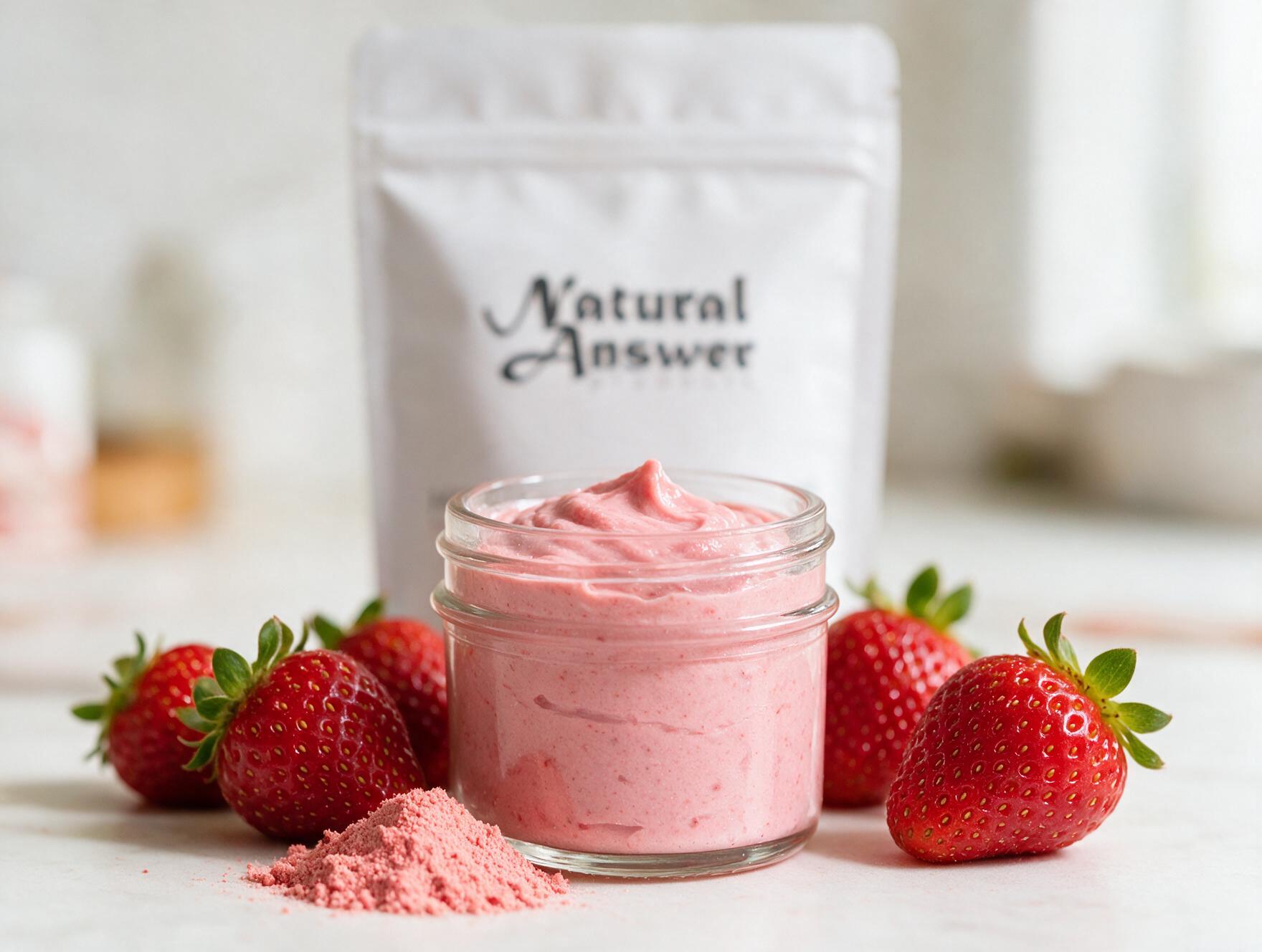
Commercial kids’ toothpaste wins compliance through flavor. This recipe uses the same trick with real ingredients: freeze-dried strawberry powder for taste and color, xylitol for sweetness (it also starves cavity bacteria), and hydroxyapatite for the actual dental work.
Ingredients
- 2 tablespoons coconut oil, softened to a spreadable consistency
- 1 tablespoon hydroxyapatite powder (40 micron — the sensible default grade for children)
- 1 teaspoon freeze-dried strawberry powder (pure fruit, no added sugar)
- 1 teaspoon fine xylitol
- 2–3 drops vanilla extract (optional)
Instructions
- Mash the softened coconut oil in a small bowl until creamy.
- Stir in the hydroxyapatite powder and xylitol until smooth.
- Add the strawberry powder and vanilla. Mix until the paste turns evenly pink.
- Spoon into a small glass jar with a lid. It keeps about two weeks at room temperature.
Let your child help make it. A four-year-old who stirred the pink toothpaste is a four-year-old who wants to use the pink toothpaste.
One safety note for pet households: xylitol is safe for humans in these amounts but toxic to dogs. Keep the jar out of tail-wagging range, or simply leave the xylitol out — the recipe works without it.
How much per age
- Under 2: a light smear on a soft brush, parent brushing
- 2–6 years: a small pea, supervised brushing
- 7+: a regular pea; they can manage it themselves
Brush twice a day for two minutes. Encourage spitting, but do not stress over what gets swallowed along the way. That is the whole point.
Making It Stick: Three Tips From the Trenches
- Do not announce a change. Put the jar by the sink and call it “your special strawberry toothpaste.” Framing beats explaining.
- Expect the no-foam question. Homemade paste does not foam, because foam comes from the detergent SLS. Tell them it is “ninja toothpaste — it works quietly.”
- Rotate flavors. Once strawberry gets old, our complete DIY guide has a chocolate version made with raw cacao that most kids treat as a minor miracle, plus five other recipes to grow into.
What About Cavities? The Honest Answer
No toothpaste — fluoride or otherwise — outbrushes a diet of juice and gummies plus skipped brushing. Hydroxyapatite gives your child a genuine remineralizing ingredient in a swallow-friendly form, but the fundamentals still carry the day: brush twice daily, keep sugar to mealtimes, and keep the regular dental checkups. Tell your dentist what you are using; many are pleasantly surprised to see it, and your child’s enamel over the following visits makes the case on its own.
FAQ
Q: Is homemade fluoride-free toothpaste safe for toddlers who swallow toothpaste?
A: Yes — this is exactly where hydroxyapatite shines. It is the same calcium phosphate mineral teeth are built from, and small amounts swallowed during brushing are not a concern: regulators reviewing it for oral care found ingested particles simply dissolve in the stomach. It is still toothpaste, not food — keep the jar with the toothbrushes, not the snacks — but a toddler swallowing their pea of paste is not a reason to worry.
Q: Does fluoride-free toothpaste actually prevent cavities in children?
A: Only if it contains a real active ingredient. Most commercial “training” pastes contain none. Hydroxyapatite-based paste does: in clinical trials it matched fluoride toothpaste at preventing cavities — a small but promising evidence base — and studies suggest it helps early white spot lesions remineralize.
Q: What age can my child start using hydroxyapatite toothpaste?
A: From the first tooth. Because small swallowed amounts are not a concern, there is no minimum age the way there is with fluoride. Use a light smear on a soft brush for babies and toddlers, and a small pea from around age two.
Q: Which hydroxyapatite grade should I use for kids — nano or 40 micron?
A: For young children, the 40 micron grade is the sensible default: gentle, budget-friendly, and easy to dose. Nano (60nm) particles are finer and penetrate deeper for repair, which can be useful if your dentist has flagged early white spots in an older child — but nano is also the grade EU regulators are still reviewing for finished toothpastes, which is one more reason to keep 40 micron as the family staple. See the nano vs 40 micron comparison for the details.
Learn more:
- Is Hydroxyapatite Safe for Children? The Research
- The Complete Hydroxyapatite DIY Toothpaste Guide — including the kid-favorite chocolate recipe
- Hydroxyapatite vs Fluoride: The Full Comparison