


Last updated: August 28, 2026
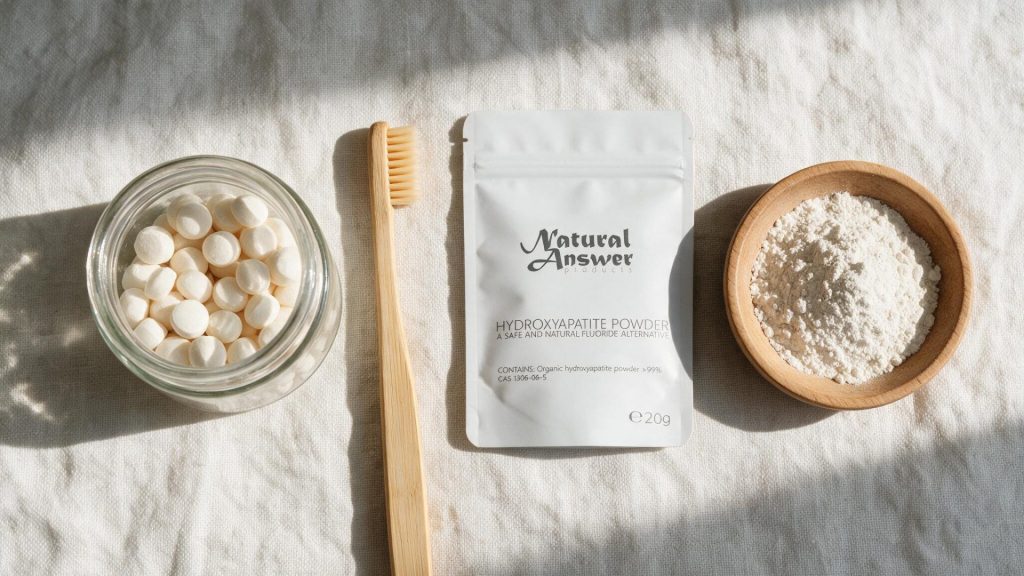
To make zero-waste toothpaste at home, press a simple dough of hydroxyapatite powder, baking soda, kaolin clay, and xylitol into small tablets and let them air-dry — or skip even that and brush with plain hydroxyapatite powder from a glass jar. Both methods eliminate the plastic tube entirely, and because hydroxyapatite is the mineral tooth enamel is made of, you keep the remineralization and cavity protection that most DIY and “eco” toothpastes lack — in clinical trials, hydroxyapatite toothpaste has performed as well as fluoride at preventing cavities.
The Tube Problem Nobody Solves at Checkout
A widely cited estimate puts the number of toothpaste tubes thrown away worldwide at around 1.5 billion a year — and nearly all of them go to landfill or incineration. Tubes are one of recycling’s hardest cases: multiple layers of plastic laminated together, often with a foil barrier in the middle, contaminated with leftover paste. Even the newer “recyclable” mono-material tubes mostly are not accepted by curbside programs in practice.
If you brush twice a day, you personally retire around three to four tubes a year. Multiply by a household and a lifetime, and the little tube by the sink turns out to be a steady plastic stream — one you cannot sort your way out of.
The good news: toothpaste is one of the easiest products in your bathroom to take zero-waste, because the effective part of toothpaste was never the tube, the foam, or the stripe. It is one mineral, and you can buy that mineral by itself.
First, Avoid the Zero-Waste Trap
Plenty of DIY and package-free toothpaste options exist — baking soda blends, charcoal powders, clay pastes, minimalist tabs. Most share one quiet weakness: they only clean. Nothing in them rebuilds the mineral your enamel loses to acid every day. Fluoride normally handles that repair job in commercial paste; strip it out and replace it with an abrasive, and your waste footprint improves while your enamel slowly runs a deficit.
The fix is hydroxyapatite (HAP) — the calcium phosphate mineral that makes up about 97% of tooth enamel. Sold as a pure powder, so there is no tube to begin with, it:
- remineralizes enamel with the same material teeth are built from — in clinical trials, hydroxyapatite toothpaste performed as well as fluoride at preventing cavities (a small but promising evidence base);
- reduces sensitivity by sealing exposed dentin tubules;
- is gentle enough for daily use, and small amounts swallowed while brushing are not a concern;
- sends no microplastics, SLS, or triclosan down the drain — unlike the residue many commercial pastes leave in the waterway.
In other words: the zero-waste option does not have to be the “worse but greener” option. Here it is arguably the upgrade. The science deep-dive lives in our hydroxyapatite vs fluoride guide.
The Recipe: DIY Hydroxyapatite Toothpaste Tablets
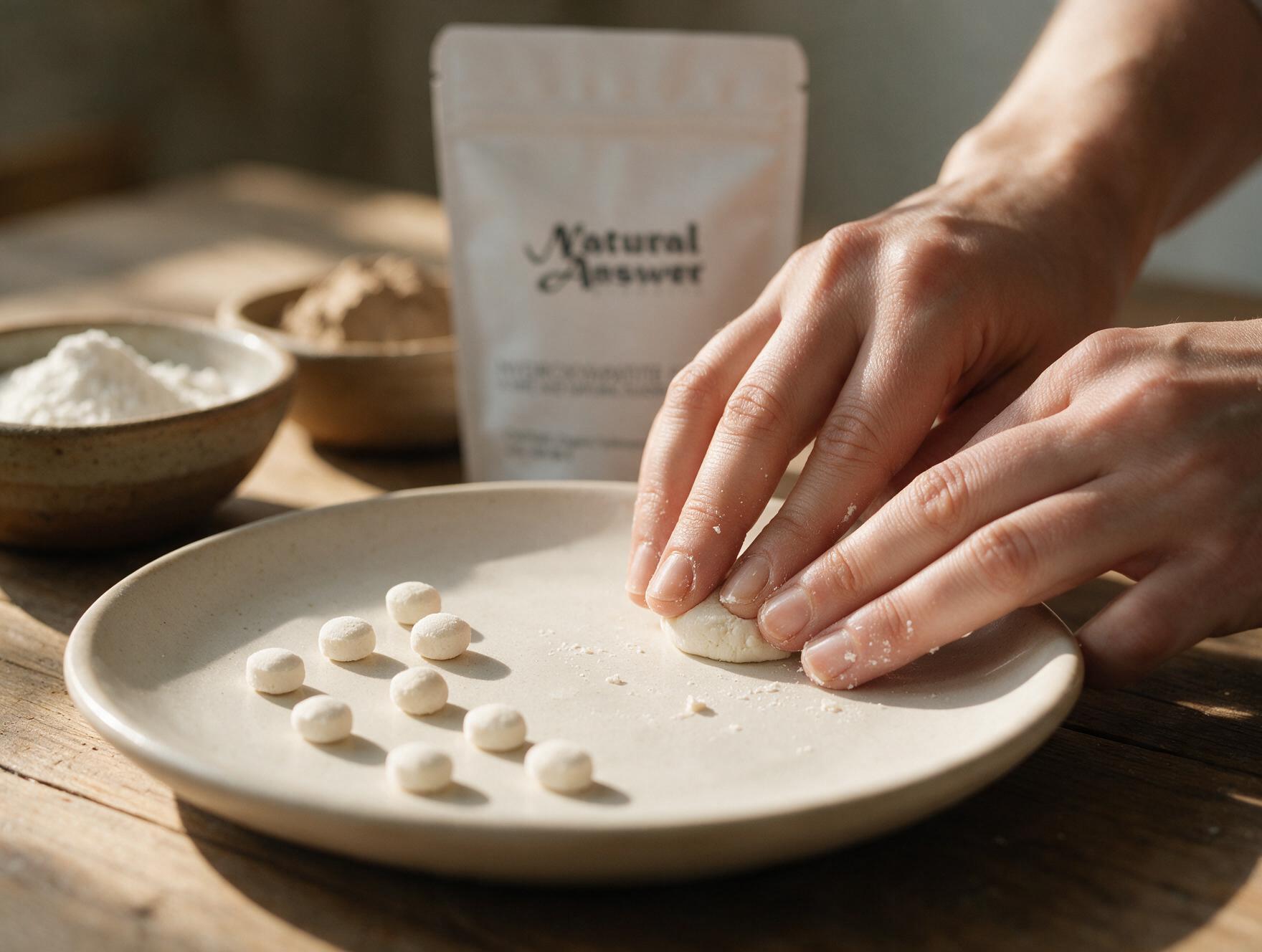
Tablets are the most travel-friendly, mess-free format in the zero-waste world — and the one thing shop-bought tabs rarely include is hydroxyapatite. Making your own fixes that, at a fraction of the price of boutique brands.
Ingredients (about 60 tablets)
- 2 tablespoons hydroxyapatite powder (40 micron is the right grade for tablets; if you also fight sensitivity, swap one teaspoon of it for the nano grade and keep the rest 40 micron)
- 2 tablespoons baking soda
- 1 tablespoon kaolin clay (white cosmetic clay — the binder)
- 1 teaspoon fine xylitol
- 8–10 drops peppermint essential oil
- Clean water, added drop by drop
Instructions
- Mix all the dry ingredients in a bowl. Use a wooden or silicone spoon.
- Add the peppermint oil, then water a few drops at a time, kneading until the mixture holds together like firm cookie dough. Less water is better — a wet dough dries slowly.
- Roll pea-sized balls, or press the dough flat and cut small squares. For a professional look, press portions into a silicone mini-mold.
- Air-dry on a plate for 24–48 hours until fully hard, turning once.
- Store in a sealed glass jar, out of reach of small children — the tablets look and taste like sweets, and they are a choking risk for under-sixes. Kept dry, they last for months. (Peppermint oil is also not recommended for children under six; make a mint-free batch for a family jar.)
How to use them
Pop one tablet in your mouth, chew it into a paste, brush with a wet toothbrush for two minutes, and spit. Skip the final rinse so the hydroxyapatite keeps working on your enamel. Two tablets a day means one batch lasts about a month — and your travel toiletry bag just lost its worst leaker.
The even simpler route: no tablets at all. Wet your brush, dip it into plain hydroxyapatite powder, brush. One ingredient, one glass jar, zero preparation. Many people try tablets first and settle on the dip-and-brush method within a month. More powder-based recipes — pastes, mouthwash, a kid-friendly chocolate version — are in our complete hydroxyapatite DIY guide.
Zero-Waste the Whole Routine
While you are at it, the rest of the sink is easy to convert:
- Brush: bamboo toothbrush, or an electric brush with replaceable heads (keeping a working electric brush is greener than binning it).
- Floss: silk or corn-fiber floss in a refillable glass dispenser.
- Mouthwash: make your own — a quarter teaspoon of 40 micron hydroxyapatite powder shaken into 200 ml of water with a pinch of xylitol does the job without the neon-blue bottle.
- Ingredients sourcing: baking soda, clay, and xylitol are all available in bulk or paper packaging. Buy the largest sizes you will realistically use; packaging-per-gram falls fast.
None of this asks for sacrifice. That is the real argument for zero-waste oral care: done right, you end up with fewer possessions, less plastic, lower cost per brushing — and an active ingredient most tubes do not even offer.
FAQ
Q: Are homemade zero-waste toothpaste tablets as good as regular toothpaste?
A: For cleaning, yes. For protection, it depends on the active ingredient. Tablets made only from baking soda and clay clean but cannot repair enamel. Add hydroxyapatite and you get remineralization and cavity prevention that, in clinical trials, matched fluoride toothpaste — in a format with no tube at all.
Q: How long do DIY toothpaste tablets last?
A: Fully dried and stored in a sealed glass jar away from moisture, homemade tablets keep for several months. The batch above (about 60 tablets) covers roughly a month of twice-daily brushing, so most people make a fresh batch monthly.
Q: What is the cheapest way to go zero-waste with toothpaste?
A: Plain powder, no recipe: wet your brush and dip it straight into 40 micron hydroxyapatite powder. There is nothing to make and nothing to dry. Expect a 30g pouch to last around two to four weeks if you dip straight into the powder, and several months if you mix it into a paste or tablets — dilution is what stretches it. Baking soda alone is cheaper still, but it is abrasive-only — it cleans without repairing anything.
Q: Is powder or tablet toothpaste more hygienic to share?
A: Tablets win for shared bathrooms and travel: each tablet is a single dose, so no one dips a brush into a communal jar. If you prefer powder, keep a small spoon in the jar and tip a dose onto your damp brush instead of dipping — that keeps the jar sanitary. Work calmly so you do not raise dust, especially with the fine nano grade.
Learn more:
- The Complete Hydroxyapatite DIY Toothpaste Guide — 6 more recipes including mouthwash and kids’ paste
- Hydroxyapatite vs Fluoride: The Full Comparison
- Nano vs 40 Micron Hydroxyapatite: Which Grade Fits You?