


Last updated: October 10, 2026
Introduction

What Causes Frizzy Hair? (And Why Your Shampoo Matters)
Frizz happens when the outer layer of your hair (the cuticle) lifts, allowing moisture from the air to penetrate the hair shaft. This causes the strand to swell and stick out.Common Frizz Triggers

Can Shampoo Bars Cause Frizz?
Short answer: Only if you choose the wrong type or live in hard water without adjusting.Two scenarios where bars cause frizz:1️⃣ Soap-Based Bars in Hard Water
Soap bars (made with lye) can react with hard water minerals, leaving a waxy residue if you skip the acidic rinse. This coats your hair, making it feel rough, straw-like, and frizzy.Solution: Follow every wash with an ACV rinse. Natural Answer bars are cold-process soap (pH 9-10), and the acidic rinse dissolves the mineral film and smooths the cuticle.2️⃣ Lack of Conditioning Ingredients

Best Ingredients for Frizz Control in Shampoo Bars
🧴 Moisturizing Oils (Seal the Cuticle)
Argan Oil ⭐⭐⭐- Lightweight, penetrates the hair shaft
- Rich in vitamin E and fatty acids
- Adds shine without weighing hair down
- Deeply hydrating, reduces protein loss
- Smooths the cuticle
- Heavy-duty moisture for very dry hair
- Seals the cuticle, locks in hydration
- Mimics scalp’s natural sebum
- Balances moisture without greasiness
- Penetrates deeply, strengthens hair
- High in omega-3s and vitamins A, D, E
🧬 Proteins (Strengthen & Smooth)
Hydrolyzed Silk Protein ⭐⭐⭐- Binds to the hair shaft, fills in gaps
- Creates a smooth, reflective surface
- Reduces breakage
- Main structural protein in hair
- Repairs damage, smooths cuticle
- Long-lasting frizz control
- Adds body without weight
- Improves elasticity and shine
- Thickens hair strands
- Increases moisture retention
💧 Humectants (Lock in Moisture)
Vegetable Glycerin ⭐⭐⭐- Draws moisture into the hair shaft
- Keeps hair hydrated throughout the day
- Penetrates the cuticle, retains moisture
- Adds shine and softness
- Lightweight hydration
- Soothes scalp, reduces static
- Natural humectant
- Adds slip (makes detangling easier)
🌿 Smoothing Botanicals
Marshmallow Root ⭐⭐⭐- Creates slip (easier detangling)
- Smooths the cuticle
- Mucilaginous (creates a smooth coating)
- Reduces friction, prevents frizz
- Natural gel-like coating
- Defines curls, controls flyaways
🧪 Gentle Surfactants (Clean Without Stripping)
saponified plant oils ⭐⭐⭐- Coconut-derived, ultra-gentle
- Creamy lather, doesn’t strip oils
- Plant-based, hypoallergenic
- Preserves natural moisture
- Mild, non-drying
- Safe for color-treated hair
🔥 Hard Water Fighters (Essential for Frizz-Prone Hair)
If you live in hard water, mineral buildup is likely making your frizz worse. Look for:Citric Acid ⭐⭐⭐- Binds to calcium and magnesium
- Removes existing buildup
- Balances pH for smoother cuticles
- Natural acidity that dissolves mineral film
- Adds shine, reduces buildup
- Absorbs minerals and excess oil
- Clarifies without stripping
- Synthetic chelator
- Very effective but not “natural”
How to Choose the Best Shampoo Bar for Frizzy Hair
Step 1: Identify Your Hair Type
| Hair Type | What You Need ||—————|——————-|| Fine, frizzy | Lightweight oils (argan, jojoba), silk protein, glycerin || Thick, coarse, frizzy | Heavy butters (shea, cocoa), coconut oil, keratin || Curly, frizzy | Slip ingredients (marshmallow root, flaxseed), shea butter, glycerin || Damaged, frizzy | Proteins (keratin, silk), argan oil, panthenol |Step 2: Check Your Water Hardness
Hard water? (White residue on faucets, soap doesn’t lather well)→ Must-have: an ACV rinse, plus citric acid or clay in your shampoo barSoft water?→ Focus on moisturizing oils and proteinsStep 3: Avoid Frizz-Causing Ingredients
❌ Sulfates (SLS, SLES) — Strip oils❌ High alcohol content (SD alcohol, alcohol denat) — Dries out hair⚠️ Soap-based bars without ACV rinse (cold-process soap + ACV rinse removes hard-water frizz triggers)❌ Synthetic fragrances — Can irritate and dry scalp—Top Shampoo Bar Formulas for Frizzy Hair (By Type)
🌟 Best All-Around Frizz Fighter
Formula:- saponified plant oils (cold-process soap)
- Argan oil + shea butter
- Silk protein
- Citric acid (for hard water)
- Panthenol
🌊 Best for Thick, Coarse, Frizzy Hair
Formula:- Cold-process soap
- Coconut oil + shea butter + cocoa butter
- Keratin
- Marshmallow root
- Glycerin
✨ Best for Fine, Frizzy Hair
Formula:- Cold-process soap
- Jojoba oil + argan oil (light oils only)
- Hydrolyzed silk protein
- Aloe vera
- Citric acid
🌀 Best for Curly, Frizzy Hair
Formula:- Cold-process soap
- Shea butter + coconut oil
- Flaxseed extract or marshmallow root
- Glycerin
- Panthenol
🩹 Best for Damaged, Frizzy Hair
Formula:- Cold-process soap
- Argan oil + avocado oil
- Keratin + wheat protein
- Panthenol
- Citric acid
How to Use Shampoo Bars for Maximum Frizz Control
✅ Pre-Wash Prep
1. Brush your hair (removes tangles, reduces breakage)2. Wet thoroughly with warm (not hot) water3. If hard water: Pre-rinse with diluted ACV (1 tbsp per cup water)✅ The Right Technique
Method 1: Direct Application1. Rub the bar directly on wet hair in downward strokes (following the cuticle direction)2. Focus on roots, let lather distribute through lengths3. Massage scalp gently (don’t rough up the cuticle)Method 2: Lather in Hands1. Create a lather in your palms2. Apply lather to hair (better for fine, frizz-prone hair)3. Work through gently✅ Rinse Properly
- Cold/cool final rinse seals the cuticle (reduces frizz)
- Rinse until water runs completely clear (leftover product = frizz)
- If hard water: Follow with ACV rinse (1 tbsp ACV per cup water, apply to mid-lengths and ends, leave 30 seconds, rinse)
✅ Post-Wash Care
1. Squeeze water out gently (don’t rub with towel)2. Microfiber towel or t-shirt (less friction than regular towels)3. Apply leave-in conditioner or oil (argan oil, jojoba) to damp hair4. Air dry or diffuse (blow-drying = more frizz unless using heat protectant)—Hard Water + Frizzy Hair: The Connection You’re Missing
If your frizz got worse after switching to shampoo bars, hard water is likely the culprit—not the bar itself.Why Hard Water Causes Frizz
1. Mineral coating: Calcium/magnesium stick to hair, creating a rough texture2. Cuticle lift: Buildup prevents cuticle from lying flat3. Dullness: Minerals block light reflection (hair looks frizzy AND dull)4. Soap scum: Soap reacts with minerals → waxy residue unless you use an acidic rinseSolutions
Option 1: Install a shower filter- Removes 90%+ of minerals
- One-time cost, long-term frizz reduction
- Best ROI for frizz-prone hair
- Use an ACV rinse, or look for citric acid or sodium citrate in the bar
- Weekly clarifying washes
- After every wash: 1 tbsp ACV per cup water
- Spray on mid-lengths and ends, leave 30 seconds, rinse
- Removes mineral buildup, restores pH
Shampoo Bar Transition Period: Is Frizz Normal?
Yes, some people experience frizz during the first 2-4 weeks when switching from liquid shampoo to bars.Why It Happens
1. Scalp detox: Your scalp is adjusting oil production2. Silicone removal: Liquid shampoos often contain silicones (create fake smoothness). When they wash out, hair feels different3. Hard water buildup: If you were using sulfate shampoos, they were stripping minerals (and everything else). Bars are gentler, so existing buildup becomes noticeableHow to Minimize Transition Frizz
- Start with a clarifying wash (removes silicones and buildup)
- Use ACV rinses (helps with pH adjustment)
- Be patient (most frizz resolves after 3-4 washes)
- Deep condition weekly (extra moisture during adjustment)
Natural Answer Products: Frizz-Fighting Formulas
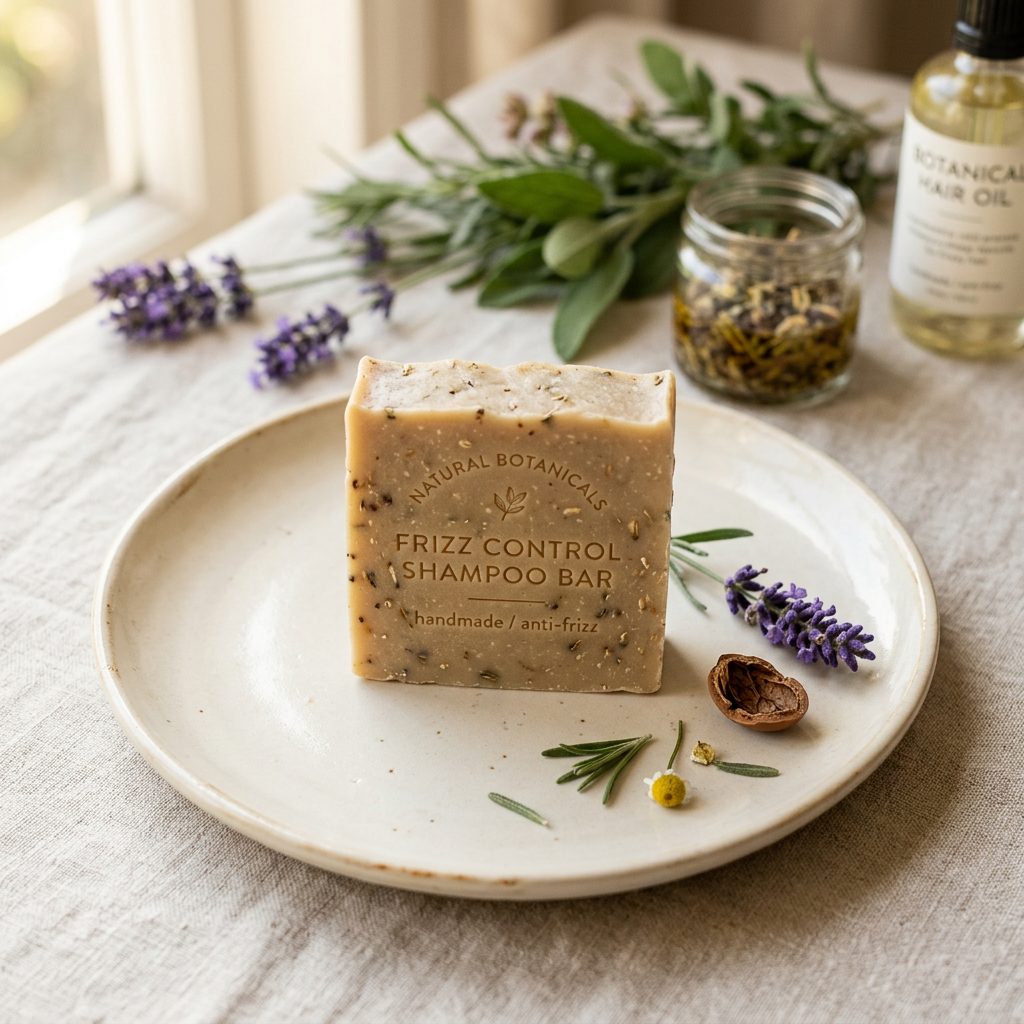
Our shampoo bars are designed to tackle frizz at the source:✅ No sulfates — Gentle cleansing preserves natural oils✅ Moisturizing oils (coconut, shea butter) — Smooth and hydrate✅ Hard water-friendly — Formulated for European water (often high in minerals)✅ No palm oil — Eco-friendly, high-quality ingredients✅ Vegan & cruelty-free — No animal testingRecommended for frizzy hair:- Moisturizing formulas (coconut oil, shea butter)
- Hard water defense (if you live in a mineral-heavy area)
Frequently Asked Questions
Q: Will shampoo bars make my frizzy hair worse?A: Not if you choose a generously superfatted bar and finish with an acidic rinse. Hard water can cause frizz—use ACV rinses or a shower filter.Q: Can I use shampoo bars on curly, frizzy hair?A: Absolutely! Look for bars with shea butter, marshmallow root, and glycerin. These add slip and moisture, which curls need.Q: How often should I wash frizzy hair with shampoo bars?A: 2-3 times per week for most people. Overwashing strips oils, making frizz worse. Use a conditioner or leave-in between washes.Q: Do I need conditioner after using a frizz-control shampoo bar?A: Usually, yes. Even the most moisturizing bars benefit from a conditioner (liquid or bar). Focus on mid-lengths and ends.Q: Can shampoo bars help with humidity frizz?A: Yes, by hydrating hair and smoothing the cuticle. Well-moisturized hair absorbs less humidity. Pair with anti-frizz serums or oils.Q: What if my hair feels waxy/frizzy after using a shampoo bar?A: Likely hard water buildup. Try an ACV rinse after every wash. If it persists, add a weekly clarifying wash.—Conclusion: Smooth, Frizz-Free Hair Starts With the Right Bar
Frizzy hair isn’t a life sentence—it’s a hydration, cuticle, and hard water problem. The best shampoo bars for frizz:✅ Contain moisturizing oils (argan, coconut, shea butter)✅ Include smoothing proteins (silk, keratin)✅ Use gentle cleansers (saponified plant oils)✅ Fight hard water (citric acid, ACV rinse)✅ Skip sulfates and finish with an ACV rinseYour action plan:1. Check your water hardness (test kit or look for mineral deposits)2. Choose a bar tailored to your hair type (see formulas above)3. Use ACV rinses (if hard water is an issue)4. Be patient during the 2-4 week transition5. Deep condition weekly for extra frizz controlWith the right shampoo bar and technique, you can trade the frizz for smooth, shiny, manageable hair—naturally.—Ready to tame your frizz? Explore our collection of moisturizing, frizz-fighting shampoo bars — formulated with natural oils, no sulfates, and hard water defense built in.Ready to Make the Switch?
Ready to experience the benefits of a natural shampoo bar? Browse our complete collection of cold-processed soap bars — each one made with 6 organic plant oils and zero synthetic additives.
Related guides: