


Last updated: October 9, 2026
Introduction
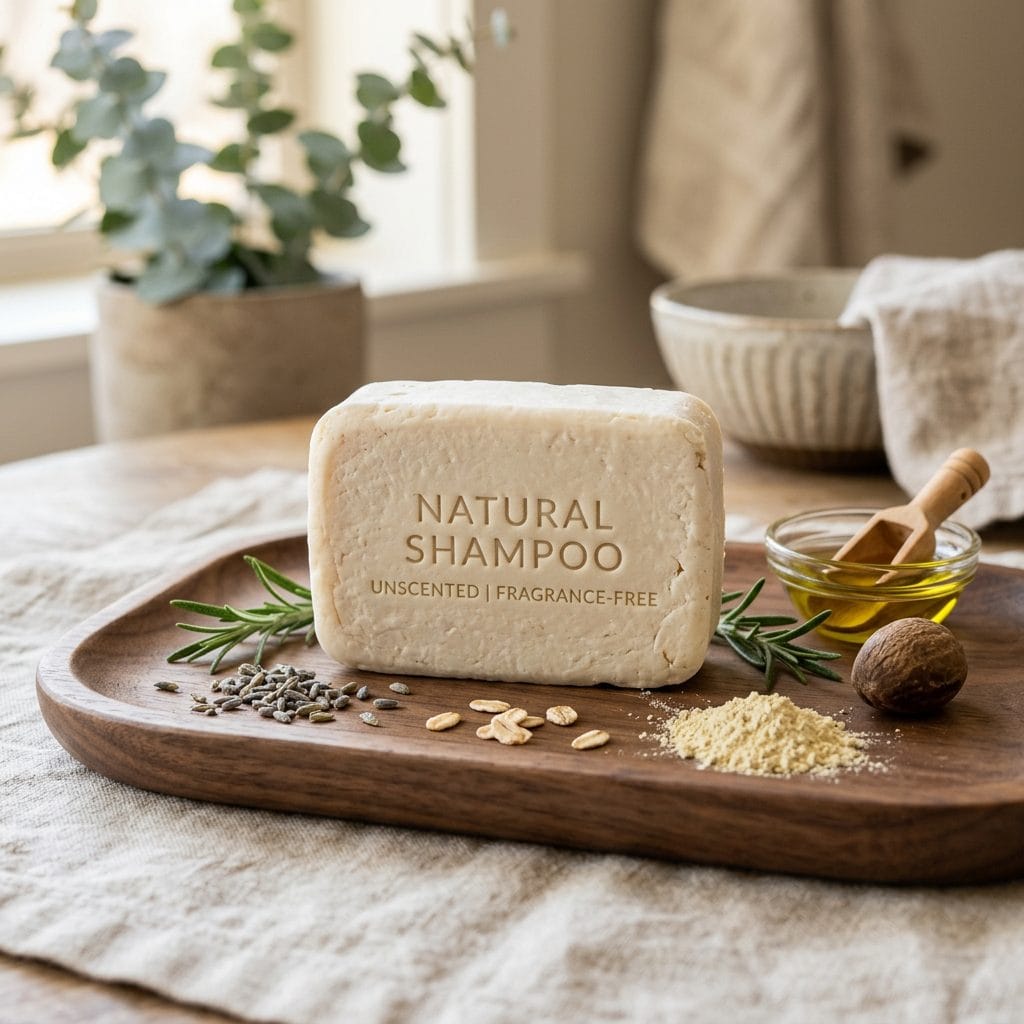
If you have sensitive skin, allergies, or simply prefer no added scent, finding truly fragrance-free shampoo bars can be challenging. Many “unscented” products still contain masking fragrances or essential oils that can trigger reactions.
This guide explains the difference between unscented shampoo bars and fragrance-free shampoo bars, why you might need them, what ingredients to look for (and avoid), and how to choose the best option for your needs.
—
Unscented vs. Fragrance-Free: What’s the Difference?
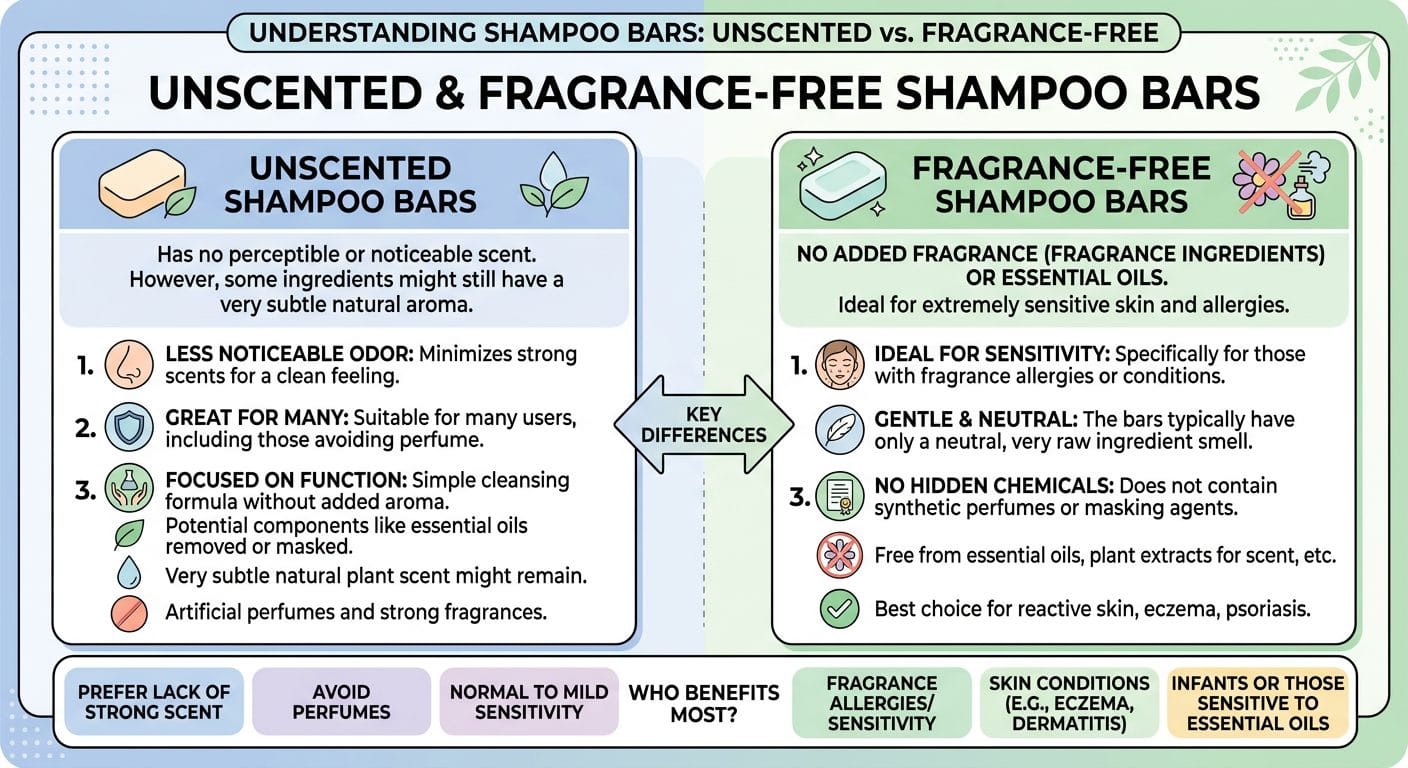
Fragrance-Free
- Zero added fragrance ingredients
- No essential oils, no synthetic perfumes, no “masking” scents
- May have a very faint natural scent from base ingredients (oils, butters)
- Best for: Severe allergies, eczema, pregnancy, chemotherapy patients
Unscented
- No *noticeable* scent to the end user
- May contain “masking fragrances” to neutralize base ingredient smells
- Still contains fragrance chemicals (just not detectable as “perfume”)
- Best for: People who prefer neutral smell (but don’t have allergies)
For true sensitivity, always choose fragrance-free.
—
Who Needs Fragrance-Free Shampoo Bars?
1. Sensitive Scalp & Skin Conditions
- Eczema (atopic dermatitis)
- Seborrheic dermatitis
- Psoriasis
- Contact dermatitis
- Rosacea on the scalp
Fragrances are the #1 cause of cosmetic allergic reactions.
2. Allergies & Asthma
- Essential oil allergies (common: lavender, tea tree, peppermint)
- Synthetic fragrance allergies
- Asthma triggered by strong scents
- Multiple Chemical Sensitivity (MCS)
3. Pregnancy & Breastfeeding
- Some essential oils are contraindicated during pregnancy
- Heightened scent sensitivity (pregnancy rhinitis)
- Concern about baby exposure through skin contact
4. Chemotherapy & Medical Treatments
- Chemotherapy often causes severe scent sensitivity
- Immune-compromised patients avoid potential irritants
- Post-radiation scalp sensitivity
5. Babies & Children
- Delicate skin prone to reactions
- Pediatricians often recommend fragrance-free products until age 2+
6. Preference for Natural Scent
- Don’t want artificial perfume smell
- Prefer hair to smell neutral
- Want fragrance from perfume/cologne (not shampoo competing)
7. Professional Environments
- Scent-free workplace policies (hospitals, schools, offices)
- Food industry workers (scent contamination concerns)
- Close-contact professions (massage therapists, dentists)
—
What to Look For in Fragrance-Free Shampoo Bars
1. Gentle Surfactants
Choose cold-process soap bars with an acidic ACV rinse for sensitive scalps:
- Saponified organic plant oils (like NAP bars, pH 9-10): no synthetic surfactants or detergents
- Follow with an ACV rinse (1 tbsp per cup water): closes cuticles and soothes the scalp after washing
2. Minimal Ingredient List
- Fewer ingredients = fewer potential allergens
- Simple formulas reduce reaction risk
- Look for recognizable ingredients
3. pH-Balanced (4.5-5.5)
- Acidic pH matches hair’s natural state
- Closes cuticles, reduces frizz
- Gentler on sensitive scalps
4. Moisturizing (But Not Comedogenic)
- Shea butter: Deep conditioning, low comedogenic rating
- Coconut oil: Antimicrobial, lightweight
- Glycerin: Humectant, draws moisture
- Avoid: Heavy oils if scalp is acne-prone (jojoba, argan OK)
5. Free From Common Irritants
❌ No synthetic fragrances
❌ No essential oils
❌ No parabens
❌ No sulfates (SLS/SLES)
❌ No dyes/colorants
❌ No phenoxyethanol (preservative some react to)
6. Third-Party Testing
- Dermatologist-tested
- Hypoallergenic claims (though not regulated)
- Patch test recommended label
—
Hard Water & Fragrance-Free Bars
If you live in a hard water area AND need fragrance-free, you face a double challenge:
1. Hard water minerals (calcium/magnesium) create buildup
2. Soap-based bars create soap scum → itch, irritation, flaking
3. Sensitive scalp can’t tolerate harsh clarifying treatments
Solution: Cold-process soap bars with ACV rinse (dissolves mineral residue after washing).
Why Cold-Process Soap Bars Work in Hard Water:
- Cold-process soap can form soap scum with hard water minerals
- ACV rinse (diluted apple cider vinegar) dissolves soap scum and mineral buildup after washing
- Result: clean, residue-free hair even in hard water — without switching to syndet bars
Hard Water Cities (180-300+ ppm):
- UK: London, Birmingham, Oxford, Brighton
- Netherlands: Amsterdam, Rotterdam, Utrecht, The Hague
- Belgium: Brussels, Antwerp, Ghent
- Germany: Munich, Frankfurt, Cologne, Stuttgart
- US: Phoenix, Las Vegas, San Antonio, Indianapolis
If you have hard water + sensitive scalp: Use a detergent bar bar + finish with diluted apple cider vinegar rinse (removes mineral buildup gently).
—
How to Read Ingredient Labels for Hidden Fragrances
Red Flags on “Fragrance-Free” Products:
1. “Fragrance” or “Parfum” — umbrella term for 100+ undisclosed chemicals
2. Essential oils: lavender oil, tea tree oil, peppermint oil, eucalyptus, rosemary, etc.
3. “Natural fragrance” — still contains scent compounds
4. “Masking fragrance” — neutralizes base smell (not truly fragrance-free)
5. Botanical extracts (if near end of ingredient list): Often added for scent, not function
Safe Ingredients That Smell (But Aren’t Added Fragrance):
These ingredients have natural scents but aren’t fragrance additives:
- Coconut oil — mild coconutty smell
- Shea butter — slight nutty scent
- Cocoa butter — chocolatey aroma
- Olive oil — faint olive smell
If the bar smells like its base ingredients (mild coconut, shea butter), that’s natural—not added fragrance.
—
How to Use Fragrance-Free Shampoo Bars
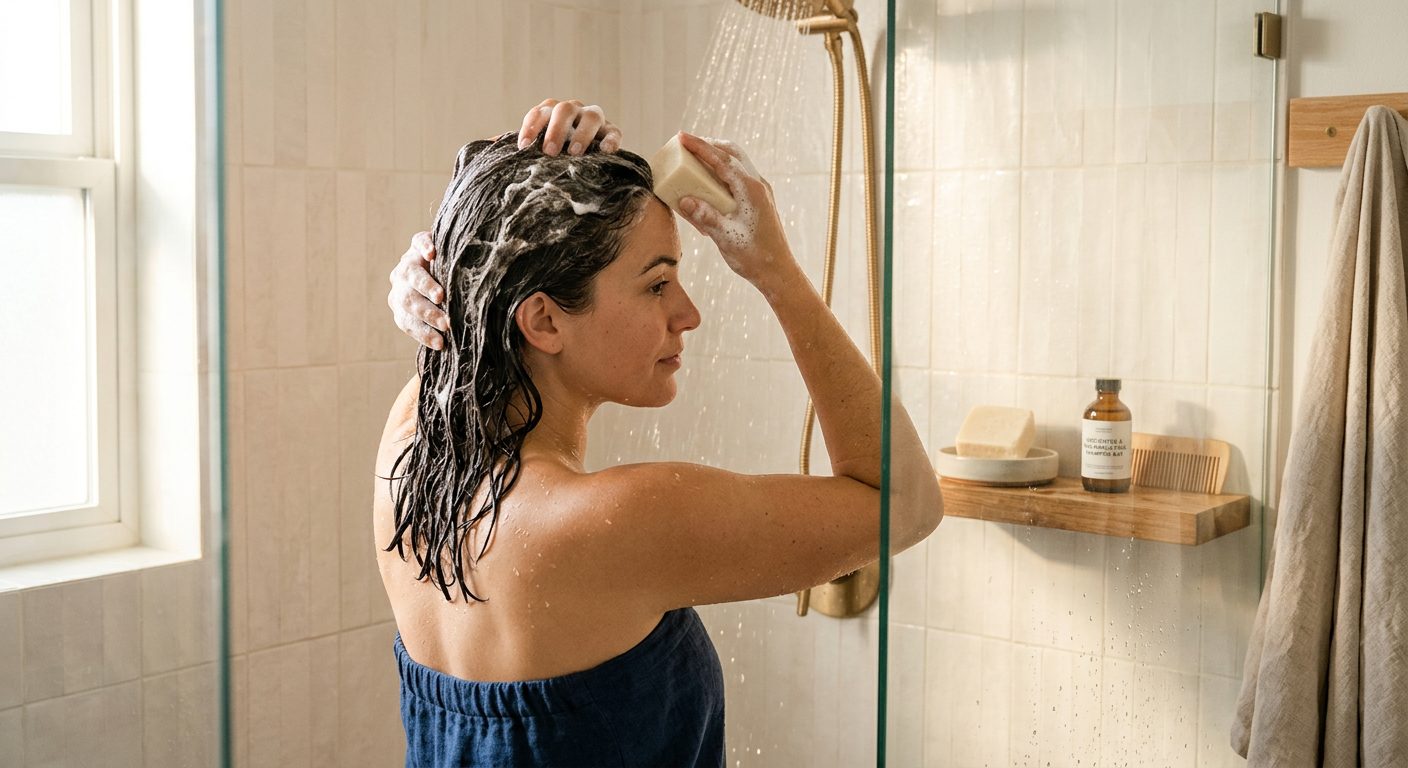
1. Wet Hair Thoroughly
Lukewarm water is best for sensitive scalps (hot water irritates).
2. Rub Bar Gently on Hair
- Create lather from roots to ends
- Don’t over-scrub—gentle circular motions
- Focus on scalp (where oil and dirt accumulate)
3. Massage Scalp
- 30-60 seconds gentle massage
- Stimulates blood flow
- Reduces stress (which worsens eczema/psoriasis)
4. Rinse Extremely Thoroughly
- Spend 2-3 minutes rinsing
- Residue = #1 cause of irritation on sensitive scalps
- In hard water areas: rinse even longer
5. Optional ACV Rinse (Hard Water)
- Mix 1 tablespoon apple cider vinegar + 1 cup water
- Pour over hair after shampoo
- Rinse with cool water
- Removes mineral buildup, balances pH
6. Pat Dry (Don’t Rub)
- Use microfiber towel (gentler than cotton)
- Blot excess water—don’t rub vigorously
- Reduces friction, prevents irritation
—
Patch Testing Fragrance-Free Products
Even fragrance-free bars can cause reactions in highly sensitive individuals. Always patch test:
How to Patch Test:
1. Wet a small section of inner forearm
2. Rub shampoo bar gently to create lather
3. Leave on skin for 10 minutes
4. Rinse thoroughly
5. Wait 24-48 hours
6. Check for redness, itching, swelling, or rash
If reaction occurs: Don’t use the product. Try a different formula.
If no reaction: Proceed with scalp use (but still monitor for delayed reactions).
—
Common Mistakes with Fragrance-Free Shampoo Bars
1. Assuming “Natural” Means Safe
Essential oils are natural—but highly allergenic for many people. “Natural” ≠ hypoallergenic.
2. Not Reading Beyond “Unscented”
Check ingredients. “Unscented” can still contain masking fragrances.
3. Over-Washing Sensitive Scalps
Washing daily strips natural oils → dryness → irritation. Try 2-3x/week instead.
4. Using Soap Bars Without the ACV Rinse
Cold-process soap bars (pH 9-10) are alkaline — follow with an ACV rinse to close cuticles and calm the scalp. Natural Answer’s formulation is mild and superfatted for sensitive skin.
5. Skipping ACV Rinse in Hard Water
Mineral buildup causes flaking that mimics dandruff → people assume the bar doesn’t work. ACV rinse solves this.
6. Giving Up Too Soon
Transition period = 2-4 weeks. Scalp needs time to adjust oil production.
—
Fragrance-Free Bars for Different Hair Types
Fine/Thin Hair
- Look for rice protein (volumizing)
- Avoid heavy oils (weigh down fine hair)
- Lightweight formula
Thick/Coarse Hair
- Shea butter + coconut oil (deep moisturizing)
- May need conditioner bar on ends
Curly/Coily Hair
- High-moisture formula (curls need extra hydration)
- Avoid sulfates (strip natural oils)
- Finger-detangle only (wide-tooth comb on wet hair)
Color-Treated Hair
- pH 4.5-5.5 (preserves color)
- Gentle surfactants (SCI/SLSA)
- No harsh clarifiers
Dry/Damaged Hair
- Shea butter, coconut oil, glycerin
- May need leave-in conditioner
- Limit heat styling
Oily Hair
- Lightweight formula (avoid heavy butters)
- Focus lather on scalp only
- May wash more frequently (3-4x/week)
—
Natural Answer Shampoo Bars: Fragrance Options
At Natural Answer, we offer:
✅ Unscented option (no essential oils, no synthetic fragrance)
✅ True cold process soap (saponified organic oils, pH 9-10)
✅ Pair with your own ACV rinse (hard water solution)
✅ Minimal ingredient list (reduces allergen exposure)
✅ Vegan, cruelty-free, palm oil-free
✅ Dermatologist-tested (safe for sensitive skin)
✅ Plastic-free packaging
[Shop Fragrance-Free Shampoo Bars →](https://naturalanswerproducts.com/)
—
Frequently Asked Questions
Do fragrance-free shampoo bars smell bad?
No. They have a very faint natural scent from base ingredients (shea butter, coconut oil), but no added perfume. Hair smells neutral/clean after use.
Can I use fragrance-free bars if I don’t have allergies?
Yes! Many people prefer no competing scents (they want hair to smell like their perfume, not shampoo).
Are essential oils safer than synthetic fragrances?
No. Essential oils are common allergens (lavender, tea tree, peppermint especially). For true sensitivity, avoid both.
Will fragrance-free bars work in hard water?
Yes—if they’re detergent-based. Soap bars struggle in hard water. Always finish with ACV rinse to remove mineral buildup.
How long do fragrance-free shampoo bars last?
Same as scented bars (60-80 washes for one person). Store in a dry, well-ventilated spot between uses.
Can I use fragrance-free bars on babies?
Yes—many pediatricians recommend fragrance-free products for babies 0-24 months. Check ingredients for baby-safe formulas.
Do fragrance-free bars lather as well?
Yes. Lather comes from surfactants (SCI/SLSA), not fragrance. You’ll get the same rich foam.
Can I add my own essential oils to fragrance-free bars?
Technically yes, but it defeats the purpose of fragrance-free. If you want scent, just buy a scented bar.
—
When to See a Dermatologist
Consult a dermatologist if you experience:
- Persistent itching, redness, or burning after using fragrance-free bars
- Severe flaking, scaling, or crusting
- Hair loss or bald patches
- Oozing, weeping, or infected scalp lesions
- Symptoms that don’t improve after 4 weeks of gentle care
Fragrance-free products can’t cure underlying conditions (eczema, psoriasis, seborrheic dermatitis)—but they won’t make them worse.
—
Bottom Line
Fragrance-free shampoo bars are essential for anyone with sensitive skin, allergies, or scent sensitivities. Choose cold-process soap bars with minimal ingredients, pair with an ACV rinse in hard water, and always patch test before full use.
Your scalp deserves gentle, effective cleansing—without irritation.
—
Shop Natural Answer Fragrance-Free Shampoo Bars
*Handmade. Vegan. Palm oil-free. Designed for sensitive skin and European hard water.*