


Last updated: October 13, 2026
Introduction

Pregnancy transforms your body in countless ways—including your hair. Between hormonal surges, increased sensitivity, and heightened awareness of what you’re putting on your skin, choosing the right shampoo becomes more complex.
If you’re considering switching to (or continuing with) shampoo bars during pregnancy, you’re not alone. Many expecting parents look for pregnancy safe shampoo bars and other cleaner, more natural hair care options. But are shampoo bars safe? And which ingredients should you avoid?
This guide covers everything you need to know about using shampoo bars safely during pregnancy, from ingredient red flags to how hormonal changes affect your hair.
Are Shampoo Bars Safe During Pregnancy?
Short answer: Yes, most shampoo bars are safe during pregnancy—especially those made with natural, gentle ingredients.
Why shampoo bars can be a good choice:
- Transparent ingredients — Unlike liquid shampoos with long chemical lists, quality shampoo bars typically contain fewer, recognizable ingredients
- No harmful preservatives — Because they’re solid, shampoo bars don’t need parabens or formaldehyde-releasing preservatives common in liquid products
- Palm oil-free options — Reduces exposure to potential contaminants from palm oil production
- Sulfate-free formulas — Gentler on sensitive scalps (common during pregnancy)
- Fragrance control — Many bars use essential oils instead of synthetic fragrances, reducing allergen exposure
The key: Choose bars specifically formulated without pregnancy-unsafe ingredients (see next section).
Ingredients to Avoid During Pregnancy
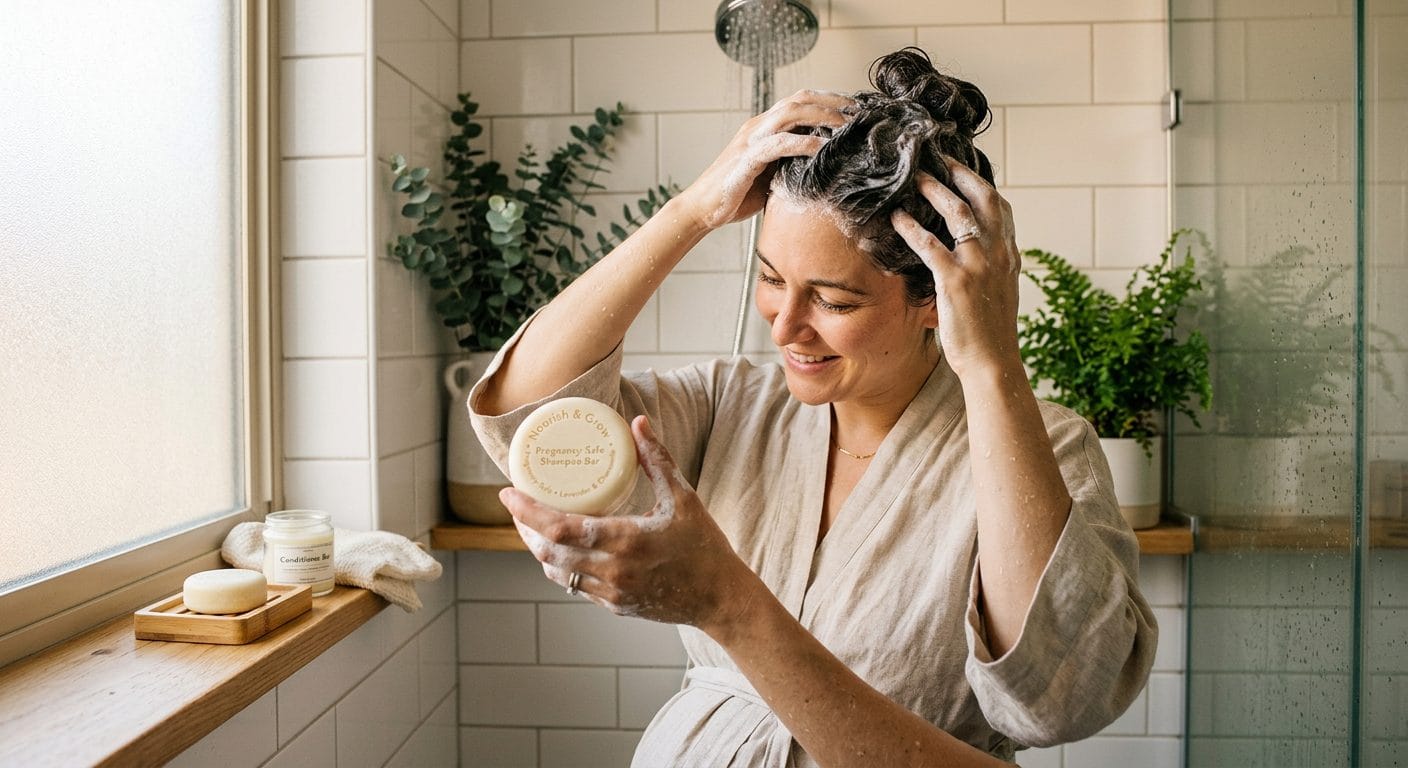
While most shampoo bar ingredients are safe, a few should be avoided or used cautiously during pregnancy:
❌ Definite No-Nos
1. Essential Oils to Avoid:
- Rosemary — May stimulate uterine contractions (especially in first trimester)
- Sage & Clary Sage — Can affect hormone levels
- Cedarwood — May stimulate menstruation
- Basil — High camphor content
- Wintergreen — Contains methyl salicylate (similar to aspirin)
- Camphor — Potentially toxic in high doses
2. Chemical Ingredients:
- Coal tar — Linked to birth defects (rare in shampoo bars)
- Formaldehyde — Avoid bars with DMDM hydantoin, diazolidinyl urea, or quaternium-15
- Phthalates — Often hidden in “fragrance” (choose phthalate-free)
- Triclosan — Disrupts hormones (banned in some countries)
3. High-Salicylate Ingredients:
- Willow bark extract — Natural source of salicylic acid
- Beta hydroxy acids (BHA) — In high concentrations
⚠️ Use With Caution
Moderately Safe Essential Oils (in low concentrations, after first trimester):
- Lavender (small amounts)
- Chamomile (German chamomile preferred)
- Tea tree (1% or less)
- Peppermint (can be cooling but use sparingly)
The rule: Always check with your healthcare provider if you’re unsure about specific ingredients, especially if you have pregnancy complications.
What to Look For in Pregnancy-Safe Shampoo Bars
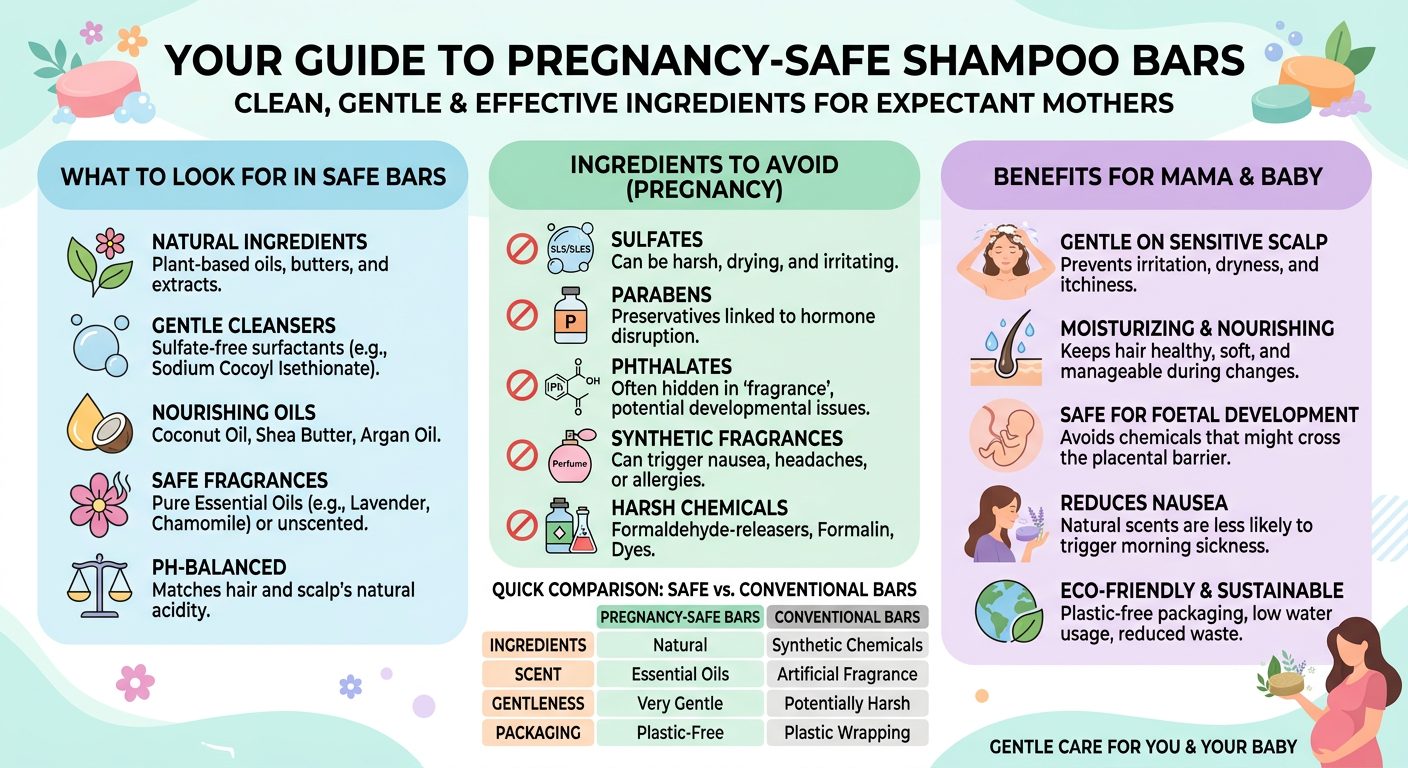
✅ Ideal Ingredients
Gentle Cleansers:
- Sodium cocoyl isethionate (SCI) — Mild, coconut-derived surfactant
- Decyl glucoside — Plant-based, ultra-gentle
- Coco glucoside — Derived from coconut and fruit sugars
- Sodium coco sulfate — Gentler than SLS, coconut-based
Nourishing Oils:
- Coconut oil — Moisturizing, safe during pregnancy
- Olive oil — Rich in antioxidants
- Shea butter — Deeply hydrating
- Cocoa butter — Adds shine and softness
- Jojoba oil — Balances scalp oil production
Pregnancy-Safe Botanicals:
- Oat extract — Soothes sensitive scalps
- Aloe vera — Calming and hydrating
- Calendula — Gentle, anti-inflammatory
- Chamomile (German) — Mild, soothing
- Marshmallow root — Adds slip, detangles
Safe Essential Oils (in moderation):
- Citrus oils (sweet orange, lemon, grapefruit) — Uplifting, generally safe
- Ylang ylang — Balances oil, safe in low doses
- Geranium — Hormone-balancing (after first trimester)
How Pregnancy Changes Your Hair (And What It Means for Shampoo Choice)
First Trimester (Weeks 1-12)
What happens:
- Increased sebum production (oilier scalp)
- Heightened sensitivity to smells
- Possible morning sickness triggered by strong scents
Shampoo bar strategy:
- Choose unscented or lightly scented bars (avoid strong essential oils)
- Look for oil-balancing ingredients (clay, citrus)
- Opt for gentle, sulfate-free formulas to avoid irritating sensitive scalps
Second Trimester (Weeks 13-26)
What happens:
- Hair often becomes thicker, shinier (the “pregnancy glow”)
- Scalp sensitivity may decrease
- Increased blood flow strengthens hair follicles
Shampoo bar strategy:
- You can experiment more with different bars
- Focus on nourishing oils (coconut, olive, shea butter) to enhance shine
- Hard water areas: Use clarifying bars occasionally to prevent buildup (minerals can dull the glow)
Third Trimester (Weeks 27-40)
What happens:
- Hair continues to thicken (fewer hairs shed)
- Scalp may become slightly oilier again
- You might feel overheated (cool, refreshing scents help)
Shampoo bar strategy:
- Avoid overheating essential oils (rosemary, cinnamon)
- Choose cooling botanicals (mint in low doses, cucumber)
- Prep for postpartum hair changes (see below)
Postpartum Considerations
What to expect:
- Hair shedding starts 3-6 months postpartum (telogen effluvium)
- Hormone fluctuations may change hair texture
- Scalp sensitivity may return (especially if breastfeeding)
Shampoo bar adjustments:
- Switch to volumizing or strengthening bars (biotin, keratin, rice protein)
- Continue avoiding harsh sulfates (postpartum hair is fragile)
- If breastfeeding: Still avoid rosemary, sage, and high-dose essential oils (they can pass through milk)
Hard Water + Pregnancy: A Double Challenge
If you live in a hard water area, pregnancy can make mineral buildup worse:
Why it’s trickier during pregnancy:
- Hormonal changes increase oil production → combines with minerals → faster buildup
- Sensitive scalps react more to waxy residue
- Morning sickness makes it harder to tolerate “adjustment periods”
Solutions:
- Use a water softener or filter on your shower (worth the investment)
- Apple cider vinegar rinse (1 tbsp per cup of water) after shampooing
- Choose shampoo bars formulated for hard water (with a chelator like citric acid)
- Clarify weekly with a gentle clay-based bar
Hard water ingredients that help:
- citric acid — Binds to minerals
- Clay (kaolin, bentonite) — Absorbs buildup
- Vinegar powder — Natural acidifier
Recommended Shampoo Bar Ingredients for Pregnancy
| Hair Type | Ideal Ingredients | Avoid |
|—————|———————-|———–|
| Oily | Clay, citrus oils, tea tree (1%), SCI | Rosemary, heavy butters |
| Dry | Shea butter, coconut oil, olive oil, marshmallow root | Sulfates, high-clay content |
| Sensitive Scalp | Oat extract, aloe vera, chamomile, unscented | Synthetic fragrances, high essential oil % |
| Normal | Balanced oils (jojoba, argan), gentle surfactants | Harsh detergents |
| Hard Water | Citric acid, vinegar powder, clay, or an ACV rinse | Skipping the rinse step (lets minerals build up) |
How to Test a New Shampoo Bar During Pregnancy
Patch test first:
- Rub the bar on your inner forearm
- Wait 24 hours
- Check for redness, itching, or irritation
Why this matters during pregnancy:
- Your immune system is slightly suppressed (to protect the baby)
- Skin is more reactive to allergens
- Hormones increase sensitivity
If you react:
- Stop use immediately
- Rinse thoroughly with cool water
- Try a simpler formula (fewer ingredients = easier to identify triggers)
Natural Answer Products: Pregnancy-Safe?
Our shampoo bars are formulated with:
- ✅ Cold-process soap (plant oils saponified with lye — no synthetic surfactants or SCI)
- ✅ Natural oils (coconut, olive, shea butter)
- ✅ No palm oil (reduces potential contaminants)
- ✅ No parabens, sulfates, or synthetic fragrances
- ✅ Essential oil blends designed for sensitivity
Pregnancy-friendly options:
- Unscented bars — Zero essential oils (safest choice)
- Citrus-scented bars — Gentle, uplifting (orange, lemon)
- Hard water formula — Tackles mineral buildup without harsh chemicals
Always consult your doctor if you have concerns about specific ingredients.
DIY Pregnancy-Safe Shampoo Bar Recipe (Optional)
If you’re feeling crafty (and have time before the baby arrives), here’s a simple, pregnancy-safe recipe:
Ingredients:
- 100g sodium cocoyl isethionate (SCI powder)
- 30g coconut oil
- 20g shea butter
- 10g jojoba oil
- 5g vegetable glycerin
- 2g citric acid (for hard water)
- Optional: 5 drops sweet orange essential oil (after first trimester)
Instructions:
- Melt SCI, coconut oil, and shea butter in a double boiler
- Remove from heat, stir in jojoba oil, glycerin, citric acid
- Add essential oil (if using) once cooled slightly
- Pour into soap molds
- Let set 24-48 hours
- Cure for 1 week before use
Note: This is a basic recipe. For best results, research proper shampoo bar-making techniques or consult a professional formulator.
Frequently Asked Questions
Q: Can I use shampoo bars in the first trimester?
A: Yes, but choose unscented or lightly scented options (avoid rosemary, sage, cedarwood). Stick to gentle, natural ingredients.
Q: Will shampoo bars strip my hair during pregnancy?
A: Not if you choose sulfate-free, oil-rich formulas. Pregnancy hair is often stronger and shinier, so stripping is less of a concern—but gentle is still better.
Q: Can essential oils in shampoo bars harm my baby?
A: In small amounts (typical for shampoo bars), most essential oils are safe after the first trimester. Avoid high-risk oils like rosemary, sage, and wintergreen. When in doubt, choose unscented.
Q: Should I switch shampoos postpartum?
A: You may want to. Postpartum hair shedding often requires volumizing or strengthening formulas. If breastfeeding, continue avoiding high-risk essential oils.
Q: Are “natural” shampoo bars automatically pregnancy-safe?
A: Not always. “Natural” can include essential oils that aren’t pregnancy-safe (like rosemary). Always read the ingredient list.
Q: Can I use shampoo bars if I have pregnancy acne?
A: Yes, but avoid bars with heavy oils that might migrate to your face. Choose lightweight, non-comedogenic ingredients (jojoba, argan oil).
Conclusion: Safe, Simple, Sustainable Hair Care
Shampoo bars can be an excellent choice during pregnancy—offering cleaner ingredients, fewer preservatives, and transparency about what you’re putting on your body.
Key takeaways:
- ✅ Most shampoo bars are pregnancy-safe (especially sulfate-free, natural options)
- ❌ Avoid rosemary, sage, cedarwood, and high-salicylate ingredients
- ✅ Choose gentle surfactants (SCI, decyl glucoside) and nourishing oils
- ⚠️ Patch test new products (pregnancy increases sensitivity)
- 💧 Hard water? Use bars with citric acid, or pair with an ACV rinse
Your body is doing incredible work right now. Your hair care should support—not stress—that process. Choose simple, gentle, pregnancy-safe formulas, and trust your instincts.
When in doubt, ask your healthcare provider. They know your unique pregnancy situation best.
Ready to find a pregnancy-safe shampoo bar? Explore our collection of natural, palm oil-free shampoo bars — formulated with gentle ingredients and no harsh chemicals.