


Last updated: October 11, 2026
TL;DR
- Why men are switching: Lasts 2-3x longer than bottles, TSA-friendly, no plastic waste, better ingredients
- Best for most men: cold-process soap bars (like NAP) with an ACV rinse for hard water
- Key consideration: If you have hard water (most tap water), you need an acidic rinse in your routine
- Common mistake: Using cold-process soap bars without an ACV rinse in hard water → waxy buildup, dryness, frustration
- Transition period: 2-4 weeks (your hair adjusts to the new pH and purges old product buildup)
- Bottom line: Once you find the right bar, it’s simpler, cheaper, and more effective than liquid shampoo
—
Why Switch to Shampoo Bars?
1. They Last Forever
A single 100g shampoo bar = 2-3 bottles of liquid shampoo.
For short hair: 80-100 washes
For medium hair: 50-70 washes
For long hair: 30-50 washes
Cost comparison:
- Liquid shampoo: €5-12/bottle (lasts 6-8 weeks)
- Shampoo bar: €8-15/bar (lasts 5-7 months for most men)
Yearly savings: €50-100+
—
2. Travel-Friendly (No Liquid Limits)
- TSA-approved (no 100ml restriction)
- Won’t leak in your bag
- Takes up minimal space
- Doubles as body wash in a pinch
For gym bags: No risk of shampoo explosions in your locker.
—
3. Less Plastic Waste
Liquid shampoo bottles:
- ~550 million end up in landfills yearly (US alone)
- Most aren’t recycled (contaminated with product residue)
- Take 450+ years to decompose
Shampoo bars:
- Paper/cardboard packaging (biodegradable)
- Zero plastic (if you choose the right brand)
- One bar = 2-3 bottles not in landfill
—
4. Better Ingredients (Usually)
Most liquid shampoos contain:
- Sulfates (SLS) — harsh detergents that strip hair
- Parabens — preservatives linked to hormone disruption
- Silicones — temporary shine, but build up over time
- Synthetic fragrances — can irritate scalp
- 70-80% water — you’re paying for filler
Quality shampoo bars:
- Concentrated active ingredients (no water filler)
- Often sulfate-free or gentle sulfates only
- No parabens or silicones
- Natural essential oils (if scented)
Note: Not all bars are the same — cold-process soap and syndet bars clean hair differently (more on this below).
—
5. Minimalist Routine
One bar = shampoo (and often body wash if you want).
No bottles cluttering your shower. No wondering if you packed your shampoo. Just a bar in a tin.
For guys who travel frequently: This is the game-changer.
—
The Hard Water Problem (That Most Guides Ignore)
Here’s what they don’t tell you:
If you have hard water (tap water with high calcium/magnesium), switching to shampoo bars can be a disaster — unless you choose the right formula.
What Is Hard Water?
Tap water with dissolved minerals:
- Calcium
- Magnesium
- Iron (in some areas)
How to check:
- White buildup on faucets/showerheads
- Soap doesn’t lather easily
- Glasses have cloudy spots after dishwasher
- Water test strip (€5-10 online)
Where hard water is common:
- Most of Europe (especially Netherlands, Belgium, Germany, UK)
- US Midwest and Southwest
- Parts of Canada, Australia
—
Why Hard Water Ruins Shampoo Bars
The chemical reaction:
Shampoo (especially soap) + hard water minerals = soap scum (calcium stearate).
This creates a waxy, sticky film that:
- Coats your hair (feels heavy, dull, greasy)
- Prevents shampoo from rinsing clean
- Builds up over time (gets worse with each wash)
- Makes hair look flat and lifeless
Symptoms of hard water buildup:
- Hair feels waxy or greasy even after washing
- Flat, dull appearance (no shine)
- Difficult to style
- Scalp feels itchy or irritated
- Hair tangles easily
—
The Fix: conditioning
conditioning bind to hard water minerals and rinse them away.
Look for these ingredients:
- EDTA (Tetrasodium EDTA) — most effective chelator
- Citric acid — natural alternative, also balances pH
- Sodium gluconate — plant-derived chelator
Why this matters:
A shampoo bar without natural oils will fail in hard water — no matter how “natural” or “premium” it claims to be.
The difference:
- With natural oils: Hair feels clean, light, shiny
- Without: Waxy buildup, dullness, frustration, back to bottles
—
Cold-Process Soap vs Syndet Bars (Critical!)
Not all shampoo bars are the same. There are two main types:
1. Cold-Process Soap Bars (like NAP)
Made from: Saponified oils (like bar soap for your hands)
Ingredients you’ll see:
- Sodium cocoate
- Sodium olivate
- “Saponified coconut/olive oil”
What to know:
- High pH (9-10) — hair’s natural pH is 4.5-5.5
- The high pH lifts the hair cuticle slightly
- Well-superfatted soap is gentle on hair; lye is fully used up during saponification, so none remains in the bar
- In hard water: pair with an acidic (ACV) rinse to close the cuticle and prevent buildup
Who uses them:
- Traditional cold-process soapmakers (like NAP)
- Brands using quality plant oils, well superfatted for hair
The bottom line:
A well-made cold-process soap bar, finished with an ACV rinse, is a solid choice for hair — not a bar to avoid.
—
2. Syndet Bars
Made from: Synthetic detergents (gentle surfactants like SCI, SLSa)
Ingredients you’ll see:
- Sodium Cocoyl Isethionate (SCI)
- Sodium Lauryl Sulfoacetate (SLSa) — NOT the harsh SLS
- Cocamidopropyl Betaine
- Disodium Lauryl Sulfosuccinate
Characteristics:
- pH 5-6 (matches hair’s natural acidity)
- Gentle cleansing (don’t strip oils aggressively)
- Water-type agnostic (no rinse step needed)
- Creamy lather (feels like liquid shampoo)
Who uses them:
- Quality syndet bar brands
- Formulas built around synthetic surfactants instead of soap
—
How to Tell the Difference
Look at the ingredient list:
- First 1-3 ingredients are saponified plant oils? → Cold-process soap bar (like NAP) — pair with an ACV rinse for hard water
- First ingredients are surfactants (decyl glucoside, betaine, SCI)? → Syndet bar — no ACV rinse required
Rule of thumb:
Both bar types can work well for men. Cold-process soap bars like Natural Answer use an ACV rinse for hard water; syndet bars are more water-type agnostic. Check the ingredient list, not the marketing.
—
What to Look For in a Shampoo Bar (Men’s Guide)
1. A Cleanser Base You Understand
Must-have: Either saponified plant oils (cold-process soap, like NAP) or a syndet base (SCI, SLSa, cocamidopropyl betaine)
Why: Cold-process soap is gentle when well superfatted — pair it with an ACV rinse in hard water. Syndet bars sit at pH 5-6 and skip the rinse step.
—
2. conditioning
Must-have: an acidic rinse
Why: Removes hard water minerals, prevents buildup
—
3. Sulfate-Free (Or Gentle Sulfates)
Avoid: Sodium Lauryl Sulfate (SLS) — harsh, drying
OK: Sodium Lauryl Sulfoacetate (SLSa) — sounds similar but completely different, much gentler
—
4. No Parabens or Synthetic Fragrances
Parabens: Methylparaben, propylparaben — preservatives linked to hormonal disruption
Synthetic fragrances: Listed as “fragrance” or “parfum” — can irritate scalp
Better: Essential oils (tea tree, peppermint, eucalyptus) or unscented
—
5. Moisturizing Oils (For Dry/Normal Hair)
Good options:
- Argan oil
- Jojoba oil
- Coconut oil (if tolerated)
- Shea butter
For oily hair: Skip heavy oils, choose lightweight formulas
—
6. Optional: Tea Tree or Menthol (For Scalp Health)
Tea tree oil:
- Antifungal, antibacterial
- Reduces dandruff
- Refreshing scent
Menthol/peppermint:
- Cooling, invigorating
- Stimulates circulation
- “Tingly clean” feeling
—
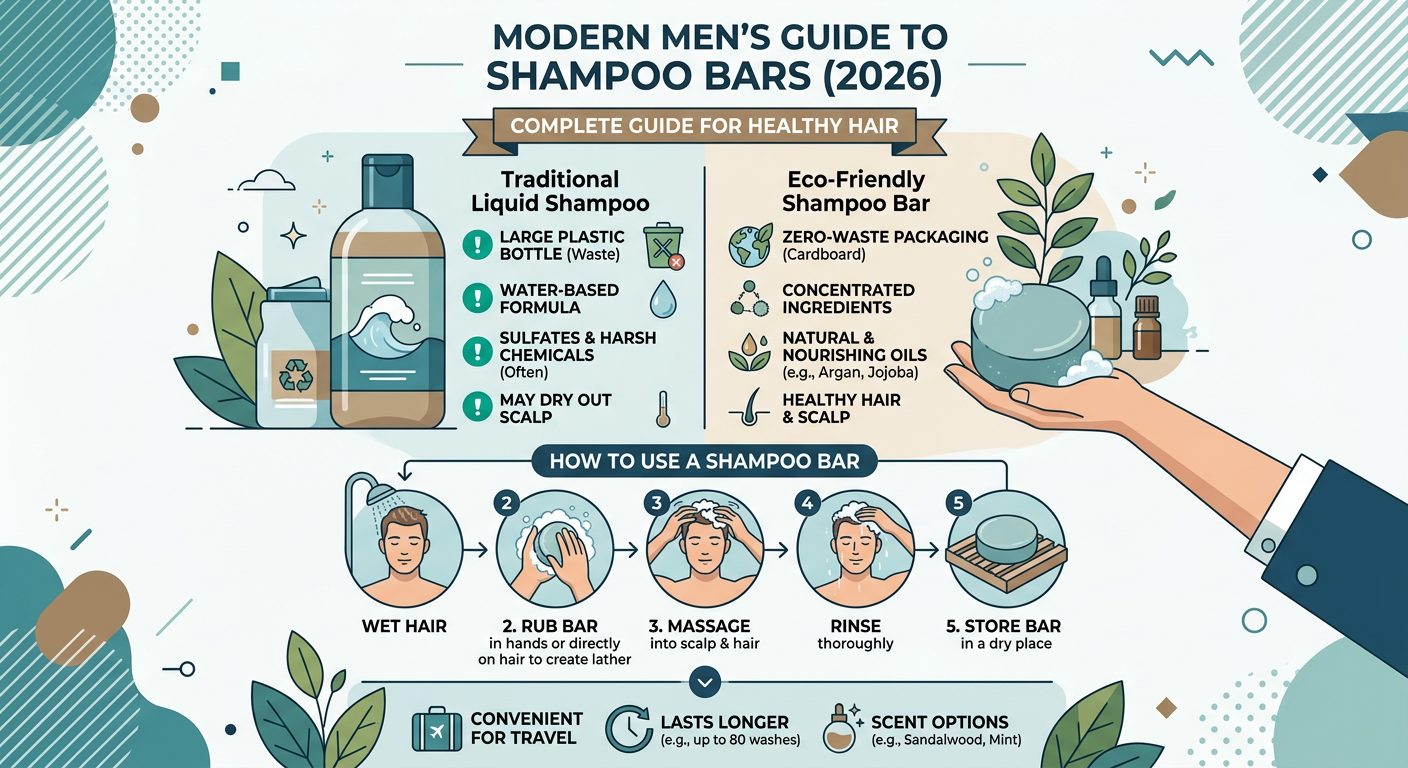
How to Use Shampoo Bars (Step-by-Step)
Step 1: Wet Hair Completely
Run water through hair for 30 seconds. This helps the bar lather and prevents tugging.
—
Step 2: Rub Bar Directly on Scalp
Method 1 (Direct):
- Rub bar on scalp in circular motions
- Cover entire scalp (hairline, crown, back)
- You’ll feel lather building
Method 2 (Lather in hands):
- Rub bar between wet hands
- Apply lather to scalp
For short hair: Direct method is faster
For longer hair: Lather in hands prevents tangles
—
Step 3: Massage Scalp
Use fingertips (not nails) to massage for 1-2 minutes.
Why: Stimulates circulation, distributes shampoo evenly, feels great
—
Step 4: Rinse Thoroughly
Rinse for 2-3 minutes — longer than you think.
Critical: Incomplete rinsing leaves residue (hair feels heavy, greasy, dull).
—
Step 5: Condition (Optional)
If hair is short (<5cm): You probably don’t need conditioner
If hair is longer or dry: Use conditioner bar on lengths/ends (not scalp)
—
Hard Water Bonus: ACV Rinse
If you have hard water:
After rinsing, pour diluted apple cider vinegar over hair:
- Mix: 1 tablespoon ACV + 1 cup water
- Pour over hair: Focus on lengths
- Leave 30 seconds: Rinse with cool water
Benefits:
- Removes mineral buildup
- Closes hair cuticle (adds shine)
- Balances pH
- Prevents waxy residue
—
Transition Period (What to Expect)
When switching from liquid shampoo to bars, your hair may feel weird for 2-4 weeks.
Why This Happens
Your scalp is adjusting:
1. pH shift: Liquid shampoos are often pH 5-7; cold-process soap bars are pH 9-10, so an ACV rinse matters
2. Sebum regulation: Your scalp overproduces oil when stripped by harsh sulfates. It needs time to recalibrate.
3. Buildup purge: Silicones and sulfates leave residue. It takes time to clear.
What You’ll Notice
Week 1-2:
- Hair may feel waxy, greasy, or heavy
- Scalp might be oilier than usual
- Hair may not look as “clean”
Week 3-4:
- Texture improves
- Oil production normalizes
- Hair starts to feel lighter, shinier
Week 6+:
- Hair looks healthier than before
- You wash less frequently (scalp produces less oil)
- Shampoo bar feels effortless
How to Speed Up the Transition
1. Do ACV rinses after every wash (removes residue faster)
2. Clarify once with a cleansing shampoo (resets your hair)
3. Be patient — don’t give up after week 1
Most guys quit during the transition. If you push through, you won’t go back.
—
Common Mistakes (And How to Avoid Them)
1. Skipping the Rinse Step
Mistake: Using a cold-process soap bar (pH 9-10) and skipping the rinse afterward.
Fix: Finish with an acidic (ACV) rinse to close the cuticle. Using a syndet bar instead (SCI, SLSa, betaine in the ingredients)? This step isn’t needed.
—
2. Not Rinsing Long Enough
Mistake: Rinsing for 30 seconds, leaving residue.
Fix: Rinse for 2-3 minutes, until hair feels “squeaky.”
—
3. Ignoring Hard Water
Mistake: Using a bar without natural oils in hard water.
Fix: Do an ACV rinse after washing.
—
4. Giving Up During Transition
Mistake: Quitting after 1 week because hair feels weird.
Fix: Stick it out for 4 weeks. The transition is temporary.
—
5. Leaving Bar Wet
Mistake: Storing bar on wet soap dish or in shower stream.
Fix: Use soap dish with drainage, or keep bar outside shower between uses.
—
6. Rubbing Bar on Hair Lengths
Mistake: Scrubbing bar down the length of long hair (causes tangles).
Fix: Apply to scalp, let lather rinse through lengths.
—
Storing Your Shampoo Bar
Between Uses
Must-have: Soap dish with drainage holes.
Why: Wet bar = soft, mushy bar that dissolves fast.
Options:
- Wooden soap dish (natural drainage)
- Magnetic soap holder (bar dries in air)
- Mesh bag (hang to dry)
Avoid: Leaving bar on flat surface or in shower stream.
—
Traveling
1. Dry bar completely before packing (2-3 hours)
2. Use tin container with airflow or wrap in cloth
3. Carry-on friendly: No TSA liquid restrictions
Gym bag: Same rules — dry bar before storing.
—
Hair Type Guide (What Works Best)
Short Hair (1-5cm)
Best: Any natural bar with natural oils
Why: Short hair is easiest — you don’t need heavy conditioning, just clean scalp.
Tip: You can skip conditioner entirely.
—
Oily/Greasy Hair
Best: Lightweight formula, no heavy oils
Look for: Tea tree oil, peppermint, citrus essential oils (control sebum)
Avoid: Bars with coconut oil, shea butter, or heavy moisturizers
—
Dry/Damaged Hair
Best: Moisturizing bars with argan oil, jojoba, shea butter
Look for: Humectants (glycerin, panthenol)
Tip: Use conditioner bar on ends after washing.
—
Dandruff/Itchy Scalp
Best: Bars with tea tree oil, zinc pyrithione, or salicylic acid
Why: Antifungal, antibacterial properties reduce flaking
Tip: Massage scalp for 2-3 minutes (increases contact time)
—
Thinning Hair
Best: Bars with biotin, caffeine, or rosemary oil
Why: Stimulates circulation, strengthens hair follicles
Tip: Gentle massage (don’t scrub aggressively)
—
Color-Treated Hair
Best: Sulfate-free syndet bars, or cold-process soap finished with an ACV rinse
Why: Sulfates strip color faster, and an unrinsed high pH can fade it too
Tip: Using a soap bar (pH 9-10)? Always finish with an ACV rinse to close the cuticle and protect color
—
Do You Need Conditioner?
Short Hair (<5cm)
Probably not. Your scalp’s natural oils reach the ends easily.
Exception: If hair feels dry or you have hard water buildup.
—
Medium/Long Hair (5cm+)
Yes. Shampoo cleanses, but longer hair needs extra moisture.
Options:
- Conditioner bar (apply to lengths, avoid scalp)
- Leave-in conditioner spray
- Argan or jojoba oil (2-3 drops on damp ends)
—
Are Shampoo Bars Actually Better?
For the environment: Yes, unquestionably.
- One bar = 2-3 plastic bottles avoided
- Biodegradable packaging
- Lower carbon footprint (no water weight in shipping)
For your hair: Depends on the formula.
- Well-superfatted cold-process soap bar + ACV rinse → Better than most liquid shampoos
- Harsh or poorly superfatted bar → Worse than liquid shampoo (especially in hard water)
For your wallet: Yes.
- Bars last 2-3x longer per dollar spent
- Less frequent repurchasing
For convenience:
- Travel: Bars win (TSA-friendly, leak-proof)
- Daily use: Bottles are slightly easier (faster lather, no learning curve)
—
Natural Answer Hard Water Shampoo Bar
Our bar is designed specifically for men in hard water areas (most of Europe):
Formula
✅ True cold process soap (pH 9-10) — finish with an acidic rinse and it is smooth, not squeaky
✅ Tea tree + peppermint — refreshing, scalp-healthy scent
✅ Palm oil-free — ethically sourced
✅ Vegan, cruelty-free
✅ Plastic-free packaging
Lasts: 80-100 washes for short hair (5-7 months)
Why it works:
Most shampoo bars fail in hard water because they lack natural oils. Ours removes mineral buildup while cleansing — so your hair actually gets clean instead of coated in film.
—
FAQ
Are shampoo bars better than liquid shampoo?
Depends on the bar. Cold-process soap bars with an ACV rinse are better than most liquid shampoos—gentler cleansing, plastic-free, and long-lasting. Pair them with a weekly ACV rinse for hard water areas.
—
Why does my hair feel waxy after using a shampoo bar?
Hard water buildup. Minerals react with shampoo (especially soap) to form a waxy film. Solution: finish with an ACV rinse, or get a shower filter.
—
Can I use a shampoo bar on my beard?
Yes. Works great for beard cleansing. Some guys use it as body wash too (it’s just concentrated cleanser).
—
How long does a shampoo bar last?
For short hair: 80-100 washes (5-7 months)
For medium hair: 50-70 washes (3-5 months)
For long hair: 30-50 washes (2-4 months)
Factors: How often you wash, how much you use, how well you store it.
—
Do I need to use less shampoo bar than liquid?
No. You need the same amount of lather, not the same volume. A bar is concentrated — a little goes a long way.
—
Can shampoo bars cause hair loss?
No. Unless you’re scrubbing aggressively or using a formula that irritates your scalp.
Note: If you’re experiencing hair loss, see a dermatologist. Shampoo (liquid or bar) doesn’t cause or prevent hair loss.
—
Will a shampoo bar work in a gym shower?
Yes. But store it in a case afterward (don’t leave it in your locker wet).
—
Are shampoo bars good for daily washing?
Most men don’t need daily washing. Every 2-3 days is ideal (your scalp produces less oil when you wash less frequently).
If you work out daily: Rinse with water on non-wash days, shampoo every 2-3 days.
—
Can I travel with a shampoo bar on a plane?
Yes. No liquid restrictions. TSA-approved. Pack in tin or cloth after drying.
—
Final Thoughts
Shampoo bars aren’t a gimmick — they’re a better, cheaper, more sustainable option if you choose the right formula.
Key takeaways:
✅ Choose cold-process soap bars (like NAP) — pair with an ACV rinse for hard water
✅ Must have natural oils if you have hard water
✅ Be patient through the 2-4 week transition
✅ Store bar dry between uses
✅ Rinse thoroughly (2-3 minutes)
The hard water factor is critical. If you have hard water and don’t address it, even a premium bar will fail.
Choose wisely, stick with it, and you won’t go back to bottles.
—
Looking for a shampoo bar designed for men in hard water areas? Check out our cold-process soap bars with tea tree and peppermint. Palm oil-free, vegan, plastic-free.
Ready to Make the Switch?
Ready to experience the benefits of a natural shampoo bar? Browse our complete collection of cold-processed soap bars — each one made with 6 organic plant oils and zero synthetic additives.