


Last updated: September 26, 2026
Thick hair is a blessing and a challenge. You have enviable volume and body, but washing and styling can feel like a workout. Regular shampoos often leave thick hair feeling heavy, greasy, or under-cleansed. Meanwhile, harsh formulas strip natural oils, leaving your hair dry and frizzy.
Shampoo bars offer a powerful solution for thick hair—if you choose the right one. The concentrated formula cuts through buildup without weighing hair down, while natural oils provide the moisture thick strands crave. But not all bars are created equal.
This guide reveals exactly what thick-haired people need to know about shampoo bars, from choosing the right formula to mastering the technique that prevents that “didn’t quite wash it all” feeling.
Table of Contents

- [Why Thick Hair Needs Special Care](#why-thick-hair-needs-special-care)
- [What Makes a Shampoo Bar Good for Thick Hair](#what-makes-a-shampoo-bar-good-for-thick-hair)
- [Top Ingredients to Look For](#top-ingredients-to-look-for)
- [Best Shampoo Bars for Thick Hair](#best-shampoo-bars-for-thick-hair)
- [How to Use Shampoo Bars on Thick Hair](#how-to-use-shampoo-bars-on-thick-hair)
- [Common Mistakes to Avoid](#common-mistakes-to-avoid)
- [Hard Water and Thick Hair](#hard-water-and-thick-hair)
- [FAQs](#faqs)
Why Thick Hair Needs Special Care
Thick hair has more strands per square inch than fine or medium hair. Each strand also tends to have a larger diameter. This creates unique challenges:
More surface area to clean. With more hair packed onto your scalp, oil, product buildup, and dirt accumulate faster. Regular shampoos may not penetrate deeply enough, leaving residue behind.
Heavier weight. Thick hair is literally heavier. Traditional liquid shampoos often contain fillers and water that add weight without benefit. Your hair ends up feeling greasy or flat, even right after washing.
Moisture needs. Thick strands need more hydration to stay soft and manageable. But many volumizing or clarifying shampoos strip away too much oil, leaving hair dry, frizzy, or tangled.
Longer wash time. Rinsing thick hair takes forever. Liquid shampoos create excessive suds that get trapped in dense hair, requiring multiple rinses and wasting water.
Shampoo bars address all four challenges. Their concentrated formula cuts through buildup effectively. They contain zero water-based fillers, so hair feels lighter. Natural oils and butters provide intense moisture without greasiness. And because bars produce less suds, rinsing is faster.
What Makes a Shampoo Bar Good for Thick Hair
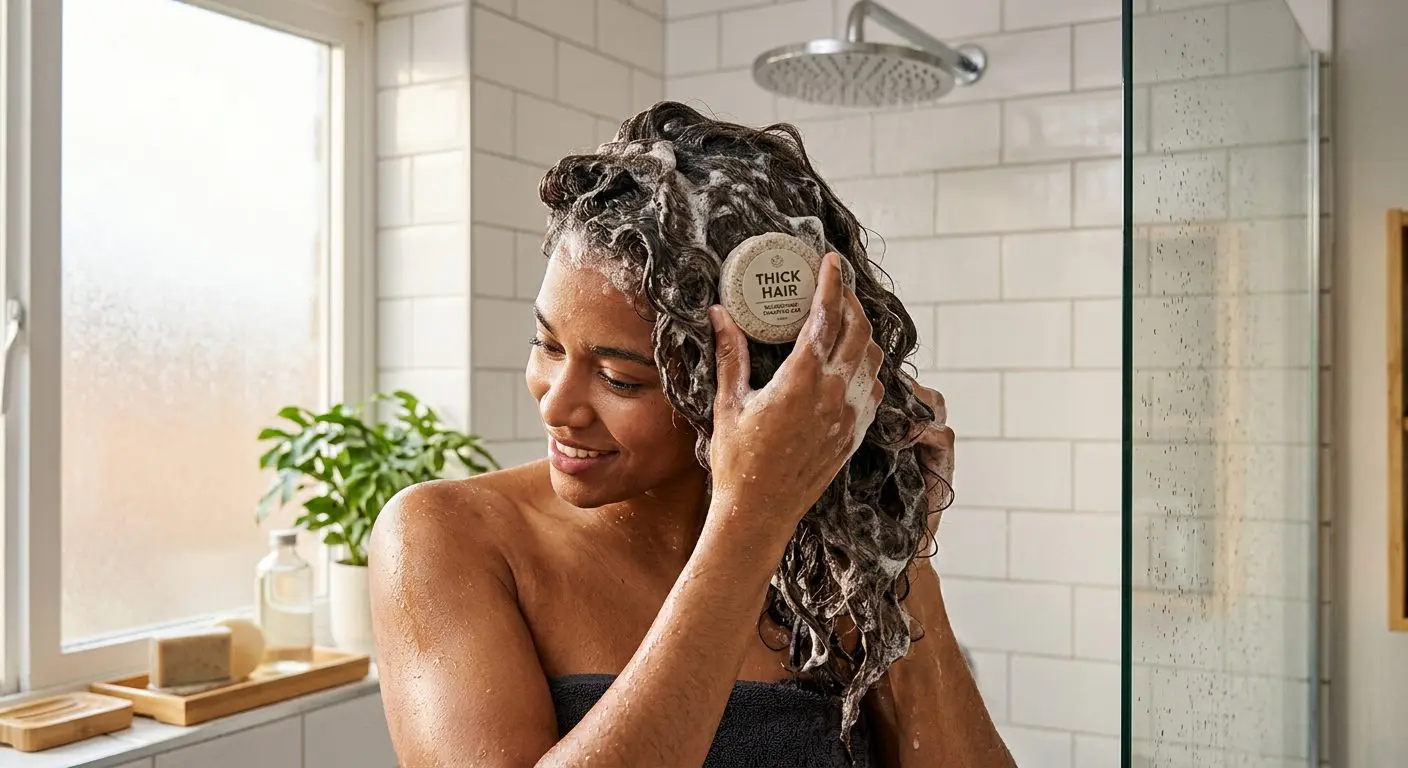
Not every shampoo bar suits thick hair. Here’s what to look for:
1. Strong Cleansing Power
Thick hair needs a bar with enough cleansing strength to cut through oil and buildup. Look for bars that use coconut oil or castor oil as a base—both create a rich lather that reaches the scalp effectively.
Avoid: Bars marketed for “delicate” or “fine” hair. These are often too gentle for thick strands, leaving residue behind.
2. Moisturizing Ingredients
Thick hair may seem coarse, but it needs serious hydration. The best bars include:
- Shea butter or cocoa butter for deep moisture
- Argan oil or jojoba oil for smoothness and shine
- Glycerin to attract and retain moisture
3. No Silicones or Sulfates
Silicones coat thick hair, making it look shiny temporarily but causing buildup over time. Sulfates strip natural oils aggressively, leading to dryness and frizz.
Choose bars with cold-process soap base like saponified coconut oil or castor oil — these clean effectively. Follow with an apple cider vinegar rinse to remove any mineral buildup.
4. Scalp Health Support
Because thick hair creates a dense canopy over your scalp, airflow is limited. This can lead to oiliness or even dandruff. Look for bars with:
- Tea tree oil for antibacterial benefits
- Peppermint oil to stimulate circulation
- Charcoal to absorb excess oil
5. Hard Water Protection
Hard water is thick hair’s worst enemy. Minerals bind to strands, creating a waxy buildup that makes hair feel greasy and heavy even after washing.
If you have hard water, choose a bar specifically formulated to prevent mineral buildup. Natural Answer bars are true cold process soap, so in hard water finish with a vinegar rinse and they behave perfectly. (Learn more in our hard water guide.)
Top Ingredients to Look For
When shopping for a shampoo bar for thick hair, scan the ingredient list for these powerhouses:
For Cleansing
- Coconut oil: Creates rich lather, cuts through oil
- Castor oil: Thick, creamy lather; deeply cleanses
- Activated charcoal: Draws out impurities and excess oil
For Moisture
- Shea butter: Intense hydration without greasiness
- Cocoa butter: Softens and smooths coarse strands
- Argan oil: Adds shine and reduces frizz
- Jojoba oil: Mimics scalp’s natural sebum
For Scalp Health
- Tea tree oil: Antibacterial, prevents buildup
- Peppermint oil: Cooling, stimulates circulation
- Rosemary oil: Strengthens hair, supports growth
- Eucalyptus oil: Clarifying, refreshing
For Softness
- Aloe vera: Soothes scalp, adds slip
- Panthenol (Pro-Vitamin B5): Strengthens and moisturizes
- Silk protein: Smooths cuticle, adds shine
Best Shampoo Bars for Thick Hair
While we can’t review specific competitor products (we’d need to test them all), here’s what to look for based on your thick hair needs:
Best for Daily Cleansing
What to look for: Coconut oil + shea butter base, alkaline pH (9–10, cold-process soap), tea tree or peppermint oil — follow with a vinegar rinse.
Why it works: Thick hair can handle daily washing if you use a gentle-yet-effective formula. Coconut oil cleanses without stripping, while shea butter keeps hair soft.
Best for Hard Water
What to look for: an acidic rinse (apple cider vinegar), citric acid or sodium citrate, a hard water formulation.
Why it works: Chelators like these bind to hard water minerals before they stick to your hair. Natural Answer bars take a different route: true cold-process soap, finished with a vinegar rinse, which clears the same mineral buildup without needing a chelator in the bar.
Best for Frizz Control
What to look for: Argan oil, cocoa butter, silk protein.
Why it works: Thick hair is often coarse and prone to frizz. These ingredients smooth the cuticle and lock in moisture, taming flyaways without weighing hair down.
Best for Volume
What to look for: Lightweight oils (jojoba, grapeseed), no heavy butters, protein-rich formula.
Why it works: Even though you have thick hair, you might want more lift at the roots. Skip heavy bars with cocoa butter and choose lighter formulas that cleanse thoroughly without adding weight.
Best for Color-Treated Thick Hair
What to look for: Sulfate-free, gentle cold-process soap, UV protection — follow with ACV rinse to close cuticle.
Why it works: Color treatments can dry out thick hair. A gentle bar preserves color while providing the moisture your hair needs. (See our colored hair guide.)
How to Use Shampoo Bars on Thick Hair
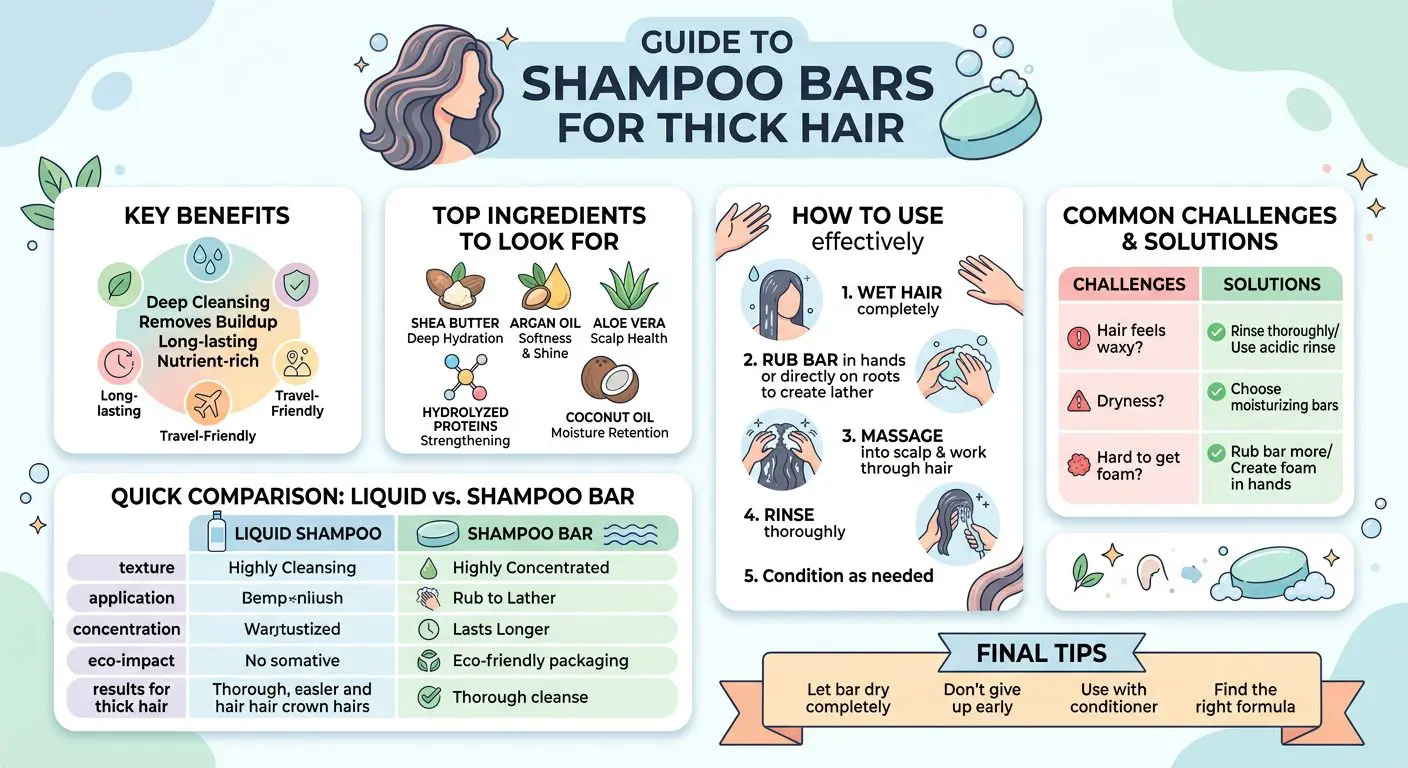
Technique matters—especially with thick hair. Follow these steps for the best results:
Step 1: Wet Hair Thoroughly (Really Thoroughly)
This is critical. Thick hair takes longer to saturate. Spend at least 30 seconds wetting your hair with warm water. The warmer the water, the better the lather.
Pro tip: Flip your head upside down while wetting to ensure water reaches the underlayers.
Step 2: Apply the Bar Directly to Your Scalp
Don’t rub the bar in your hands first—thick hair needs direct contact for full coverage.
- Divide hair into sections (at least 4: front, back, left, right)
- Rub the bar directly on each section, focusing on the scalp
- Use firm pressure—thick hair can handle it
- Cover the entire head, including the back and underlayers
You should feel the bar gliding smoothly and creating lather as you work. If it’s dragging or not lathering, your hair isn’t wet enough.
Step 3: Massage and Lather
Once you’ve covered your scalp, set the bar down and massage with your fingertips (not nails). Work the lather from roots to ends.
For thick hair: Spend extra time on the scalp. Use firm, circular motions to lift oil and buildup. Don’t rush this step—thick hair needs 60-90 seconds of massage to cleanse effectively.
Step 4: Rinse Completely
This is where thick-haired people often fail. Inadequate rinsing leaves residue, making hair feel greasy or waxy.
- Rinse for at least 60 seconds (longer than you think necessary)
- Use your fingers to comb through while rinsing, ensuring water reaches every strand
- Rinse until the water runs completely clear
- Flip your head in different directions to reach underlayers
If your hair feels slippery or squeaky, you’re done. If it feels filmy or sticky, keep rinsing.
Step 5: Condition (If Needed)
Thick hair often benefits from conditioner, especially on the ends. Skip the scalp and apply conditioner mid-length to ends only.
Pro tip: For extra moisture, apply a few drops of argan or jojoba oil to damp hair after washing.
Common Mistakes to Avoid
1. Not Wetting Hair Enough
Thick hair holds air pockets between strands. If hair isn’t fully saturated, the bar won’t lather properly. You’ll end up using more product than necessary and still won’t get a thorough clean.
Solution: Wet hair for 30+ seconds before applying the bar.
2. Using Too Little Product
Thick hair has more surface area to cover. You need more passes with the bar than someone with fine hair.
Solution: Apply the bar until you have abundant lather across your entire scalp. Don’t be stingy.
3. Skipping the Scalp
Thick hair creates a dense canopy that hides the scalp. Many people focus on the hair itself and neglect the roots.
Solution: Part hair into sections and apply the bar directly to your scalp, not just the surface layer of hair.
4. Inadequate Rinsing
Thick hair traps lather and residue. What feels “clean enough” often isn’t.
Solution: Rinse for twice as long as you think necessary. Use your fingers to ensure water reaches every strand.
5. Blaming the Bar for Hard Water Issues
If your hair feels waxy, greasy, or heavy after switching to a bar, hard water is often the culprit—not the bar itself. Hard water minerals bind to hair, creating buildup.
Solution: Use a shampoo bar formulated for hard water, or do a clarifying rinse with apple cider vinegar once a week. (Read our hard water guide for details.)
Hard Water and Thick Hair: A Challenging Combo
Hard water makes thick hair feel heavy, greasy, and impossible to rinse clean. Here’s why:
Hard water contains dissolved minerals (calcium and magnesium). These minerals bind to your hair, forming a waxy coating. The more hair you have, the more surface area for minerals to cling to.
Thick-haired people in hard water areas often report:
- Hair feels waxy or filmy after washing
- Lather is minimal, even with generous product use
- Hair looks dull, no shine
- Buildup accumulates faster
- Hair feels greasy within hours of washing
The Solution
Use a shampoo bar specifically formulated for hard water. Natural Answer bars are true cold process soap; in very hard water a vinegar rinse after washing keeps hair clear. The formula prevents mineral buildup while still providing the moisture thick hair needs.
Alternative: Use a cleansing shampoo once a week, or rinse with diluted apple cider vinegar (1 tablespoon per cup of water) after washing.
FAQs
Can shampoo bars handle thick, coarse hair?
Yes—shampoo bars are often better for thick hair than liquid shampoos. The concentrated formula provides stronger cleansing power without the fillers that weigh hair down. Choose a bar with moisturizing ingredients like shea butter and argan oil.
Will a shampoo bar make my thick hair feel dry?
Not if you choose the right formula. Look for bars with moisturizing oils and butters (shea, cocoa, argan, jojoba). Avoid bars marketed for “oily hair” or “clarifying”—these are too stripping for thick strands.
How often should I wash thick hair with a shampoo bar?
It depends on your scalp type. If your scalp produces a lot of oil, daily washing is fine with a gentle bar. If your scalp is dry, wash 2-3 times per week. Thick hair can go longer between washes because oil takes longer to travel down the hair shaft.
Why does my thick hair feel waxy after using a shampoo bar?
This is almost always a hard water issue, not a problem with the bar. Hard water minerals bind to hair, creating a waxy coating. Switch to a hard water-friendly bar (like Natural Answer), or do a clarifying rinse with apple cider vinegar.
Do I need conditioner with a shampoo bar if I have thick hair?
It depends. Many shampoo bars are moisturizing enough that thick hair doesn’t need conditioner on the scalp or roots. However, if your ends are dry or damaged, apply conditioner mid-length to ends after washing.
How long does a shampoo bar last with thick hair?
Thick hair uses more product, so bars don’t last quite as long. Expect 40-60 washes from an 80g bar if you have thick hair, versus 60-80 washes for someone with fine hair. (See our guide on how long shampoo bars last.)
Can I use a shampoo bar if my thick hair is color-treated?
Absolutely. Choose a sulfate-free bar with gentle cleansers and moisturizing ingredients. Avoid bars with strong clarifying ingredients like charcoal or tea tree oil (unless you want to strip color). (Read our colored hair guide.)
Conclusion
Thick hair doesn’t have to be a burden. With the right shampoo bar, you can enjoy cleaner, lighter, more manageable hair—without the fillers, sulfates, and water waste of liquid shampoos.
Look for bars with strong cleansing power (coconut or castor oil), deep moisture (shea butter, argan oil), and hard water protection. Master the technique—wet thoroughly, apply directly to scalp, massage well, rinse completely—and you’ll never want to go back to bottles.
If you live in a hard water area (which many thick-haired people do), choose a bar specifically designed for hard water. Natural Answer shampoo bars are formulated to prevent mineral buildup while keeping thick hair soft, clean, and full of life.
Ready to try the best shampoo bar for thick hair? Explore Natural Answer’s collection at naturalanswerproducts.com.
Related reading: shampoo bars vs. conditioner bars and How to use an apple cider vinegar rinse with shampoo bars.