


Last updated: October 9, 2026
Why Athletes Need Different Shampoo Bars
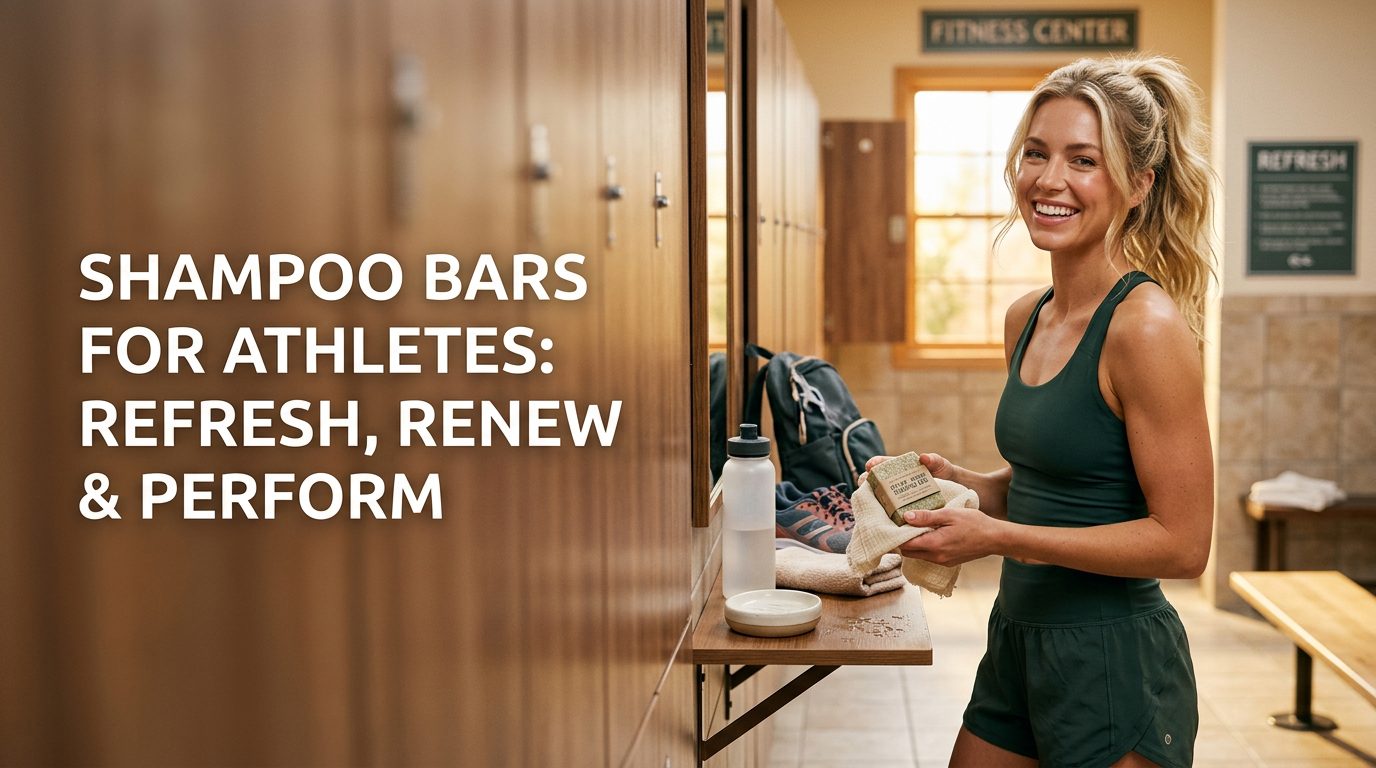
Key Requirements for Active Lifestyles
1. Handles Frequent Washing Daily or twice-daily washing means you need a gentle formula. Harsh sulfates will leave your scalp raw within a week.2. Removes Sweat and Odor Post-workout scalp smells aren’t sexy. You need effective cleansing without over-stripping natural oils.3. Works with Hard Water Gym showers often have brutal hard water. Minerals combine with sweat to create a nightmare buildup. (More on this below.)4. Chlorine-Resistant (for swimmers) Pool chlorine + shampoo bar = potential disaster if the bar isn’t formulated correctly. You need a bar that rinses clean even in treated water.5. Portable and Hygienic TSA-friendly, doesn’t melt in your gym bag, dries fast between uses. Athletes need convenience.6. Long-Lasting When you’re washing daily, bars that dissolve fast become expensive. Look for dense, compact formulas.
The Hard Water Problem for Athletes
- Waxy buildup that feels like your hair never fully rinses
- Scalp itchiness after every shower (not from the bar, from mineral residue)
- Dull, flat hair even with “volumizing” products
- Frizz and tangles that worsen over time
- Fake “dandruff” (actually mineral flakes)
How to Know If You Have Hard Water
Check these signs: – White scale on showerheads or faucets – Soap doesn’t lather well – Hair feels sticky or filmy after washing – Skin feels tight and dry after showersIf you’re an athlete in Europe (Germany, Belgium, Netherlands, France, UK, Switzerland, Italy), you likely have hard water. North American athletes: check your city’s water report.Solution: A Hard-Water-Ready Routine
Natural Answer cold-process soap bars (pH 9-10) are designed to work in hard water when paired with an acidic ACV rinse. Unlike bars without hard water formulation:- Rinse clean even in hard water
- Don’t leave mineral residue
- Follow with an ACV rinse to balance scalp pH after washing
- Handle daily washing without over-stripping
Best Shampoo Bar Features for Athletes
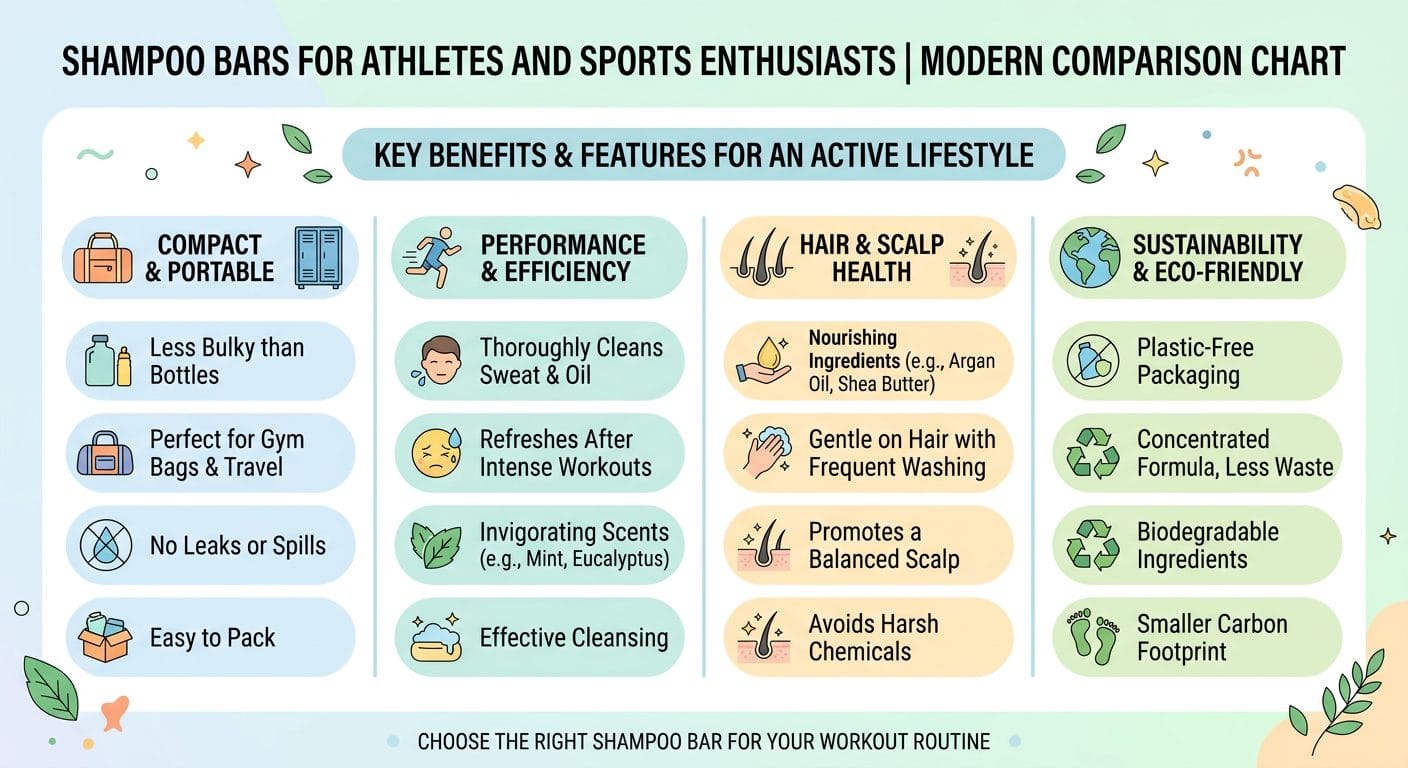
1. Saponified Plant Oils (Cold-Process Formula)
Why it matters: Daily washing with harsh sulfates (SLS/SLES) will wreck your scalp. Athletes need gentle cleansing.What to look for: – Saponified plant oils (like NAP bars): cold-process soap, pH 9-10, biodegradable – Follow with an acidic ACV rinse to close cuticles and remove mineral residue – Avoid: Sodium Lauryl Sulfate (SLS), Sodium Laureth Sulfate (SLES)Why it works: Saponified plant oil bars clean effectively without stripping your scalp’s natural moisture barrier. When you’re washing 7-14 times per week, gentleness is non-negotiable.2. An Acidic Rinse After Washing
Why it matters: Your scalp’s natural pH is around 5.5 (slightly acidic). Cold-process soap is alkaline (pH 9-10) by chemistry — a quick acidic rinse afterward restores your scalp’s protective acid mantle.What to look for: – Cold-process soap (pH 9-10), paired with an ACV rinse – Or a syndet bar, already closer to pH 5.5 – Either way: finish with an acidic rinse after trainingWhy it works: Maintaining your scalp’s natural pH prevents dryness, irritation, and bacterial overgrowth — especially important when you’re sweating daily.3. Hard Water Chelators
Why it matters: Minerals in gym/pool showers will build up in your hair unless your bar contains a chelator or you follow with an ACV rinse.What to look for: – Citric acid – EDTA (Ethylenediaminetetraacetic acid) – Sodium citrateWhy it works: These ingredients bind to hard water minerals and prevent them from depositing on your hair. Result: hair that actually feels clean after rinsing.4. Clarifying Ingredients (for buildup removal)
Why it matters: Sweat, chlorine, styling products, and minerals create layers of buildup. You need a bar that can cut through it.What to look for: – Clay (bentonite, kaolin) — absorbs oil and buildup – Activated charcoal — detoxifies and clarifies – Apple cider vinegar powder — balances pH and removes residue – Tea tree oil — deep cleanses and fights odorWhy it works: These ingredients break down buildup without harsh sulfates. Weekly clarifying washes keep your hair reset and responsive.5. Moisture-Balancing Oils
Why it matters: Even though you’re washing often, you still need some moisture. The trick is balancing cleansing with conditioning.What to look for: – Coconut oil — lightweight moisture, antibacterial – Argan oil — non-greasy, adds shine – Jojoba oil — mimics scalp’s natural sebum – Shea butter — gentle moisture for dry scalpsAvoid heavy oils (castor, olive) that can build up with frequent washing.Why it works: Lightweight oils maintain scalp health without weighing down hair or creating greasiness between washes.6. Compact, Dense Formula
Why it matters: Daily use means you’ll burn through soft bars in 2-3 weeks. Athletes need longevity.What to look for: – Dense, hard texture (not soft or crumbly) – 80-100g+ weight – Minimal air bubbles inside – Dries hard after useWhy it works: A dense 80g natural shampoo bar should last 2-3 months even with daily washing, making cost-per-wash lower than liquid shampoo.Shampoo Bars to Avoid as an Athlete
⚠️ Cold-Process Soap Bars in Hard Water — Use with ACV Rinse
Why know: True soap is alkaline and reacts with hard water to form a film. If you shower daily in a hard-water gym, keep a small bottle of diluted vinegar in your kit — a quick rinse after washing clears it completely.How to identify: Look for ingredients like “saponified oils,” “sodium olivate,” “sodium cocoate,” or “sodium palmate.” If the bar is marketed as “handmade” or “artisanal,” it’s likely soap-based.Without ACV rinse: Waxy buildup, dull hair, itchy scalp. With a 10-second diluted ACV rinse after washing: rinses clean, no buildup — suitable for daily gym use.❌ Bars with Heavy Oils/Butters
Why avoid: Ingredients like castor oil, olive oil, cocoa butter are great for dry hair washed 2x/week. For daily washing, they build up fast.What happens: Hair feels greasy even after washing. Roots look oily within 12 hours. You end up washing MORE, which defeats the purpose.❌ Overly Moisturizing “Conditioning” Bars
Why avoid: Some bars are designed for very dry or damaged hair. If you’re an athlete with normal-to-oily hair (from daily workouts), these will be too heavy.What happens: Flat, lifeless hair. Buildup at the roots. Your hair feels coated instead of clean.❌ Skipping the Hard-Water Rinse or Chelator
Why avoid: If you have hard water and the bar you skip the acidic rinse, minerals WILL build up in your hair. No exceptions.What happens: The classic “shampoo bar didn’t work for me” complaint. Hair feels sticky, tangly, or waxy — but it’s not the bar’s fault, it’s the water + wrong formula.
How to Use Shampoo Bars for Athletic Hair
The Proper Technique
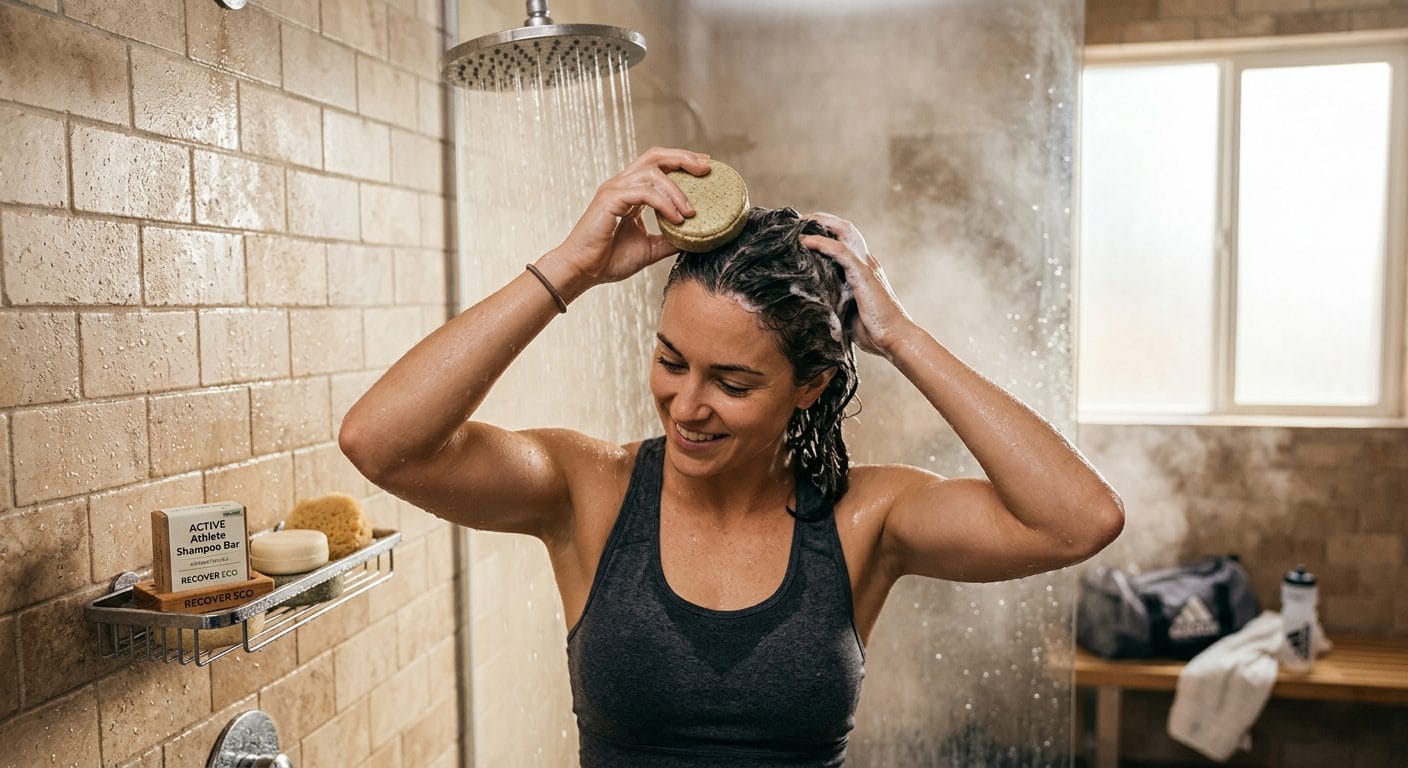
Step 1: Pre-Rinse Thoroughly (2-3 Minutes)This is the most skipped step — and the most important for athletes.Hard water minerals, sweat, chlorine, and styling products create a barrier on your hair. If you skip the pre-rinse, you’re just moving gunk around instead of removing it.How to do it: – Wet hair completely under warm water – Massage scalp with fingertips while rinsing – Rinse until water runs clear (2-3 minutes minimum) – Your hair should feel “squeaky” before applying barWhy it works: Pre-rinsing removes 60-70% of buildup before you even touch the bar. This lets the surfactants actually clean instead of fighting through layers of grime.Step 2: Apply the Bar CorrectlyTwo methods:Method A (Direct Application): – Rub wet bar directly on scalp in circular motions – Focus on roots, crown, and areas with most sweat – 8-10 strokes per section (temples, crown, back, sides) – Let foam build naturallyMethod B (Lather-in-Hands): – Rub bar between wet hands to create lather – Apply lather to scalp and massage – Re-lather as neededFor athletes: Method A is faster and more effective for sweat removal. Method B is better for very long hair.Step 3: Massage and Focus on Scalp (2-3 Minutes)Your scalp is where sweat, oil, and odor accumulate. Don’t rush this.Technique: – Use fingertips (not nails) in circular motions – Spend 30-60 seconds per section (front, crown, sides, back) – Work from roots to ends – Add a bit of water if lather gets too thickWhy it works: Massage stimulates blood flow, loosens buildup, and ensures surfactants reach every follicle.Step 4: Rinse THOROUGHLY (3-5 Minutes)Athletes need extra rinsing time, especially in hard water.How to do it: – Rinse under warm water for 2-3 minutes minimum – Keep massaging while rinsing (don’t just stand there) – Tilt head in different directions to hit all angles – Rinse until water runs completely clear – Do a “squeeze test”: squeeze a section of hair — if it feels slippery, keep rinsingHard water tip: If you have very hard water, do a final 30-second cold rinse. This closes cuticles and prevents mineral re-deposit.Step 5: Optional ACV Rinse (1x/Week)Apple cider vinegar rinse is a game-changer for athletes with hard water.Recipe: – 1 tablespoon ACV – 1 cup cool water – Mix in a bottle or cupHow to use: – After final rinse, pour ACV mixture over scalp and hair – Massage gently for 30 seconds – Rinse out with cool water (30 seconds)Why it works: ACV (pH 3-4) dissolves mineral buildup, balances scalp pH, and removes any lingering residue from sweat or chlorine. Do this weekly to reset your hair.Storage Tips for Gym Bags
Problem: Wet bars in enclosed spaces = soggy mess + mold.Solutions:1. Use a Ventilated Soap Dish/Case – Look for cases with drainage holes – Avoid sealed plastic containers (bars need air to dry) – Tin cases with holes work well2. Wrap in a Washcloth – Wet bar → wrap in small washcloth → toss in gym bag – Washcloth absorbs excess water – Wash the cloth weekly3. Cut Bar in Half – Keep one half at home (in soap dish) – Travel with the other half (lasts 6-8 weeks) – Smaller pieces dry faster4. Let Bar Dry Completely Before Packing – After shower, leave bar on soap dish for 2-3 hours – Pack it in your gym bag BEFORE your next workout – This prevents the “wet bar in bag” problemSpecial Scenarios for Athletes
For Swimmers (Chlorine + Hard Water)
The double whammy: Pool chlorine strips your hair dry. Hard water deposits minerals. Together, they create brittle, greenish, tangled hair.Solution:Before swimming: – Wet hair with clean water before entering pool – (Saturated hair absorbs less chlorine)After swimming: – Rinse immediately with fresh water (before chlorine dries) – Use shampoo bar plus an acidic rinse – Follow with ACV rinse (2x/week) – Deep condition weeklyIngredient priorities for swimmers: – an acidic rinse (removes chlorine + minerals) – Panthenol (repairs damage) – Coconut oil (moisture without buildup)For Outdoor Athletes (Sun + Sweat + Dust)
The challenge: UV damage + sweat + dirt/dust + hard water.Solution:Ingredient priorities: – Antioxidants (vitamin E, green tea extract) — fight UV damage – Clay (bentonite, kaolin) — removes dirt and dust – Lightweight oils (argan, jojoba) — moisture without greasinessRoutine: – Daily wash (post-activity) – Weekly clarifying wash (clay-based bar or ACV rinse) – Monthly deep conditioning treatmentFor Winter Sports Athletes (Cold + Sweat + Helmet Hair)
The challenge: Sweat trapped under helmets/beanies + dry winter air + indoor heating.Solution:Ingredient priorities: – Moisture-balancing (shea butter, coconut oil) – Anti-itch (tea tree oil, peppermint) – Gentle cleansing (SCI-based)Routine: – Daily wash (helmet sweat breeds bacteria) – Avoid over-stripping (winter air is already drying) – Use ACV rinse 1x/week (prevents winter scalp flakes)For Runners (Sweat + Hard Water + Frequent Ponytails)
The challenge: Scalp sweat + tension from ponytails + hard water buildup.Solution:Ingredient priorities: – Scalp-soothing (aloe, chamomile) – Gentle surfactants (SCI, not SLS) – Citric acid (or sodium citrate)Routine: – Wash immediately post-run (sweat oxidizes and smells worse if left) – Focus on scalp massage (2-3 minutes) – Alternate ponytail placement to avoid breakage – Weekly scalp exfoliation (charcoal bar or ACV rinse)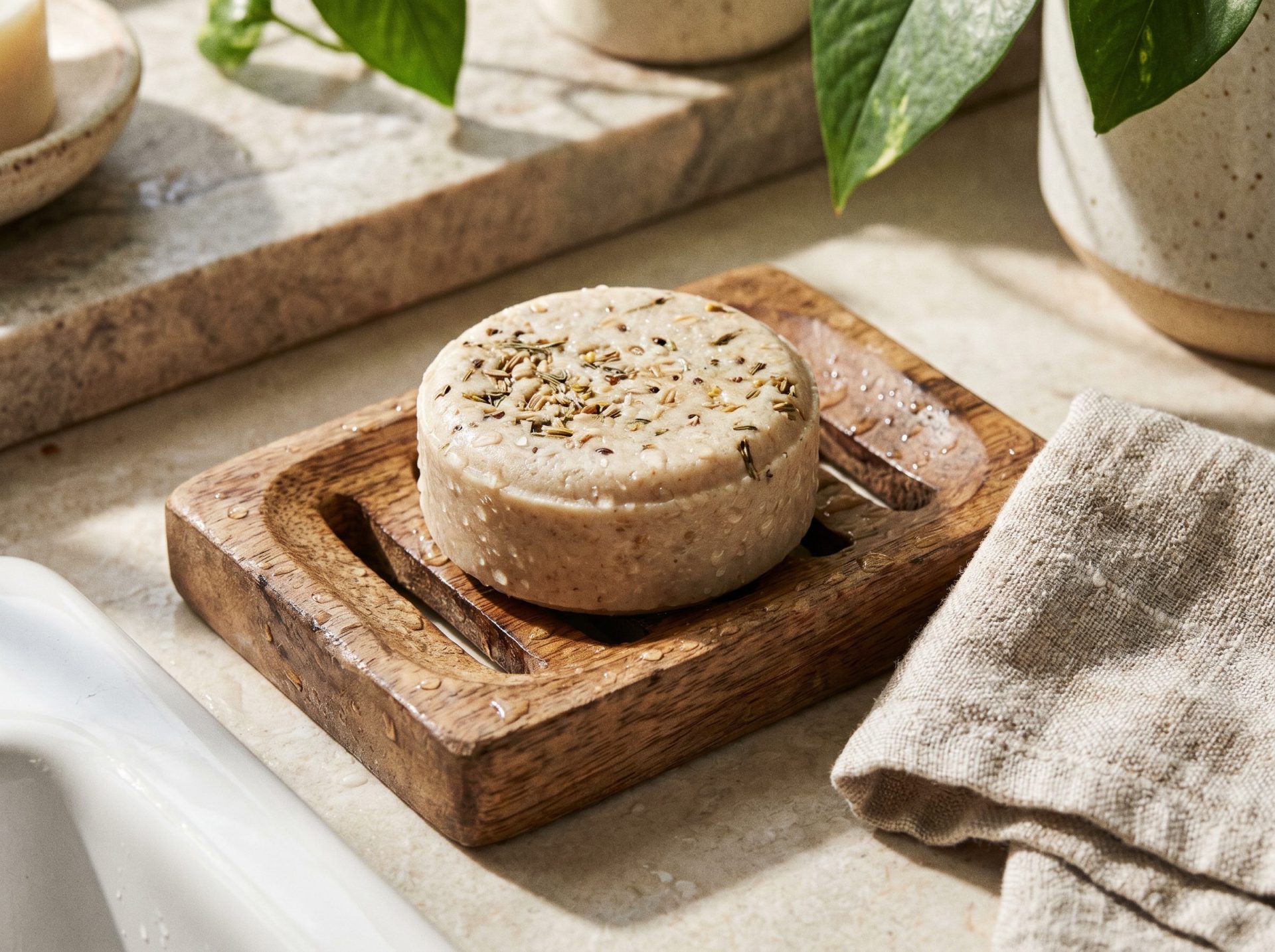
Cost Analysis: Shampoo Bars vs. Liquid for Athletes
The Math
Scenario: You wash your hair daily (365 washes/year).Liquid Shampoo: – 250ml bottle = €8-12 – Lasts ~30 washes (generous estimate) – Annual cost: €98-€146 – Annual waste: ~12 plastic bottlesShampoo Bar (natural): – 80-100g bar = €8-12 – Lasts 60-90 washes (even with daily use) – Annual cost: €32-€73 – Annual waste: 4-6 paper wrappers (compostable)Savings: €66-€73/year + zero plastic waste.Longevity Tips to Maximize Savings
- Keep bar dry between uses — Wet bars dissolve 3x faster
- Use proper technique — Over-applying wastes product
- Cut bar in half — Smaller pieces last longer (counterintuitive but true)
- Store in ventilated dish — Prevents mushiness
- Don’t leave bar in shower stream — Store away from direct water
Common Problems Athletes Face with Shampoo Bars
Problem 1: “My hair feels waxy/sticky after switching to a bar”
Likely cause: Hard water + a missed step (soap without an ACV rinse, or a syndet bar without a chelator).Solution: – Add an ACV rinse, or check your bar for a chelator like citric acid – Do a clarifying ACV rinse to remove existing buildup – Extend rinse time to 3-5 minutes – Check your water hardness (if it’s very hard, consider a shower filter)Problem 2: “The bar doesn’t lather well”
Likely causes: – Not enough pre-rinsing (buildup blocks lather) – Hard water (minerals prevent lather formation) – Bar is too wet/mushy (lost effectiveness)Solutions: – Pre-rinse for 2-3 minutes before applying bar – Use more water while lathering (add water incrementally) – Try the “lather-in-hands” method instead of direct application – If bar is mushy, let it dry out for 24-48 hours on a soap dishProblem 3: “My scalp itches after every wash”
Likely causes: – Mineral buildup (not the bar’s fault) – Incomplete rinsing (surfactant residue) – Skipped acidic rinse after a soap barSolutions: – Add an ACV rinse after washing (or check a syndet bar’s pH) – Double your rinse time (3-5 minutes minimum) – Do weekly ACV rinses to remove mineral buildup – Check for product allergies (fragrance, essential oils)Problem 4: “The bar melts too fast in my gym bag”
Likely causes: – Storing wet bar in enclosed space – Soap-based bar (softer than natural shampoo bars) – No drainage in storage containerSolutions: – Let bar dry 2-3 hours before packing – Use a ventilated soap case (with holes) – Cut bar in half and only travel with one piece – Wrap in a washcloth (absorbs moisture)Problem 5: “My hair looks greasy even after washing”
Likely causes: – Bar is too moisturizing for daily use – Hard water preventing rinse – Conditioner applied to roots (if using separate conditioner)Solutions: – Switch to a clarifying bar (clay-based or minimal oils) – Extend rinse time (minerals coat hair and look greasy) – Only condition mid-lengths to ends (never roots) – Do a weekly ACV rinse to resetTransition Period: What to Expect
Switching from liquid shampoo to shampoo bars requires adjustment — especially for athletes with hard water.Week 1-2: The Awkward Phase
What happens: – Hair may feel different (not bad, just different) – Lather might be less foamy than liquid (this is normal) – You’re learning the techniqueWhat to do: – Be patient with lathering technique – Focus on scalp massage – Extend rinse time – Don’t give up yetWeek 3-4: The Adjustment
What happens: – If you have hard water, you might experience waxiness or buildup – This is usually old liquid shampoo residue + minerals finally surfacing – Your scalp is adjusting its oil productionWhat to do: – Do a clarifying ACV rinse (2x this week) – Consider a shower filter if water is very hard – Check whether your bar needs a chelator or an ACV rinse for hard waterWeek 5+: The Payoff
What happens: – Hair feels clean, light, and manageable – Scalp oil production balances out – You’ve mastered the technique – You’re saving money and reducing plastic wasteProof it’s working: – Hair dries faster – Less oil buildup between washes – Scalp feels healthier – Hair has more volume and shineEnvironmental Impact for Athletes
Athletes wash their hair more frequently, which amplifies environmental impact.Plastic Waste Calculation
Daily washing = 365 washes/yearLiquid shampoo: – ~12 bottles/year – 12 bottles × 10g plastic each = 120g plastic waste/year – Most bottles aren’t recycled (contamination)Shampoo bars: – 4-6 paper wrappers/year – Wrappers are compostable – Zero plastic wasteImpact over 5 years: – Liquid: 60 bottles (600g plastic) – Bars: 20-30 paper wrappers (compostable)Water Usage
Liquid shampoo: – Bottle production requires water – Diluted formulas (60-80% water) – You’re paying to ship waterShampoo bars: – Concentrated (no water in product) – Lower shipping emissions (lighter weight) – Less water needed in productionCarbon Footprint
Transportation: – Bars are lighter and more compact – 1 shipping container of bars = 3-4 containers of liquid – Lower emissions per washProduction: – Bars require less energy (no water heating/mixing) – Minimal packaging (vs. bottles, caps, pumps)For an athlete washing daily: – Switching to bars reduces personal care carbon footprint by 40-60% annuallyFAQ: Shampoo Bars for Athletes
Q: Can I use the same bar for body and hair?A: Not recommended. Body wash bars are formulated differently (higher pH, different surfactants). Use a dedicated shampoo bar for hair.Q: How do I travel with a wet bar after a gym shower?A: Wrap it in a washcloth, use a ventilated case, or let it dry for 2-3 hours before packing. Avoid sealed containers — bars need airflow.Q: Will shampoo bars work in hotel showers (hard water)?A: Yes, if you follow with an acidic rinse (ACV) — soap bars especially benefit from it in hard water.Q: Can I use shampoo bars in cold water?A: Yes, but warm water lathers better and opens hair cuticles for deeper cleansing. If you must use cold water, lather in hands first.Q: Do I need a separate conditioner if I use a shampoo bar?A: It depends. Some bars are moisturizing enough for daily use. If your hair is long, damaged, or very dry, you might want a separate conditioner bar or liquid conditioner for ends only (never roots).Q: Will shampoo bars strip color-treated hair?A: Gentle natural shampoo bars (SCI-based, sulfate-free) are safe for color-treated hair. Avoid clarifying bars with strong surfactants (SLS/SLES).Q: Can I use shampoo bars if I have a sensitive scalp?A: Yes — look for fragrance-free, hypoallergenic natural shampoo bars with soothing ingredients (aloe, chamomile, oat extract). Avoid bars with essential oils or strong fragrances.Q: How long does a shampoo bar last with daily washing?A: A dense 80-100g natural shampoo bar should last 60-90 washes, even with daily use. That’s 2-3 months per bar.Q: Are shampoo bars TSA-approved?A: Yes! Bars are solid, so they’re not subject to the 100ml liquid rule. Perfect for travel athletes.Q: Will shampoo bars make my hair greasy if I have oily hair?A: No — choose a clarifying bar with minimal oils and a good chelator. Avoid overly moisturizing bars designed for dry hair.Final Recommendations: Best Shampoo Bar for Athletes
Ideal Formula Checklist
✅ Saponified plant oils (cold-process soap) or a syndet bar — either works ✅ An acidic (ACV) rinse after every wash, especially with soap ✅ A hard-water chelator (EDTA, citric acid, or sodium citrate) ✅ Gentle surfactants (SCI or SCS, not SLS) if you choose a syndet bar ✅ Lightweight oils (coconut, argan, jojoba — not castor or olive) ✅ Compact and dense (80-100g, hard texture) ✅ Minimal fragrance (essential oils can irritate with daily use)What to Avoid
❌ Skipping the acidic rinse after a soap-based bar ❌ Bars without a hard-water chelator or rinse step (if you have hard water) ❌ Overly moisturizing bars (for daily use) ❌ Bars with heavy oils (castor, olive) ❌ Soft, crumbly textures (won’t last)Specific Product Considerations
For swimmers (chlorine + hard water): – Prioritize EDTA over citric acid (stronger chelator for pool-water minerals) – Look for panthenol (repairs chlorine damage) – Consider weekly deep conditioningFor outdoor athletes (sun + sweat + dust): – Clay-based clarifying bars (bentonite, kaolin) – Antioxidants (vitamin E, green tea) – Lightweight moistureFor runners (scalp sweat + ponytails): – Scalp-soothing ingredients (aloe, tea tree) – Gentle enough for daily use – Good lather for thorough cleansingFor winter sports (cold + helmet hair): – Balance moisture with clarifying – Anti-itch ingredients (peppermint, tea tree) – An ACV rinse to prevent drynessConclusion
Athletes have unique hair care needs. Daily washing, sweat, chlorine, hard water, and travel all demand a shampoo bar that’s gentle yet effective, portable yet long-lasting.The key factors: – The right base (cold-process soap + ACV rinse, or a syndet bar) – A hard-water step (ACV rinse, or a chelator like citric acid) – Gentle surfactants (SCI, not SLS) – Proper technique (pre-rinse, thorough massage, extended rinse)When you find the right bar and master the technique, you’ll wonder why you ever used liquid shampoo.The payoff: – Clean, healthy hair even with daily washing – €66-€73/year saved – Zero plastic waste – TSA-friendly travel – Better for your scalp, better for the planetTrain hard. Wash smart. Choose bars that work as hard as you do.Related guides: